
Attack Shark

KEYBOARD POLLING RATE TESTER
Time Remaining
10.00s
Real-time Rate
0 Hz
After clicking "START TEST", alternate pressing two keys quickly (e.g., A and S).
The test will run for 10 seconds.
0
Max Rate
0
Min Rate (Peak)
0
Average Rate
-
Stability
* Browser Limitation: Web browsers have system-level limits on polling rate measurement. Values around 1000Hz usually indicate 1K+ support.
* Ensure you press keys quickly. Holding a key down does not trigger polling detection.

How to Use

1

Click START TEST to initialize the 10-second timer and polling detector.

2

Immediately begin pressing two keys (e.g., A and S) as rapidly and alternatingly as possible.

3

Maintain the rhythm until the timer hits zero. Do not hold keys down, as this stops polling events.

Understanding the Results

  • Max Rate: The highest report frequency detected. 1000Hz = 1ms delay.
  • Stability: Indicates how consistent the data transmission is. "Good" is ideal for gaming.
  • 125Hz vs 1000Hz: Standard office keyboards are locked at 125Hz. Gaming keyboards range from 1000Hz to 8000Hz.
  • Browser Limits: Some browsers may cap rates. If you see consistent ~1000Hz, your device is performing well.

Frequently Asked Questions

What is keyboard polling rate? +
Keyboard polling rate, measured in Hertz (Hz), indicates how frequently the keyboard reports keystroke data to the computer. A 1000Hz polling rate means the keyboard sends a signal every 1 millisecond (ms).
Is 1000Hz or 8000Hz better for gaming? +
For competitive gaming, higher is generally better. 1000Hz (1ms) is the standard for esports. 8000Hz (0.125ms) offers the lowest theoretical latency but requires a high-performance CPU and a high-refresh-rate monitor to notice the difference.
How do I accurately test my keyboard polling rate? +
Use an online polling rate tester like this one. Press and release multiple keys (like A and S) as rapidly as possible for at least 10 seconds. The 'Max Rate' displayed represents the peak frequency your keyboard achieved.
Does polling rate affect CPU usage? +
Yes. Standard 1000Hz keyboards have negligible impact. However, setting a keyboard to 4000Hz or 8000Hz generates significantly more interrupts, which can increase CPU usage and potentially lower FPS on older systems.
Why does the test result show less than 1000Hz? +
This can happen due to browser limitations, OS scheduling, or not pressing keys fast enough. Also, standard office keyboards are hardware-locked to 125Hz, so they will never exceed ~125Hz in tests.
What is the scan rate vs polling rate? +
Polling rate is how often data is sent to the PC via USB. Scan rate is how often the keyboard's internal matrix checks for key presses. A true low-latency keyboard needs both a high scan rate and a high polling rate.

Blog posts

View all
Carbon fiber patterned gaming mouse and its wireless receiver against a neon blue background.

Cómo viajar con tu equipo de videojuegos

Protege tu equipo durante tus viajes: consejos para viajar con equipo de videojuegos: utiliza teclados del 60 %, estuches rígidos y equipaje de mano para evitar que se rompan los interruptores.
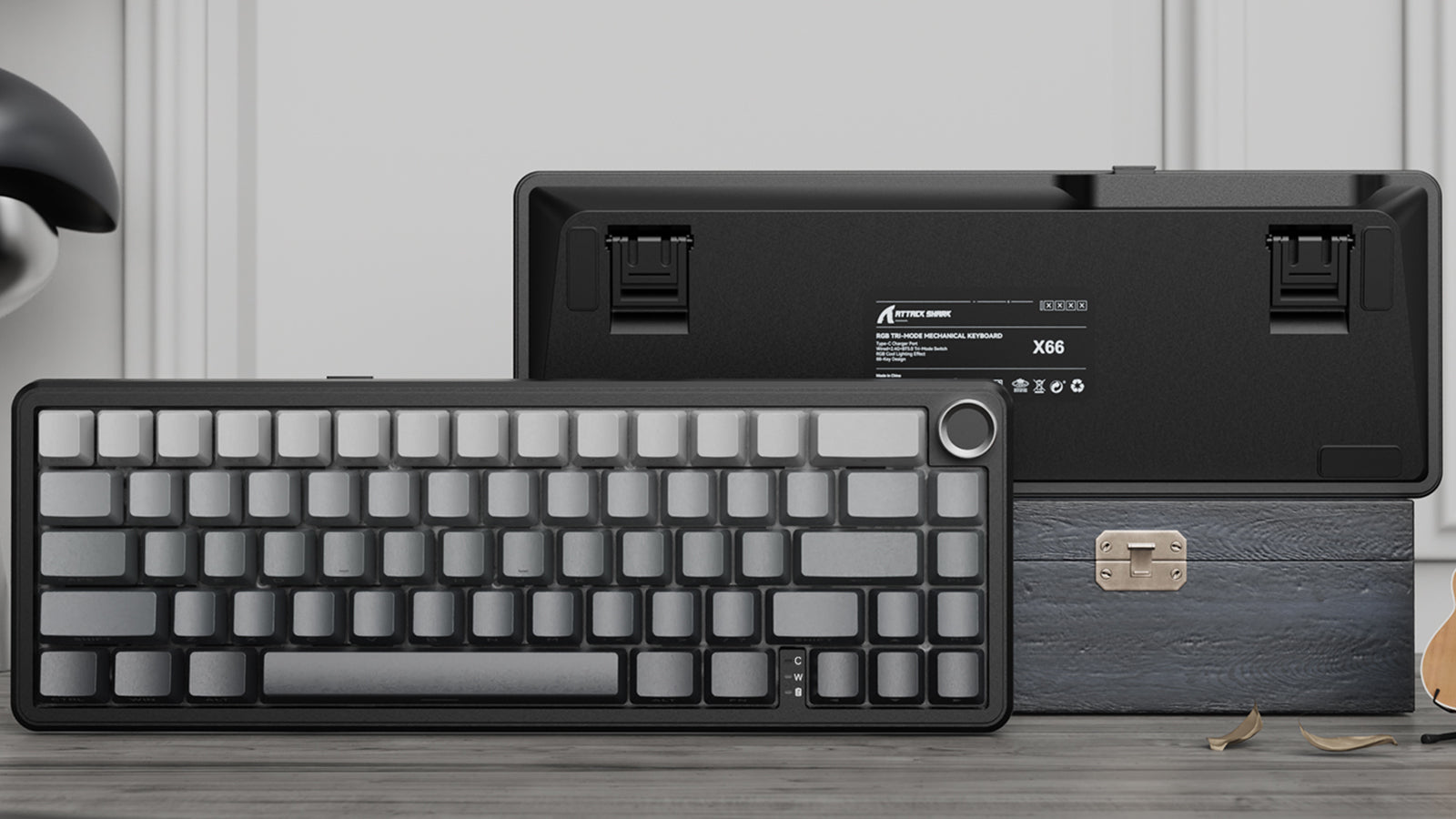
Front and back view of a grey mechanical keyboard with a knob, resting against a textured box.

Cómo vivir sin teclas de flecha dedicadas en un teclado del 60 %

Las teclas de flecha no han desaparecido, simplemente están ocultas. Domina las capas de Fn, el modo de pulsación y la reasignación de teclas QMK para navegar más rápido que nunca en un teclado del...
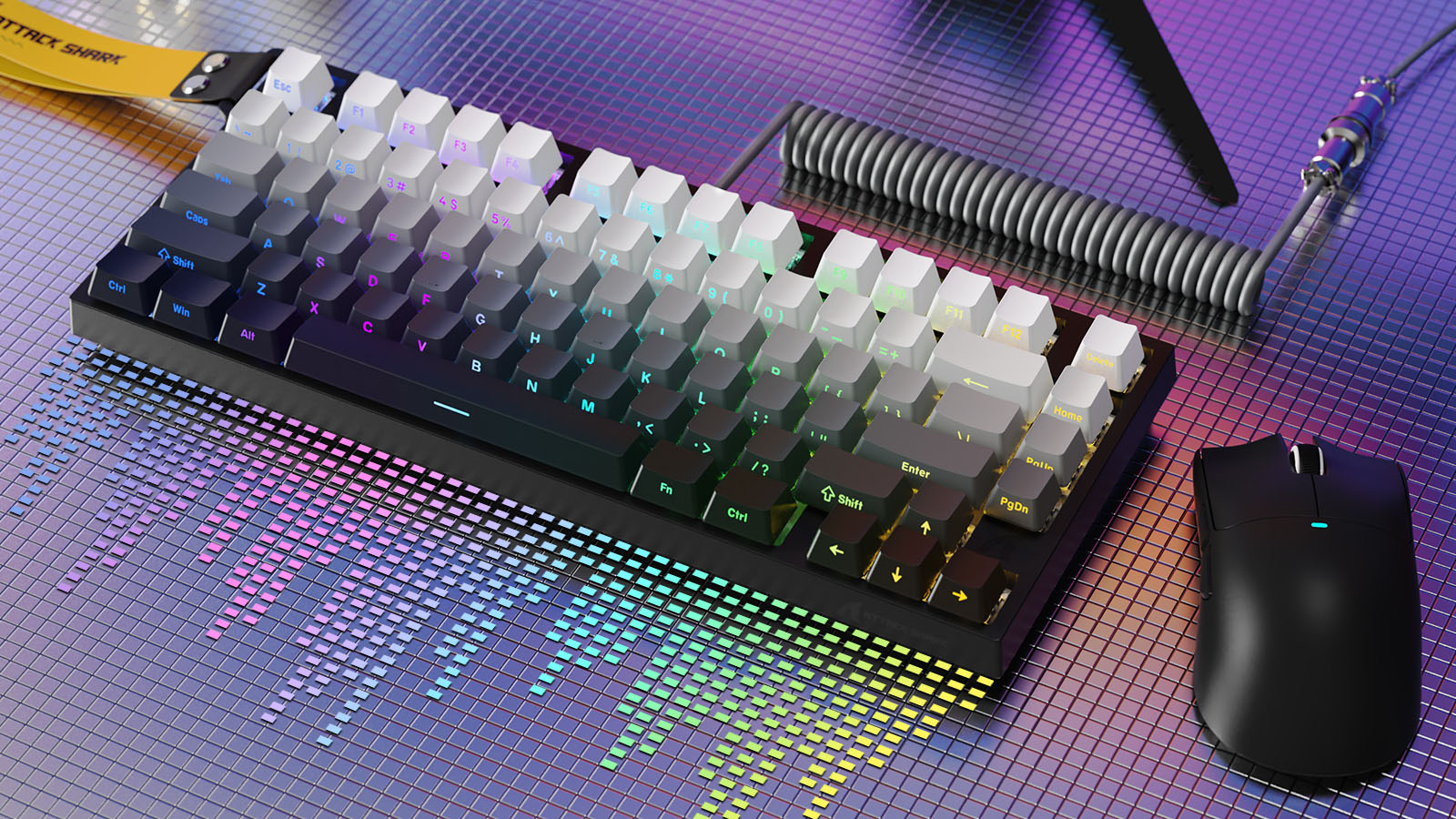
Compact mechanical keyboard with gradient keycaps, coiled cable, and black gaming mouse.

Cómo construir la sala de juegos definitiva: una guía paso a paso

Consigue la configuración perfecta para tu sala de juegos desde el primer momento: escritorio, silla, periféricos, iluminación y gestión de cables, todo en una guía completa paso a paso.