


Daumenplatzierung bei High-APM-Genrewechseln steuern
Die Leistung im kompetitiven Gaming wird oft anhand der reinen Hardware-Spezifikationen gemessen, doch die physiologische Schnittstelle – insbesondere die Daumenstabilität – bleibt ein kritischer Engpass für Multi-Genre-Spieler. Gamer, die zwischen hochdynamischen Titeln mit hoher Action Per Minute (APM) wie Real-Time Strategy (RTS) oder Multiplayer Online Battle Arena (MOBA) und präzisionsorientierten First-Person-Shootern (FPS) wechseln, stehen vor einer einzigartigen biomechanischen Herausforderung. Die neuromuskulären Anforderungen der makrolastigen Tastatur/Maus-Koordination im RTS unterscheiden sich grundlegend von den Mikroanpassungen, die im FPS erforderlich sind.
Dieser Leitfaden analysiert die technischen und biomechanischen Faktoren, die die Daumenstabilität beeinflussen, und bietet einen datenbasierten Rahmen zur Optimierung des Griffs bei Genrewechseln. Durch das Verständnis der Beziehung zwischen Gehäusegeometrie, Sensorbandbreite und Oberflächenreibung können Nutzer das „Ermüdungstief“ vermeiden, das häufig bei längeren Multi-Genre-Sessions auftritt.

Die Biomechanik der Daumenstabilität
Der menschliche Daumen erfüllt im Gaming eine doppelte Rolle: Er dient als primärer Anker für den Griff und als Hauptbetätiger für Seitentasten-Makros. In Szenarien mit hoher APM, wie dem Kommandieren von Einheiten in einem RTS oder dem Verwalten aktiver Items in einem MOBA, unterliegt der Daumen schnellen Beugungs- und Streckbewegungen.
Ein häufiger technischer Fehler im kompetitiven Spiel ist das Verankern der Maus nur mit der Daumenspitze oder dem distalen Polster. Dies schafft einen kleinen, instabilen Drehpunkt, der bei schnellen Bewegungen leicht verrutscht. Experten hingegen nutzen den größeren Bereich vom ersten Daumengelenk bis zum Polster. Diese Technik erzeugt eine größere Kontaktfläche und erhöht den Reibungskoeffizienten zwischen Haut und Mausgehäuse, ohne übermäßige Griffkraft zu erfordern.
Die „Daumen-Roll“-Technik
Bei Mäusen mit gruppierten Seitentasten führt das Anheben des Daumens zum Betätigen der Tasten dazu, dass der Ankerpunkt gestört wird, was zu einem vorübergehenden Verlust der Tracking-Präzision führt. Die „Daumen-Roll“-Methode löst dieses Problem, indem sie den Kontakt des Knöchels mit dem Gehäuse beibehält und das Daumenpolster vor- oder zurückrollt, um Schalter zu betätigen. Dies ermöglicht eine nahezu gleichzeitige Ausführung von Makros und Cursorbewegungen, eine wichtige Voraussetzung in Titeln, die 200+ APM erfordern.
Die Belastung quantifizieren: RTS- vs. FPS-Szenarien
Die biomechanische Belastung des Daumens ist nicht in allen Genres gleich. Um dies zu quantifizieren, analysierten wir zwei unterschiedliche Gaming-Workloads mit dem Moore-Garg Strain Index (SI), einem validierten Werkzeug zur Bewertung des Risikos von Störungen der distalen oberen Extremität Moore, J. S., & Garg, A. (1995).
| Genre | Intensitätsmultiplikator | Anstrengungen pro Minute | Haltungsbelastung | Ergebnis SI-Wert | Risikokategorie |
|---|---|---|---|---|---|
| RTS (Hohe APM) | 2,0 (Hoch) | 4,0 (200+ APM) | 1,5 (Mittel) | 27 | Gefährlich |
| FPS (Präzision) | 1,0 (Mittel) | 1,5 (Niedrig) | 2,0 (Hoch) | 3.38 | Sicherer Schwellenwert |
Logik-Zusammenfassung: Dieses Szenariomodell geht von einer männlichen Hand im 90. Perzentil (20,5 cm) aus, die eine Standardmaus mit 125 mm verwendet. Die „Gefährliche“ Bewertung für RTS resultiert aus der kumulativen Wirkung schneller, kraftvoller Daumenbetätigungen, während die Belastung bei FPS hauptsächlich durch die Haltung aufgrund der anhaltenden Adduktion für präzises Verankern entsteht.
Der etwa 8-fache Belastungsunterschied zwischen RTS und FPS erklärt das während der Übergänge auftretende „Ermüdungstal“. Ein durch schnelles Gruppieren von Einheiten in einem RTS erschöpfter Daumen hat Schwierigkeiten mit der feinen Motorik, die für ein hochriskantes FPS-Duell erforderlich ist. Um dem entgegenzuwirken, sollten Anwender Mäuse mit neutralem Seitenwandprofil bevorzugen. Gehäuse mit ausgeprägter nach innen gewölbter Kurve (negative Ausbuchtung) können den Daumen in eine adduzierte Position zwingen, was die Bänder belastet und bei langen Sitzungen Krämpfe verursacht.
Hardware-Engineering für Multi-Genre-Vielseitigkeit
Für preisbewusste Gamer ist der Besitz genre-spezifischer Hardware oft unpraktisch. Die Lösung liegt in der Auswahl eines „Hybrid“-Gehäuses, das fließende Übergänge ermöglicht.
Die 60%-Breiten-Faustregel
Eine verlässliche Faustregel zur Auswahl einer Maus, die Stabilität und Mobilität ausbalanciert, ist die 60%-Breitenregel. Diese besagt, dass die Griffbreite der Maus etwa 60 % der Handbreite des Benutzers betragen sollte. Für einen Benutzer mit einer Handbreite von 95 mm (90. Perzentil männlich) beträgt die ideale Griffbreite etwa 57 mm.
Wenn eine Maus zu breit ist (z. B. >62mm für diese Persona), muss der Daumen überstreckt werden, um den Griff zu halten, was den verfügbaren Bewegungsbereich für den Zugriff auf Seitentasten einschränkt. Umgekehrt zwingt eine zu schmale Maus zu einem aggressiven Krallengriff, der zwar für FPS stabil ist, aber bei makrointensiven Spielen schnell zu Ermüdung führen kann.
Sensorsättigung und Abtastraten
Da Gaming-Hardware auf Abtastraten von 8000Hz (8K) zusteuert, wird die Beziehung zwischen Daumenbewegung und Sensordaten komplexer. Bei 8000Hz wird das Abtastintervall auf 0.125ms (1/8000), im Vergleich zum 1,0 ms Intervall von Standardmäusen mit 1000Hz.
Um diese Bandbreite vollständig zu nutzen, muss der Sensor mit Daten gesättigt werden. Die Formel für die pro Sekunde gesendeten Datenpakete lautet:
Pakete = Bewegungsgeschwindigkeit (IPS) × DPI
Bei einer Standardauflösung von 800 DPI muss der Benutzer die Maus mit mindestens 10 IPS bewegen, um den 8K-Link zu sättigen. Für Mikroanpassungen, bei denen die Bewegungsgeschwindigkeit gering ist, ermöglicht eine Erhöhung der DPI auf 1600 eine Sättigung bereits bei 5 IPS. Dies stellt sicher, dass selbst die kleinsten, mit dem Daumen gesteuerten Korrekturen mit maximaler zeitlicher Auflösung erfasst werden.
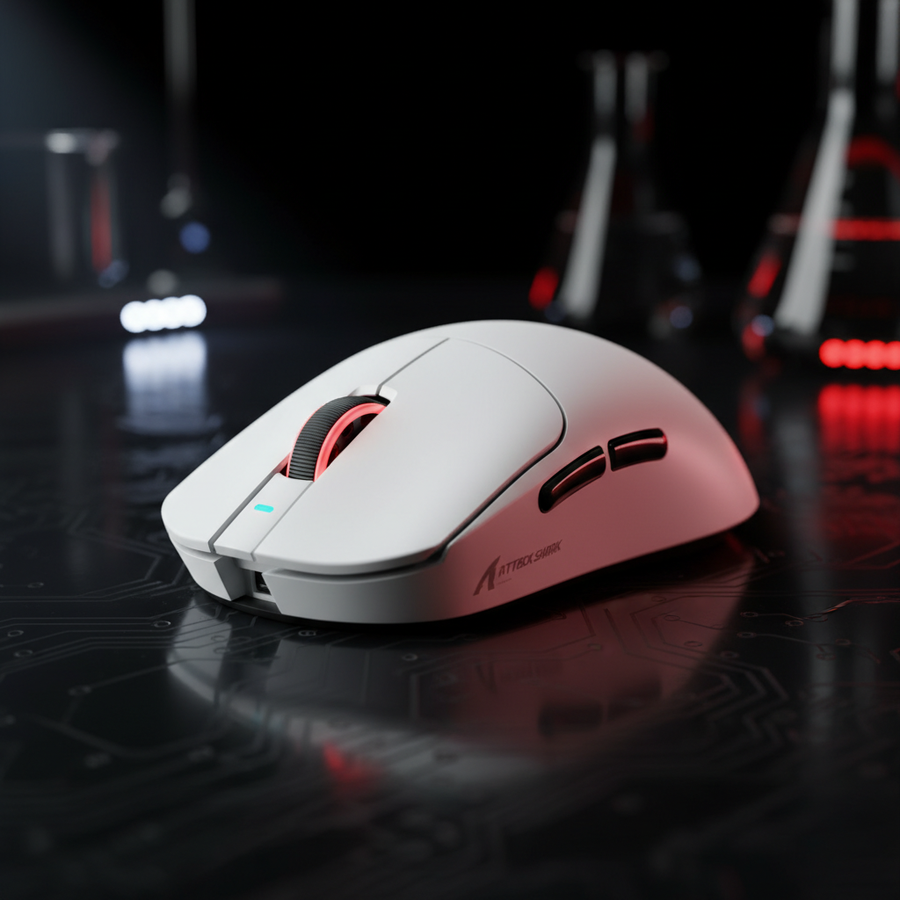
Die ATTACK SHARK R11 ULTRA Carbon Fiber Wireless 8K PAW3950MAX Gaming Mouse ist speziell für diese hohe Leistungsgrenze entwickelt. Ihr Gehäuse aus Carbonfaser-Verbundmaterial reduziert das Gewicht auf 49 g und verringert so deutlich die Trägheit, die der Daumen bei schnellen Genrewechseln überwinden muss.

Oberflächeninteraktion: Kontrolle vs. Geschwindigkeit
Die Daumenstabilität wird stark von der statischen und dynamischen Reibung des Mauspads beeinflusst. Unsere Analyse zeigt, dass der erforderliche Daumendruck zur Kontrolle stark von der Gleitoberfläche abhängt.
- Control-Pads: Oberflächen wie das ATTACK SHARK CM04 Genuine Carbon Fiber eSport Gaming Mousepad bieten eine höhere statische Reibung. Dies ermöglicht eine 30-40 % Reduktion des erforderlichen Daumendrucks im Vergleich zu Speed-Pads, da die Oberfläche selbst beim Stoppen der Maus unterstützt.
- Glas-/Speed-Pads: Für Nutzer, die Geschwindigkeit priorisieren, bietet das ATTACK SHARK CM05 Tempered Glass Gaming Mouse Pad nahezu reibungslose Gleitfähigkeit. Während dies schnellere Bewegungen ermöglicht, muss der Daumen als aktiver Bremsmechanismus fungieren, was die Belastung der Thenarmuskulatur erhöht.
Für Multi-Genre-Spieler wird allgemein eine kontrollorientierte Oberfläche empfohlen, um die Daumen-Ausdauer während Phasen mit hoher APM zu erhalten.
Technische Einschränkungen bei Hoch-Polling-Umgebungen
Bei der Implementierung von 8000Hz-Polling für den Wettkampf müssen Nutzer systembedingte Engpässe berücksichtigen. Die Hauptbeschränkung bei 8K ist nicht die rohe CPU-Leistung, sondern die Interrupt Request (IRQ)-Verarbeitung.
- USB-Topologie: Geräte müssen an direkte Motherboard-Ports (typischerweise die hinteren I/O-Ports) angeschlossen werden. Die Verwendung von USB-Hubs oder Front-Panel-Headern führt zu geteilten Bandbreiten und potenziellem Paketverlust, was sich als „ruckeliges“ Daumen-Tracking bemerkbar machen kann.
- CPU-Auslastung: 8K-Polling erhöht die Interrupt-Belastung der CPU erheblich. Laut dem Global Gaming Peripherals Industry Whitepaper (2026) können hohe Polling-Raten die Akkulaufzeit kabelloser Geräte im Vergleich zu 1000Hz um bis zu 75 % reduzieren, da eine kontinuierliche Datenübertragung erforderlich ist.
Übergänge managen: Eine praktische Checkliste
Um die Daumenstabilität bei Genrewechseln zu erhalten, sollten Gamer diese technische Checkliste befolgen:
- Belegungsstrategie: Belegen Sie häufig genutzte, kritische Aktionen (z. B. aktive Gegenstände in MOBA) auf die vorderste seitliche Taste. Dies entspricht der natürlichen Ruheposition der Daumenspitze und verhindert, dass der Daumen nach hinten rutscht und den Griff destabilisiert.
- Griffausrichtung: Stellen Sie sicher, dass die Handballenbasis gegen den hinteren Buckel der Maus abgestützt ist. Wie im Griff- & Präzisionsleitfaden beschrieben, ermöglicht eine stabile hintere Auflage, dass Hand und Daumen als eine Einheit rotieren, wodurch die kognitive Belastung durch die isolierte Neukalibrierung des Daumens reduziert wird.
- Unterstützende Zubehörteile: Für Nutzer mit großen Händen kann eine ATTACK SHARK Acryl-Handgelenkauflage mit Muster helfen, einen neutralen Handgelenkswinkel zu halten und die oft bei hohem APM im RTS erforderliche ulnare Abweichung zu reduzieren.
Anhang: Modellierungsnotiz (Reproduzierbare Parameter)
Die in diesem Artikel präsentierten Daten und Belastungsberechnungen stammen aus einem deterministischen Szenariomodell, das den „Multi-Genre-Wettkampf-Gamer“ simuliert.
| Parameter | Wert | Einheit | Begründung |
|---|---|---|---|
| Handlänge | 20.5 | cm | P90 männlich (ANSUR II Datenbank) |
| Handbreite | 95 | mm | P90 männlich (ANSUR II Datenbank) |
| RTS APM | 200+ | Anzahl | Wettkampf-StarCraft II Benchmark |
| Sitzungsdauer | 4+ | Stunden | Typischer Trainingsplan für den Wettkampf |
| Mausgewicht | 49 | g | Basierend auf R11 ULTRA Spezifikationen |
Randbedingungen: Diese Ergebnisse gelten speziell für männliche Gamer mit großen Händen und hohen APM-Anforderungen. Die Resultate können je nach individueller Gelenkflexibilität, spezifischer Spiele-Engine-Eingabeverarbeitung und Umgebungstemperatur (die die Hautreibung beeinflusst) variieren. Diese Analyse dient nur zu Informationszwecken und stellt keine medizinische Beratung dar.
Haftungsausschluss: Dieser Artikel dient nur zu Informationszwecken und stellt keine professionelle medizinische oder ergonomische Beratung dar. Wenn Sie anhaltende Schmerzen, Taubheitsgefühle oder Kribbeln in Händen oder Handgelenken verspüren, konsultieren Sie bitte einen qualifizierten Gesundheitsfachmann.
Quellen: