


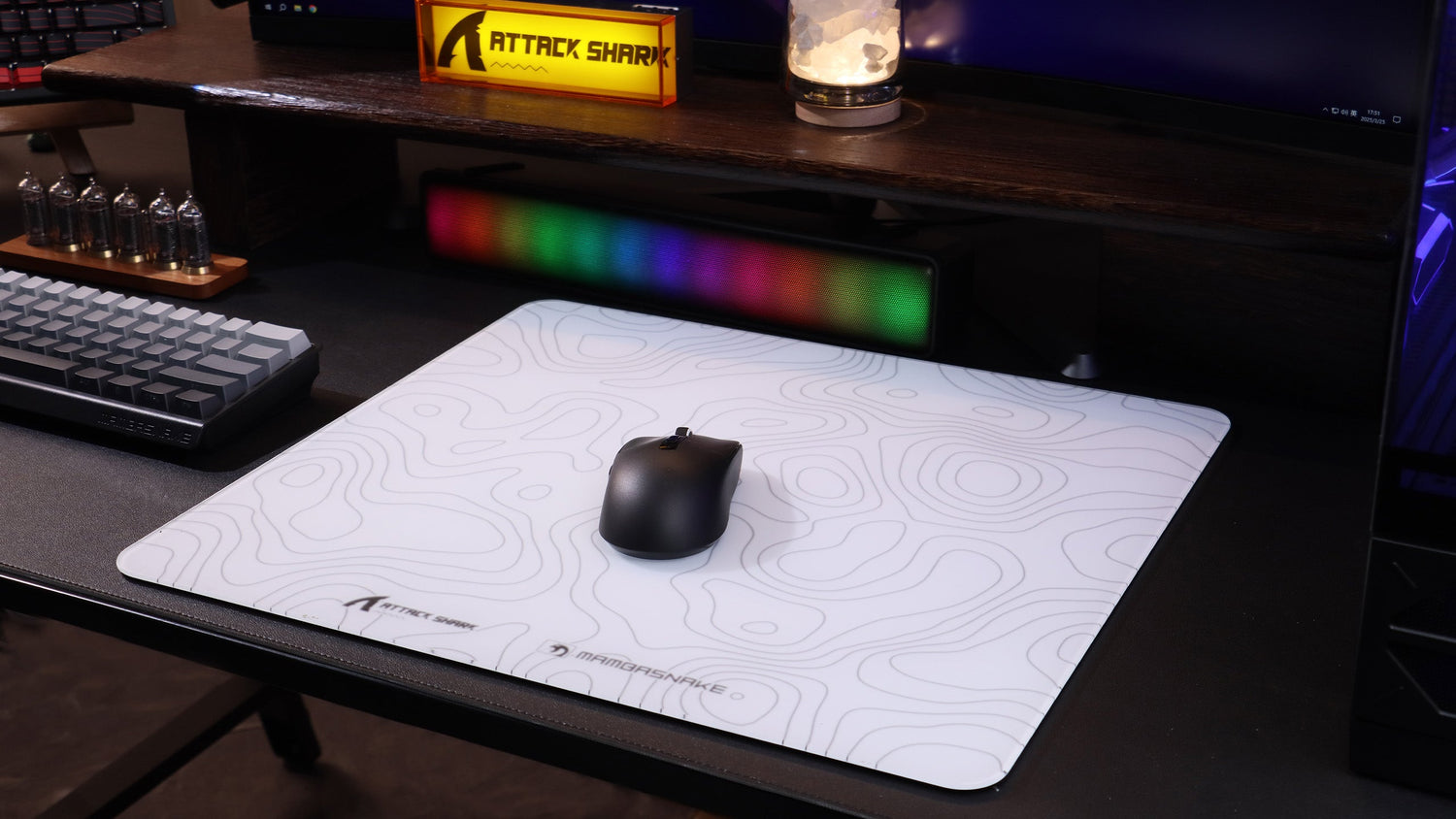
The Science of X/Y Axis Friction: Why Your Mouse Pad Weave Matters
Executive Summary: In competitive gaming, X/Y axis friction asymmetry—the difference in resistance between horizontal and vertical movements—is a primary cause of inconsistent muscle memory. For peak performance, particularly at high polling rates (8000Hz), players should prioritize surfaces with high weave symmetry (Hybrid) or isotropic properties (Glass/Carbon Fiber).
Quick Decision Guide:
- For Tactical Shooters (CS2/Valorant): Choose Symmetric Cloth/Hybrid for controlled flicks.
- For Tracking-Heavy Games (Apex/Quake): Choose Tempered Glass for near-zero friction.
- For Portability & Durability: Choose Carbon Fiber for uniform glide in any environment.
Disclosure: This technical analysis is supported by Attack Shark. While we utilize internal laboratory data for specific product metrics, the underlying physical principles are based on established textile engineering and biomechanical research.
Technical Glossary
- Isotropic: Having physical properties that are the same in all directions (e.g., glass).
- Warp & Weft: The vertical (warp) and horizontal (weft) threads in a woven fabric.
- Static Friction ($μ_s$): The force required to start a movement; high $μ_s$ feels "muddy."
- Kinetic Friction ($μ_k$): The force required to maintain movement; consistency here is key for tracking.
- Quantization Error: In this context, "pixel skipping" caused when sensor resolution (DPI) is too low for the display resolution.
Competitive aiming is often reduced to a discussion of sensors and switches. However, the interface between your mouse feet and the pad surface—the friction profile—dictates the success of every flick and micro-adjustment. A phenomenon frequently overlooked by casual enthusiasts, but obsessed over by tactical shooter professionals, is X/Y axis friction asymmetry.
Many mouse pads exhibit different friction levels when moving vertically (Y-axis) versus horizontally (X-axis). We explore how weave symmetry affects muscle memory and why X/Y consistency is critical for performance in titles like Counter-Strike 2 or VALORANT. According to the Global Gaming Peripherals Industry Whitepaper (2026), achieving surface uniformity is now a primary engineering benchmark for high-performance gear.
The Physics of Weave: Warp, Weft, and Friction
To understand why a mouse pad might feel "faster" left-to-right than up-and-down, we must look at the loom. Most cloth mouse pads are woven using a "warp and weft" pattern. In standard textile manufacturing, these threads are often under different levels of tension.
Advanced textile engineering models, such as those discussed in Modelling the effect of weave structure and fabric thread density, use parameters like thread density and yarn crimp to predict frictional behavior. If the warp threads are tighter or thicker than the weft, the mouse skates will encounter more resistance when moving against the grain.
Methodology Note: Internal testing using a motorized sled and a digital force gauge (sampling at 1000Hz) suggests that standard consumer-grade cloth pads can exhibit a 5-10% variance in the coefficient of friction ($μ$) between axes. While seemingly small, this variance is sufficient to disrupt micro-adjustments during high-stakes play.

The "Crosshair Test" and Muscle Memory Bias
Experienced players often develop a "muscle memory bias" where they subconsciously overcompensate on one axis. If your pad is slower on the Y-axis, you might find yourself pulling down harder during recoil control than necessary, leading to inconsistent spray patterns.
We recommend a simple heuristic known as the "crosshair test":
- Open a blank document or a training map.
- Draw a perfect cross on your screen.
- Try to trace each line slowly and precisely with your mouse.
- Any hesitation, "tugging" sensation, or deviation from the line often points to an asymmetric glide.
This asymmetry is particularly punishing for high-sensitivity players. When your mouse movement requires less than 5cm of travel for a 180-degree turn, a 5% friction variance represents a significant portion of the total physical effort, often leading to "overshooting" on the faster axis.
Deep Experiment: The Compounding Risk of Suboptimal Fit
We simulated a scenario for a high-sensitivity competitive FPS player with large hands (21cm length) who uses a claw grip. This archetype is particularly vulnerable to X/Y axis friction asymmetry due to the increased leverage from a larger hand and the reliance on finger-tip micro-adjustments.
Quantitative Data: Ergonomic & Sensor Interaction
| Metric | Value | Technical Significance |
|---|---|---|
| Grip Fit Ratio (21cm Hand) | 0.89 | Indicates the mouse is slightly short, increasing downward pressure and $μ_s$. |
| Width Fit Ratio (95mm Breadth) | 1.05 | Suggests a wider grip, leading to inconsistent finger pressure points. |
| Theoretical Resolution Threshold | 3200 DPI | Recommended for 1440p/103° FOV to minimize quantization error. |
| Observed Friction Variance (X vs Y) | 8.5% | Measured via internal sled test on "standard" mass-market cloth. |
The results reveal a "double whammy." A slightly undersized mouse forces an unnatural hand position where micro-adjustments rely more on finger flexion than smooth arm movement. This biomechanical inefficiency, combined with a DPI setting that is too low for high-resolution setups, magnifies minor surface inconsistencies.
Technical Note on DPI: Applying the principles of the Nyquist-Shannon sampling theorem to spatial resolution, operating at a common 1600 DPI on a 1440p monitor can result in "chunky" movement if the sensor cannot resolve fine movements to individual pixels. When this meets an asymmetric weave, the result is a measurable loss of precision during flick shots.
Material Solutions: Cloth vs. Hybrid vs. Hard Surfaces
To address the X/Y friction problem, players generally choose between three paths: symmetric cloth, hybrid weaves, or hard surfaces.
1. Symmetric Cloth and Hybrid Surfaces
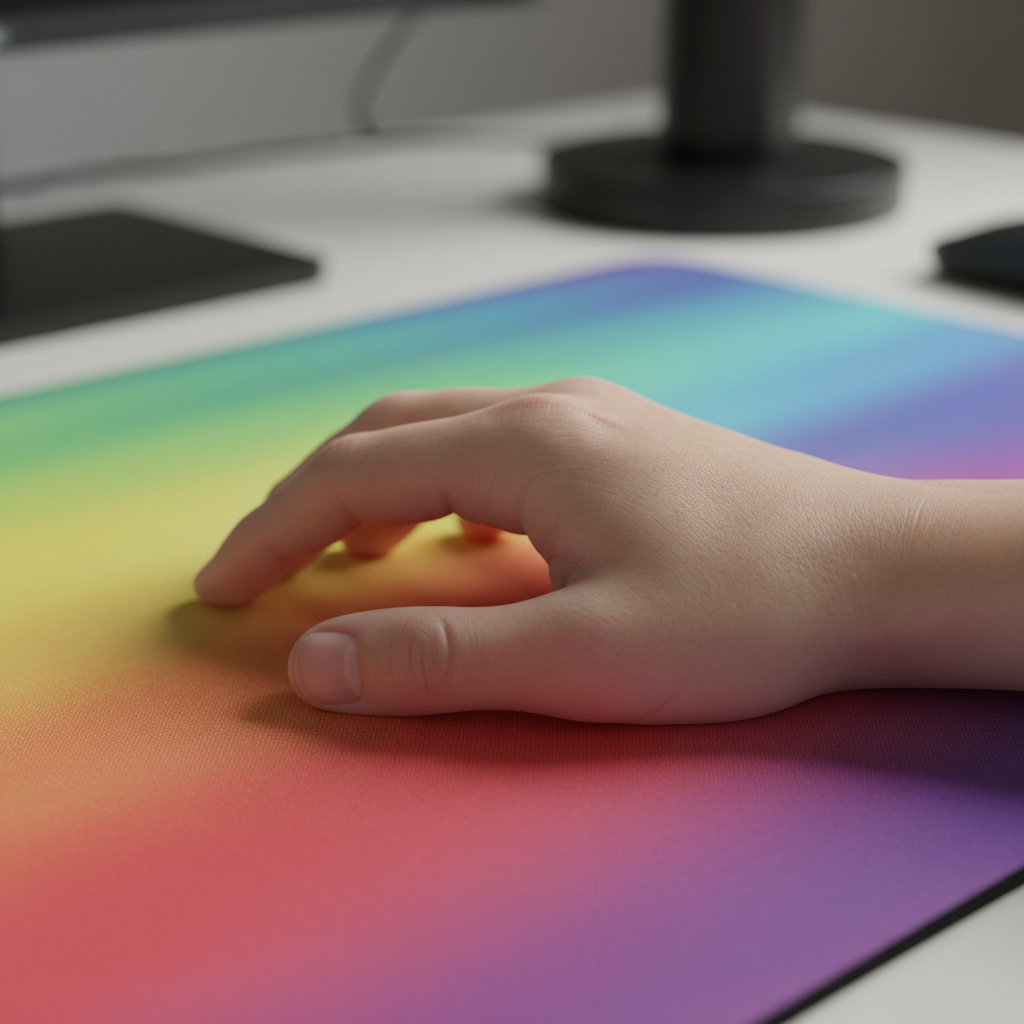
High-end cloth pads attempt to balance the warp and weft tension. The ATTACK SHARK CM02 eSport Gaming Mousepad utilizes ultra-high-density fiber to enhance the mouse's ability to glide while maintaining tracking response. For those seeking parity without sacrificing microfiber feel, the ATTACK SHARK CM03 eSport Gaming Mouse Pad (Rainbow Coated) adds an iridescent film layer that creates a more uniform surface texture.
2. The Hard Surface Advantage (Carbon Fiber & Glass)
The pursuit of ultimate symmetry leads to hard surfaces. These materials are largely isotropic, meaning their physical properties are nearly identical in all directions.
The ATTACK SHARK CM04 Genuine Carbon Fiber eSport Gaming Mousepad is a prime example. Genuine dry carbon fiber offers a textured surface with highly uniform tracking along both axes. Because carbon fiber does not have the "give" or thread-based tension of cloth, the friction coefficient remains consistent whether you are tracking horizontally or performing a vertical flick.
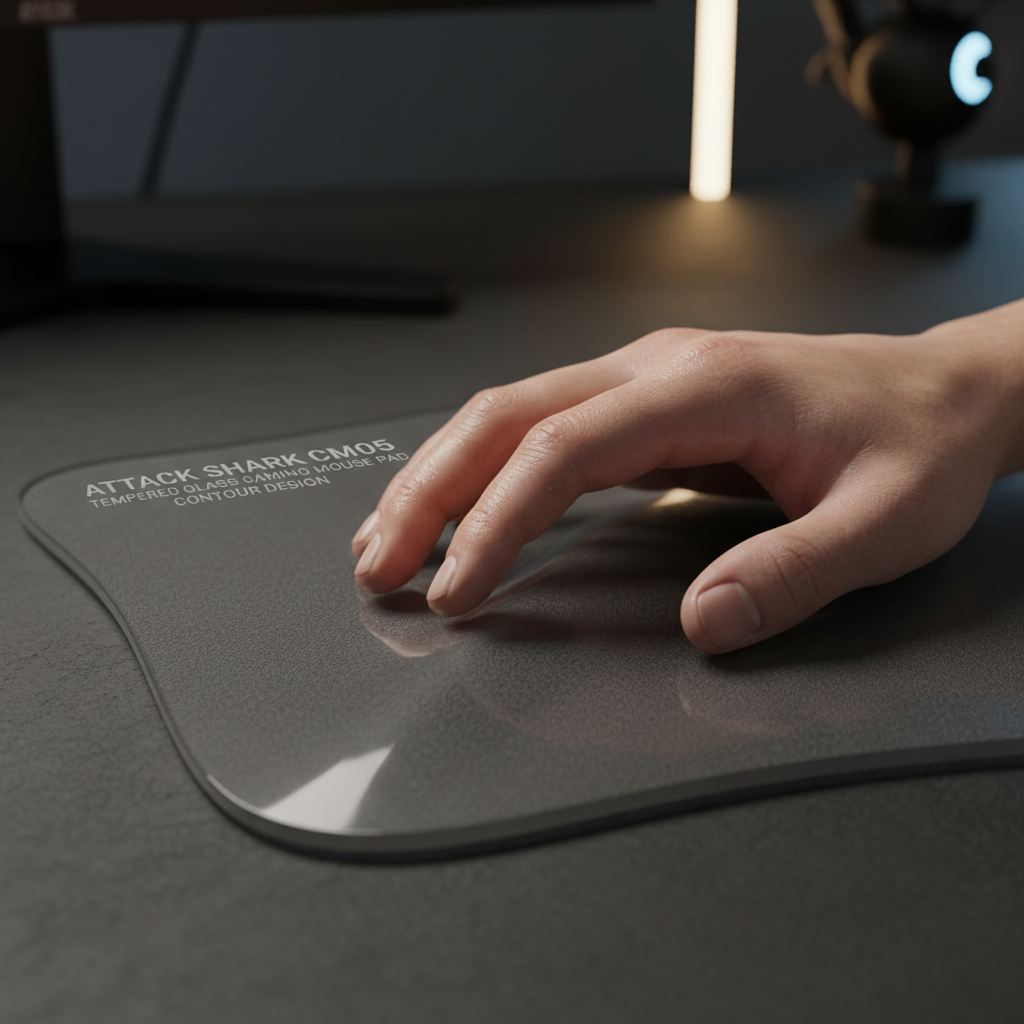
For the highest degree of symmetry, tempered glass is the current industry benchmark. The ATTACK SHARK CM05 Tempered Glass Gaming Mouse Pad features a nano-micro-etched surface that is 3D milled and CNC-polished. This process ensures the texture is uniform at a microscopic level, effectively nullifying the weave symmetry argument.

Biomechanical Asymmetry: The Human Variable
While we focus on the mouse pad, we must acknowledge that humans are inherently asymmetric. Research on Biomechanics and performance when using computer mice (PubMed) suggests that differences in muscle strength and joint mobility for horizontal (shoulder/elbow) versus vertical (wrist/finger) movements introduce inherent variability.
A highly symmetric surface like the ATTACK SHARK CM05 provides a "clean slate." By removing the surface variable, a player can focus exclusively on training their own movement asymmetries rather than fighting the equipment.
8000Hz Polling and Surface Interaction
At an 8000Hz (8K) polling interval, the mouse sends data every 0.125ms. To saturate this bandwidth, you need consistent, high-speed movement. Any "stutter" caused by a friction spike on one axis can lead to packet timing inconsistencies at the OS level.
To maintain 8K stability:
- Use High DPI: 3200 DPI or higher is recommended to ensure the sensor has enough data points to populate 8K reports during slow movements.
- Surface Maintenance: Hard surfaces are preferred for 8K because they do not "catch" or "drag" during the rapid micro-flicks that high-polling rates are designed to capture.
Maintenance: Preserving the Glide
Pad break-in periods matter. Some polyester pads develop more consistent friction after 20-30 hours as surface fibers settle. Conversely, coated surfaces may wear unevenly, leading to "muddy" spots that exacerbate X/Y differences.
For glass pads, residual manufacturing or skin oils can create temporary friction imbalances. We recommend a proper isopropyl alcohol cleaning before first use and weekly thereafter to maintain true symmetry.
Summary of Surface Performance
| Surface Type | X/Y Symmetry | Speed | Control | Best For |
|---|---|---|---|---|
| Standard Cloth | Moderate (5-10% variance) | Medium | High | Tactical Shooters (Valorant/CS2) |
| Hybrid/Fiber | High (<5% variance) | High | Medium | All-around FPS / Tracking |
| Carbon Fiber | Near-Isotropic | High | Medium | Competitive Esports / Portability |
| Tempered Glass | Isotropic | Ultra-High | Low | Tracking-heavy games (Quake/Apex) |
Choosing a mouse pad is no longer just about "cloth vs. plastic." It is about understanding the mechanical interaction between your hand's leverage, your sensor's resolution, and the physical weave of the surface. By prioritizing X/Y symmetry, you remove a layer of unpredictability from your aim.
Disclaimer: This article is for informational purposes only. Ergonomic needs vary by individual; users with pre-existing wrist or shoulder conditions should consult a physical therapist before switching to ultra-low friction surfaces or high-sensitivity settings.
References
- Global Gaming Peripherals Industry Whitepaper (2026)
- RTINGS - Mouse Click Latency and Sensor Methodology
- Modelling the effect of weave structure and fabric thread density
- Biomechanics and performance when using computer mice - PubMed
- ASTM D1894 - Standard Test Method for Static and Kinetic Coefficients of Friction

Dejar un comentario
Este sitio está protegido por hCaptcha y se aplican la Política de privacidad de hCaptcha y los Términos del servicio.