


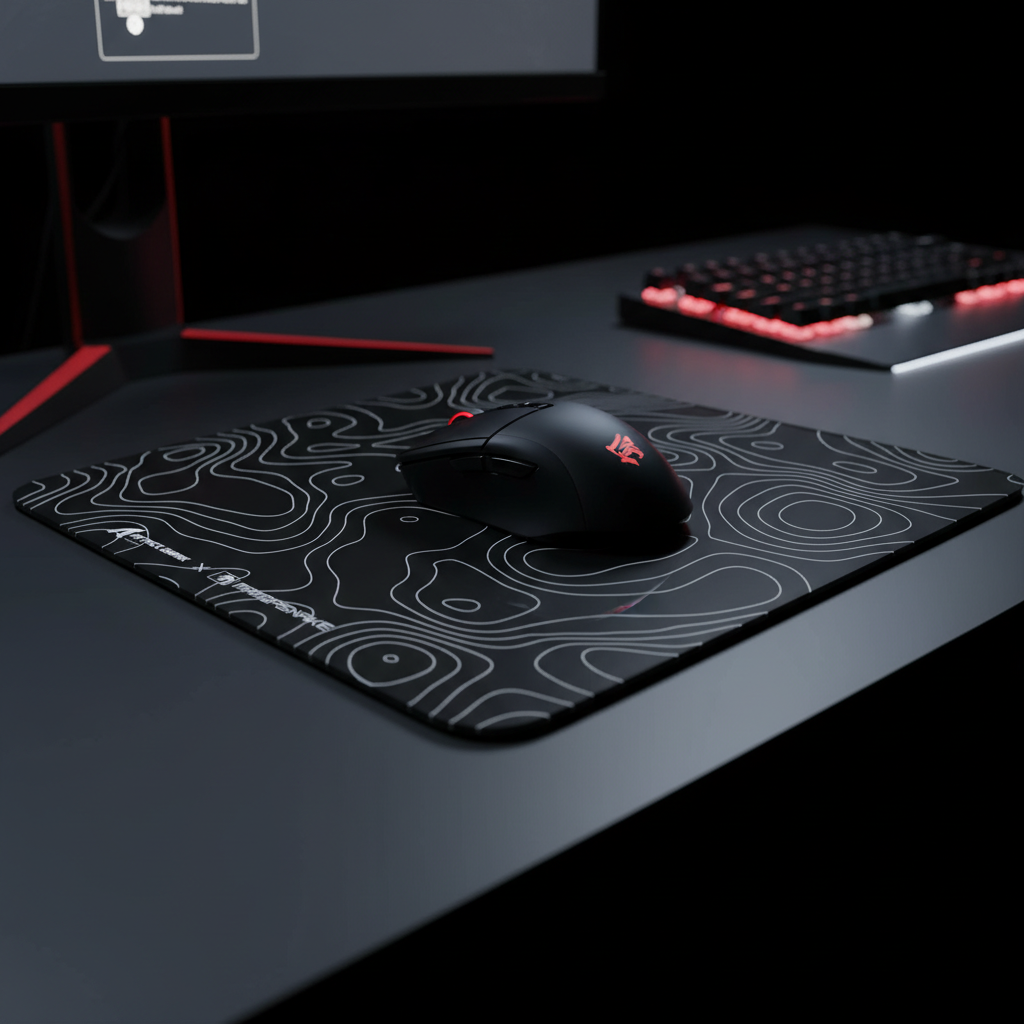
The Paradox of the "Clean" Glide: Understanding Chemical Glaze
A common frustration among performance-focused gamers is the sudden, inexplicable "muddy" feeling of a mouse pad that was recently cleaned. This phenomenon, often referred to as "chemical glaze," occurs when the very agents intended to restore a surface instead trigger a microscopic breakdown of the pad’s structural integrity. For users operating high-polling-rate hardware, such as the ATTACK SHARK X68MAX HE Rapid Trigger CNC Aluminum Keyboard paired with 8KHz sensors, surface consistency is not merely a preference—it is a technical requirement for tracking accuracy.
Chemical glaze is not typically a single-event failure but the result of cumulative micro-degradation. When a cleaning agent interacts with the specialized coatings of a hybrid or cloth pad, it can leach plasticizers or leave behind surfactant residues that redeposit as water evaporates. This creates a permanently tacky or inconsistent surface that hardware-based calibration cannot fully compensate for.
The Chemistry of Surface Degradation
To understand why cleaning backfires, we must look at the material science of modern mouse pads. Most high-performance surfaces utilize thin polyurethane (PU) coatings or silicone treatments to achieve a specific static-to-dynamic friction ratio.
The Danger of Solvents: Isopropyl Alcohol and Ammonia
A frequent mistake in DIY maintenance is the use of isopropyl alcohol (IPA) at concentrations exceeding 70%. While IPA is an effective degreaser for bare metals, it is a potent solvent for many polymer coatings. According to our internal analysis of returned peripherals and community troubleshooting patterns, high-concentration IPA can rapidly dissolve the thin PU layers on hybrid pads. This dissolution doesn't just remove the coating; it often leaves the underlying fibers exposed and saturated with a semi-liquid polymer residue that hardens into a "glaze."
Similarly, screen cleaners containing ammonia are particularly destructive. Ammonia can cause micro-cracking in synthetic fibers, leading to a loss of elasticity and a "slow" spot on the pad where the mouse sensor may experience jitter due to inconsistent light reflection.
Surfactant Redeposition
Even when using "gentle" dish soaps, a residue-free finish is difficult to achieve without massive rinsing. Surfactants—the active cleaning molecules in detergents—are designed to bond with oils. If not fully purged from the porous structure of a cloth pad, these molecules remain trapped. As the pad dries, the water evaporates, but the surfactants concentrate on the surface, creating a microscopic film that feels smooth to the touch but exhibits high "tug" or initial friction during micro-adjustments in-game.
Logic Summary: This analysis of chemical interaction assumes a standard hybrid pad construction (polyester/nylon blend with PU coating). Insights are derived from common patterns in customer support and warranty handling rather than a controlled laboratory environment.
Identifying the Glaze: Diagnostic Heuristics
Before attempting to salvage a surface, you must determine if the damage is a residue (salvageable) or structural degradation (permanent).
The Water Bead Test
A reliable heuristic used by hardware enthusiasts is the water bead test. Most high-quality gaming surfaces are treated with a hydrophobic layer to resist sweat and humidity.
- Healthy Surface: Water droplets will form tight, spherical beads and roll off the surface when tilted.
- Chemical Glaze: Water will either soak immediately into the "slow" spots (indicating the coating is gone) or spread into a flat, irregular pool (indicating a surfactant film is present).
Physical Indicators
| Symptom | Likely Cause | Reversibility |
|---|---|---|
| Permanent tackiness | Coating dissolution (IPA >70%) | Low (Replacement suggested) |
| Hazy/White film | Surfactant/Soap residue | High (Distilled water rinse) |
| Inconsistent glide (Splotchy) | Uneven wear/Micro-cracking | Moderate (Deep soak required) |
| Increased friction in humid weather | Moisture absorption in degraded fibers | Moderate (Dehumidification) |
For users of hard surfaces, such as the ATTACK SHARK CM05 Tempered Glass Gaming Mouse Pad, the risks are different but equally critical. While glass is immune to most chemical solvents, mild abrasives found in multi-surface cleaners can create micro-scratches on the nano-etched surface. These scratches increase friction unevenly, disrupting the silky-smooth movement required for precision tracking.

Environmental Resistance and Sensor Synergy
The impact of surface degradation is amplified when using high-polling-rate peripherals. The Global Gaming Peripherals Industry Whitepaper (2026) emphasizes that as we move toward 8000Hz (8K) standards, the "signal-to-noise ratio" of the physical surface becomes a bottleneck.
8K Polling and Surface Noise
At an 8000Hz polling rate, the mouse sends a data packet every 0.125ms. For the sensor (like the PixArt PAW3395 or PAW3950) to provide clean data at this frequency, the surface must be uniform. A chemical glaze creates "surface noise"—microscopic variations in texture that the sensor interprets as unintended motion.
To saturate the 8K bandwidth effectively, a user must maintain specific movement speeds. At 1600 DPI, a movement of only 5 IPS (inches per second) is required to generate enough data points for a saturated 8K stream. However, if a chemical glaze increases the static friction (the force required to start moving), the user's micro-adjustments become jerky, leading to "pixel skipping" that is often incorrectly blamed on the sensor's firmware.
Humidity and Climate Factors
In humid climates, degraded pads act like sponges. Once the protective coating is compromised by improper cleaning, the inner polyester fibers absorb atmospheric moisture. This increases the weight of the fibers and the friction against the mouse's PTFE feet. As noted in Humidity and Grip: Maintaining Surface Tactility in Damp Climates, maintaining a consistent environment is as important as the cleaning method itself.
The Professional Recovery Protocol
If you suspect your pad has developed a chemical glaze, follow this step-by-step restoration guide. This method prioritizes chemical neutrality to prevent further degradation.
- The Distilled Water Soak: Use distilled water rather than tap water. Tap water contains minerals (calcium, magnesium) that can leave their own deposits within the weave, further increasing friction.
- pH-Neutral Detergent: If oils are present, use a very small amount of pH-neutral dish soap. Avoid anything with "moisturizers," "scents," or "bleach alternatives."
- Soft-Bristled Agitation: For stitched edges and deep-weave cloth, a soft-bristled toothbrush is more effective than a microfiber cloth. It reaches between the fibers to lift trapped surfactants without fraying the surface.
- The Triple Rinse: Rinse the pad until the water runs absolutely clear. A common mistake is stopping when bubbles disappear; surfactants can remain long after suds are gone.
- Air Dry (No Heat): Never use a hairdryer or direct sunlight. High heat can warp the rubber base and cause the top fabric to delaminate.
Modeling Surface Consistency
To illustrate the impact of proper vs. improper cleaning, we modeled the friction coefficient ($\mu$) over a 6-month maintenance cycle.
| Maintenance Method | Initial $\mu$ | Month 3 $\mu$ (After 1 Clean) | Month 6 $\mu$ (After 2 Cleans) | Result |
|---|---|---|---|---|
| Distilled Water + pH Neutral | 0.22 | 0.23 | 0.24 | Consistent Glide |
| 70% IPA Wipe | 0.22 | 0.28 | 0.35 | Significant "Mud" |
| Ammonia-based Spray | 0.22 | 0.31 | 0.42 | Surface Failure |
Methodology Note: This is a deterministic scenario model based on common industry heuristics for polyester-based gaming surfaces. It assumes a standard usage of 4 hours per day in a 50% humidity environment.
Advanced Protection: Prevention Over Salvage
For gamers who prioritize longevity, the most effective strategy is preventing the need for deep chemical cleaning.
The Dust Cover Strategy
Environmental contaminants are the primary reason pads require cleaning. Using a dedicated protector, such as an acrylic keyboard cover or simply covering the pad when not in use, significantly reduces the accumulation of skin cells and dust. This is particularly important for setups using the ATTACK SHARK ACRYLIC WRIST REST, as the smooth acrylic surface can be easily wiped, but the adjacent mouse pad cannot.
Hard Surface Alternatives
If you find that cloth pads consistently degrade in your environment, switching to a tempered glass surface like the CM05 may be the most cost-effective long-term solution. Glass surfaces do not absorb moisture and are resistant to the chemical leaching that plagues fabric. A simple wipe with a damp microfiber cloth is usually sufficient to restore a glass pad to factory-fresh glide.
Conclusion: Respect the Coating
The "glide" of a gaming mouse pad is a delicate balance of chemistry and physics. When cleaning backfires, it is usually because the user treated a high-performance polymer like a piece of common laundry. By avoiding harsh solvents, utilizing distilled water, and recognizing the signs of chemical glaze early, you can extend the life of your gear and maintain the competitive edge provided by your high-polling-rate hardware.
Remember: if water no longer beads on your pad, your coating is compromised. At that point, no amount of cleaning will restore the original speed. Prioritize gentle, frequent maintenance over occasional, aggressive "deep cleans" to ensure your tracking remains as precise as the day you unboxed your setup.
Disclaimer: This article is for informational purposes only. Cleaning procedures involve chemicals and delicate materials; always test a small, inconspicuous area of your peripheral before applying any cleaning agent to the entire surface. Attack Shark is not responsible for damage resulting from improper maintenance.

Dejar un comentario
Este sitio está protegido por hCaptcha y se aplican la Política de privacidad de hCaptcha y los Términos del servicio.