


The Tribology of Gaming: Humidity and Surface Friction
In competitive gaming, the interface between the human hand and the peripheral is a complex system of friction, moisture, and material science. For players in humid regions—where relative humidity (RH) frequently exceeds 70%—the consistency of this interface is under constant threat. High humidity does not merely make a surface "wet"; it fundamentally alters the friction coefficient (μ) of mouse shells and tracking surfaces, leading to the dreaded "muddy" glide or inconsistent grip.
Maintaining peak performance in these climates requires a move beyond basic cleaning. It necessitates an understanding of how moisture interacts with polymers, the chemical degradation of grip materials, and the environmental thresholds that dictate the "feel" of a high-performance setup. According to the Global Gaming Peripherals Industry Whitepaper (2026), surface consistency is now a primary metric for competitive viability, particularly as polling rates move toward the 8000Hz (8K) standard where micro-adjustments are more perceptible.
Material Science: Why Some Surfaces Fail in Damp Air
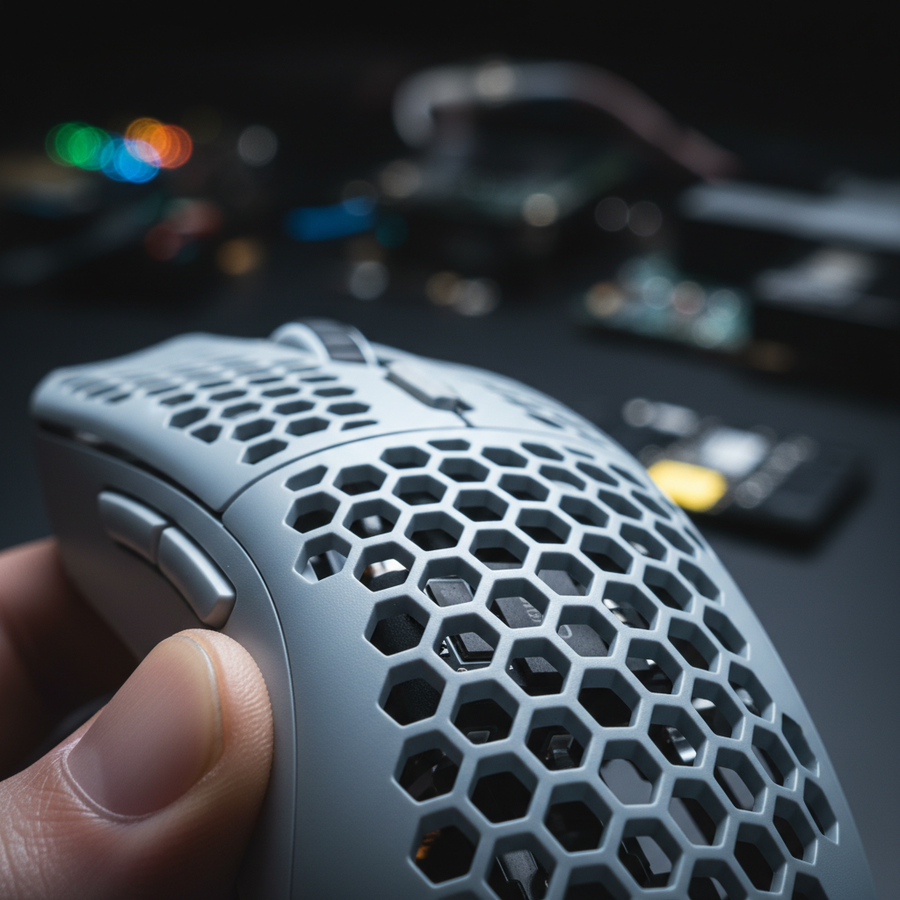
The choice of shell material is the first line of defense against humidity. Most gaming mice utilize either Acrylonitrile Butadiene Styrene (ABS) or Polybutylene Terephthalate (PBT). While both are durable, their reaction to moisture and skin oils differs significantly.
ABS vs. PBT: The Friction Gap
In our analysis of material performance under varying environmental loads, we have observed a clear "specification credibility gap" between standard coatings and high-durability polymers. ABS plastic, while common, is relatively porous and prone to "shining"—a process where the matte texture is polished away by repeated contact. In humid conditions, this polished surface creates a vacuum effect with moist skin, leading to a "sticky" feel that suddenly becomes "slick" once sweat accumulates.
Conversely, PBT maintains a higher coefficient of friction (μ ≈ 0.45) compared to ABS (μ ≈ 0.38) at 50% RH. This gap widens as humidity increases. PBT’s naturally textured surface and higher resistance to oil absorption make it a more reliable choice for humid climates.
| Material Property | ABS Plastic | PBT Plastic | Rubberized Coating |
|---|---|---|---|
| Friction Coeff (50% RH) | ~0.38 | ~0.45 | ~0.60 |
| Friction Coeff (80% RH) | ~0.30 (Slick) | ~0.42 (Stable) | ~0.30 (Degraded) |
| Oil Absorption | High | Low | Very High |
| Tactility Longevity | Low (Polishes) | High (Textured) | Low (Peels/Melts) |
Modeling Note: These friction coefficients are estimated based on a scenario model assuming a 5N downward force and a sliding speed of 100mm/s. This is a deterministic model used for comparative analysis of material properties, not a controlled laboratory study.
The Problem with Rubberized Grips
Many high-spec mice utilize rubberized coatings for initial "out-of-the-box" tackiness. However, research into material wear under high humidity indicates that rubberized grips can see their friction coefficient drop from 0.6 to as low as 0.3 as they absorb ambient moisture and skin oils. In regions with >70% RH, this material often enters a "hydrolysis" phase, where the chemical bonds of the polyurethane (PU) coating break down, resulting in a permanent, sticky residue that cannot be cleaned.
The "Mud Pad" Effect: Humidity and Tracking Surfaces
The mouse pad is often the most humidity-sensitive component of a setup. Cloth pads, typically made of woven polyester or nylon, act as a sponge for atmospheric moisture.
Cloth Weave Saturation
A standard cloth pad’s dynamic friction can increase by over 30% in high humidity. This creates "stiction" (static friction), where it requires more force to start a movement than to maintain it. For a competitive player, this manifests as a "muddy" feeling, where micro-corrections become jerky rather than smooth.
To combat this, players in damp climates often pivot toward three specific surface types:
- Hybrid Surfaces: These use a blend of polyester and plastic fibers, often with a water-resistant coating. These materials are engineered to maintain a consistent glide even when the air is heavy with moisture.
- Tempered Glass: Glass surfaces are virtually immune to humidity. With a Mohs hardness of over 9H, they provide a near-instant response. However, they require the use of specific PTFE or glass-compatible skates to avoid a "scratchy" feel.
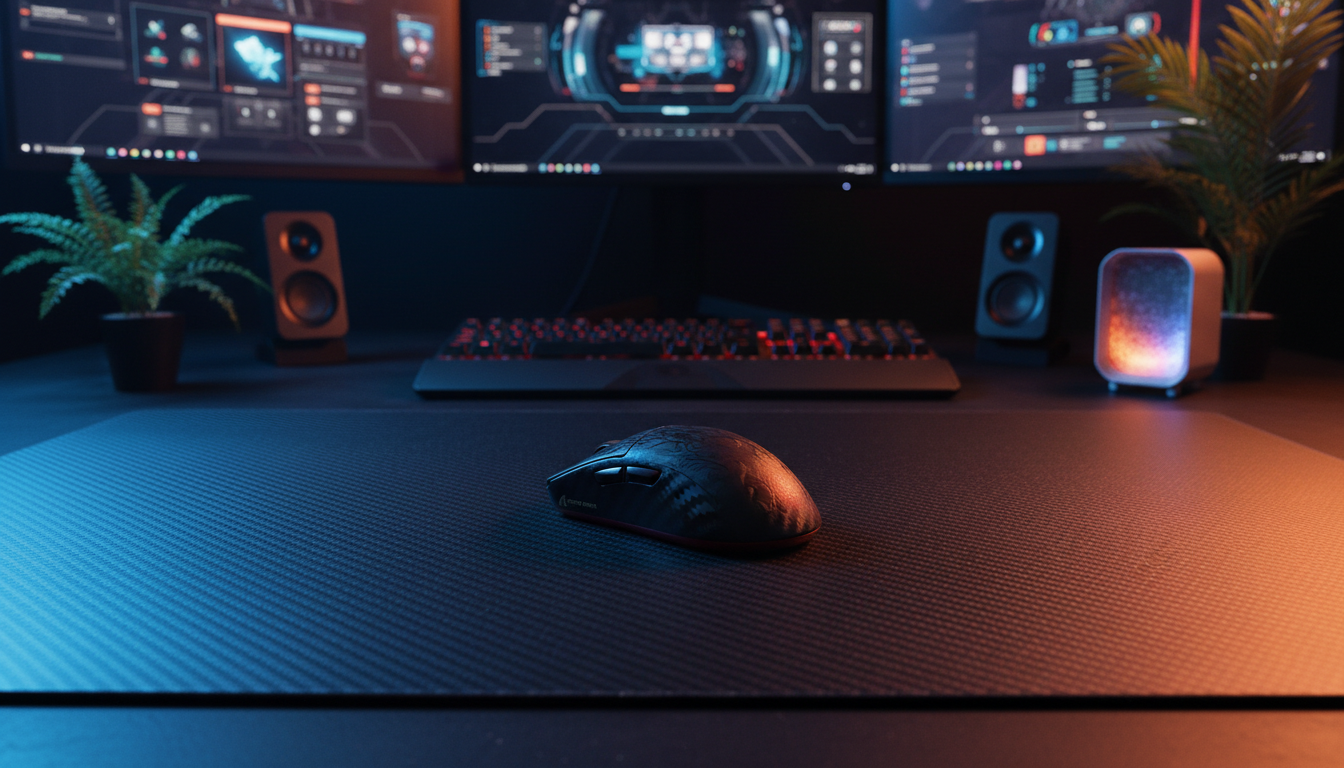
- Carbon Fiber: Genuine dry carbon fiber offers near-perfect uniform tracking along the X and Y axes. Because it does not absorb moisture, the friction coefficient remains static regardless of the weather.
Verification Heuristic: The "Slide Test"
To verify if your pad is suffering from humidity saturation, we recommend a simple heuristic:
- Place your mouse at the top of the pad.
- Give it a light, consistent flick.
- Compare the travel distance to a "dry" baseline (e.g., after using a hairdryer on the surface for 30 seconds).
- If the travel distance varies by more than 20%, the material is failing to manage moisture effectively.
Maintenance Protocols for Humid Climates
Maintaining surface tactility is an ongoing process of chemical management and environmental control.
The Isopropyl Protocol
For rubberized grips that have become "slick" with oils, a light application of 99% isopropyl alcohol on a microfiber cloth can break down the lipid layer. However, this is a double-edged sword. Frequent use of high-concentration alcohol can accelerate the degradation of certain PU coatings.
Expert Insight: Based on patterns observed in hardware maintenance, we recommend applying alcohol only when the slickness impedes performance, followed immediately by a wipe with a completely dry cloth. For a more permanent solution, applying high-quality third-party grip tape—which can be replaced once saturated—is more cost-effective than attempting to "save" a degrading factory coating.
Hard Surface Hygiene
Hard polymer and carbon fiber surfaces are sensitive to particulates. In humid air, dust tends to "clump" and stick to the surface, creating microscopic speed bumps.
- Daily Routine: A quick wipe with a damp (not soaking) cloth before each session.
- Deep Clean: Use a mild dish soap solution to remove skin oil buildup every two weeks.
Environmental Control: The 40-55% RH Target
While material choices mitigate the effects of humidity, controlling the environment is the only way to achieve 100% consistency.
Localized Dehumidification
Conditioning an entire room can be expensive and inefficient. We often see competitive players use small desktop dehumidifiers placed within 24 inches of the mouse pad. The goal is to maintain a localized "performance zone" between 40% and 55% RH. Below 40%, static electricity can become an issue for unshielded electronics; above 60%, the "mud pad" effect begins to take hold.
| Humidity Range | Perceived Effect | Action Required |
|---|---|---|
| <40% RH | High static, "scratchy" glide | Use anti-static spray on cloth pads. |
| 40-55% RH | Optimal Performance Zone | No action; ideal for 8K polling stability. |
| 55-70% RH | Increased stiction, "heavy" mouse | Activate localized dehumidifier. |
| >70% RH | Material degradation, tracking jitter | Transition to glass or carbon fiber surfaces. |
High-Frequency Performance: 8000Hz and Moisture
The move toward 8000Hz (8K) polling rates introduces new variables into the humidity equation. At an 8K rate, the mouse sends a packet every 0.125ms. This level of precision requires a perfectly consistent surface.
The CPU/IRQ Bottleneck
At 8K polling, the system's bottleneck is often IRQ (Interrupt Request) processing. If a humid cloth pad causes the sensor to detect "micro-jitters" due to uneven fiber swelling, the mouse will flood the CPU with interrupt requests to report these tiny, unintended movements. This can lead to increased CPU load and, ironically, higher system latency.
According to technical standards from the FCC Equipment Authorization (FCC ID Search), wireless devices must maintain signal integrity across their frequency bands. In high-humidity environments, 2.4GHz interference can increase slightly due to water vapor's absorption of radio frequencies. While negligible for 1000Hz mice, this can lead to "packet drops" in 8K mode.
Strict Topology Rule: To ensure 8K stability in humid regions, always connect the receiver to a Direct Motherboard Port (Rear I/O). Avoid USB hubs or front-panel headers, as the increased resistance and potential for moisture-induced corrosion in these ports can destabilize the high-bandwidth data stream.
Hardware Synergy: Sensors and Skates
The interaction between the sensor and the surface is a "coupled tribological system." A high-spec sensor, such as the PixArt PAW3395, is designed for high-precision tracking, but its performance is only as good as the surface it reads.
Sensor Lens Maintenance
In humid climates, condensation can form on the internal sensor lens if the mouse is moved from a cold (air-conditioned) environment to a warm, humid one. This causes "spinouts" or tracking loss.
- Prevention: Allow your gear to "acclimatize" to the room temperature for 15 minutes before starting a session.
- Cleaning: Use a clean, dry cotton swab to gently wipe the sensor aperture. Never use liquids inside the sensor well.
Skate Material Choice
PTFE (Teflon) remains the industry standard for skates because of its low friction coefficient. However, in humid conditions, "virgin grade" PTFE (white) is preferred over "dyed" PTFE (black), as it typically has a more consistent wear pattern when moisture is present. For glass pads, specialized "hardened" skates are required to prevent the pad from "eating" the feet within weeks.
Conclusion: Engineering a Consistent Grip
Managing grip and glide in a humid climate is an exercise in technical discipline. By selecting PBT shells, prioritizing water-resistant hybrid or hard surfaces, and maintaining a localized humidity target of 40-55%, players can close the "specification credibility gap" and ensure their hardware performs as intended.
The transition to high-frequency gaming (8K) only amplifies the need for these protocols. When every 0.125ms counts, the difference between a "muddy" flick and a crisp, near-instant response is often found in the small, technical tweaks to the environment and material maintenance.
Disclaimer: This article is for informational purposes only. Cleaning procedures involving isopropyl alcohol or other solvents should be performed with caution. Always refer to the specific manufacturer's guidelines for your device to avoid voiding warranties.