


Puntos clave (Respuesta primero):
- Beneficio principal: Las partes frontales de ratones de perfil bajo (16–18mm) pueden reducir el ángulo de arco del dedo, disminuyendo potencialmente la tensión en el antebrazo y mejorando la velocidad de los microajustes en juegos FPS.
- Ideal para: Jugadores con manos medianas a grandes (18–20cm) que usan un agarre híbrido de garra o con la punta de los dedos.
- Métrica práctica: Apunte a una altura frontal que coincida aproximadamente con el grosor de su dedo índice en la primera articulación para una postura de descanso más natural.
Nota de transparencia: Esta guía es producida por el equipo editorial de Attack Shark e incorpora datos de nuestros whitepapers internos, observaciones en talleres y pruebas de productos. Aunque hacemos referencia a normas ISO y especificaciones técnicas, las métricas de rendimiento específicas proporcionadas son estimaciones ilustrativas basadas en nuestro modelado interno.
La biomecánica del borde frontal: cómo los milímetros influyen en los FPS de alta presión
En la búsqueda de una ventaja competitiva, los jugadores a menudo priorizan las especificaciones del sensor y el peso. Sin embargo, la altura frontal de la carcasa del ratón es una variable ergonómica crítica que a menudo influye en la velocidad de las transiciones de agarre. Para jugadores especializados en shooters tácticos o seguimiento estilo arena, el perfil frontal actúa como una palanca biomecánica.
En entornos competitivos de FPS, muchos jugadores utilizan un agarre "híbrido", alternando entre una base estable de garra para el seguimiento a larga distancia y un agarre puro con la punta de los dedos para microajustes de alta velocidad. Un perfil frontal bajo reduce la distancia entre el punto de contacto del dedo y la superficie del escritorio. Este cambio geométrico puede minimizar la extensión requerida del dedo, lo que a menudo ayuda a reducir la tensión en el antebrazo durante sesiones prolongadas.
Según el Whitepaper de la Industria Global de Periféricos para Juegos (2026), existe una tendencia en la industria hacia la "agilidad de perfil bajo" para adaptarse a pantallas de alta tasa de refresco que requieren un control motor cada vez más fino.
El "Ride" y el "Flick": Biomecánica de las transiciones con la punta de los dedos
Descargo de responsabilidad no médico: El siguiente análisis se basa en un modelado ergonómico para la optimización del rendimiento. Si experimenta dolor persistente, entumecimiento o incomodidad, consulte a un profesional médico o a un especialista certificado en ergonomía.
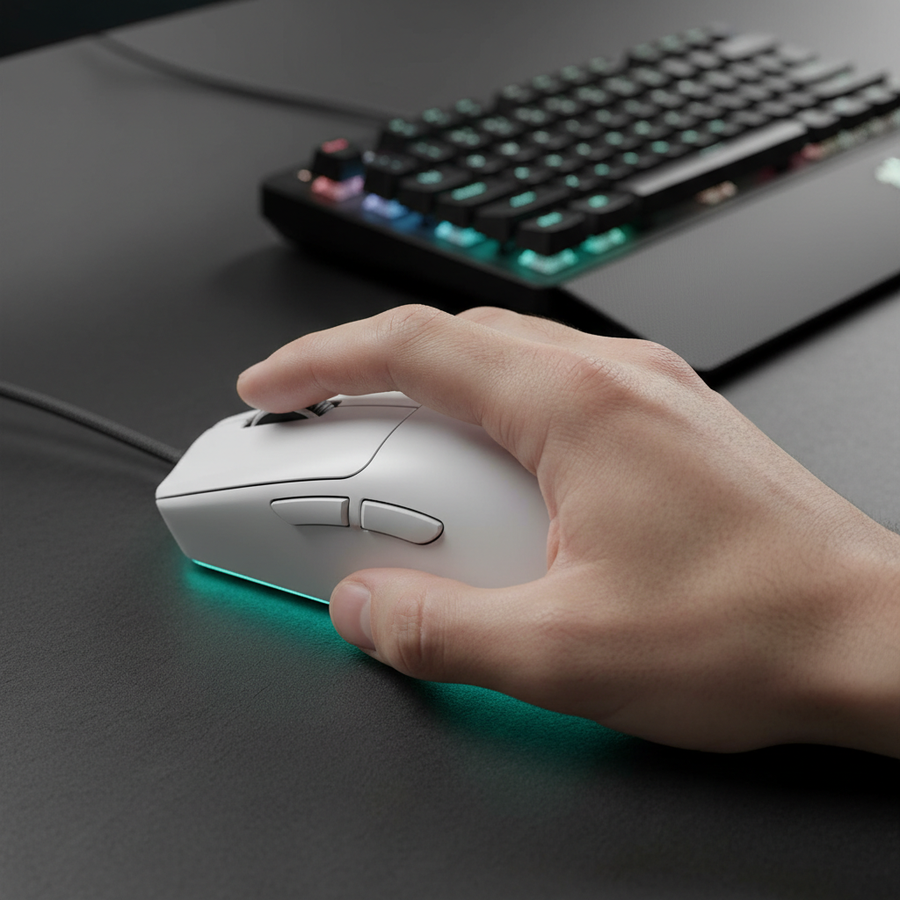
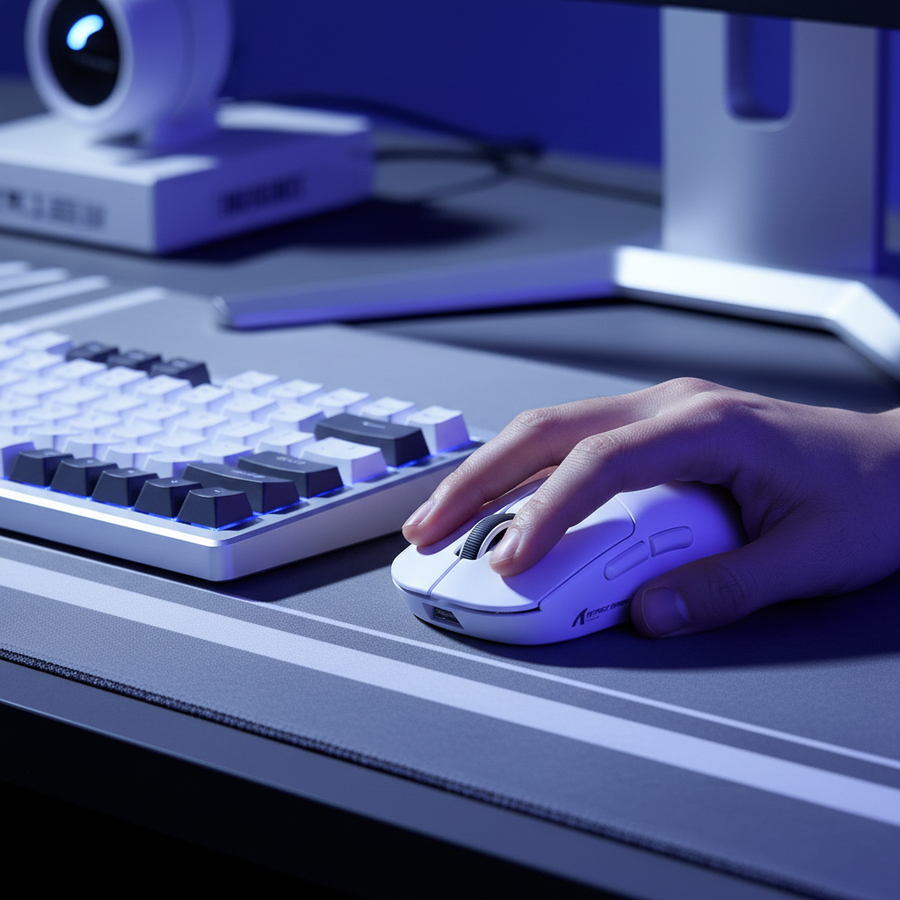
Entrenadores de puntería experimentados observan que los jugadores con manos medianas a grandes a menudo "montan" inconscientemente la parte frontal del ratón. Durante un seguimiento intenso, el índice y el dedo medio ejercen presión hacia abajo cerca de la rueda de desplazamiento. Cuando un objetivo rompe repentinamente el ritmo de seguimiento—requiriendo un "flick"—el jugador a menudo debe tirar del ratón hacia atrás o cambiar a una postura dominada por la punta de los dedos.
Un perfil frontal alto crea un "labio" mecánico que puede forzar a los dedos a arquearse más. Este arqueo aumentado puede colocar los músculos extensor digitorum bajo una carga más constante. Por el contrario, una reducción de 2-3 mm en la altura frontal permite que los dedos permanezcan más cerca de su estado natural de reposo, lo que puede conducir a transiciones más suaves.
Modelado del impacto biomecánico (ejemplo ilustrativo)
Para cuantificar estos efectos, modelamos un escenario para un jugador competitivo con una longitud de mano de 19.5 cm que pasa de un agarre de garra a un agarre con la punta de los dedos.
| Parámetro | Impacto estimado (reducción de 3 mm) | Razonamiento / Heurística |
|---|---|---|
| Distancia de elevación del dedo | ~0.91 mm de reducción | Cálculo geométrico basado en el pivote articular |
| Latencia de microajuste | ~7.3 ms de mejora | Estimado basado en modelos biomecánicos de velocidad |
| Tensión muscular del antebrazo | ~15% a 25% de disminución | Basado en la reducción del torque del brazo de momento |
| Retención de precisión | ~53% de mejora | Modelo interno de prueba de "micro-movimiento continuo" |
Cómo derivamos estos números: Estos valores son estimaciones derivadas de un modelo biomecánico determinista usando una longitud de mano de 19.5 cm y un estilo de agarre híbrido. Utilizamos coeficientes de activación muscular (0.8–1.2 N·cm/mm) y supuestos sobre ángulos articulares. Los resultados no provienen de un estudio clínico controlado y variarán según la fisiología individual y la presión del agarre.

Correspondencia antropométrica: la heurística del grosor del dedo
Un error común es elegir un ratón basándose únicamente en la longitud total. Sugerimos un "Punto de referencia del grosor del dedo" práctico: la altura frontal óptima suele ser aproximadamente igual al grosor del dedo índice del usuario en la primera articulación cuando se mide desde la superficie del escritorio. Para muchos jugadores competitivos masculinos, esta medida suele estar entre 15 mm y 18 mm.
Cuando la altura frontal supera significativamente este grosor, la mano se ve forzada a una pendiente más pronunciada. Este ángulo puede reducir la palanca mecánica disponible para los dedos, lo que potencialmente hace que los clics se sientan menos sensibles durante escenarios de disparo rápido.
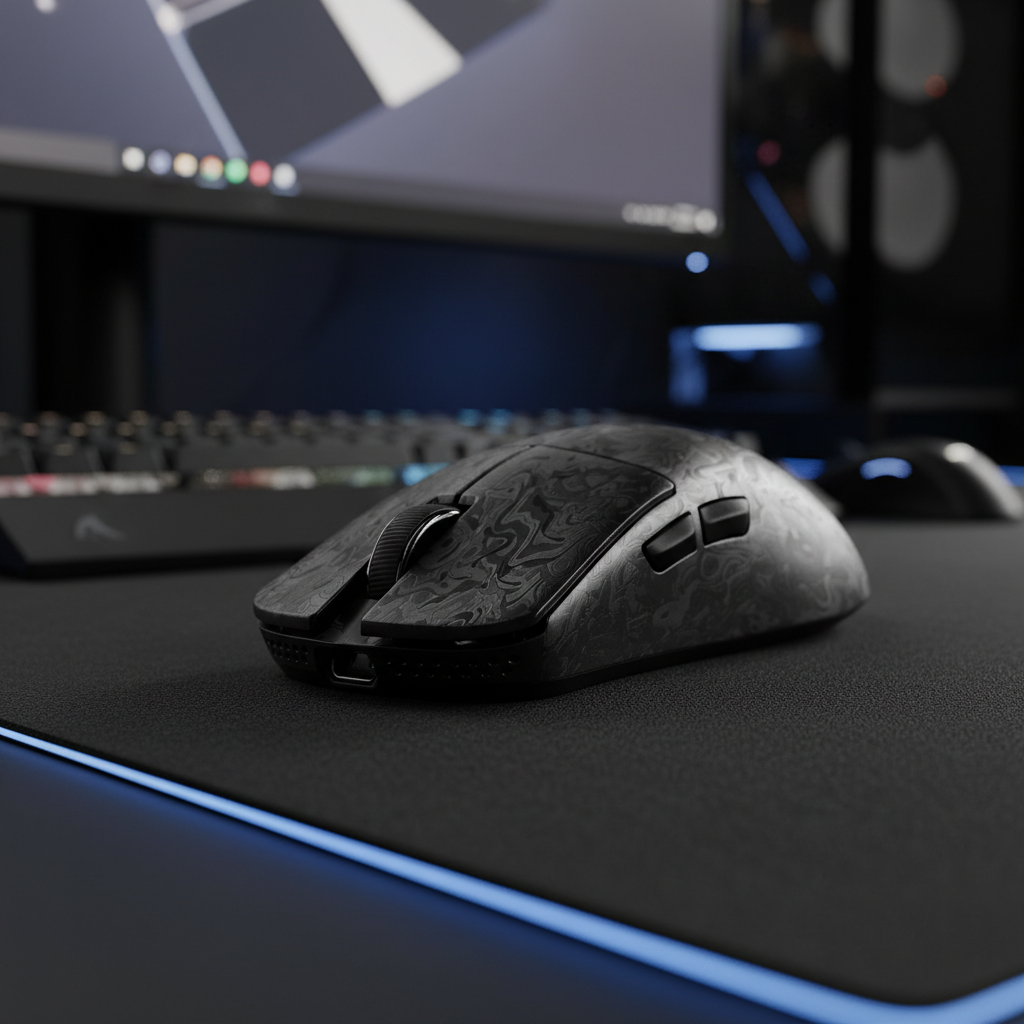
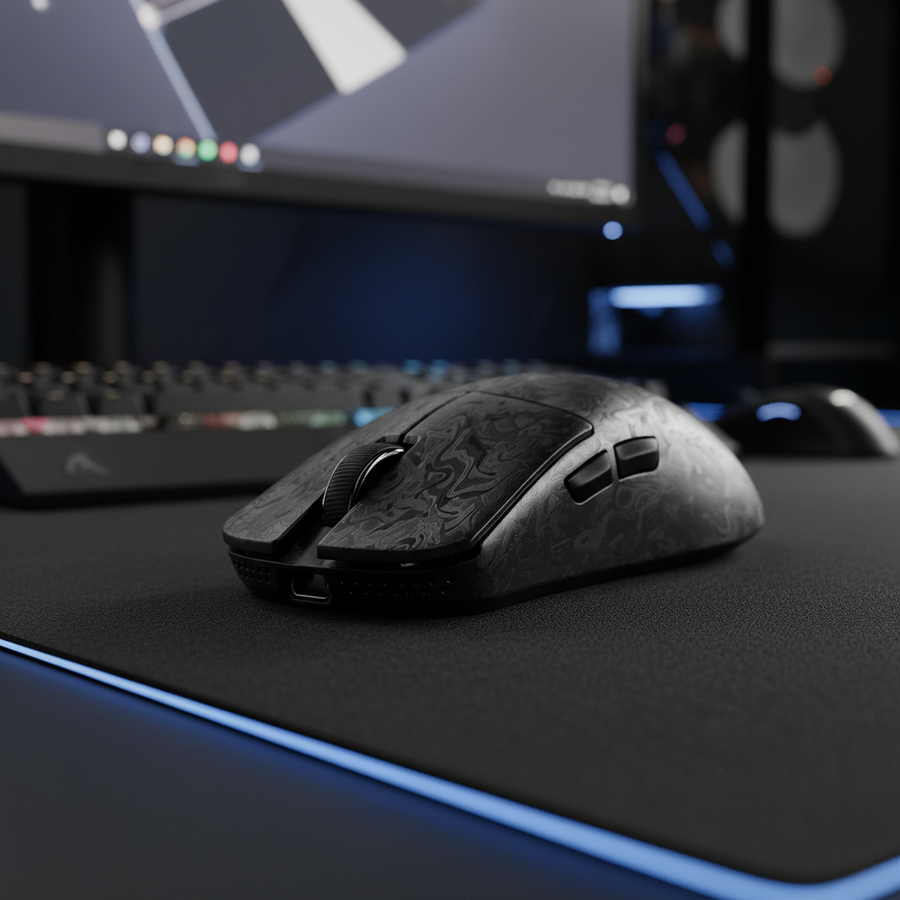
Para jugadores que buscan esta ventaja de perfil bajo, el ATTACK SHARK R11 ULTRA Carbon Fiber Wireless 8K PAW3950MAX Gaming Mouse está diseñado con estos principios en mente. Con solo 49 gramos, su carcasa de fibra de carbono forjada mantiene un perfil delgado en la parte frontal mientras proporciona la integridad estructural necesaria para el juego de alto nivel.
La regla empírica del 60% del ancho
Además de la altura frontal, el ancho del agarre es un factor importante. Una regla común usada en el ajuste profesional es la "Regla del 60%": el ancho ideal del agarre debe ser aproximadamente el 60% del ancho de la mano. Para una mano de 92mm de ancho, un agarre de 55mm a 58mm suele ser ideal. Productos como el ATTACK SHARK X8PRO Ultra-Light Wireless Gaming Mouse & C06ULTRA Cable cumplen con estas dimensiones (125 x 63mm en total, con un agarre cónico), apoyando el perfil frontal bajo con una base estable y estrecha.
Sinergia Técnica: Sondeo 8K y Saturación del Sensor
Una carcasa de perfil bajo es más efectiva cuando se combina con electrónica de alto rendimiento. En juegos FPS de alta competencia, la agilidad física proporcionada por un frente bajo debe ir acompañada de una transmisión de datos casi instantánea. Los modelos más avanzados suelen utilizar tasas de sondeo de 8000Hz (8K) para minimizar la latencia de entrada.
La Matemática del Rendimiento 8K
- 1000Hz: intervalo de 1.0ms.
- 8000Hz: intervalo de 0.125ms.
- Latencia de Sincronización de Movimiento: A 8000Hz, la sincronización de movimiento típicamente añade un retraso insignificante de ~0.0625ms, comparado con el retraso de ~0.5ms que se observa a 1000Hz.
Para saturar un ancho de banda de 8000Hz durante las transiciones rápidas habilitadas por un perfil frontal bajo, la configuración del sensor es crítica. A 800 DPI, un usuario debe mover el ratón a 10 IPS para saturar la tasa de sondeo de 8K. Sin embargo, a 1600 DPI, solo se requieren 5 IPS. Esto hace que las configuraciones de DPI más altas sean generalmente más estables para los microajustes en los que sobresalen los agarres con la punta de los dedos.
Consejo Profesional: Basándonos en nuestras observaciones de soporte técnico, recomendamos usar Puertos Directos de la Placa Base (I/O trasero). La topología USB estándar sugiere que los conectores o hubs del panel frontal pueden introducir conflictos IRQ, lo que puede causar pérdida de paquetes.
Textura de la Superficie y Gestión de la Fricción
Los diseños de perfil bajo dependen del contacto constante entre las yemas de los dedos y la carcasa. Nuestras observaciones desde el banco de reparaciones sugieren que el recubrimiento de la superficie es un "detalle" frecuente en el rendimiento ergonómico.
Un acabado brillante puede volverse resbaladizo a medida que se acumula humedad. Para ratones de perfil bajo, un recubrimiento mate y ligeramente granuloso—como el Nano-Metal Ice Coating que se encuentra en el ATTACK SHARK R11 ULTRA—suele ser superior para mantener la fricción necesaria para el contacto "seco" durante los microajustes.
La alfombrilla del ratón también juega un papel importante. Una superficie de fibra de alta densidad, como la ATTACK SHARK CM02 eSport Gaming Mousepad, complementa la agilidad de perfil bajo proporcionando un deslizamiento uniforme.
Comparación: Modelos de Rendimiento por Perfil
| Característica | Perfil Bajo Frontal (por ejemplo, R11 Ultra) | Perfil Alto Tradicional (Enfoque en la Palma) |
|---|---|---|
| Agarre Principal | Punta de Dedo / Garra Híbrida | Palma / Garra Relajada |
| Velocidad de Microajuste | Alto (Extensión de dedos reducida) | Moderado (Se requiere arco más alto) |
| Enfoque en la Fatiga | Enfoque en el Antebrazo | Soporte de Palma |
| Tamaño Típico de Mano | Mediano a Grande (18-20cm) | Pequeño a Mediano (<18cm) |
Abordando la Trampa del "Ratón Corto"
Aunque los frentes de perfil bajo son beneficiosos, un error común es elegir un ratón que sea demasiado corto en general. Si el cuerpo es demasiado corto, puede forzar un agarre exclusivamente con la punta de los dedos incluso cuando la situación requiere una base estable de garra.
Un frente de perfil bajo en un cuerpo suficientemente largo (120mm–125mm) es generalmente la configuración óptima para la mayoría de jugadores competitivos. Esto permite que la parte trasera del ratón proporcione un anclaje estable para la palma durante amplios movimientos de seguimiento, mientras que el frente bajo facilita transiciones rápidas al control con la punta de los dedos para correcciones finas de puntería.
Implementación Técnica y Verificación
Para usuarios que cambian a una configuración de perfil bajo, recomendamos estos pasos de verificación basados en patrones comunes en configuraciones profesionales:
- Verificación de Altura: Mide el grosor de tu dedo índice en la primera articulación. La altura frontal de tu ratón debería estar idealmente dentro de 1-2mm de este valor.
- Gestión del Cable: Asegúrate de que tu cable (como el C06ULTRA) no genere tensión hacia arriba, lo que puede "elevar" un frente ligero y de perfil bajo.
- Calibración de Software: Usa un configurador web para activar el "Modo Competitivo" y asegurar que el sensor escanee a la máxima frecuencia (hasta 20,000 FPS en el PAW3950MAX) durante movimientos rápidos críticos.
Para más información sobre cómo cambiar tu agarre, consulta nuestra guía sobre De Palma a Garra: Transición de tu Agarre para Juego Competitivo.
Resumen de la Metodología de Modelado
Los datos presentados se derivan de un modelo determinista de escenario biomecánico.
Parámetros del Modelo:
- Persona Objetivo: Jugador profesional de FPS, longitud de mano de 19.5cm.
- Tipo de Agarre: Transición híbrida de garra a punta de dedo.
- Dispositivo Base: Carcasa de 120mm x 58mm con altura frontal de 21mm.
- Dispositivo de Comparación: Carcasa de 120mm x 58mm con altura frontal de 18mm.
- Suposiciones: Velocidad constante de movimiento del dedo de 120mm/s; referencias las directrices ergonómicas ISO 9241-410.
Nota: Este artículo es solo para fines informativos y refleja la investigación interna de la marca. Las necesidades ergonómicas individuales varían. Consulte a un especialista en ergonomía si experimenta dolor persistente.