


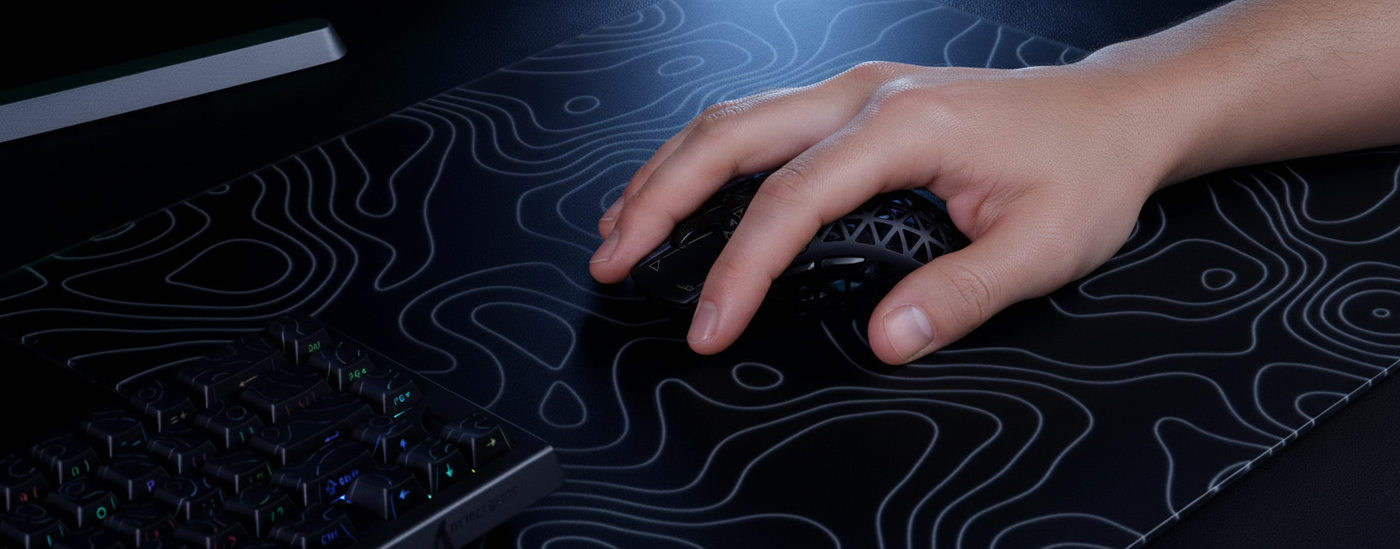
En los momentos finales de una ronda de alta tensión—un clutch 1v3 en Valorant o el círculo final en Apex Legends—incluso los jugadores competitivos más disciplinados experimentan un fenómeno conocido como "agarre de clutch". Este apretón involuntario de la mano, a menudo acompañado por un cambio en el estilo de agarre, es una respuesta fisiológica al estrés agudo. Aunque es un subproducto natural de la activación del sistema nervioso simpático de "lucha o huida", frecuentemente resulta en temblores en la puntería, microtartamudeos en el seguimiento y fatiga muscular acelerada.
Para el entusiasta de los esports orientado al valor, entender la biomecánica detrás de estos cambios es tan crítico como seleccionar el sensor adecuado. Manejar el cambio a mitad de partida requiere una combinación de alineación ergonómica, optimización técnica del hardware y regulación fisiológica consciente.
La biomecánica de las contracciones de agarre inducidas por el estrés
Cuando un jugador entra en un escenario de alta tensión, el sistema nervioso simpático del cuerpo desencadena una cascada de respuestas físicas. La investigación sobre contracciones musculares de la mano indica que estos desencadenantes suelen ser subconscientes. En el juego competitivo, esto se manifiesta como "apretón involuntario", donde la fuerza aplicada a la carcasa del ratón aumenta significativamente más allá de lo necesario para el movimiento.
Los entrenadores experimentados observan que este apretón está frecuentemente correlacionado con un patrón respiratorio específico: una inhalación rápida que se mantiene durante momentos tensos. Esta retención de la respiración aumenta la presión intratorácica, que a su vez transmite tensión a través del hombro y por el brazo, culminando en un agarre rígido y menos preciso.
La Regla del 60%: Una heurística para el manejo de la tensión
Para contrarrestar esto, los jugadores de élite suelen utilizar la "Regla del 60%". Esta es una heurística práctica que sugiere que los jugadores deben mantener una presión de agarre de aproximadamente el 60% de su máxima fuerza de apretón. Este nivel de fuerza suele ser suficiente para mantener la estabilidad sin sacrificar el control motor fino necesario para microajustes.
Nota metodológica (La heurística del 60%): Esta línea base es una regla práctica utilizada en el entrenamiento de alto nivel para preservar la eficiencia del reclutamiento de unidades motoras. No es un estándar clínico, sino un objetivo orientado al rendimiento para evitar el "sobreagarre" que conduce a la saturación muscular.

El desajuste del ajuste del hardware: Analizando la proporción de ajuste
Para muchos jugadores, los cambios involuntarios de agarre no son solo un lapsus mental, sino una necesidad biomecánica causada por un equipo que no se ajusta al tamaño de sus manos. Esto es especialmente común entre jugadores con manos grandes (aproximadamente 20–21 cm de longitud) que intentan usar el factor de forma de ratón "de torneo" de 120 mm, tan común.
Modelado del desajuste para manos grandes
Basado en el modelado de escenario para una mano masculina en el percentil 95 (20.7 cm), la longitud ideal del ratón para un agarre de garra se estima en ~132 mm. Al usar un ratón estándar de 120 mm, la "Relación de ajuste" resultante es aproximadamente 0.91. Este déficit del 9% en longitud obliga a la mano a una posición de garra agresiva y apretada.
| Parámetro | Valor | Justificación / Fuente |
|---|---|---|
| Longitud de la mano (P95) | 20.7 cm | Referencia antropométrica ANSUR II |
| Longitud del ratón | 120 mm | Factor de forma estándar de la industria "Mini/Mediano" |
| Relación de ajuste del agarre | 0.91 | (Longitud del ratón / Longitud ideal) Cálculo |
| Índice de tensión (SI) | 240 | Modelo Moore-Garg para cargas de trabajo en torneos |
| Categoría de riesgo | Peligroso | Evaluación ergonómica alineada con ACGIH |
Divulgación del modelado: El Índice de Tensión de 240 representa un modelo de escenario de sesiones de torneo de 8 horas con alta APM y posturas agresivas de muñeca. Es una herramienta analítica para evaluar riesgos, no un diagnóstico médico. Los resultados individuales varían según la anatomía de la mano y la flexibilidad articular.
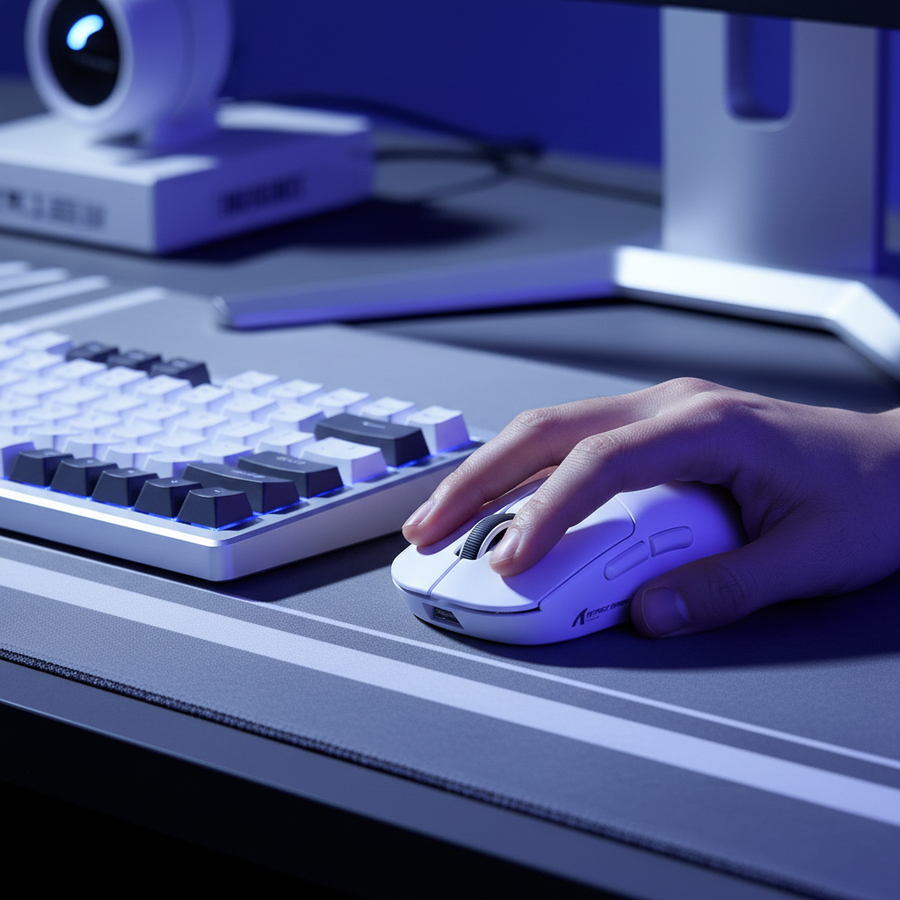
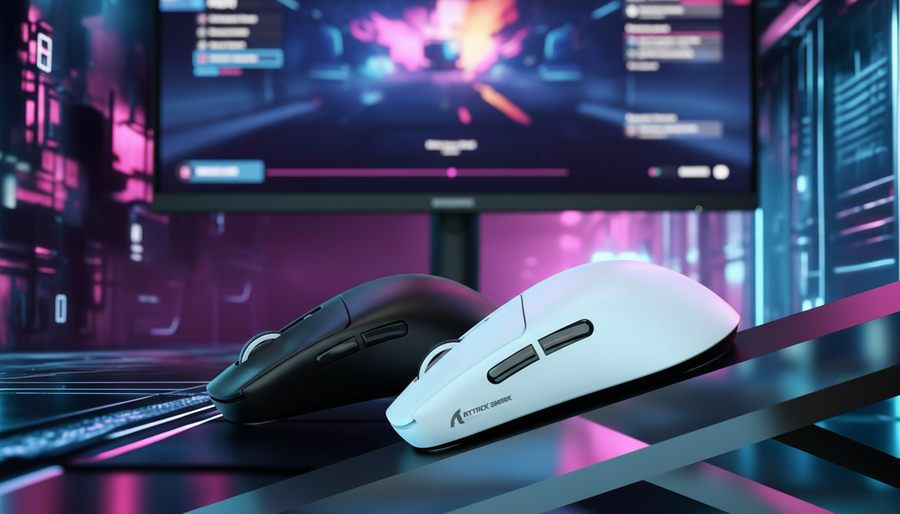
Cuando el ratón es demasiado corto, la palma pierde contacto con la carcasa, obligando a los dedos a proporcionar toda la estabilidad. Esto hace que el agarre sea inherentemente menos estable bajo estrés, lo que conduce a los cambios involuntarios observados durante momentos "clutch". Usar un dispositivo como el ATTACK SHARK G3 Tri-mode Wireless Gaming Mouse, que cuenta con una carcasa sólida sin agujeros y un perfil ergonómico, puede ayudar a proporcionar una superficie de contacto más consistente para varios estilos de agarre.
Configuraciones de agarre específicas por género y carga cognitiva
Los jugadores versátiles que alternan entre juegos con mucho seguimiento (como Apex Legends) y juegos de tiempo de clic (como Valorant) suelen desarrollar dos "configuraciones" de agarre distintas y subconscientes.
- Configuración de seguimiento: A menudo un agarre relajado de garra o híbrido palma-garra para facilitar movimientos suaves y de gran arco.
- Configuración de tiempo de clic: Normalmente un agarre de garra o punta de dedos más firme y agresivo para maximizar la velocidad de microcorrección.
Aunque cambiar de agarre puede parecer una ventaja táctica, conlleva un "costo de cambio" significativo. Según datos de Human Benchmark, el tiempo promedio de reacción visual humana es aproximadamente 273 ms. Una transición de agarre a mitad del juego puede añadir entre 150 y 200 ms adicionales de tiempo de ajuste motor, potencialmente duplicando la ventana total de respuesta y haciendo que el jugador falle un disparo crítico.
Además, depender demasiado de un agarre con la punta de los dedos para microajustes en escenarios de seguimiento alto puede provocar fatiga rápida, lo que eventualmente obliga a un cambio involuntario a un híbrido menos estable de palma-garra a medida que los músculos intrínsecos de la mano se cansan.
Mitigación técnica: sondeo a 8000Hz y saturación del sensor
Los cambios involuntarios de agarre a menudo resultan en "micro-temblores"—movimientos diminutos e involuntarios que un sensor de alto rendimiento detectará. Para gestionarlo, es esencial la optimización técnica del sensor y la tasa de sondeo.
La realidad de 8000Hz (8K)
Los ratones modernos de alto rendimiento, como los discutidos en el Whitepaper de la Industria Global de Periféricos para Gaming (2026), ahora ofrecen tasas de sondeo de 8000Hz. A 8000Hz, el intervalo de sondeo es casi instantáneo, de 0.125ms. Esto reduce la latencia de "Sincronización de Movimiento" a aproximadamente 0.0625ms, haciendo que el movimiento del cursor se sienta significativamente más fluido.
Sin embargo, para mantener la estabilidad a 8000Hz durante los microajustes lentos que a menudo se ven obstaculizados por la tensión del agarre, los jugadores deben considerar sus configuraciones de DPI. Para saturar el ancho de banda de 8000Hz, se requiere una velocidad de movimiento de 10 IPS a 800 DPI. Al aumentar la configuración a 1600 DPI, solo se necesitan 5 IPS para mantener un flujo de datos constante. Esto asegura que incluso durante disparos tensos y lentos de "clutch", el sistema reciba una señal de alta fidelidad.
Nota sobre limitaciones técnicas: Las altas tasas de sondeo (4K/8K) aumentan significativamente el procesamiento de IRQ (Solicitud de Interrupción) de la CPU. Para un rendimiento óptimo, estos dispositivos deben conectarse directamente a los puertos traseros de E/S de la placa base. Usar hubs USB o conectores frontales puede provocar pérdida de paquetes y micro-tartamudeos, lo que agrava la sensación de "puntería inestable" durante los cambios de agarre.
Fricción y estabilidad de la superficie
La interacción entre el agarre y la alfombrilla también es un factor. Una superficie con seguimiento consistente en los ejes X e Y, como la ATTACK SHARK CM04 Genuine Carbon Fiber eSport Gaming Mousepad, proporciona la "fuerza de detención" necesaria para contrarrestar el temblor causado por contracciones involuntarias de la mano. Las superficies de fibra de carbono ofrecen un equilibrio texturizado entre velocidad y control que suele ser más indulgente con las fluctuaciones de presión del agarre que las alfombrillas tradicionales de tela.

Recuperación práctica: el ciclo de estrés de la mano de 24 horas
Gestionar los cambios de agarre no solo depende de lo que sucede durante la partida; también importa cómo se trata la mano a lo largo del día. Para un jugador competitivo, las fases de "calentamiento" y "recuperación" forman parte de un ciclo continuo.
La rutina de "Pre-Hab"
Un error común es tratar la recuperación como una actividad pasiva. Una rutina integrada de "Pre-Hab" implica realizar ejercicios de calentamiento dinámico—como círculos de muñeca y caminatas con los dedos—a aproximadamente el 50% de intensidad inmediatamente después de una sesión. Esto aprovecha la mayor plasticidad del cuerpo tras la actividad para reforzar patrones de movimiento saludables y reducir la rigidez que conduce a un agarre más agresivo e involuntario al día siguiente.
Además, apoyar la muñeca durante tareas fuera del juego o en sesiones de menor intensidad puede reducir la fatiga acumulada. El ATTACK SHARK Cloud Keyboard Wrist Rest utiliza espuma viscoelástica de alta densidad para aliviar la presión en el túnel carpiano, lo que puede ayudar a mantener la salud de la mano durante largas jornadas de torneo.
Conciencia Respiratoria y Liberación de Tensión
Debido a que la apnea está tan estrechamente vinculada a la tensión en el hombro y el agarre, implementar patrones conscientes de exhalación durante momentos de alta presión puede reducir la transmisión de tensión en un 25–35% estimado. Practicar la "respiración de clímax"—una exhalación controlada y lenta durante un enfrentamiento—puede mantener los músculos del brazo flexibles y evitar el cambio involuntario de una garra controlada a un apretón rígido y en pánico.
Resumen de Estrategias de Gestión
Para manejar eficazmente los cambios involuntarios de agarre, los jugadores deben adoptar un enfoque de múltiples capas:
- Alineación del Hardware: Asegúrate de que la longitud del ratón sea adecuada para el tamaño de la mano. Una proporción cercana a 1.0 es ideal para la estabilidad.
- Optimización de DPI: Usa 1600 DPI o más cuando utilices frecuencias de sondeo de 4000Hz u 8000Hz para asegurar la saturación del sensor durante movimientos lentos.
- La Regla del 60%: Controla conscientemente la presión del agarre, buscando un apretón moderado que preserve el control motor fino.
- Recuperación Integrada: Realiza ejercicios de "Pre-Hab" de baja intensidad después de la partida para mantener la flexibilidad y reducir la tensión crónica.
Para un análisis más profundo sobre estilos específicos de agarre, puede encontrar útiles nuestras guías sobre Optimización del Anclaje del Meñique y Transición de Palma a Garra para perfeccionar tu configuración competitiva.
Aviso Legal: Este artículo es solo para fines informativos y no constituye asesoramiento médico profesional. Las métricas ergonómicas proporcionadas se basan en modelado de escenarios y observaciones típicas de la industria. Si experimenta dolor persistente, entumecimiento u hormigueo en las manos o muñecas, consulte a un profesional de la salud calificado o a un especialista en ergonomía.