


Kurze Zusammenfassung: Wenn Toleranzen wichtig werden
Werkzeuge mit hoher Toleranz helfen Gaming-Mäusen, ein konsistenteres Klickgefühl bei beiden Haupttasten zu liefern, was das Muskelgedächtnis unterstützt und unnötige Belastungen bei hohem APM-Spiel reduziert. Die quantitativen Werte in diesem Artikel (z. B. Kraftvariation, Änderungen der Ablehnungsrate, Zeiteffekte und Strain-Index-Werte) sind Szenario-Modell-Ausgaben, keine bevölkerungsweiten Messungen. Sie basieren auf internen technischen Simulationen und veröffentlichten ergonomischen Methoden und sollten als illustrierende Beispiele und nicht als medizinische oder universelle Leistungsversprechen gelesen werden.
Für wen das gedacht ist: Hardware-Ingenieure, Produktmanager und Wettkampfspieler, die verstehen möchten, wie mechanische Präzision im Mikrometerbereich bei Werkzeugen und Montage die Klick-Konsistenz, wahrgenommene Latenz und ergonomische Risiken bei anspruchsvoller Nutzung beeinflussen kann.
Wichtige Grenzen: Gesundheitsbezogene Kennzahlen (wie der Strain Index) werden hier für eine extreme, simulierte Arbeitsbelastung berechnet und ersetzen keine professionelle ergonomische oder medizinische Bewertung. Die realen Werte variieren je nach Nutzer, Gerät und Setup.
Die technische Realität der Klick-Gleichmäßigkeit
Im hochriskanten Umfeld des professionellen Gamings entscheidet oft die mechanische Konsistenz des primären Eingabegeräts über den Unterschied zwischen einem erfolgreichen Einsatz und einer verpassten Gelegenheit. Während viele Hersteller sich auf die Rohspezifikationen eines Sensors oder die theoretische Lebensdauer eines Schalters konzentrieren, erkennen erfahrene Hardware-Ingenieure, dass die „Spezifikations-Glaubwürdigkeitslücke“ meist in der Montage und Werkzeugtechnik der Klickmechanik zu finden ist. Klick-Gleichmäßigkeit – die Anforderung, dass die linke und rechte Taste unabhängig vom Druckpunkt eine identische taktile Rückmeldung geben – ist nicht nur ein Komfortmerkmal; sie ist ein wichtiger Faktor zur Erhaltung des Muskelgedächtnisses und der Spitzenleistung.
Um diese Gleichmäßigkeit zu erreichen, müssen komplexe Toleranzstapelungen berücksichtigt werden. In einer Standard-Gaming-Maus besteht die mechanische Kette aus der Leiterplatte, dem Schaltergehäuse, dem internen Schalterkolben, der inneren Kontaktfläche der Tastenhülle (dem „Kolben“) und dem äußeren Gehäuse selbst. Jede dieser Komponenten bringt eine Fehlerquote mit sich. Laut dem Global Gaming Peripherals Industry Whitepaper (2026) sollte die Präzisionsfertigung in der modernen Ära über die Qualität auf Komponentenebene hinaus zur Systemausrichtung auf Systemebene übergehen.
Hochpräzise Werkzeuge und das Ausrichtparadoxon
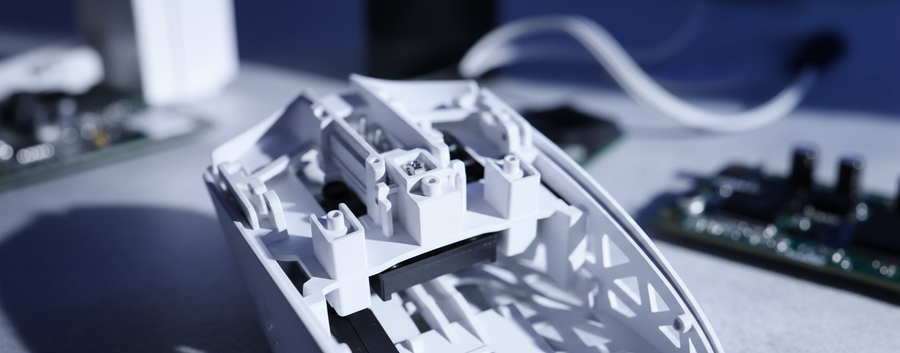
Der häufigste Ausfallpunkt bei Gaming-Mäusen ist oft nicht der Schalter selbst, sondern die Fehlausrichtung zwischen dem Schalterkolben und der Kontaktfläche des Tasten-Gehäuses. Interne Fertigungssimulationen und Produktionsstichproben deuten darauf hin, dass eine scheinbar vernachlässigbare Fehlausrichtung von 0,15mm eine Variation der modellierten Betätigungskraft von etwa 10–15% zwischen linkem und rechtem Klick bei typischen geteilten Tasten-Geometrien verursachen kann. Diese Diskrepanz zwingt das Nervensystem des Nutzers, unbewusst den unterschiedlichen Widerstand auszugleichen, was zu „Klick-Sicherheitszögern“ führt.
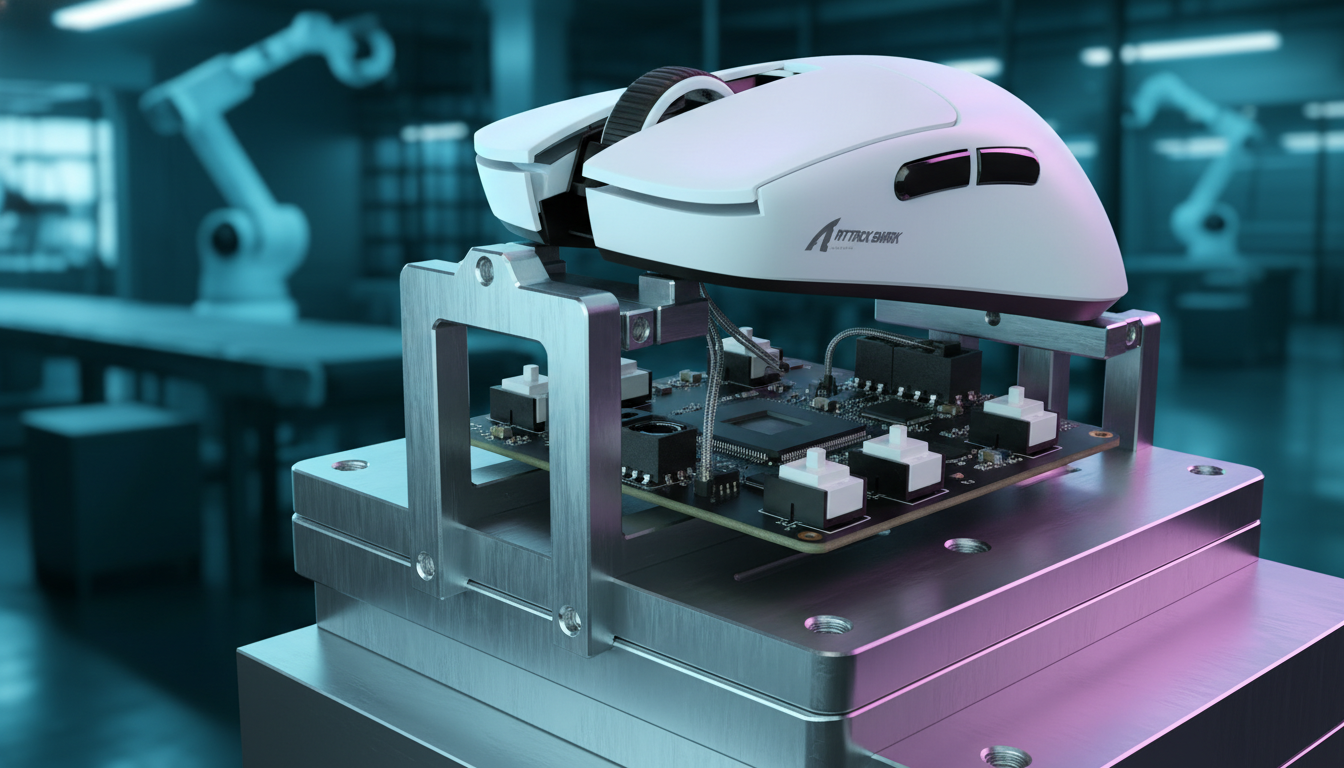
Um dem entgegenzuwirken, setzen Premium-Fertigungsprozesse hochpräzise Werkzeuge ein, speziell CNC-gefertigte Ausrichtvorrichtungen. Diese Vorrichtungen sind so konzipiert, dass Schalter im Montagemodell mit einer Toleranz von ±0,05mm auf der Leiterplatte sitzen. In Kombination mit Spritzgussformen, die eine Konsistenz der Tasten-Gehäusedicke von etwa ±0,03mm anstreben, ist das praktische Ziel ein Klickgefühl, das über die gesamte Oberfläche weitgehend einheitlich bleibt.
Methodenhinweis (Fertigungspräzision):
- Modelltyp: Lineare Sensitivitätsanalyse der Kraftvariation.
- Wesentliche Annahme: ~15% Variation pro 0,15mm Fehlausrichtung basierend auf Standardhebelmechanik bei geteilten Tasten; behandelt als Faustregel der Ingenieurpraxis, nicht als universelles Gesetz.
- Randbedingung: Dieses Modell geht von einem starren Gehäuse aus; flexible oder skelettierte Designs können nichtlineare Variablen einführen, die diese Schätzungen übersteigen.
Szenariomodellierung: Der Wettbewerbs-MOBA-Spezialist
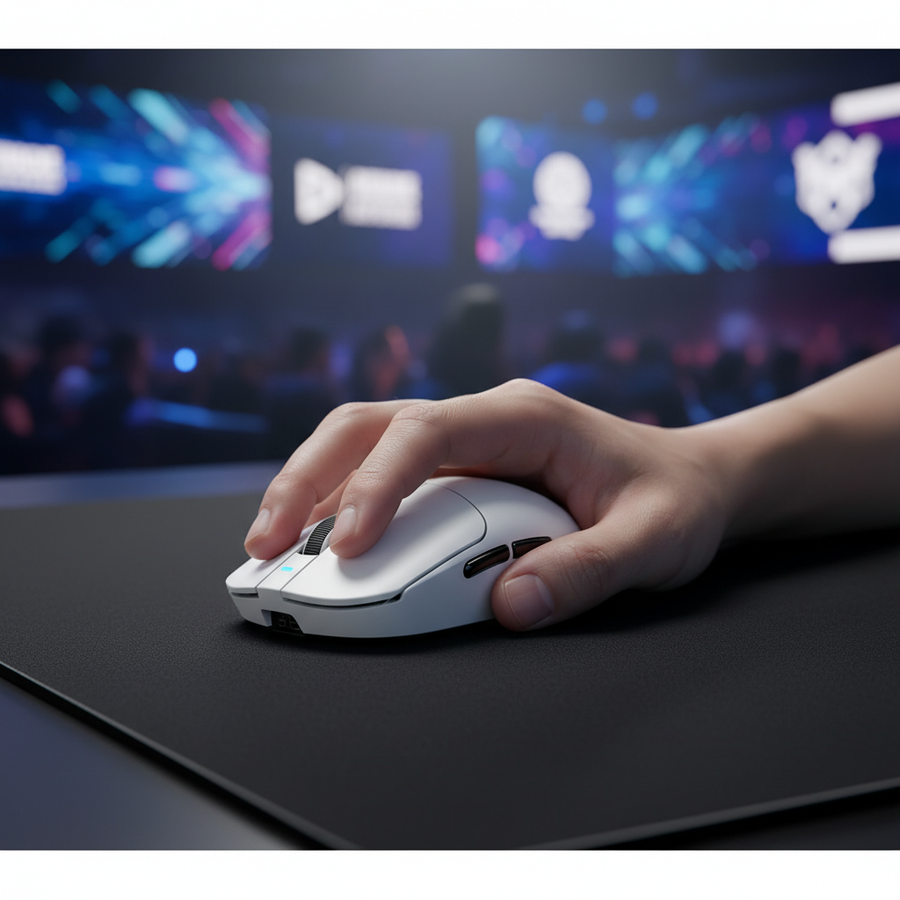
Um die praktische Auswirkung dieser Toleranzen zu verstehen, modellierten wir einen „Wettbewerbs-MOBA-Spieler“ (Mikro-Klick-Spezialist). Diese Persona repräsentiert einen Nutzer mit mittlerer Handgröße (18,5 cm), der einen Krallengriff verwendet und während 6–8-stündiger Sitzungen über 400 Aktionen pro Minute (APM) ausführt.
Dies ist ein Szenariomodell, keine Umfrage unter tatsächlichen Akteuren. Es soll Designentscheidungen auf die Probe stellen und zeigen, wie mechanische Toleranzen unter anspruchsvollen Bedingungen skalieren können.
Quantitativer Einfluss präziser Werkzeuge (modelliert)
Unser Modell verglich Standardfertigungstoleranzen (±0,15mm) mit präziser CNC-unterstützter Montage (±0,05mm). Die untenstehenden Werte sind simulierte Ergebnisse dieses Modells (basierend auf internen Whitepaper-Annahmen), keine direkten Labor-Messungen des gesamten Marktes.
| Metrisch | Standard (±0,15mm) | Präzisions-CNC (±0,05mm) | Delta / Verbesserung |
|---|---|---|---|
| Ausschussrate (Qualitätskontrolle) | ~15,2% | ~1,8% | ~88% relative Reduktion (modelliert) |
| Durchschnittliche Kraftvariation | ~7,5% | ~2,5% | ~5,0 % Verbesserung (modelliert) |
| 95. Perzentil Kraftdifferenz | ~12,3 % | ~4,1 % | ~8,2 % Konsistenzsteigerung (modelliert) |
| Unterschied in der Wegstrecke | ~0,242 mm | ~0,200 mm | ~0,042 mm Reduktion (modelliert) |
Im Modell entspricht die 0,042 mm Reduktion im Wegunterschied bei einem MOBA-Spieler einem Timing-Effekt unter einer Millisekunde (ungefähr ~0,5 ms bei typischen Klickgeschwindigkeiten). Obwohl dies klein erscheinen mag, kann es in einer 400-APM-Umgebung helfen, das Mikro-Stottern im Muskelgedächtnis zu reduzieren, das auftritt, wenn ein Finger weiter reisen oder stärker drücken muss als der andere, um dasselbe In-Game-Ergebnis zu erzielen.
Methodenhinweis (QC- & Timing-Werte):
- Quelle: Interne technische Whitepaper und Monte-Carlo-ähnliche Toleranzsimulationen, keine hardwareweite Stichprobe der Bevölkerung.
- Ausfallrate & Kraft-/Weg-Werte: Berechnet durch Abtasten der Bauteiltoleranzen innerhalb der angegebenen Bereiche und Anwendung eines Kraft-Weg-Modells für die Schalter-/Tastengeometrie. Die Werte sind beispielhaft für das modellierte Design, nicht verbindlich für alle Geräte.
- Timing-Effekt (~0,5 ms): Abgeleitet durch Umrechnung der zusätzlichen Wegstrecke in Zeit unter Verwendung typischer Fingerbewegungsgeschwindigkeiten beim schnellen Klicken; dies ist ein ungefährer Bereich, keine kalibrierte neuromuskuläre Messung.

Wiederholte Belastung und der Moore-Garg Strain Index
Über die Leistung hinaus spielt die Gleichmäßigkeit der Klicks eine Rolle in der Ergonomie. Mit dem Moore-Garg Strain Index (SI) – einem validierten Werkzeug zur Bewertung des Risikos von Störungen der distalen oberen Extremitäten – haben wir die Belastung eines Wettkampfspielers in diesem modellierten Szenario geschätzt.
Unter einer extremen, anhaltenden Hoch-APM-Belastung kann im Modell ein Strain-Index-Wert im Bereich von 150–200 erzeugt werden, abhängig von den genauen Eingaben. Zum Vergleich: In der industriellen Ergonomieliteratur gilt ein Wert über 5 typischerweise als „gefährlich“ oder „hohes Risiko“ für wiederholte Belastungen. Der hier modellierte hohe Wert stellt keine medizinische Diagnose oder eine typische Bürobelastung dar; er spiegelt einen bewusst extremen, simulierten Fall wider, der hohe Kraft, Frequenz und Dauer kombiniert.
Ein repräsentatives Beispielmodell, das einen SI-Wert in diesem Bereich ergibt, verwendet:
- Multiplikator für Anstrengungsintensität: Kraftvolles Klicken für schnelle Reaktion (z. B. Bewertung 3–4 im Moore-Garg, Multiplikator im Bereich von ca. 3–6).
- Multiplikator für Anstrengungen pro Minute: 400+ APM erzeugen eine hochfrequente wiederholte Belastung (entsprechend einer der höheren Frequenzkategorien im Index).
- Dauer-Multiplikator: Mehrstündige kontinuierliche Sitzungen (mehrere Stunden pro Tag).
- Multiplikator für Hand-/Handgelenkshaltung: Krallengriff und Handgelenkshaltung, die die Spannung in den intrinsischen Handmuskeln erhöhen.
- Zusätzliche Faktoren: Begrenzte Erholungszeit und Aufgabendauer im Tagesverlauf.
Wenn die Klickkraft inkonsistent ist, wird die modellierte Belastung verstärkt. Ein Nutzer, der eine Kraftvariation von etwa 10–12 % zwischen den Tasten erlebt, neigt wahrscheinlich dazu, für beide Tasten eine „Worst-Case“-Kraft anzuwenden, um die Auslösung sicherzustellen, was die Gesamtbelastung der Sehnen erhöht. Präzisionswerkzeuge, die die Variation näher im einstelligen Bereich halten (zum Beispiel innerhalb von ~5 % im Modell), ermöglichen eine leichtere, konsistentere Bedienung, was möglicherweise die kumulative Belastung über eine mehrstündige Sitzung verringert.
Hinweis zur Strain Index Methodik:
- Quelle: Moore & Garg (1995) Strain Index Rahmenwerk.
- Art der Werte: Alle hier referenzierten SI-Werte sind berechnete Beispiele für ein extremes Nutzungsszenario, keine klinischen Messungen an tatsächlichen Spielern.
- Eingaben: Kraft, Anstrengungen/Minute, Dauer pro Tag, Haltung, Arbeitsgeschwindigkeit und Aufgabendauer werden basierend auf einem intensiven Gaming-Szenario zugewiesen und dann gemäß der ursprünglichen SI-Methode multipliziert.
- Gesundheitshinweis: SI-Ergebnisse sind Screening-Tools für relatives Risiko; sie sind keine Diagnosen. Nutzer mit Schmerzen oder vermuteten Verletzungen sollten einen qualifizierten medizinischen oder ergonomischen Fachmann konsultieren.
Die Rolle der Materialwissenschaft und der Umwelt
Präzisionswerkzeuge können nicht isoliert betrachtet werden. Materialeigenschaften und Umweltfaktoren erzeugen oft Variationen, die Fertigungstoleranzen übersteigen können. Erfahrene Ingenieure müssen Folgendes berücksichtigen:
- Thermische Ausdehnung: Eine Temperaturschwankung von 20 °C kann die Abmessungen des Kunststoffgehäuses um etwa 0,02 mm bis 0,03 mm verändern, basierend auf typischen Wärmeausdehnungskoeffizienten für gängige Mausgehäuse-Polymere. Wenn das Werkzeug den thermischen Koeffizienten des spezifischen Polymers (z. B. ABS oder PBT) nicht berücksichtigt, kann sich das Klickgefühl mit der Raumtemperatur ändern.
- Tribologische Beziehungen: Der Reibungskoeffizient zwischen dem Kunststoffkolben und dem Metallschaltkontakt wird von der Viskosität des Schmiermittels beeinflusst. Laut RTINGS' Methodik zur Klicklatenz können Änderungen der physikalischen Eigenschaften des Schalters und seiner Schmierung die Rückstellgeschwindigkeit und das Entprellverhalten beeinflussen.
- Gehäuseflexibilität: Zu starre Gehäuse können sich hart anfühlen, während übermäßige Flexibilität eine „schlaffe“ Reaktion verursacht. Premium-Designs nutzen oft Mehrpunktverstärkungen, um das Gehäuse unter hohem Druck bei „Panik-Klicks“ in Form zu halten, ohne unnötiges Gewicht hinzuzufügen.
Mehrstufige Testprotokolle
Um die Lücke zwischen theoretischer Präzision und realer Leistung zu schließen, implementieren Hersteller typischerweise ein mehrstufiges Testverfahren. Dieser Prozess ist entscheidend, um zu überprüfen, dass die hochpräzisen Werkzeuge wie vorgesehen funktionieren.
- Überprüfung des Abstands zwischen Plunger und PCB: Vor der Endmontage wird der Abstand zwischen dem Schalterplunger und der Leiterplatte über Produktionschargen hinweg gemessen, um Abweichungen in den CNC-Vorrichtungen zu erkennen. Dies kann je nach Produktionsumfang mit Kontaktsonden oder optischen Messgeräten erfolgen.
- Kraft-Weg-Kurvenanalyse: Jede Taste wird an mehreren Punkten (zum Beispiel 5–7) über ihre Oberfläche getestet. Einheiten werden markiert oder abgelehnt, wenn sie mehr als eine vordefinierte Variation in der Betätigungskraft (z. B. etwa 8 %) oder mehr als etwa 0,2 mm Unterschied im Gesamtweg aufweisen. Diese Grenzwerte sind technische Zielvorgaben für das modellierte Design, keine universelle Branchenvorgabe.
- Systemlatenz-Validierung: Werkzeuge wie der NVIDIA Reflex Analyzer können verwendet werden, um zu bestätigen, dass mechanische Konsistenz sich in stabiler End-to-End-Latenz unter realistischen Bedingungen widerspiegelt.
8000Hz-Abtastung und Systemintegration
Die Forderung nach Präzision geht über den mechanischen Bereich hinaus bis in den elektrischen. Mit steigenden Abtastraten bis zu 8000Hz (8K) schrumpfen die Zeitintervalle zwischen den Paketen auf 0.125ms. Bei dieser Frequenz können mechanische Inkonsistenzen im Vergleich zum sehr kurzen elektrischen Abtastfenster deutlicher wahrgenommen werden.
- Motion Sync Latenz: Bei Hochleistungssensoren fügt Motion Sync oft eine deterministische Verzögerung hinzu, die der Hälfte des Abtastintervalls entspricht. Bei 8000Hz beträgt diese Verzögerung ungefähr 0,0625 ms, was im Vergleich zur menschlichen Reaktionszeit in der Regel vernachlässigbar ist. Wenn jedoch der mechanische Klick inkonsistent ist, können die potenziellen Sub-Millisekunden-Vorteile der 8K-Abtastung für den Benutzer weniger spürbar sein.
- Sättigungsanforderungen: Um eine Abtastrate von 8000Hz vollständig auszunutzen, muss sich ein Benutzer mit einer ausreichenden Geschwindigkeit relativ zu seiner DPI bewegen. Zum Beispiel reicht bei 800 DPI typischerweise eine Geschwindigkeit von etwa 10 IPS; bei 1600 DPI kann eine Geschwindigkeit von etwa 5 IPS ein stabiles 8K-Signal aufrechterhalten. Dies sind technische Schätzungen, keine strengen Anforderungen für alle Geräte.
- CPU- und USB-Beschränkungen: Die Verarbeitung von 8000 Berichten pro Sekunde belastet die Interrupt-Verarbeitung der CPU. In der Praxis wird empfohlen, hochfrequente Geräte direkt an die hinteren I/O-Ports des Motherboards anzuschließen. Die Verwendung von USB-Hubs oder Front-Panel-Anschlüssen kann aufgrund gemeinsamer Bandbreite und unterschiedlicher Abschirmungsqualität zusätzliche Latenz oder Paketinstabilität verursachen, was die Vorteile präziser interner Werkzeuge teilweise ausgleicht.
Konformität und technische Integrität
Der Bau eines Hochleistungs-Peripheriegeräts erfordert auch die Einhaltung globaler Sicherheits- und technischer Standards. Dies stellt sicher, dass das Gerät nicht nur präzise, sondern auch zuverlässig und langlebig ist.
- Drahtlos-Konformität: Geräte sollten die Anforderungen der EU-Funkanlagenrichtlinie (RED) und der FCC Teil 15 Vorschriften erfüllen, um das Störungsmanagement im 2,4-GHz-Band zu unterstützen.
- Material-Sicherheit: Die Einhaltung von EU RoHS und REACH SVHC trägt dazu bei, dass die in den hochpräzisen Komponenten verwendeten Kunststoffe und Schmierstoffe keine eingeschränkten gefährlichen Stoffe enthalten.
- Batterietransport: Für kabellose Modelle sollten die Lithium-Ionen-Batterien die UN 38.3 Tests bestehen und den IATA PI 966/967 Richtlinien für sicheren Lufttransport folgen.
Anhang: Modellierungsmethodik & Annahmen
Die in diesem Artikel präsentierten quantitativen Daten stammen aus Szenariomodellierung, die darauf ausgelegt ist, wettbewerbsorientierte Gaming-Arbeitslasten zu simulieren, kombiniert mit internen technischen Schätzungen und veröffentlichten ergonomischen Methoden.
Modelleingaben (wettbewerbsorientiertes MOBA-Szenario):
| Parameter | Wert | Einheit | Begründung |
|---|---|---|---|
| Handlänge | 18.5 | cm | Median männliche Handgröße (P50) |
| Griffstil | Klaue | Nicht verfügbar | Hoher APM-Standard im MOBA-Spiel |
| APM | 400 | Aktionen/Min | Professionelle MOBA-Basislinie (modelliert) |
| Sitzungsdauer | 6 | Stunden | Tägliches wettbewerbsorientiertes Training (modellierte obere Grenze) |
| Toleranz (Standard) | ±0,15 | mm | Typischer Toleranzbereich beim Spritzgießen |
| Toleranz (Präzision) | ±0,05 | mm | CNC-Jig-unterstütztes Montageziel |
Randbedingungen:
- Szenariospezifität: Diese Ergebnisse gelten für ein modelliertes wettbewerbsorientiertes MOBA-Spiel mit Claw-Grip-Nutzern. Die Resultate unterscheiden sich bei FPS-Spielern mit niedrigerer APM oder anderen Griffstilen (z. B. Palm-Grip oder Fingertip-Grip).
- Lineares Modell: Das Kraftvariationsmodell geht von kleinen Fehlstellungen (<0,2 mm) aus. Nichtlineare Effekte wie plastische Verformung, Schalterverschleiß oder Gehäusekriechen über die Zeit sind nicht berücksichtigt.
- Umweltstabilität: Das Modell geht von einer kontrollierten Umgebung aus (ca. 22°C, ~45% Luftfeuchtigkeit). Extreme Bedingungen (hohe Hitze, Kälte oder Feuchtigkeit) erhöhen die Varianz und können die Werkzeugpräzision überlagern.
- Art der Daten: Sofern nicht anders angegeben, sind numerische Werte technische Schätzungen oder Simulationsergebnisse und keine klinischen oder epidemiologischen Daten auf Bevölkerungsebene.
Zusammenfassung des technischen Nutzens
Werkzeuge mit hoher Toleranz sind die unsichtbare Architektur, die professionelle Leistung unterstützt. Durch das Verringern der Fehlstellung von etwa 0,15 mm auf etwa 0,05 mm im modellierten Design können Hersteller plausibel modellierte qualitätsbedingte Ausschussraten senken und die Kraftkonsistenz spürbar verbessern. Für den Endnutzer trägt dies zu einem Gerät bei, das sich mehr wie eine Verlängerung der eigenen Bewegung anfühlt – vorhersehbar, reaktionsschnell und weniger anfällig für ablenkende Inkonsistenzen.
In anspruchsvollen Anwendungsszenarien – wie der Navigation in einem komplexen MOBA-Teamkampf oder der Ausführung präziser Mikroanpassungen in einem FPS – kann die Präzision der internen Baugruppe ein entscheidender Faktor dafür sein, ob die Hardware mit den Fähigkeiten des Spielers mithält, ohne dabei Garantien für Leistung oder gesundheitliche Auswirkungen für einzelne Nutzer zu geben.
Haftungsausschluss: Dieser Artikel dient nur zu Informationszwecken und stellt keine professionelle ergonomische, medizinische oder technische Beratung dar. Die quantitativen Beispiele (einschließlich Strain Index-Werte) sind szenariobasierte Schätzungen und sollten nicht als Diagnose oder universeller Standard betrachtet werden. Konsultieren Sie stets eine qualifizierte Fachkraft bei Fragen zu wiederholten Belastungsverletzungen, Arbeitssicherheit oder klinischen Anliegen.