


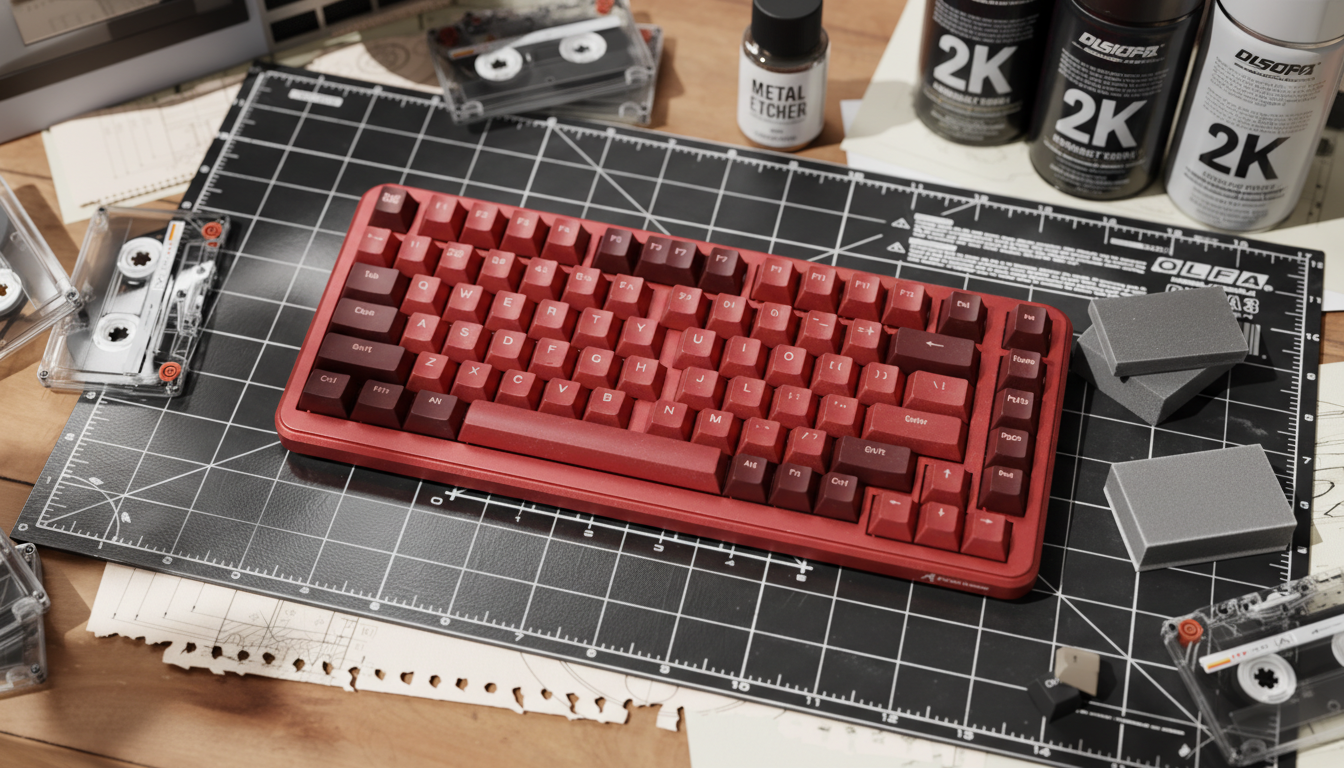
Quick Verdict: Which Finish Wins?
Choosing between powder coating and spray paint depends on your priorities for durability versus repairability.
- Powder Coating offers industrial-grade impact resistance but carries a higher risk of warping thin aluminum cases during the heat-curing process.
- 2K Spray Paint provides a high-quality, chemically resistant finish that is significantly easier to spot-repair at home if damaged.
DIY Quick Checklist
- [ ] Safety First: Obtain an N95 or P100 respirator for fumes/dust and powder-free nitrile gloves.
- [ ] Battery Removal: Always remove lithium-ion batteries before sanding or heating.
- [ ] Environment Check: Ensure your workspace is between 70-75°F with less than 50% humidity for optimal paint adhesion.
- [ ] Surface Prep: Sand with 400-600 grit; a simple alcohol wipe is usually insufficient for long-term bonding.
The Customization Dilemma: Why Your Aluminum Case Needs More Than a Quick Fix
We have all been there: you finally get your hands on a solid aluminum mechanical keyboard, but the stock finish feels a bit... uninspired. Whether it’s a vibrant "burnt orange" or a stealthy matte black, the path to a custom look usually splits into two directions: the industrial toughness of powder coating or the accessible flexibility of spray paint.
However, many DIY enthusiasts jump into these projects only to face disappointment months later. Based on common patterns seen in community forums and repair workshops, finishes often begin to bubble or peel at the corners if the unique chemistry of aluminum is underestimated. In extreme cases, thin aluminum shells can even warp during high-heat curing.
This guide breaks down the value proposition of both methods to help you make an informed investment in your hardware's longevity.

The "Invisible" Enemy: Why Surface Prep is 90% of the Battle
From our experience handling custom commissions, a quick wipe with isopropyl alcohol is rarely enough for aluminum. Aluminum is a reactive metal that forms a microscopic layer of oxidation almost immediately upon exposure to air. This layer, combined with manufacturing oils, can act as a barrier that prevents coatings from truly bonding.
The Professional Preparation Protocol
To achieve a finish that can withstand thousands of hours of use, we recommend a mechanical-and-chemical approach:
- Mechanical Keying: Sand the surface with 400-600 grit sandpaper. This creates "teeth" for the new coating to grab without necessarily removing all the original factory finish.
- Chemical Etching: Using a dedicated metal degreaser or a phosphoric acid-based etcher (common in automotive work) helps remove invisible oxides.
- Contamination Control: Skin oils can compromise adhesion. We recommend wearing powder-free nitrile gloves throughout the etching and painting phases.
Rule of Thumb: These preparation steps are based on general industry heuristics for painting non-ferrous metals, often aligned with durability standards such as those referenced in the ISED Canada Radio Equipment List (REL).
Spray Paint: The 2K Revolution and DIY Accessibility
Spray painting is sometimes dismissed as a "budget" option, but modern 2K (two-component) catalyzed paints have closed the durability gap significantly. Unlike standard hardware store cans that dry through solvent evaporation, 2K paints use a chemical hardener to create a cross-linking polymer network.
The Value Proposition of 2K Paint
- Chemical Resistance: 2K finishes are typically highly resistant to skin oils and common cleaning solvents.
- Repairability: This is a major advantage. If a spray-painted case is chipped, it can often be spot-sanded and blended. Estimated professional repair costs for a minor chip might range from $100–$150, whereas powder coating usually requires a full, more expensive strip-and-recoat.
- The "Tack Coat" Technique: To minimize "orange peel" textures, apply an ultra-light first layer. This creates a sticky foundation for subsequent coats.
Environmental Constraints
Achieving a factory-grade finish at home requires strict climate control. Fluctuating temperatures in a garage are a leading cause of finish failure. Ideal conditions are roughly 70-75°F with sub-50% humidity. If working indoors, ensure a high ventilation rate (e.g., using a dedicated exhaust fan or working in a large, open-air shop environment) to manage VOCs.
Powder Coating: The Industrial Benchmark (with a Hidden Risk)
Powder coating involves electrostatically applying dry powder and "baking" it to melt and cure the finish. While it offers exceptional impact resistance, it carries a technical hurdle for keyboard enthusiasts: thermal warping.
The Warping Reality
Many aluminum keyboard cases are relatively thin (approximately 1-3mm). Aluminum has a high coefficient of thermal expansion (typically cited around 23.1 μm/m·°C for common alloys). Subjecting an asymmetrical, thin-walled case to a 400°F (204°C) curing oven can cause the metal to twist or bow.
If powder coating at home, avoid standard kitchen ovens, which often have "hot spots." We recommend using a dedicated curing oven with a thermometer to ensure even heat distribution.
Cast Aluminum vs. CNC Aluminum
The alloy type matters. Budget-friendly keyboards often use cast alloys with 6-12% silicon content. As noted in technical guides on anodizing and coating cast aluminum, these silicon particles can cause "pitting" or poor adhesion during high-heat processes. If your keyboard is cast, 2K spray paint is often the more reliable choice.
Performance Impact: Modeling the Competitive Edge
For competitive gamers, customization choices can occasionally impact the "feel" of a high-sensitivity setup. We have modeled a scenario to illustrate potential interactions.
Scenario Model: Competitive FPS Setup
Note: These figures are illustrative estimates based on a 1440p monitor and a high-sensitivity setup (25cm/360).
| Parameter | Estimated Value | Unit | Rationale/Assumption |
|---|---|---|---|
| Case Thickness Increase (Paint) | ~0.1 | mm | Based on typical 2-3 coat application |
| Case Thickness Increase (Powder) | ~0.3 - 0.5 | mm | Based on standard industrial powder thickness |
| Curing Temperature (Powder) | 400 | °F | Standard curing threshold for most powders |
| Minimum DPI (1440p/25cm) | 1850 | DPI | Model estimate to avoid pixel skipping |
| Est. Battery Life (4000Hz) | 13.4 | Hours | Theoretical model for a 300mAh cell |
Methodology Note: The DPI and battery figures are scenario-based models, not universal guarantees. The battery runtime is a theoretical calculation derived from Nordic Semiconductor nRF52840 power consumption specs at high polling rates. The DPI threshold is a heuristic based on sampling fidelity at high sensitivities.
For more on evolving hardware standards, refer to the Global Gaming Peripherals Industry Whitepaper (2026).
Decision Matrix: Which One Should You Choose?
| Feature | 2K Spray Paint | Powder Coating |
|---|---|---|
| Est. Initial DIY Cost | $30 - $60 | $150+ (Equipment) |
| Est. Professional Cost | $100 - $200 | $80 - $180 |
| Impact Resistance | High (with 2K) | Exceptional |
| Ease of DIY | Moderate | Hard (Requires Oven/Gun) |
| Repairability | Excellent | Poor (Requires Full Strip) |
| Warping Risk | Negligible | Moderate |
The "Smart Investment" Heuristic
- Choose Spray Paint if: You want a specific custom color, value the ability to fix scratches yourself, or are working with a thin/cast aluminum case.
- Choose Powder Coating if: You prioritize maximum durability and have access to a professional shop experienced in handling thin-gauge aluminum.
Trust, Safety, and Compliance
When modding hardware, safety is the priority. Many coating chemicals are hazardous if handled incorrectly.
- Personal Protective Equipment (PPE): Use a respirator rated for Volatile Organic Compounds (VOCs) and particulates (N95/P100).
- Regulatory Compliance: Ensure materials comply with EU REACH and RoHS directives to minimize exposure to hazardous substances like lead or cadmium.
- Battery Safety: Remove all lithium-ion batteries before sanding, painting, or heating. For safe battery transport and handling, refer to the IATA Lithium Battery Guidance.
A Final Note on Value
Customizing your keyboard is an excellent way to personalize your setup. By focusing on meticulous surface preparation and choosing a method that matches your skill level and equipment, you are investing in a piece of hardware that can remain a centerpiece of your desk for years.
Disclaimer: This article is for informational purposes only. DIY modifications involving chemicals, heat, and electronics carry inherent risks. Always follow manufacturer Safety Data Sheets (SDS) and local safety regulations.

Laisser un commentaire
Ce site est protégé par hCaptcha, et la Politique de confidentialité et les Conditions de service de hCaptcha s’appliquent.