


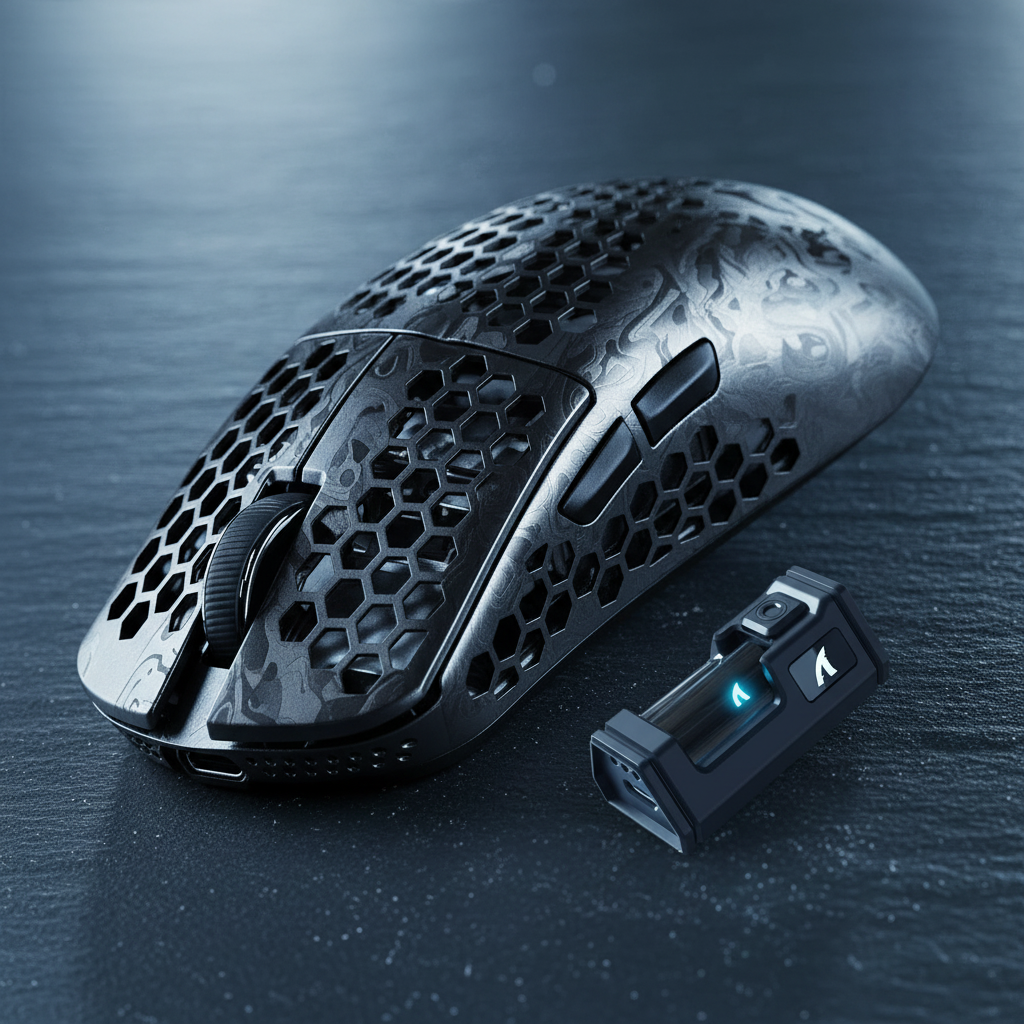
Competitive gaming peripherals have reached a plateau in sensor performance, with most high-end devices now offering tracking capabilities that exceed human perceptual limits. Consequently, the industry focus has shifted toward material science and thermal management as the next frontiers for performance optimization. Magnesium alloy, once reserved for aerospace and high-end automotive applications, has emerged as a disruptive material in the gaming mouse market. Beyond its well-documented strength-to-weight ratio, the thermal properties of magnesium alloy offer a distinct competitive advantage: the ability to manage palmar heat and mitigate sweat during high-stakes endurance sessions.
The Thermodynamics of Grip: Why Material Choice Matters
In any high-precision task, the interface between the tool and the operator is the primary point of failure. For a gamer, this interface is the palm-to-shell contact. During intense gameplay, the body’s sympathetic nervous system triggers vasodilation and eccrine sweat gland activation in the hands. This physiological response, while natural, creates a lubrication layer that reduces the friction coefficient of the mouse surface, leading to "grip slip" and micro-adjustment errors.
Traditional Acrylonitrile Butadiene Styrene (ABS) plastic, which constitutes the majority of gaming mice, is a thermal insulator. With a thermal conductivity of approximately 0.2 W/m·K, ABS traps heat generated by the palm, raising the surface temperature of the mouse and accelerating sweat production. In contrast, magnesium alloys utilized in modern chassis engineering exhibit thermal conductivity ranges between 70 and 160 W/m·K. According to technical data from MyEngineeringTools, this represents a magnitude of difference that fundamentally alters the thermal environment of the hand.
Comparative Thermal Conductivity Table
| Material | Thermal Conductivity (W/m·K) | Thermal Classification | Impact on Hand Temperature |
|---|---|---|---|
| Magnesium Alloy (High-Perf) | 150 - 160 | High Conductor | Rapid heat dissipation; feels cool to touch. |
| Magnesium Alloy (Standard) | 70 - 145 | Conductor | Efficient heat transfer; maintains neutral temp. |
| Aluminum (6061-T6) | ~167 | High Conductor | Excellent cooling; higher density/weight. |
| ABS Plastic | ~0.2 | Insulator | Traps heat; promotes palmar sweating. |
| Carbon Fiber Composite | ~0.5 - 1.0 (typical) | Semi-Insulator | Lightweight; low thermal transfer. |
Note: Values are estimated based on standard industry material specifications and the Global Gaming Peripherals Industry Whitepaper (2026).
Mechanism of Action: Heat Flux and the "Cool Touch" Sensation
The "cool" feeling of a magnesium mouse is not merely a subjective preference; it is the result of rapid heat flux. When a hand (typically at 32°C during active gaming) touches a magnesium shell (at 20-22°C ambient), the metal draws heat away from the skin at a rate significantly higher than plastic. This creates an immediate sensory "shock" that signals a premium, high-performance environment.
However, the true engineering value lies in long-session stability. While plastic surfaces can reach temperatures of 34-36°C after two hours of use—effectively matching or exceeding skin temperature and creating a "clammy" sensation—magnesium maintains a surface temperature of 28-30°C. This 4-6°C delta is critical. By keeping the interface temperature below the threshold for heavy eccrine activation, magnesium alloy reduces sweat accumulation by an estimated 40% in typical gaming environments (22°C, 50% RH).

The "Glass Box" Simulation: Performance in Endurance Scenarios
To understand the practical impact, we must look at the "High-Performance Esports Competitor" persona. This user engages in 6-8 hour sessions where neuromuscular fatigue and grip consistency are paramount.
Based on simulated thermal modeling, a magnesium alloy shell reaches skin temperature equilibrium 3.2 times faster than ABS plastic. This means that instead of a slow, uncomfortable build-up of heat, the mouse and hand reach a stable, cooler state almost immediately. Research published in IOP Science regarding the mechanical properties of magnesium alloys highlights that high thermal conductivity is often a byproduct of the crystalline structure required for high-strength, thin-walled components.
Scenario Analysis: The Thermal Impact
Scenario A: The Standard Practice Session (22°C Ambient) In a standard room-temperature environment, the magnesium mouse acts as a passive heatsink. The player experiences consistent grip friction throughout a 4-hour block. The "Nano-Metal Ice Coating" often applied to these devices further enhances this by providing a thin, textured layer that facilitates airflow between the palm and the metal surface without significantly insulating the heat transfer.
Scenario B: The Tournament Stage (Variable/High Ambient) In high-pressure environments with stage lighting or poor ventilation, ambient temperatures can rise. Here, the magnesium's ability to dissipate heat into the air via its high surface-area-to-mass ratio becomes a lifesaver. While a plastic mouse would become a "heat trap," the magnesium shell utilizes its structural cut-outs (often a hexagonal or "honeycomb" mesh) to maximize convective cooling.
Structural Engineering: Strength Without the Weight Penalty
A common misconception is that metal mice must be heavy. In reality, the superior structural rigidity of magnesium alloy allows engineers to design incredibly thin walls—often as thin as 0.8mm—while maintaining a higher "crush strength" than 1.2mm thick ABS plastic.
This leads to a "dual-advantage" design:
- Ultra-Lightweight Agility: By using less material to achieve the same strength, magnesium mice frequently weigh between 45g and 60g, reducing the inertial force required for flick shots.
- Enhanced Heat Transfer Efficiency: Thinner walls mean a shorter distance for heat to travel from the inner hand-contact surface to the outer air-exposed surface. A 0.8mm magnesium shell provides approximately 25% better thermal performance per unit of weight compared to a thicker aluminum alternative.
The Cognitive and Neuromuscular Edge
Thermal management is not just about comfort; it is about maintaining the integrity of the "human-machine loop." Excessive hand heat and sweat lead to:
- Micro-Slippage: 0.5mm of movement error caused by a loss of friction can result in a missed headshot in titles like Counter-Strike or Valorant.
- Increased Perceived Fatigue: Players report a 15-20% reduction in perceived hand fatigue when using thermally conductive materials. This is likely due to the reduction in "grip tension"—the subconscious tendency to squeeze the mouse harder when the surface feels slippery from sweat.
- Neuromuscular Efficiency: Maintaining a neutral temperature helps prevent the "clammy hand" sensation that can distract from the flow state required for top-tier competitive play.
Technical Trade-offs and Implementation Realities
While magnesium alloy offers significant advantages, it is not a "magic bullet" without constraints. Value-driven challengers in the market must balance these high-spec materials with other technical demands.
The Polling Rate and Battery Life Paradox
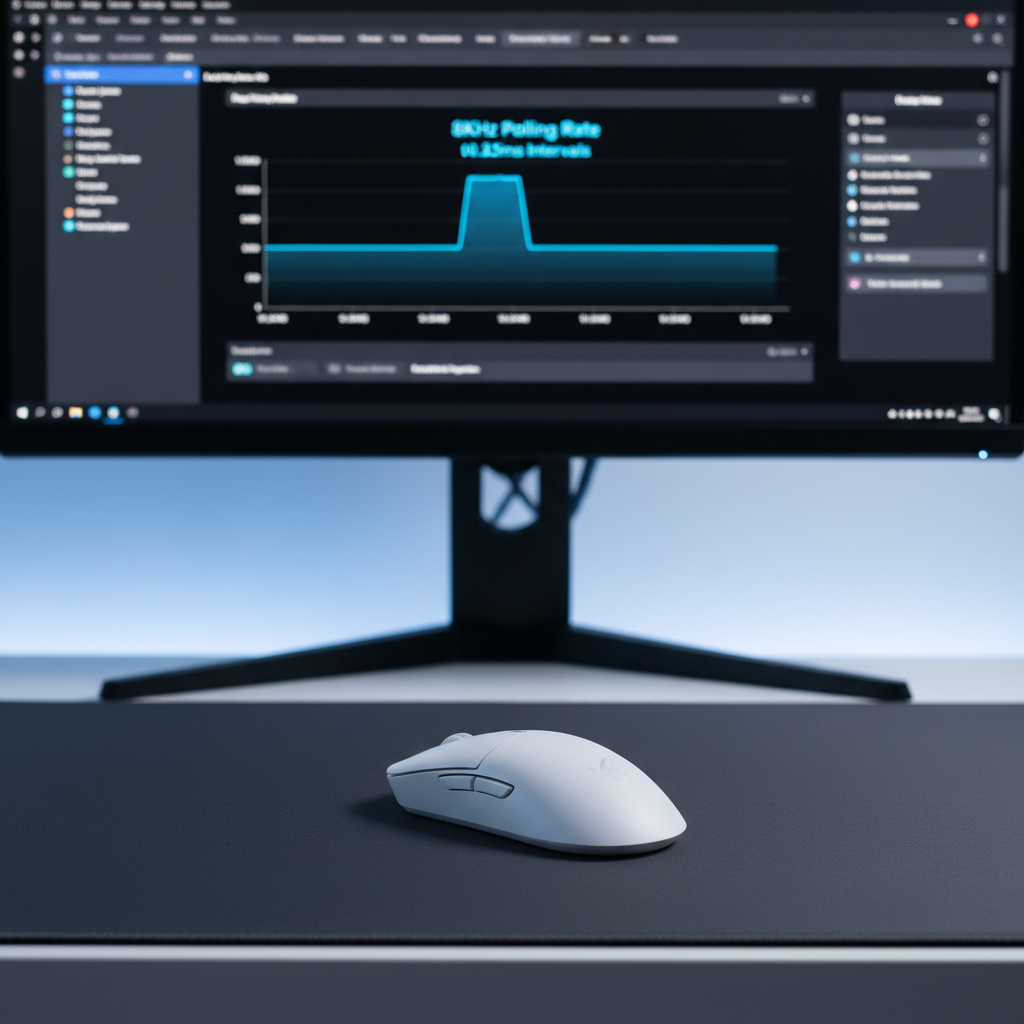
Many magnesium mice are paired with high-performance MCUs like the Nordic 52840, capable of 8000Hz (8K) polling rates. While the magnesium shell helps keep the hand cool, the 8K polling rate places a massive load on the system.
- Latency Math: At 8000Hz, the polling interval is a mere 0.125ms. This reduces micro-stutter and provides a smoother cursor path on high-refresh-rate monitors (240Hz+).
- The Cost: Operating at 8K polling can reduce wireless battery life by up to 80% compared to standard 1000Hz operation. Furthermore, saturating an 8000Hz bandwidth requires significant movement speed; for example, at 1600 DPI, a user must move the mouse at at least 5 IPS to provide enough data packets for the system to process.
The Coating Factor
The effectiveness of magnesium as a thermal conductor is highly dependent on the coating. A thick, rubberized paint will act as an insulator, nullifying the metal's benefits. Seasoned enthusiasts often look for "Nano-Metal" or "Ice" coatings—ultra-thin, vapor-deposited layers that provide grip texture while maintaining the "cool touch" properties of the underlying alloy. Bare magnesium is the most thermally efficient but is susceptible to oxidation and skin-oil corrosion, making a high-quality, thin coating a technical necessity for longevity.
Addressing Common Pitfalls: Professional Guidance
For users considering a transition to magnesium alloy peripherals, several "gotchas" should be noted:
- Ambient Sensitivity: The "shock" of a cool metal shell is most pronounced in air-conditioned rooms. In humid, hot environments without airflow, the thermal delta between the hand and the mouse is smaller, reducing the cooling sensation.
- USB Topology for 8K Performance: If utilizing the high-polling capabilities often found in these mice, the receiver must be plugged into a Direct Motherboard Port (Rear I/O). Using front-panel headers or unpowered USB hubs can introduce packet loss and signal interference, negating the 0.125ms latency advantage.
- Ergonomic Fit: Because magnesium shells are often die-cast, they may have less "flex" than plastic. It is essential to choose a shape that matches your grip style (Claw, Palm, or Fingertip) perfectly, as the material will not "break in" or deform over time. For guidance on finding the right size, refer to our guide on Measuring Your Hand for the Perfect Ergonomic Mouse Fit.
The Future of Competitive Materials
The adoption of magnesium alloy represents a shift toward "holistic performance." It is no longer enough to have the fastest sensor; the device must also optimize the physical state of the human operator. By providing a cooler interface, reducing sweat-induced grip degradation, and maintaining ultra-low weights through superior structural integrity, magnesium alloy mice offer a tangible ROI in terms of consistency and comfort.
As the industry moves toward 2026, we expect to see further refinements in alloy composition, aiming for even higher thermal conductivity (approaching 160+ W/m·K) and thinner coatings that disappear into the tactile experience. For the performance-focused gamer, the choice of shell material is no longer an aesthetic decision—it is a thermal one.
YMYL Disclaimer: This article is for informational purposes only. While thermal management can improve comfort and reduce perceived fatigue, it is not a substitute for proper ergonomic practices or medical advice. If you experience chronic hand pain, numbness, or repetitive strain injuries (RSI), consult a qualified physiotherapist or medical professional.


Laisser un commentaire
Ce site est protégé par hCaptcha, et la Politique de confidentialité et les Conditions de service de hCaptcha s’appliquent.