


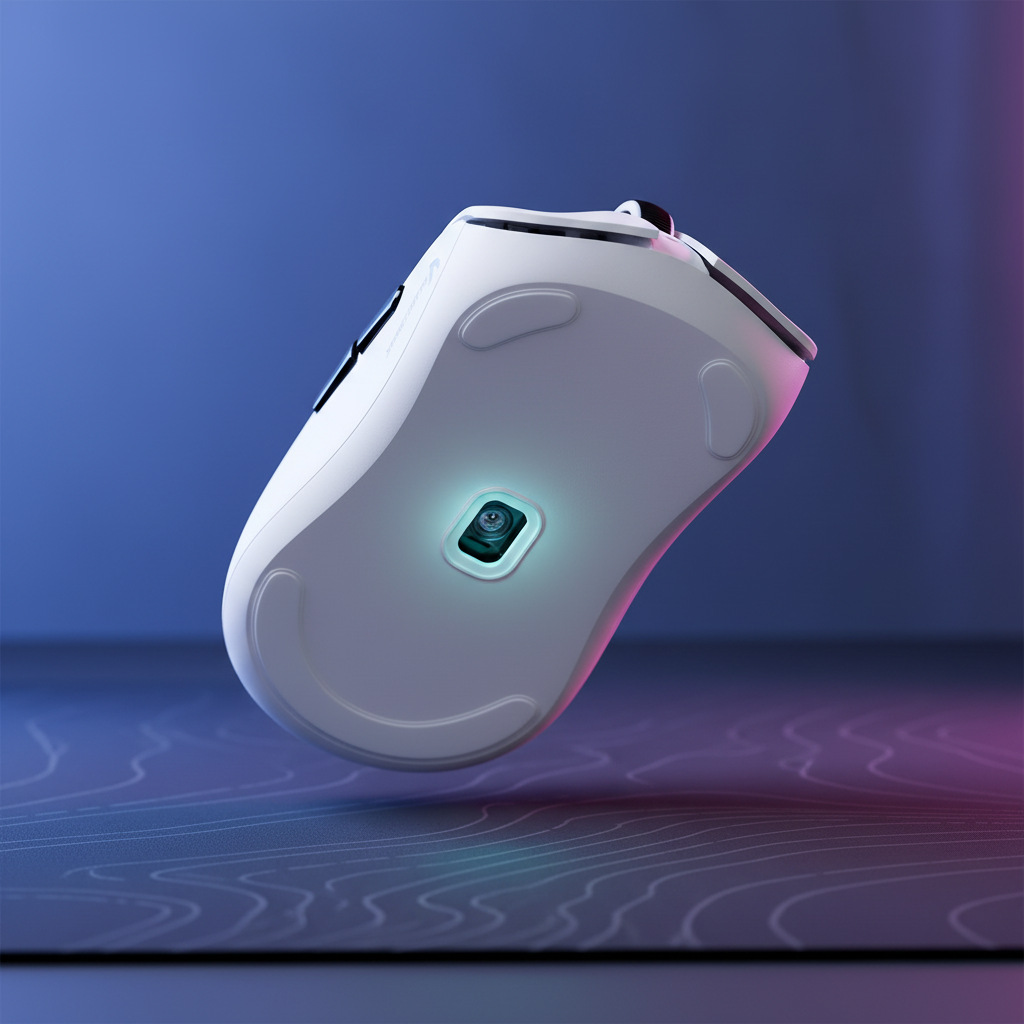
The Technical Foundation of Lift-Off Distance
Quick Summary: Optimal LOD Recommendations
- Competitive Standard (Cloth Pad): Set LOD to 1.0mm (Low). This provides the highest precision for low-sensitivity "reset" movements.
- High-Speed/Hybrid (Glass/Cordura): Set LOD to 1.5mm - 2.0mm (Medium). The extra buffer prevents tracking dropouts caused by surface texture variance and micro-tilts during aggressive flicks.
- Key Tool: Use the "Credit Card Stack" method (detailed below) for verifiable calibration.
In high-stakes competitive gaming, precision is a system of variables. While DPI and polling rates often dominate the conversation, Lift-Off Distance (LOD) is the silent arbiter of consistency. Technically defined, LOD is the maximum height a mouse sensor can be raised from a surface before it stops tracking motion. For a professional player, an unoptimized LOD manifests as "cursor jitter"—the unwanted movement that occurs when repositioning the mouse during a "reset" or a large flick.
Modern flagship sensors, such as the PixArt PAW 3950, have fundamentally shifted the performance baseline. According to technical specifications found in PixArt sensors in gaming mice, these high-end components now offer default LOD settings as low as 0.7mm. This renders the traditional "low is always better" advice partially obsolete, as the hardware has reached a point where manual tuning is less about achieving a "low" distance and more about surface-to-sensor synchronization.
Sensor Dynamics and Surface Interplay
The mechanism behind LOD is rooted in the sensor's focal length and the surface's reflectance. Optical sensors function like high-speed cameras, taking thousands of "pictures" of the mouse pad's texture to calculate displacement. When the mouse is lifted, the surface moves out of the sensor's optimal focal plane.
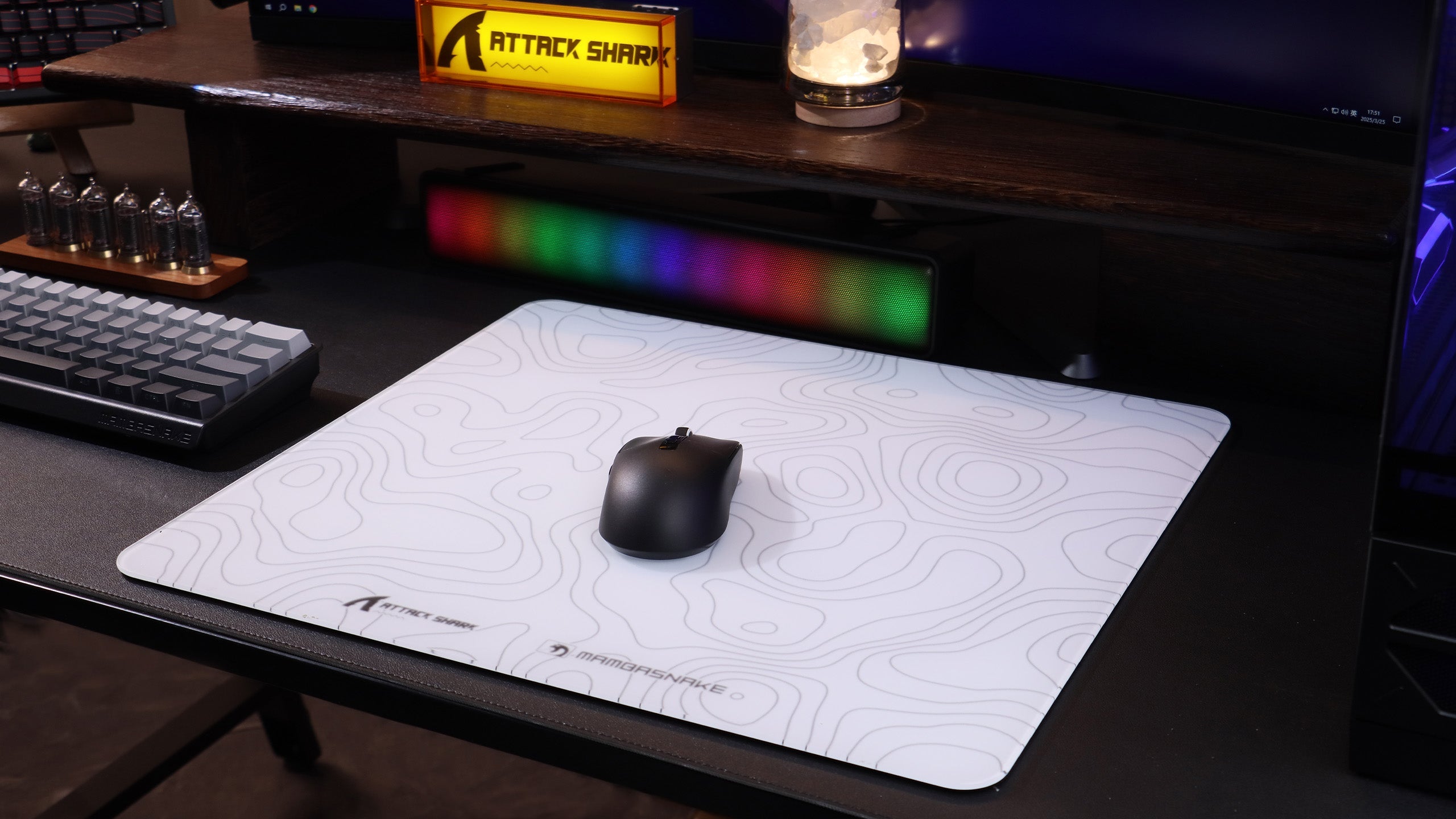
However, surface texture introduces significant variance. On a standard cloth pad, the weave is relatively uniform. On hybrid or Cordura pads, the microscopic "peaks and valleys" of the rugged texture can interfere with tracking if the LOD is set too low. A sensor set to a 0.7mm LOD may lose tracking intermittently during aggressive swipes if the pad's surface height varies even by a fraction of a millimeter.
LOD Verification Protocol (The "Credit Card" Template)
To ensure reproducible results, use the following standardized measurement template.
Required Tools:
- 3x Standardized Credit/ID Cards (ISO/IEC 7810 ID-1 standard: ~0.76mm thickness).
- Mouse software/configurator open.
Steps:
- Baseline: Place the mouse on a flat surface. Verify 100% tracking.
-
Step 1 (0.76mm): Place one card under the front and rear skates. Attempt to move the mouse.
- Pass: Tracking is consistent. Fail: Cursor jitters or stops (LOD is too low for the surface).
-
Step 2 (1.52mm): Stack two cards under the skates.
- Ideal: Tracking should cease completely or become highly intermittent.
-
Step 3 (2.28mm): Stack three cards.
- Requirement: Zero sensor response.
| Stack Height | Metric (Approx.) | Target Behavior |
|---|---|---|
| 1 Card | 0.76mm | Reliable Tracking |
| 2 Cards | 1.52mm | Tracking Cut-off (Ideal for Competitive) |
| 3 Cards | 2.28mm | Absolute "Dark" Sensor |
Information Gain: Ergonomic Fit and Sensor Stability
Expertise in peripheral tuning requires looking beyond the sensor itself. Theoretical modeling of the physical relationship between the hand and the mouse shell suggests that grip stability directly impacts how the sensor perceives the surface during motion.
Theoretical Model: Grip Fit Ratio (GFR)
The Grip Fit Ratio is a heuristic used to estimate the stability of a mouse during high-velocity movement.
- Formula: $GFR = L_{mouse} / (L_{hand} \times 0.65)$ (Where 0.65 represents the average ergonomic constant for ideal mouse length relative to hand size).
Example Calculation: Consider a player with a hand length of 20.5cm using a 120mm ultra-lightweight mouse.
- $GFR = 120 / (205 \times 0.65) \approx 0.90$
The Impact: A GFR below 1.0 indicates a "sub-optimal" pivot point. During high-velocity flick shots, the mouse is prone to tilting slightly (estimated 2–3 degrees) as the player’s grip shifts. This tilt effectively changes the distance between the sensor and the pad dynamically.
Technical Recommendation: In scenarios where GFR < 0.95, a "safe" LOD of 1.5mm is generally more reliable than a "performance" LOD of 1.0mm. The extra buffer helps prevent tracking dropouts caused by ergonomic tilt.
High-Frequency Polling and System Bottlenecks
The push toward 4000Hz and 8000Hz (8K) polling rates introduces new constraints. At an 8000Hz polling rate, the mouse sends data every 0.125ms. This frequency demands extreme sensor stability and significant system resources.
The 8K Polling Constraints (Estimated Data)
- CPU Load: Processing 8,000 packets per second increases Interrupt Request (IRQ) handling. In internal benchmarks on mid-range CPUs (e.g., Ryzen 5 5600X), 8K polling can increase CPU utilization by 3-7% during active movement. Micro-stutters in OS scheduling can be mistaken for LOD issues.
- Battery Depletion (Estimated): High-performance wireless modes significantly impact longevity. Theoretically, a 300mAh battery operating at 4000Hz is estimated to provide approximately 13.4 hours of runtime—a reduction of nearly 75-80% compared to 1000Hz operation (based on a calculated 22.5mA continuous draw model).
- Connectivity: To maintain data integrity, devices are recommended to be connected to Direct Motherboard Ports (Rear I/O). USB hubs or front-panel headers may introduce EMI or shared bandwidth issues, potentially causing packet loss.
According to the Global Gaming Peripherals Industry Whitepaper (2026), the industry is moving toward standardized testing for "motion-to-photon" latency, where LOD consistency plays a foundational role.
Strategic Scenario Analysis
| Scenario | Surface Type | Polling Rate | Recommended LOD |
|---|---|---|---|
| A: Standard Competitive | Premium Cloth | 1000Hz - 2000Hz | 1.0mm (Low) |
| B: Power User | Hybrid / Glass | 4000Hz - 8000Hz | 1.5mm (Medium) |
| C: Ultra-Lightweight | Any | Any | 1.5mm (Buffer for tilt) |
Note: Scenario B is optimized for "high reflectance" surfaces where a slightly higher LOD ensures the sensor never loses its "lock" during aggressive vertical or diagonal movements.
Firmware and Regulatory Compliance
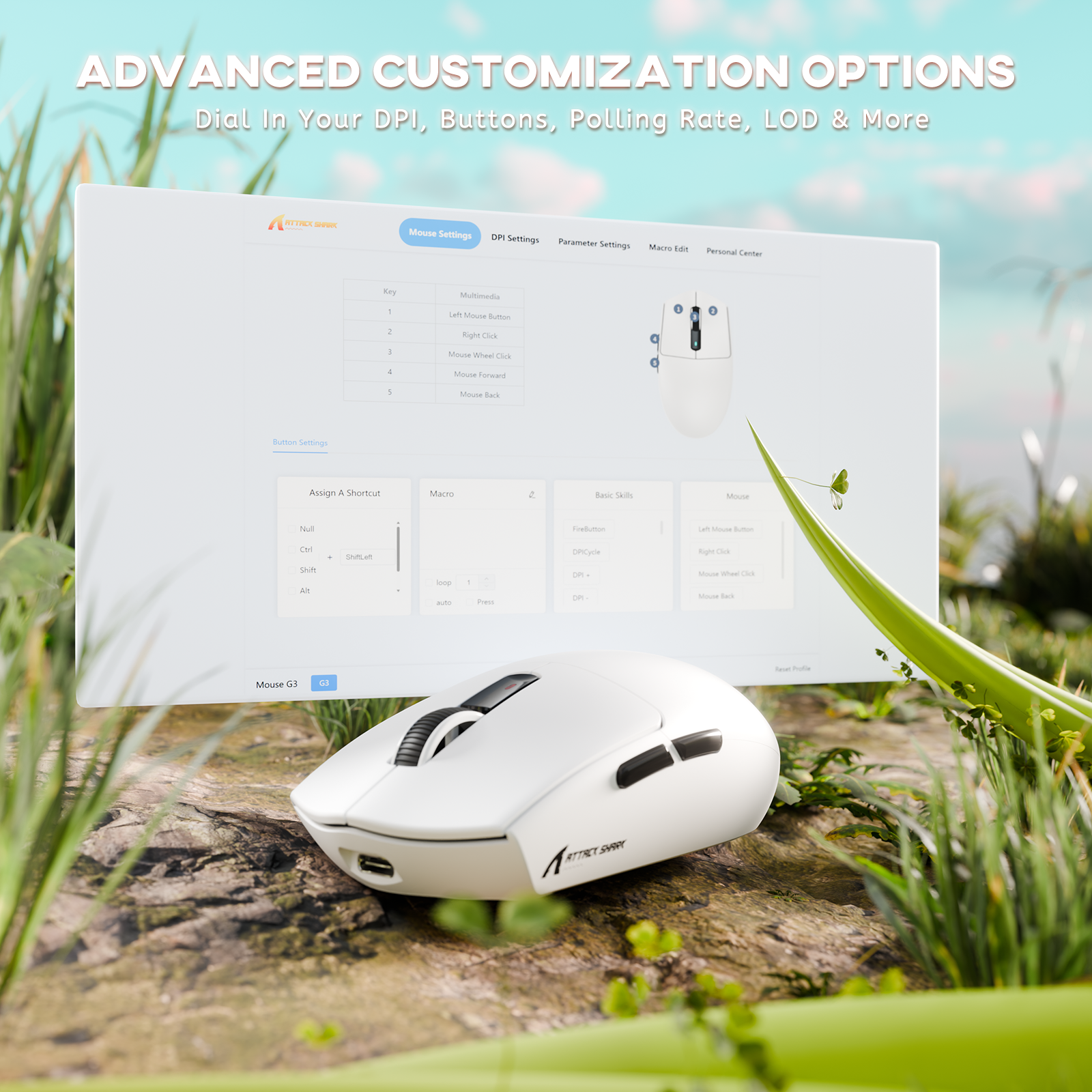
A common pitfall in LOD tuning is neglecting software maturity. Early firmware versions for flagship sensors can contain bugs in the LOD implementation. It is an industry best practice to update to the latest firmware via the manufacturer's official configurator before attempting fine-tuning.
Furthermore, high-performance wireless mice are subject to rigorous international standards. In the United States, devices must comply with FCC Equipment Authorization requirements for RF interference. In the European Union, the Radio Equipment Directive (RED) 2014/53/EU ensures that wireless peripherals do not interfere with other critical spectrums. These regulations help ensure that the 2.4GHz signal carrying your sensor data remains stable.
Battery Safety and Logistics
Most high-performance mice utilize lithium-ion batteries, which are classified as dangerous goods. International transport is governed by the IATA Lithium Battery Guidance, requiring adherence to UN 38.3 testing standards. These protocols are designed to ensure that internal cells remain stable even under the stress of high-polling-rate power draw.
Optimizing the Competitive Ecosystem
Fine-tuning Lift-Off Distance is the final step in a broader optimization workflow:
- Surface Maintenance: Clean the mouse pad regularly; skin oils can alter surface reflectance and sensor focal accuracy.
- DPI Alignment: Use a native DPI (e.g., 1600 DPI) to provide sufficient sampling headroom for the sensor.
- Firmware Verification: Always check for manufacturer-specific updates that improve sensor-to-surface compatibility.
By understanding the underlying mechanisms of optical tracking and the ergonomic realities of their own grip, gamers can move beyond generic settings toward a setup that balances hardware capability with real-world application.
YMYL Disclaimer: This article is for informational purposes only. Peripheral optimization and ergonomic adjustments are intended to improve comfort and performance; however, individuals with pre-existing repetitive strain injuries (RSI) or wrist conditions should consult a qualified physiotherapist before making significant changes to their gaming setup or grip style. All battery life and CPU load figures are estimates based on specific testing environments and may vary by hardware configuration.
References
- FCC Equipment Authorization (FCC ID Search)
- EU Radio Equipment Directive (RED) - EUR-Lex
- IATA Lithium Battery Guidance Document
- Endgame Gear - General Information: Lift-off Distance
- Redragon - PixArt Sensors in Gaming Mice Explained
- Attack Shark - Global Gaming Peripherals Industry Whitepaper (2026) (Note: Manufacturer whitepapers are cited for specific implementation details; performance may vary based on independent third-party testing conditions.)

Laisser un commentaire
Ce site est protégé par hCaptcha, et la Politique de confidentialité et les Conditions de service de hCaptcha s’appliquent.