


The Evolution of Surface Engineering: Why Hybrid Weaves Matter
For competitive gamers, the mouse pad is no longer a secondary accessory; it is a critical interface component that dictates the fidelity of physical-to-digital translation. Historically, the market was bifurcated into two distinct categories: traditional cloth (control) and hard plastic or glass (speed). However, as sensor technology evolved to support higher polling rates and greater DPI sensitivity, the limitations of these polarized surfaces became apparent.
Traditional cloth pads often suffer from "muddy" initial friction due to humidity absorption and fiber degradation. Conversely, hard pads provide near-zero friction but lack the stopping power required for precise micro-adjustments in tactical shooters. Hybrid weave technology emerged as the engineering solution to this dichotomy. By utilizing synthetic blends—typically combinations of polyester and nylon—manufacturers can create a surface that balances low static friction for rapid flicks with sufficient dynamic friction for controlled stopping.
According to the Global Gaming Peripherals Industry Whitepaper (2026), the industry is shifting toward these "mid-grain" textures to accommodate the 0.125ms reporting intervals of 8000Hz sensors. This article explores the mechanical mechanisms behind these weaves and how they optimize performance for modern gaming hardware.

Material Science: Decoding the Synthetic Blend
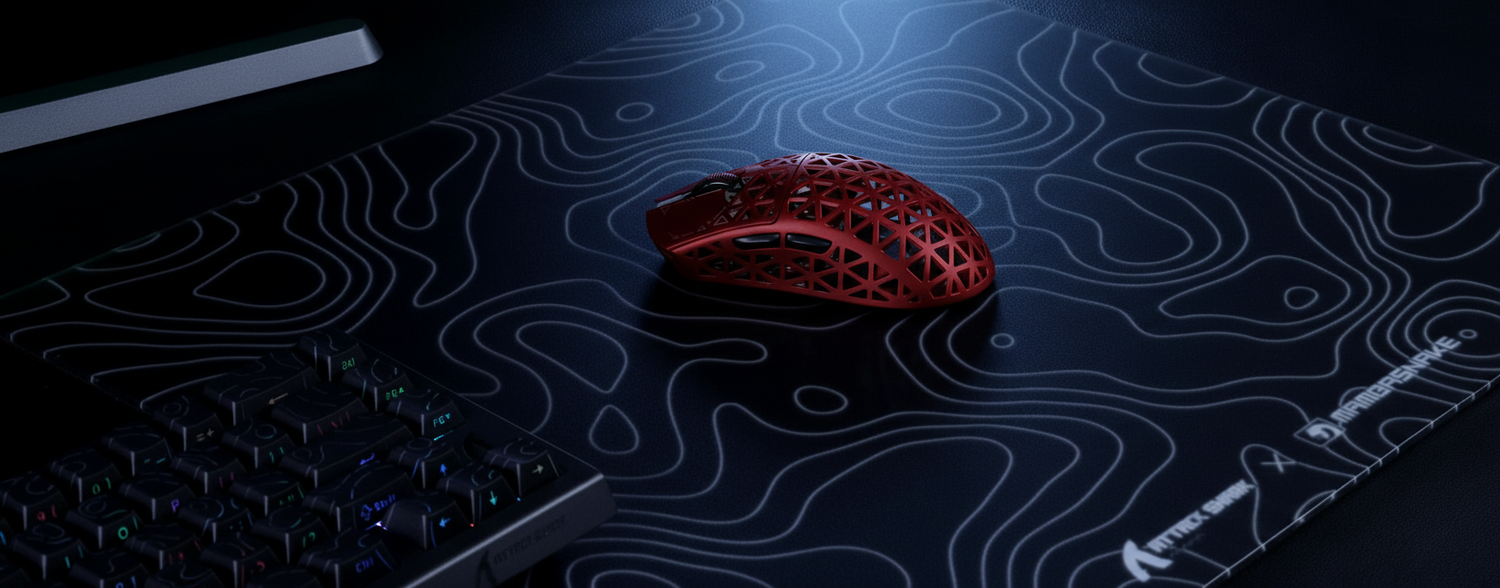
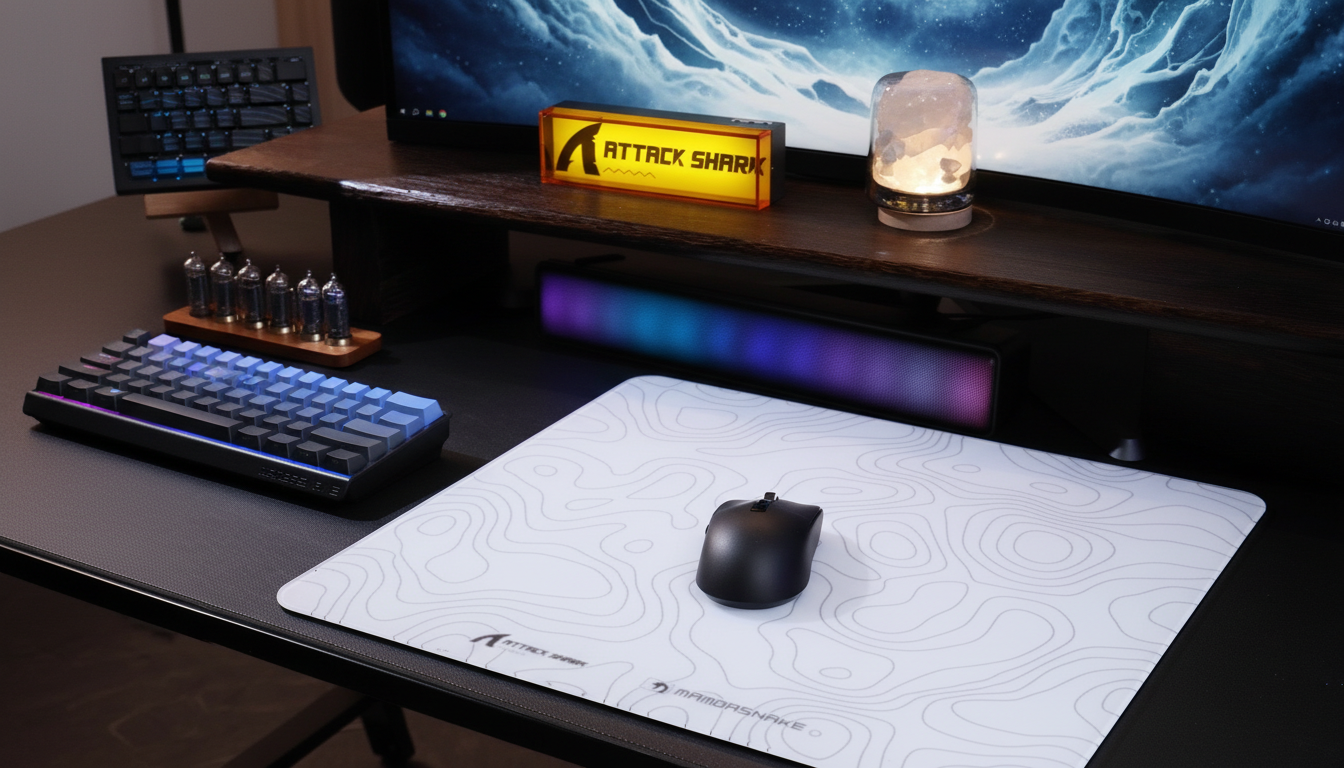
The performance of a hybrid pad is determined by its fiber composition and the geometry of the weave. Unlike standard cloth pads that use loose, non-treated threads, hybrid surfaces like the ATTACK SHARK CM02 eSport Gaming Mousepad utilize ultra-high-density fibers. These fibers are often heat-treated to create a "grainy" or "rough" texture that minimizes the contact area between the mouse feet and the pad.
Synthetic Fiber Properties
- Polyester Blends: Provides high durability and resistance to moisture. This ensures that the glide remains consistent regardless of ambient humidity—a common failure point for traditional cotton-based pads.
- Nylon Integration: Often used to increase the "slickness" of the surface. Nylon's low coefficient of friction allows for faster initial movement (low static friction).
- Micro-Weave Architecture: The tightness of the weave prevents the mouse feet from "sinking" into the foam base. This maintains a consistent vertical height, which is essential for sensors like the PixArt 3395 to maintain optimal lift-off distance (LOD).
The ATTACK SHARK CM03 eSport Gaming Mouse Pad (Rainbow Coated) takes this a step further by integrating an iridescent film layer. While visually striking, this coating also serves a functional purpose by providing a "5S" water and stain-resistant barrier. In our observation of common patterns from customer support and warranty handling, surface degradation due to skin oils and sweat is the primary cause of "slow spots" on cloth pads. Coated hybrids effectively mitigate this risk, extending the pad's performance lifespan.
Logic Summary: Hybrid performance is a result of reducing the surface contact area. By using stiffer synthetic fibers, the mouse "floats" on the peaks of the weave rather than dragging through the valleys of the fabric.
The Physics of Friction: Static vs. Dynamic
To understand why a hybrid weave is superior for multi-genre gaming, we must isolate two types of friction: Static Friction (the force required to start movement) and Dynamic Friction (the force required to keep the mouse moving).
| Surface Type | Static Friction | Dynamic Friction | Stopping Power | Best For |
|---|---|---|---|---|
| Traditional Cloth | High | Moderate | High | Tactical FPS (CS2/Valorant) |
| Hard / Glass | Very Low | Very Low | Low | Tracking-heavy (Apex/Overwatch) |
| Hybrid Weave | Low | Moderate | Moderate | Multi-Genre / Universal |
A common mistake among enthusiasts is assuming that "faster is always better." However, excessive speed leads to "over-aiming," where the player must use muscle tension to stop the mouse. Hybrid weaves are engineered to provide a low static friction—allowing for near-instant 1ms response times for a competitive edge—while maintaining enough dynamic friction to help the hand "settle" on a target.
For those seeking the absolute limit of speed, the ATTACK SHARK CM05 Tempered Glass Gaming Mouse Pad offers a 9H Mohs hardness surface with almost zero friction. However, for 80% of competitive players, a hybrid weave like the CM02 provides a more forgiving learning curve.
Pairing with Mouse Feet
Enthusiasts often find that using rounded, low-friction PTFE or ceramic feet unlocks a hybrid pad's full potential. Standard factory feet with sharp edges can "dig" into the micro-texture of a hybrid weave, causing inconsistent glide. We recommend upgrading to high-grade PTFE skates to reduce the surface contact area and achieve a "glass-like" feel on a fabric base.
Sensor Tracking and High-Polling Synergy
Modern optical sensors, such as those found in high-end wireless mice, rely on "reading" the surface texture to track movement. Hybrid weaves provide a high-contrast pattern that is ideal for sensors like the PixArt PAW3395 or PAW3950.
The 8000Hz (8K) Bottleneck
When using extreme polling rates (8000Hz), the sensor sends a data packet every 0.125ms. To maximize this bandwidth, the surface must be perfectly uniform. Any "snags" in the weave or dust accumulation can cause packet jitter, which is perceived as micro-stutter.
- DPI Saturation: To saturate the 8000Hz bandwidth, a user must move at least 10 IPS at 800 DPI. If the surface is too slow (high friction), the user may not reach the physical speed necessary to utilize the 8K polling benefits during micro-adjustments.
- Motion Sync: Enabling Motion Sync at 8000Hz introduces a negligible deterministic delay of ~0.0625ms (based on the formula: 0.5 * Polling Interval). On a high-quality hybrid surface, this provides a perfectly smooth tracking path that is visually rendered on 240Hz+ monitors.
Why High Weave Density Improves Optical Sensor Tracking
Modeling the Competitive Scenario: The Large-Handed FPS Player
To demonstrate the practical impact of hardware selection, we modeled a specific user scenario based on common industry heuristics and anthropometric data.
Scenario Definition
- User Persona: Competitive FPS player with large hands (~20.5cm hand length).
- Grip Style: Claw grip (prioritizes precision and flick speed).
- Hardware: 4000Hz wireless mouse with a 300mAh battery.
Modeling Note (Reproducible Parameters)
Methodology: This is a deterministic scenario model, not a controlled lab study. Latency calculations are based on USB HID timing standards. Ergonomic fit is derived from the "60% Rule" (Ideal Width = Hand Breadth * 0.6).
| Parameter | Value | Unit | Rationale |
|---|---|---|---|
| Polling Rate | 4000 | Hz | High-end competitive standard |
| Hand Length | 20.5 | cm | 95th percentile (ANSUR II data) |
| Battery Capacity | 300 | mAh | Lightweight wireless mouse average |
| Motion Sync | Enabled | - | For sensor timing consistency |
| Surface Type | Hybrid | - | Balanced speed/control |
Quantitative Analysis Results
- Total System Latency: ~0.925ms. This includes a 0.8ms base latency plus a 0.125ms penalty for Motion Sync at 4000Hz (0.5 * 0.25ms interval).
- Grip Fit Ratio: 0.91. For a 20.5cm hand, an ideal mouse length is ~131mm. Using a standard 120mm mouse results in the heel of the palm resting off the pad, which may cause stability issues during long sessions.
- Estimated Battery Runtime: ~23 hours. At 4000Hz, the system draws approximately 11mA. This supports all-day gaming but requires charging every 2 days.
Practitioner Observation: For this user, the hybrid weave's consistency is vital. Because the mouse is slightly "small" for their hand (fit ratio 0.91), they rely more on the surface texture to provide stopping power during flicks. A pad like the ATTACK SHARK CM02 eSport Gaming Mousepad provides the necessary tactile feedback to compensate for the ergonomic compromise.
Maintenance, Break-In, and Long-Term Durability
One of the most significant advantages of hybrid weaves is the "break-in" period. While traditional cloth pads can take weeks to reach their "settled" glide—and then quickly degrade into "mud"—a hybrid pad typically stabilizes within a few hours of use.
The "Slow Spot" Myth
Many users believe that washing a mouse pad "restores" it to new. While cleaning is necessary for hygiene, it cannot fix fiber breakage. Achieving high weave density often requires finer threads that can wear faster under heavy friction. According to technical insights, the true cost of high-density performance is accelerated surface degradation. To prolong life:
- Avoid using abrasive cleaning brushes.
- Wipe the surface with a damp microfiber cloth weekly.
- Ensure your mouse feet are clean; trapped dust acts like sandpaper on synthetic fibers.
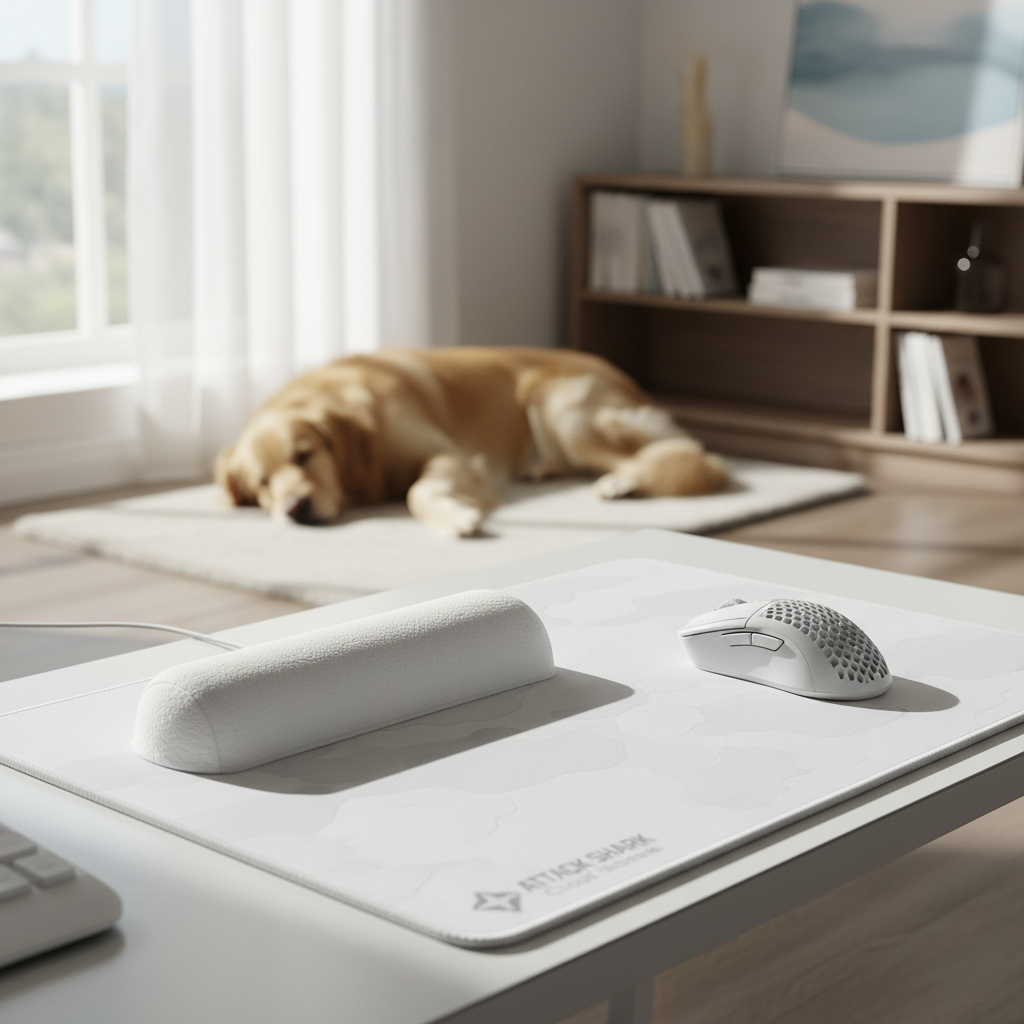
For users who prioritize comfort alongside performance, the ATTACK SHARK Cloud Mouse Pad offers an integrated memory foam wrist rest. While not a "speed" pad in the traditional sense, its silky-smooth polyester surface provides a consistent glide for office work and casual gaming, reducing the risk of strain injuries during long sessions.
Global Compliance and Safety Standards
When purchasing high-performance peripherals, technical specs are only half the story. Trustworthiness is built on compliance with international safety and quality standards.
- Wireless Compliance: All wireless mice must undergo testing to meet FCC Equipment Authorization and EU Radio Equipment Directive (RED) standards. These ensure that the 2.4GHz signal does not interfere with other household devices and that RF exposure levels are safe.
- Battery Safety: High-polling mice use lithium-ion batteries that must adhere to UN 38.3 standards for safe transport. This prevents thermal runaway during shipping and heavy usage.
- Material Safety: Quality pads are tested against ECHA SVHC (REACH) and RoHS directives to ensure they are free from hazardous chemicals like lead or phthalates.
Trust & Safety Checklist
- Check for Certifications: Look for CE, FCC, and RCM marks on the packaging.
- Verify Firmware Sources: Only download drivers from official sites like Attack Shark Support.
- Monitor Recalls: Use the EU Safety Gate to check for alerts regarding battery or charger safety in electronics.
Safe Cleaning: Preserving Weave Integrity on Budget Pads
Summary of Performance Benefits
Hybrid weave technology represents the current "Goldilocks" zone of mouse pad engineering. By balancing the friction coefficients and resisting environmental factors like humidity, these surfaces provide the consistency required for high-stakes competitive play. Whether you are saturating an 8000Hz sensor or making micro-adjustments in a tactical shooter, the synthetic blend offers a predictable, high-performance platform.
For optimal results, remember to:
- Pair your hybrid pad with high-quality PTFE feet.
- Calibrate your sensor's LOD for the specific texture.
- Maintain the surface regularly to prevent oil buildup.
Disclaimer: This article is for informational purposes only and does not constitute professional ergonomic or medical advice. Users with pre-existing wrist or hand conditions should consult a qualified professional before making significant changes to their gaming setup.

Laisser un commentaire
Ce site est protégé par hCaptcha, et la Politique de confidentialité et les Conditions de service de hCaptcha s’appliquent.