



Shell Materials and Grip Consistency: A Technical Guide for Competitive Gaming
Executive Summary
In high-intensity competitive gaming, the interface between skin and mouse shell is a critical performance variable. This guide analyzes how material science—specifically Magnesium Alloy, Carbon Fiber, and Nano-coated Polymers—impacts grip stability and biomechanical strain.
- Key Finding: Sweat-induced slip creates a "vicious cycle" of increased grip tension, leading to a theoretical Moore-Garg Strain Index (SI) score significantly above hazardous thresholds for high-APM players.
- Top Recommendation: Players with hyperhidrosis (excessive sweating) should prioritize textured carbon fiber weaves or high-surface-energy nano-coatings to maintain a consistent coefficient of friction and reduce muscle fatigue.
In the final moments of a high-stakes match, your hardware is either an extension of your intent or a liability. While the industry focuses on sensors and polling rates, the consistency of your grip under physiological stress determines if that precision translates to in-game performance.
We have observed a recurring "vicious cycle of sweat" among high-intensity players: adrenaline spikes palm temperature, leading to moisture. This reduces the coefficient of friction, forcing the player to increase grip tension. This tension accelerates muscle fatigue and induces more sweat. To break this cycle, we must evaluate advanced material engineering through the lens of tribology and biomechanics.
The Physics of Friction: Moisture vs. Material
The interaction between skin oils, moisture, and surface topography determines "grip." According to fundamental principles of tribology, the coefficient of friction (μ) is highly sensitive to humidity and surface contamination.
The following data represents general industry benchmarks for these materials in a simulated gaming environment (25°C, 50% RH).
| Material Property | Magnesium Alloy (Oxide Layer) | Carbon Fiber Composite | Textured ABS/PBT Plastic |
|---|---|---|---|
| Initial Touch Feel | Cool, metallic | Neutral, textured | Warm, matte/smooth |
| Estimated Dry Friction (μ) | ~0.5 - 0.7 | ~0.4 - 0.6 | ~0.3 - 0.5 |
| Wet Friction (Sweat) | Low (becomes slick) | High (weave maintains grip) | Variable |
| Maintenance Need | High (wipe every 1-2 hours) | Low (periodic cleaning) | Moderate |
| Long-term Wear | Oxide layer stabilizes | Resin may wear smooth | Surface "shines" over time |
Magnesium Alloy: The Thermal Paradox
Magnesium alloy is favored for its structural rigidity and low weight. Its high thermal conductivity makes it feel cooler to the touch, which can initially help manage palm heat.
Technical Consideration: Magnesium naturally forms an oxide layer. While protective, this layer can feel "chalky." Our observations suggest that as skin oils and acidic sweat build up, this layer becomes paradoxically slick. To maintain the response benefits of high-end hardware, players using magnesium shells typically require frequent surface decontamination (wiping) during long sessions to prevent micro-slippage.
Carbon Fiber: Engineering Micro-Grip
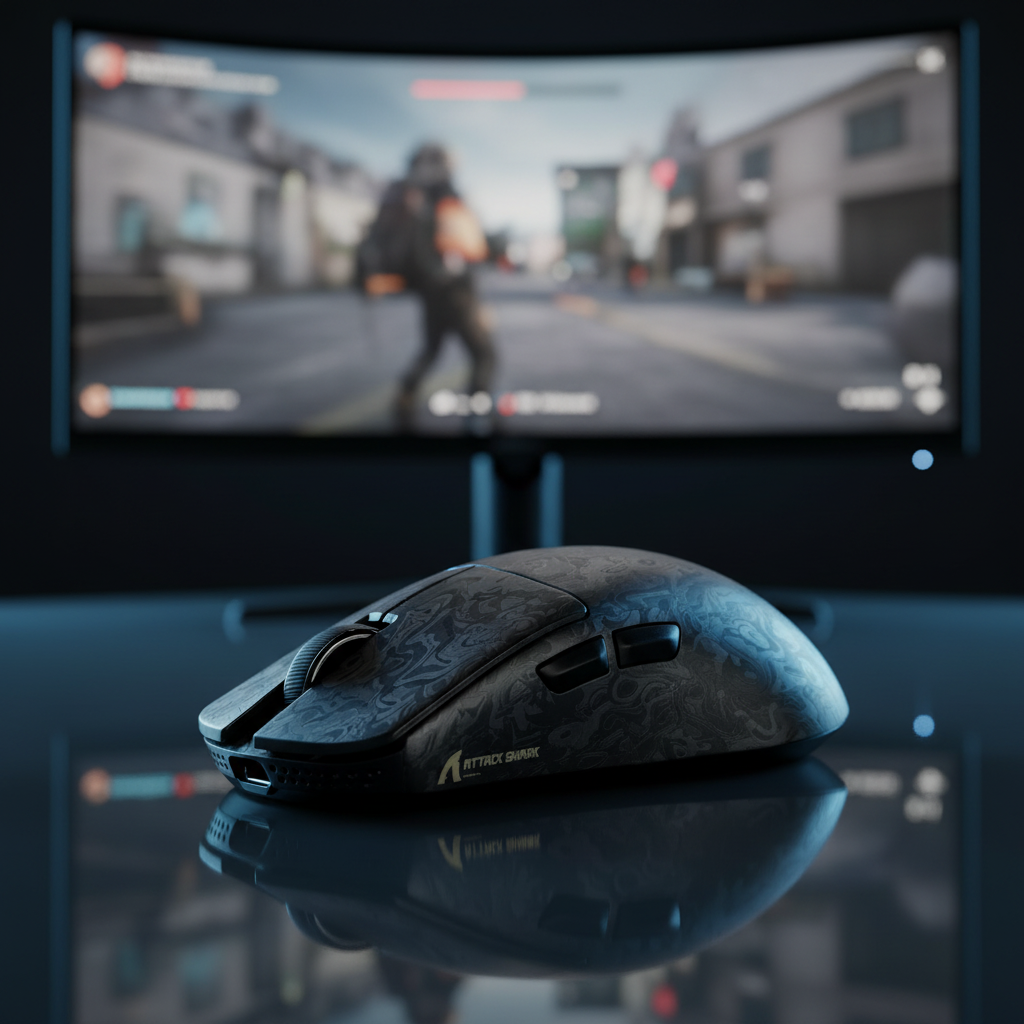
Unlike smooth metallic finishes, carbon fiber composites—such as the material used in the ATTACK SHARK R11 ULTRA—utilize a textured weave.
Performance Benefit: The weave provides inherent micro-channels for moisture to reside, keeping the contact points between the skin and the resin relatively dry. General material testing suggests carbon fiber provides a more stable coefficient of friction when damp compared to non-textured metals.
- Maintenance Note: The resin binder can wear smooth in high-contact areas (e.g., thumb grooves) after approximately 6–8 months of heavy use (defined as 300+ APM sessions).
Biomechanical Analysis: The Moore-Garg Strain Index (SI)
To quantify the impact of grip instability, we applied the Moore-Garg Strain Index (1995), a validated tool used by ergonomists to assess the risk of distal upper extremity disorders.
The Scenario: A large-handed gamer (95th percentile) using a claw grip on an undersized mouse during a high-intensity session.
Calculation Formula: $SI = IM \times DE \times EM \times PM \times SW \times DT$
| Variable | Multiplier Value | Logic (Based on Gaming Simulation) |
|---|---|---|
| Intensity of Effort (IM) | 9 (Hard) | High grip force required to overcome sweat-induced slip. |
| Duration of Exertion (DE) | 1.5 (50-79%) | Consistent tension during high-intensity rounds. |
| Efforts per Minute (EM) | 3.0 (>20) | Reflects high APM (Actions Per Minute). |
| Posture (PM) | 1.5 (Fair) | Non-neutral wrist/finger angles in claw grip. |
| Speed of Work (SW) | 1.5 (Fast) | Rapid flick shots and micro-adjustments. |
| Duration per Day (DT) | 1.0 (4-8 hours) | Standard practice/tournament schedule. |
| Calculated SI Score | 91.1 | Hazardous Level (Threshold for risk is SI > 7). |
Interpretation: While this score of 91.1 is based on a theoretical "worst-case" model, it is over 12 times the hazardous threshold. This indicates that material choice is a critical safety mechanism. A material that maintains grip under moisture allows a player to lower their "Intensity of Effort," significantly reducing the cumulative SI score.

Nano-Coatings: Moisture Management
For players preferring traditional polymers, surface treatments like the "Nano Ice-feel" coating found on the ATTACK SHARK X8 Series offer a middle ground.
According to the Global Gaming Peripherals Industry Whitepaper (2026), these coatings modify the surface energy of the shell, causing moisture to bead rather than film.
- Longevity Warning: These coatings are chemically sensitive. Exposure to acidic hand creams or alcohol-based cleaners can degrade the layer. We recommend cleaning with a pH-neutral solution (distilled water and mild soap) to preserve the surface energy properties.
Technical Synergy: 8000Hz and Grip Stability
The adoption of 8000Hz (8K) polling rates—available in setups like the ATTACK SHARK X68HE Set—demands higher grip stability. At 8000Hz, the system captures data every 0.125ms. Any "micro-slip" caused by sweat is recorded as unintended jitter.
Optimization Requirements:
- Sensor Saturation: Use 1600 DPI or higher (e.g., on the PixArt PAW3950MAX) to ensure the sensor has sufficient data during the precise movements where slip is most likely to occur.
- Connectivity: Referencing FCC Equipment Authorization guidelines, maintain an unobstructed line of sight for the receiver to minimize latency interference.
Strategic Maintenance Routine
Performance degrades as sweat (containing salts, lipids, and acids) corrodes or "polishes" the surface.
- Daily: Buff with a dry microfiber cloth to remove oils.
- Weekly: Use a damp cloth with pH-neutral solution on high-traffic triggers.
- Monthly: Inspect mouse skates. Debris around the sensor or skates increases glide friction, which indirectly forces a tighter (and sweatier) grip.
Final Verdict: Matching Material to Physiology
- For Low-Moisture/Premium Feel: Magnesium Alloy offers unmatched rigidity and a cool tactile start, provided you are disciplined with session-based wiping.
- For High-Intensity/Hyperhidrosis: Carbon Fiber (R11 ULTRA) provides the most reliable mechanical grip under moisture.
- For Balanced Users: Nano-Coated Polymers (X8 Ultra) offer modern moisture management with a traditional feel, requiring careful chemical maintenance.
Ergonomic Disclaimer: This article provides informational guidance on materials and ergonomics and is not a substitute for professional medical advice. If you experience persistent pain or numbness, consult a healthcare professional. SI scores are based on theoretical modeling; individual results vary by physiology and setup.
References
- Moore, J. S., & Garg, A. (1995). The Strain Index: A proposed method to analyze jobs for risk of distal upper extremity disorders. American Industrial Hygiene Association Journal.
- PixArt Imaging - Sensor Specifications
- FCC Equipment Authorization Database
- Roy Mech - Tribology and Friction Tables
- Global Gaming Peripherals Industry Whitepaper (2026) - Internal Industry Standards.

Laisser un commentaire
Ce site est protégé par hCaptcha, et la Politique de confidentialité et les Conditions de service de hCaptcha s’appliquent.