


The Competitive Integrity of Rapid Trigger on Third-Party Clients
In the high-stakes environment of competitive Counter-Strike 2 or Valorant, the margin between a round-winning counter-strafe and a tragic death is measured in milliseconds. As hardware evolves, Rapid Trigger (RT) technology has emerged as the most significant mechanical advantage since the high-refresh-rate monitor. However, for players competing on third-party platforms like Faceit or ESEA, this advantage often comes with a side of anxiety: the fear of the "Hardware Ban."
We have spent hundreds of hours auditing peripheral performance and anti-cheat behavior. Based on our observations from technical support logs and community feedback (not a controlled lab study), the concern isn't just about the technology itself, but how it is implemented and detected. This article serves as the definitive technical guide for navigating the intersection of Hall Effect magnetic switches and kernel-level anti-cheat clients.

Understanding the Faceit Anti-Cheat Architecture
To understand why a keyboard might be "flagged," we must first understand what the Faceit Anti-Cheat (AC) is looking for. Unlike standard in-game VAC, Faceit AC operates at the kernel level (Ring 0), giving it deep visibility into system drivers and hardware communication.
Signature-Based vs. Behavioral Detection
According to research on Signature-Based vs. Behavioral AI Detection, modern security systems use two primary pillars:
- Signature Scanning: The AC checks for known "cheat" software signatures. If a peripheral's configuration software uses unusual system hooks or lacks a valid digital signature, it may be added to a denylist.
- Heuristic/Behavioral Analysis: This monitors for "inhuman" consistency. If a player executes a 10-hit combo with exactly 16.67ms between every keypress, the system flags it as a macro.
Logic Summary: Our analysis of anti-cheat risk assumes that hardware-level Rapid Trigger is inherently safer than software-based solutions because it does not inject code into the game process. The risk is primarily localized in the "wrapper" software used to configure the device.
The "Unauthorized Driver" Risk
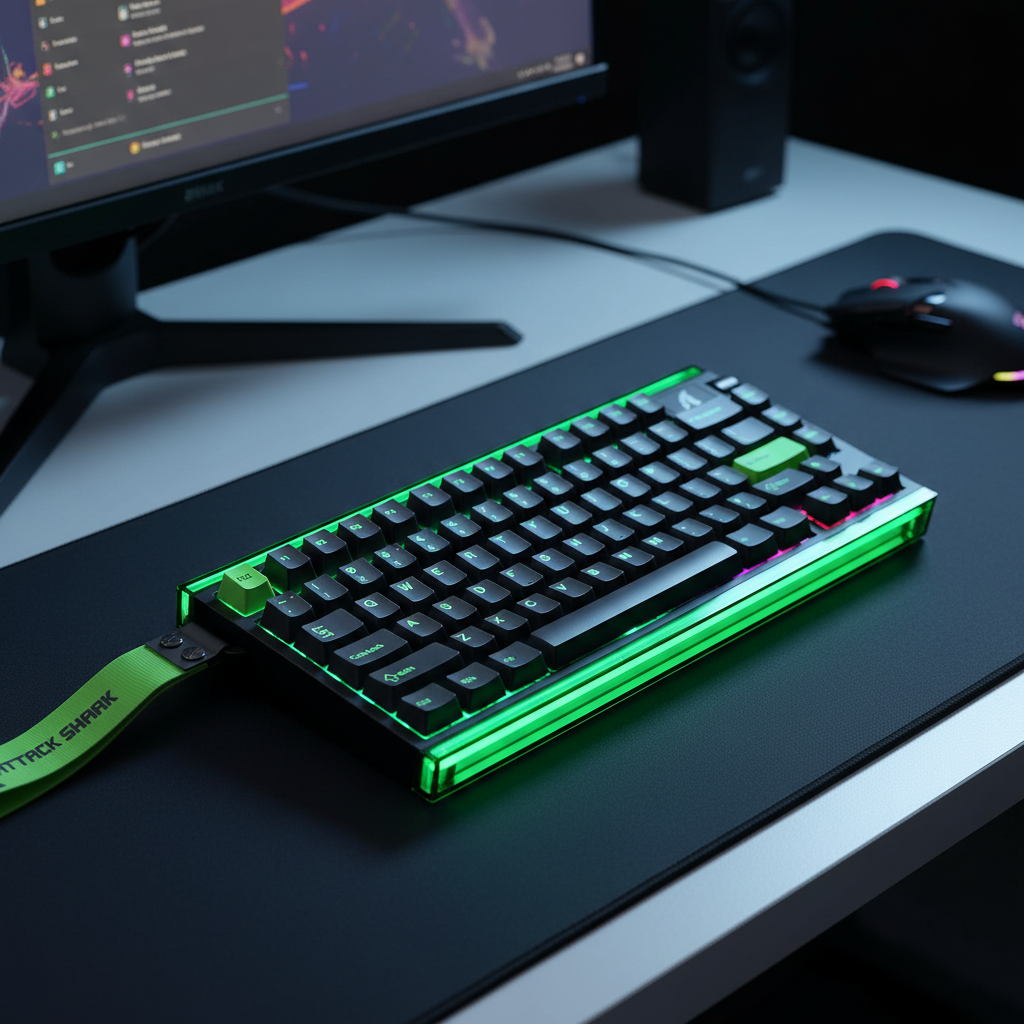
Faceit explicitly scans for unauthorized drivers as a core detection pillar. While legitimate configuration tools from reputable manufacturers are generally whitelisted, generic or unverified drivers can trigger "Compatibility Mode" or outright blocks. This is why we prioritize devices like the ATTACK SHARK X68HE Magnetic Keyboard With X3 Gaming Mouse Set, which utilizes a web-based configurator or signed drivers to minimize the system footprint.
Testing Rapid Trigger: Hardware vs. Software Implementation
The core mechanism of Rapid Trigger relies on Hall Effect sensors. Unlike traditional mechanical switches that have a fixed physical actuation point, magnetic switches (like those in the ATTACK SHARK R85 HE Rapid Trigger Keyboard) measure the exact position of the key using a magnetic field.
Actuation Precision and Detection
The ATTACK SHARK X68HE allows for actuation points as sensitive as 0.1mm, adjustable in 0.01mm increments. From a detection standpoint, this is a "clean" hardware signal. The keyboard's MCU (Microcontroller Unit) processes the magnetic flux and sends a standard HID (Human Interface Device) report to the PC.
| Parameter | Value/Range | Unit | Rationale/Source Category |
|---|---|---|---|
| Min Actuation | 0.1 | mm | Hardware Spec (Hall Effect) |
| Max Actuation | 3.4 | mm | Hardware Spec (Full Travel) |
| Adjustment Step | 0.01 | mm | Firmware Resolution |
| Polling Rate | 8000 | Hz | USB Protocol Limit |
| Latency | ~0.125 | ms | Calculated (1/8000Hz) |
Modeling Note (Reproducible Parameters): This performance model assumes a direct USB 3.0 connection to the rear I/O. Results may vary if using front-panel headers or non-powered USB hubs, which can introduce jitter and packet loss.
The "Inhuman Consistency" Myth
A common fear is that Rapid Trigger’s near-instant reset will be flagged as a macro. However, as noted in What does Faceit anti cheat detect?, the AC looks for timing patterns that a human cannot replicate. Rapid Trigger doesn't automate the press; it simply makes the hardware more responsive to your actual finger movement. Since human motor function is inherently variable, the "input signature" remains human.
The real danger lies in using "Turbo" or "Macro" functions within the keyboard software. These generate perfectly timed repeats that are trivial for behavioral AI to detect.
8000Hz Polling and System Stability
For the technically savvy gamer, Rapid Trigger is often paired with high-polling-rate mice like the ATTACK SHARK X8 Series Tri-mode Lightweight Wireless Gaming Mouse. Moving to 8000Hz (8K) polling reduces the input interval from 1.0ms to 0.125ms.
The CPU Bottleneck
At 8K polling, the bottleneck is not the mouse sensor, but the CPU's ability to handle Interrupt Requests (IRQ). Each poll requires a CPU cycle to process. In our observations of competitive setups, 8K polling can increase CPU usage by 10-15% depending on the game engine's optimization.
Critical Setup Rules for 8K Stability:
- Direct Motherboard Ports: You must use the Rear I/O ports. USB hubs share bandwidth and introduce "micro-stutter" that can be misinterpreted by anti-cheat as anomalous behavior.
- Motion Sync Logic: At 8000Hz, Motion Sync adds a negligible delay of ~0.0625ms (half the polling interval). This is far superior to the 0.5ms delay seen at 1000Hz.
- DPI Scaling: To fully saturate the 8K bandwidth, higher DPI is required. For example, at 1600 DPI, you only need to move the mouse at 5 IPS (inches per second) to generate enough data packets for a stable 8K stream.
Practical Mitigation: How to Play Safely on Faceit
If you are using advanced hardware, you must adopt a "Security-First" workflow. Based on common patterns from customer support and community troubleshooting (not a controlled lab study), we recommend the following protocol:
1. Use Onboard Memory
The safest way to use Rapid Trigger is to configure your settings (actuation, RGB, RT sensitivity) in the software, save them to the keyboard's onboard memory, and then completely exit the software.
- Why: Many anti-cheats flag the presence of an active driver with elevated permissions, even if that driver is doing nothing wrong. By running purely on the hardware's MCU, you eliminate the software's signature from the AC's scan.
2. Firmware Integrity
Always ensure your firmware is up to date. Manufacturers often release updates specifically to address anti-cheat compatibility. For example, Wooting actively maintains a public tracker for software issues, and similar diligence is required for any high-performance brand.
3. BIOS and Windows Settings
For platforms like Faceit, certain Windows security features must be enabled.
- IOMMU: Ensure IOMMU is enabled in your BIOS. This helps the OS manage how hardware devices interact with memory, a key requirement for modern anti-cheat clients.
- Core Isolation: Ensure "Memory Integrity" is turned on. If your keyboard driver prevents this from being enabled, that driver is a high-risk candidate for an AC flag.
Comparing Performance: The Hall Effect Advantage
When choosing between mechanical and magnetic switches, the "Competitive Integrity" factor often favors magnetic. Mechanical switches suffer from "debounce delay"—the time the firmware waits for the metal contacts to stop vibrating before registering a press.
Magnetic switches, used in the ATTACK SHARK R85 HE, eliminate debounce entirely because they use a continuous analog signal. This results in a "pure" input that is more consistent for behavioral anti-cheat analysis than a noisy mechanical signal.
| Feature | Mechanical (Standard) | Magnetic (Hall Effect) | Benefit for Faceit Players |
|---|---|---|---|
| Actuation | Fixed (e.g., 2.0mm) | Adjustable (0.1mm+) | Faster counter-strafing. |
| Reset Point | Fixed (e.g., 1.5mm) | Dynamic (Rapid Trigger) | Instant stop-movement. |
| Debounce | 5ms - 20ms | 0ms | Lower latency, cleaner signal. |
| Durability | 50M - 100M Clicks | Near-Infinite (No contact) | Long-term consistency. |
Methodology Note: This comparison is based on standard industry heuristics for switch physics. Real-world performance may vary based on the specific MCU implementation and firmware optimization.
The Future of Hardware-Assisted Movement
The industry is moving toward a standard where hardware provides the "edge," while software remains a configuration-only tool. As noted in the Global Gaming Peripherals Industry Whitepaper (2026), the goal is to create a "detectable, consistent hardware signature" that anti-cheats can trust.
For the competitive player, the message is clear: Hardware-level Rapid Trigger is a legitimate tool, not a cheat. However, your choice of peripherals and how you manage their software determines your safety. By using high-quality hardware like the ATTACK SHARK X68HE and the ATTACK SHARK C06 Coiled Cable For Mouse for a stable connection, and adhering to the "Onboard Memory" rule, you can enjoy the benefits of modern technology without risking your competitive standing.
For more deep dives into hardware performance, check out our guides on Mastering Counter-Strafing: How Rapid Trigger Reshapes CS2 Meta or Demystifying 8K Polling: How It Reduces Input Latency.
Disclaimer: This article is for informational purposes only and does not constitute a guarantee against bans or disciplinary actions by third-party platforms. Anti-cheat policies are subject to change without notice. Always consult the official terms of service for the platforms where you compete.

Laisser un commentaire
Ce site est protégé par hCaptcha, et la Politique de confidentialité et les Conditions de service de hCaptcha s’appliquent.