


Choisir les formes de souris pour les joueurs polyvalents : le test de polyvalence
Les joueurs polyvalents et les streamers multi-genres font face à un dilemme matériel unique. Contrairement aux athlètes professionnels d’esports qui peuvent se spécialiser dans un seul titre pendant des années, les joueurs polyvalents alternent entre des FPS à haute précision, des MOBA intensifs en clics et des RPG de longue durée. Une souris optimisée uniquement pour un genre crée souvent des frictions dans un autre. Une coque hyper-légère et petite peut dominer dans un FPS axé sur le suivi mais provoquer une fatigue de la main lors d’un raid MMO de six heures.
Pour construire une configuration « daily driver » performante et polyvalente sans prix premium, les utilisateurs doivent dépasser les spécifications marketing. Ce guide établit un cadre technique pour évaluer la polyvalence des coques de souris via la mécanique géométrique, la logique de saturation des capteurs et le test de résistance « Rotation de Genre ».
Mécanique géométrique : la théorie de la position de la bosse
Dans la conception des périphériques de jeu, la « bosse arrière » désigne le point le plus haut de l'arche de la souris. Bien que beaucoup d'acheteurs se concentrent sur la hauteur de cette bosse, les testeurs expérimentés et les auditeurs matériels ont observé que la position longitudinale de la bosse est bien plus cruciale pour les styles de prise hybrides.
Soutien métacarpien et transitions de prise
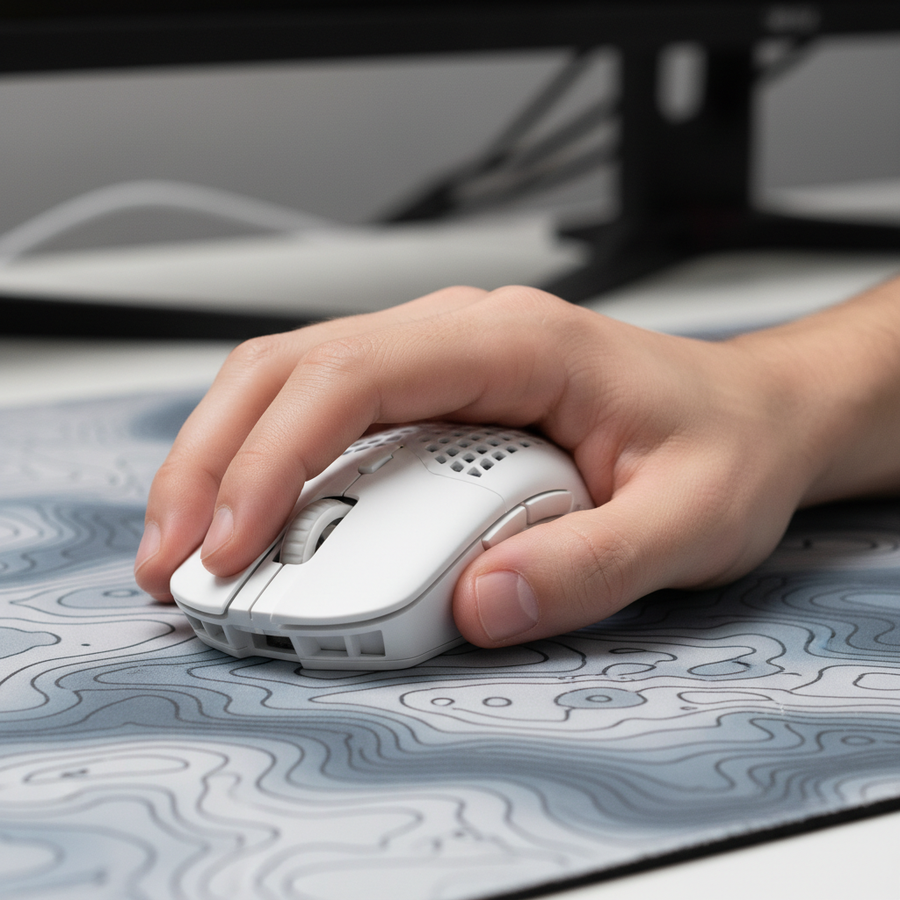
Une bosse centrée directement sous les os métacarpiens de la main (la zone centrale de la paume) fournit une base stable pour les prises paume, courantes dans les RPG pour le confort. Cependant, une coque polyvalente doit aussi permettre aux doigts de se courber facilement en prise griffe ou au bout des doigts pour les mouvements rapides requis dans les FPS.
Si la bosse est trop en arrière, elle limite l'amplitude verticale des micro-ajustements au bout des doigts. Si elle est trop en avant, la paume perd le contact, ce qui entraîne une instabilité lors du suivi. Selon EloShapes, comparer les silhouettes de différentes coques révèle qu'un biais de bosse « milieu-arrière » offre généralement le meilleur compromis pour les joueurs polyvalents.
Résumé logique : L'heuristique géométrique
- Observation : D'après les retours du support client et la gestion des retours, les utilisateurs signalent souvent une « instabilité » lorsque la coque est trop courte pour la taille de leur main, les obligeant à adopter une prise au bout des doigts non intentionnelle lors de tâches à faible intensité.
- Heuristique : Pour un véritable « usage quotidien », la longueur de la coque doit représenter environ 60-65 % de la longueur totale de la main (de la pliure du poignet jusqu'au bout du majeur). Ce ratio facilite les transitions dynamiques de prise sans nécessiter d'ajustement conscient.
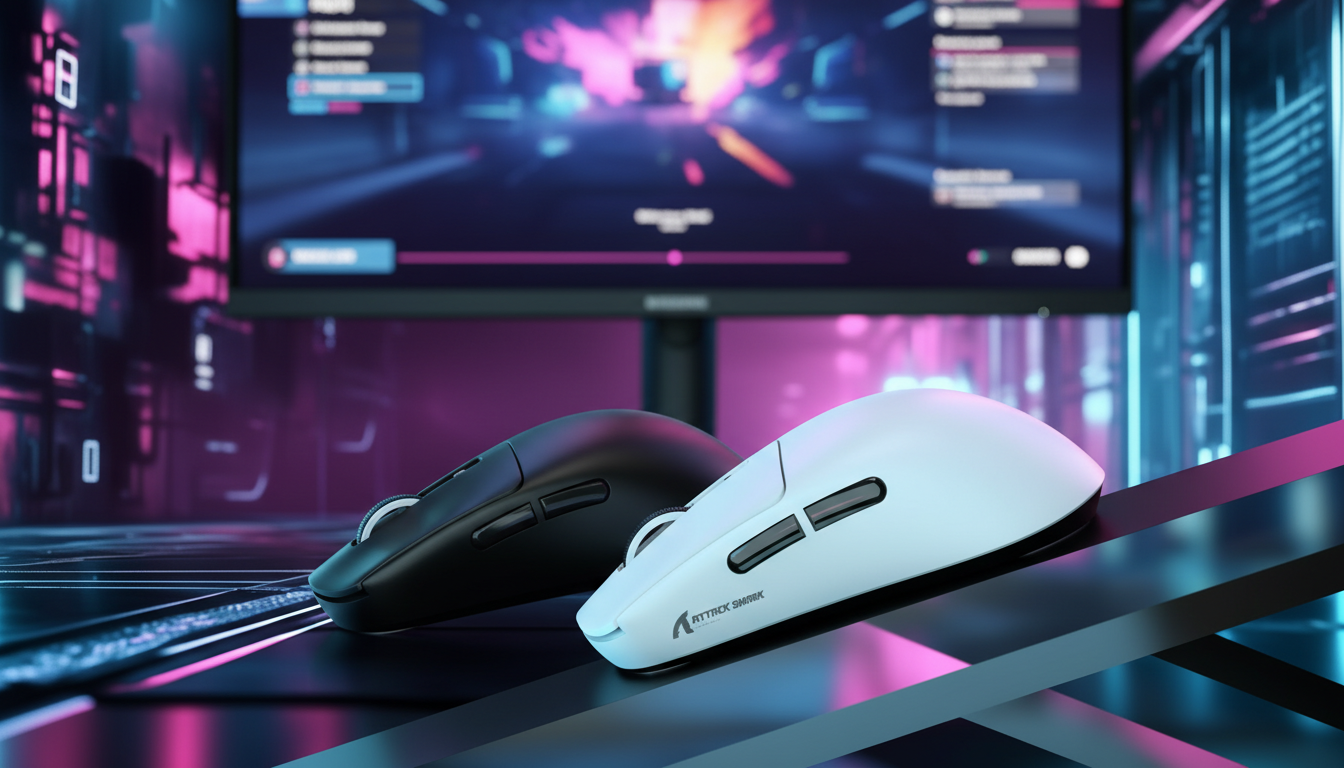
La ATTACK SHARK G3 Tri-mode Wireless Gaming Mouse 25000 DPI Ultra Lightweight utilise une coque ergonomique sans trous pesant environ 59g. Ce poids est obtenu grâce à un procédé de moulage par injection refroidi à l'azote, qui maintient l'intégrité structurelle tout en réduisant la masse — un facteur crucial pour les joueurs qui doivent passer des mouvements lents et délibérés d'un RPG aux balayages à grande vitesse d'un FPS.
Le test de rotation de genre : un cadre pratique
Pour vérifier la polyvalence d'une souris, les utilisateurs doivent effectuer un test de « Rotation de genre ». Ce n'est pas une expérience de laboratoire contrôlée, mais un modèle de reconnaissance de motifs utilisé par les passionnés pour identifier les « points de friction » dans la conception d'une souris.
Protocole de test
- Heure 1 (FPS de suivi) : Jouez à un titre comme Apex Legends ou Overwatch. Concentrez-vous sur la verticalité et la fluidité. Notez si la souris semble "collée" à la paume lors de tirs à angle élevé.
- Minutes 30-60 (MOBA à clics intensifs) : Jouez à League of Legends ou Dota 2. Concentrez-vous sur la force d'activation des boutons principaux. Une souris polyvalente doit avoir un clic assez léger pour éviter la fatigue lors de sessions à plus de 300 actions par minute (APM).
- Heure 2+ (RPG prolongé) : Jouez à Cyberpunk 2077 ou Final Fantasy XIV. Concentrez-vous sur le support de la paume. Si la main commence à se crisper, la coque est probablement trop étroite pour la stabilité des grandes mains.
La souris qui nécessite le moins d'ajustement conscient de la prise entre ces trois phases distinctes est la véritable gagnante en polyvalence.
| Genre | Demande mécanique principale | Caractéristique de la coque requise |
|---|---|---|
| FPS | Flicks à faible friction & verticalité | Léger (<65g), faible bosse |
| MOBA | Activation à haute fréquence | Interrupteurs tactiles à faible latence |
| RPG | Confort durable | Contact complet de la paume, courbe ergonomique |
| RTS | Micro-ajustements de précision | Poids légèrement orienté vers l'avant |
Performance technique : Saturation du capteur et interrogation 8K
Pour les streamers variés, la surcharge technique est essentielle. À mesure que la technologie d’affichage progresse, l’interaction entre le capteur de la souris et les requêtes d’interruption (IRQ) du système devient un goulot d’étranglement en termes de performance.
Les calculs du 8000Hz (8K)
Les souris modernes haute performance, telles que la ATTACK SHARK R11 ULTRA Carbon Fiber Wireless 8K PAW3950MAX Gaming Mouse, offrent des taux de sondage allant jusqu’à 8000Hz. Pour comprendre leur valeur, il faut examiner les intervalles de latence :
- 1000Hz : intervalle de 1,0 ms.
- 8000Hz : intervalle de 0,125 ms.
Une idée reçue est que Motion Sync — une fonction conçue pour synchroniser les données du capteur avec le sondage USB — ajoute un délai fixe de 0,5 ms. En réalité, comme indiqué dans le Guide d’installation NVIDIA Reflex Analyzer, la latence de Motion Sync est déterministe et correspond généralement à la moitié de l’intervalle de sondage. À 8000Hz, ce délai est réduit à environ 0,0625 ms, ce qui le rend pratiquement négligeable.
Contraintes CPU et système
Cependant, le sondage 8K n’est pas une fonction « régler et oublier ». Il impose une charge importante sur la performance monocœur du CPU en raison de la fréquence élevée de traitement des IRQ. Les utilisateurs doivent s’assurer d’utiliser des ports directs de la carte mère (I/O arrière) plutôt que des concentrateurs USB ou des connecteurs avant pour éviter la perte de paquets. De plus, saturer la bande passante à 8000Hz nécessite des vitesses de déplacement (IPS) et des réglages DPI spécifiques. Par exemple, pour maintenir un signal 8K stable, un utilisateur doit généralement se déplacer à 10 IPS à 800 DPI, alors qu’à 1600 DPI, seulement 5 IPS sont nécessaires.
Le Livre blanc mondial sur l’industrie des périphériques gaming (2026) souligne que, avec la généralisation des écrans 240Hz et 360Hz chez les streamers variés, des taux de sondage plus élevés sont nécessaires pour réduire le micro-saccade perceptible lors des panoramiques rapides de caméra.
Science des matériaux et répartition du poids
Le matériau de la coque de la souris impacte directement sa polyvalence. L’ATTACK SHARK R11 ULTRA utilise un composite en fibre de carbone, ce qui lui permet d’atteindre un poids ultra-léger de 49g tout en conservant une rigidité structurelle.
Pondération biaisée vers l'avant
L'analyse des passionnés suggère qu'une répartition du poids légèrement orientée vers l'avant est idéale pour le jeu multi-genre. Cette sensation « avant-lourde » aide à l'accélération initiale des mouvements rapides dans les FPS en fournissant un point de pivot clair. À l'inverse, pour la micro-gestion RTS, un centre de masse équilibré empêche la souris de donner une sensation de flottement ou d'imprécision.
Note de modélisation : impact de la répartition du poids
- Type de modèle : Analyse de sensibilité de la physique du point de pivot dans les mouvements à haute DPI.
- Hypothèses : Prise en griffe standard, 1600 DPI, sensibilité 40cm/360.
- Condition limite : Ce modèle peut ne pas s'appliquer aux « wrist aimers » ultra-sensibles qui ne soulèvent pas la souris.
| Paramètre | Valeur | Justification |
|---|---|---|
| Poids cible | 45g - 60g | Optimal pour réduire la fatigue dans tous les genres |
| Taux de rafraîchissement | 1000Hz - 8000Hz | Évolutif en fonction de la charge CPU et du moteur de jeu |
| Capteur | Capteur PixArt PAW3950MAX | Norme industrielle pour un LOD faible et un IPS élevé |
| Revêtement | Nano-Metal Ice | Maintient la prise en main lors de sessions à forte transpiration |
Synergie matérielle : surfaces et connectivité
Une souris polyvalente n'est efficace que sur la surface sur laquelle elle glisse et avec le câble qui la charge. Pour les joueurs polyvalents, une surface de « contrôle » est souvent supérieure à une surface purement « vitesse ».
La surface équilibrée
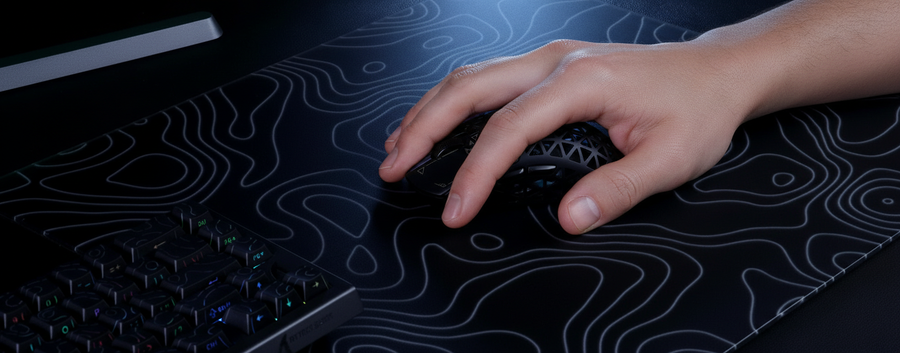
Le ATTACK SHARK CM05 Tempered Glass Gaming Mouse Pad présente une texture nano-micro-gravée. Contrairement aux tapis en tissu traditionnels qui peuvent développer des « zones lentes » avec le temps, le verre trempé offre un environnement constant à très faible friction. Cela est bénéfique pour les balayages rapides nécessaires dans League of Legends et le suivi précis requis dans Apex Legends.
Intégrité de la connectivité
Alors que la performance sans fil est la norme, la charge reste un point de friction. Le ATTACK SHARK C06 Coiled Cable For Mouse utilise des connecteurs aviator en métal de haute qualité et un blindage TPU pour offrir une connexion stable et résistante aux interférences. Pour les streamers polyvalents qui ne peuvent pas se permettre une coupure pendant une diffusion en direct, un câble renforcé garantit que la souris reste fonctionnelle même lors d'une charge filaire d'urgence.
Conformité et fiabilité en ingénierie
Lors du choix d'un « daily driver », l'autorité se trouve dans la transparence réglementaire. Les souris haute performance doivent respecter des normes strictes en matière de sans-fil et de sécurité pour garantir une fiabilité à long terme.
Les composants sans fil des souris de jeu modernes sont soumis à l'autorisation des équipements FCC aux États-Unis et aux exigences de la liste des équipements radio ISED Canada. Ces certifications garantissent que les signaux 2,4 GHz ne perturbent pas les autres appareils domestiques et que les batteries lithium-ion respectent les protocoles de sécurité.
De plus, les produits vendus dans l'Union européenne doivent être conformes à la Directive européenne sur les équipements radio (RED), qui couvre la santé, la sécurité et la compatibilité électromagnétique. Pour le joueur polyvalent, ces détails techniques « en coulisses » font la différence entre une souris qui dure des années et une qui échoue lors d'une mise à jour critique du firmware.
Liste de contrôle résumée pour le joueur polyvalent
Pour trouver une souris qui survive à la transition du FPS au RPG, recherchez les « Repères de polyvalence » suivants :
- Géométrie de la coque : Une bosse moyenne à l'arrière qui soutient les métacarpiens tout en permettant une Précision verticale.
- Objectif de poids : Entre 45g et 60g pour équilibrer vitesse et stabilité.
- Spécifications du capteur : Un capteur PixArt PAW3395 ou PAW3950 pour un suivi fiable sur différentes surfaces.
- Durabilité des switches : Micro-switchs optiques (certifiés pour plus de 70 millions de clics) pour résister au haut APM des titres MOBA.
- Maturité du pilote : Prise en charge des configurateurs logiciels web et locaux pour les réglages DPI et macros.
En appliquant le test de « Rotation des genres » et en comprenant les calculs derrière le polling 8K, les joueurs soucieux de leur budget peuvent s'assurer un « daily driver » haut de gamme qui fonctionne comme un outil spécialisé dans chaque genre auquel ils jouent.
Avertissement : Cet article est uniquement à titre informatif. Une pratique prolongée du jeu et une utilisation répétée de la souris peuvent entraîner des tensions musculo-squelettiques. En cas de douleur ou d'inconfort persistant, consultez un professionnel de santé qualifié ou un kinésithérapeute. Ce guide ne constitue pas un avis médical professionnel.
Sources :