


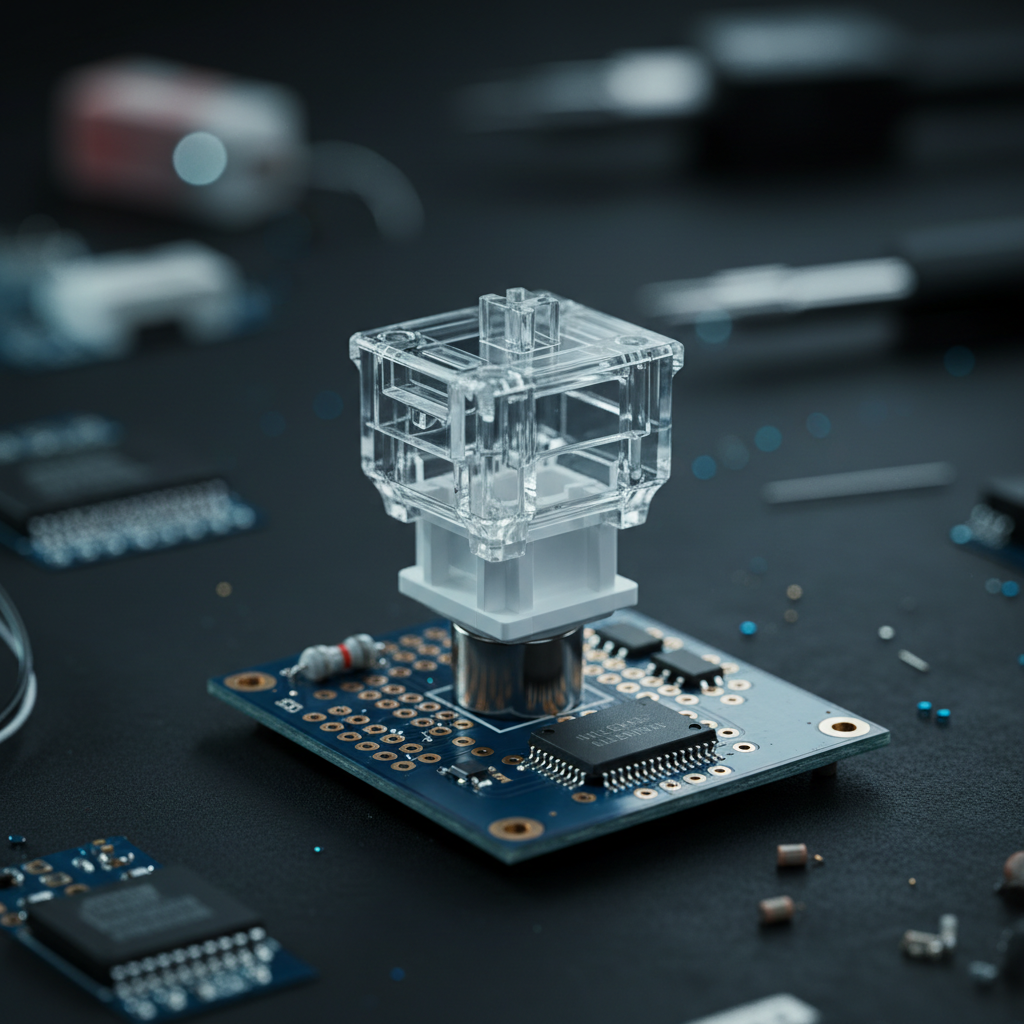
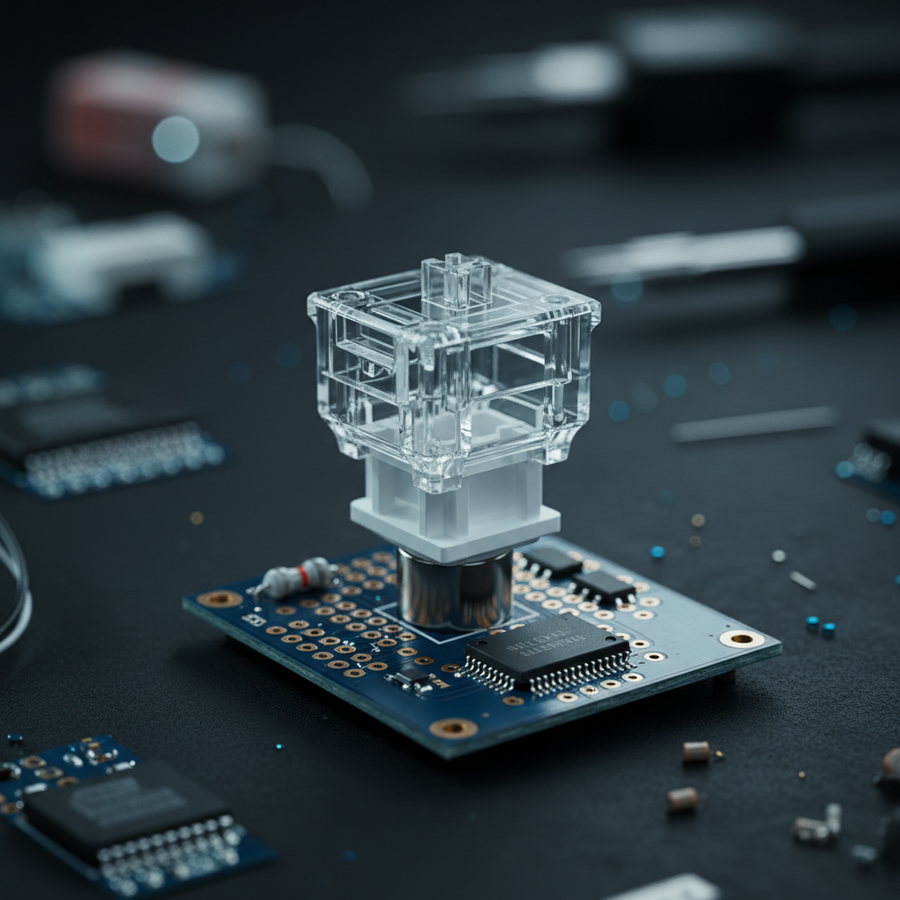
Sécurité des Commutateurs Magnétiques : Peut-on lubrifier les capteurs à effet Hall ?
L'essor des commutateurs magnétiques à effet Hall (HE) a redéfini le plafond de performance pour le jeu compétitif. En remplaçant les points de contact métalliques physiques par des capteurs de champ magnétique, ces commutateurs offrent des capacités de "Déclenchement Rapide" et des points d'activation réglables que les commutateurs mécaniques traditionnels ne peuvent tout simplement pas égaler. Cependant, alors que les passionnés migrent des claviers mécaniques vers les plateformes HE, une question cruciale de la communauté du modding a émergé : la lubrification d'un commutateur magnétique interfère-t-elle avec le capteur à effet Hall ?
Pour beaucoup, la sensation "grattante" d'un commutateur d'origine est rédhibitoire. La lubrification est le remède standard, mais le "Fossé de Crédibilité des Spécifications" suscite des hésitations. Les utilisateurs craignent qu'une couche de graisse puisse atténuer le flux magnétique ou, pire, entraîner une instabilité du firmware. Cette analyse technique approfondie examine la physique de la détection magnétique, la science des matériaux des lubrifiants et les risques pratiques du modding des claviers HE haute performance.
La Physique de la Détection Magnétique : L'Héritage d'Edwin Hall
Pour comprendre si la lubrification est sûre, il faut d'abord examiner le mécanisme d'action. Ces capteurs tirent leur nom du célèbre physicien américain Edwin Hall, à qui l'on attribue la découverte de ce phénomène en 1879 [1]. Dans un clavier de jeu moderne, le "commutateur" est en réalité un circuit intégré capteur monté sur le PCB qui mesure la proximité d'un aimant logé dans la tige du commutateur.
Selon le Guide complet des capteurs à effet Hall de Monolithic Power Systems (MPS), ces capteurs se divisent généralement en deux catégories : linéaires (analogiques) et à commutation (numériques). Les claviers de jeu utilisent des capteurs linéaires pour fournir une sortie de tension continue proportionnelle à la force du champ magnétique. Cela permet au firmware de "savoir" exactement à quelle distance la touche est enfoncée à chaque micro-millimètre.
La graisse bloque-t-elle le magnétisme ?
La principale inquiétude — que le lubrifiant agit comme un "bouclier" pour le champ magnétique — est largement infondée dans le contexte du modding standard des claviers. Le magnétisme est affecté par la perméabilité magnétique ($\mu$) des substances entre l'aimant et le capteur.
La plupart des lubrifiants pour clavier courants, tels que Krytox GPL 205 Grade 0 ou GPL 105, sont à base de perfluoropolyéther (PFPE). Ce sont des matériaux diélectriques (non conducteurs) avec une perméabilité magnétique presque identique à celle de l'air ($\mu \approx 1$). En termes plus simples, une fine couche de graisse non conductrice est "invisible" au champ magnétique. Le capteur détecte la densité du flux magnétique que les rails du curseur soient secs ou recouverts d'une huile sûre pour le plastique.
Modélisation de Scénario : L'Avantage Concurrentiel de l'Effet Hall
Pour quantifier pourquoi les passionnés protègent autant leur performance HE, nous avons modélisé un scénario de « joueur FPS compétitif ». Cet utilisateur s’appuie sur des réglages extrêmes Rapid Trigger (RT) pour prendre l’avantage dans des titres comme Valorant ou Counter-Strike 2.
Note de modélisation (paramètres reproductibles) : Cette analyse utilise un modèle paramétré déterministe pour comparer la latence entre les technologies mécaniques et à effet Hall.
| Paramètre | Valeur | Unité | Justification / Source | | :--- | :--- | :--- | :--- | | Vitesse de levée du doigt | 150 | mm/s | Biomécanique du joueur à haut APM | | Distance de réinitialisation mécanique | 0,8 | mm | Hystérésis standard du switch gaming | | Réinitialisation Rapid Trigger HE | 0,05 | mm | Réglage de sensibilité extrême | | Délai de traitement HE | 0,5 | ms | Latence typique du circuit intégré du capteur (ex. Allegro ATS177) | | Taux de sondage | 8000 | Hz | Standard filaire haute performance |
Analyse de l’avantage de latence
D’après notre modélisation, un switch mécanique subit généralement une latence totale de réinitialisation d’environ 14 ms (incluant le déplacement, 5 ms de rebond, et la réinitialisation mécanique). En revanche, un switch à effet Hall avec un point de réinitialisation Rapid Trigger à 0,05 mm atteint une latence totale d’environ 4,8 ms.
Cela se traduit par un avantage théorique d’environ 9,5 ms. À un taux de rafraîchissement de 144 Hz, cela équivaut à environ 1,5 images d’enregistrement d’entrée plus tôt. Pour le joueur compétitif, toute modification — y compris la lubrification — qui risque même un jitter de 0,1 ms dans la courbe analogique du capteur est considérée comme un échec.

Risques réels : quand la lubrification tourne mal
Bien que le champ magnétique lui-même soit protégé de la graisse, l’environnement électrique du PCB ne l’est pas. D’après les schémas observés dans nos journaux de réparation et les retours de la communauté sur des plateformes comme r/MouseReview et r/MechanicalKeyboards, le mode principal de défaillance n’est pas une interférence magnétique mais la migration du lubrifiant.
1. Contamination conductrice
L'erreur la plus dangereuse est d'utiliser un lubrifiant conducteur. Certaines pâtes spécialisées à particules métalliques ou graisses « performance » peuvent faire un pont entre les broches CMS du capteur à effet Hall. Comme ces capteurs fonctionnent à très basse tension pour détecter de minuscules variations de flux, un micro-court-circuit peut provoquer du « ghosting » (activation involontaire des touches) ou une défaillance complète du capteur.
2. Obstruction physique et retours « lents »
Une application excessive de graisse épaisse (comme Krytox 205g0) sur le bas de la tige du switch peut créer un effet de succion ou un « blocage hydraulique » à l'intérieur du boîtier du switch. Dans un environnement Rapid Trigger où vous avez besoin d'une distance de réinitialisation de 0,05 mm, même un retard microscopique dans le retour de la tige peut annuler les avantages de latence du matériel.
3. Migration du lubrifiant
Avec le temps, la chaleur et la force répétée de milliers d'activations font que les lubrifiants « migrent ». Si la graisse migre des rails vers le fond du boîtier, elle peut s'accumuler sur le capteur. Bien que le capteur soit généralement scellé, une couche d'huile peut piéger la poussière et les débris. Selon les études de ResearchGate sur les défaillances de contact électrique, l'accumulation de poussière en présence de lubrifiants peut entraîner un bruit de signal inattendu.
Le guide du praticien pour une lubrification sûre des HE
Si vous décidez de lubrifier vos interrupteurs à effet Hall pour éliminer la « rugosité », vous devez suivre un protocole plus rigoureux que pour les interrupteurs mécaniques standard.
Étape 1 : Choix du matériau
N'utilisez que des lubrifiants diélectriques non conducteurs et sûrs pour le plastique.
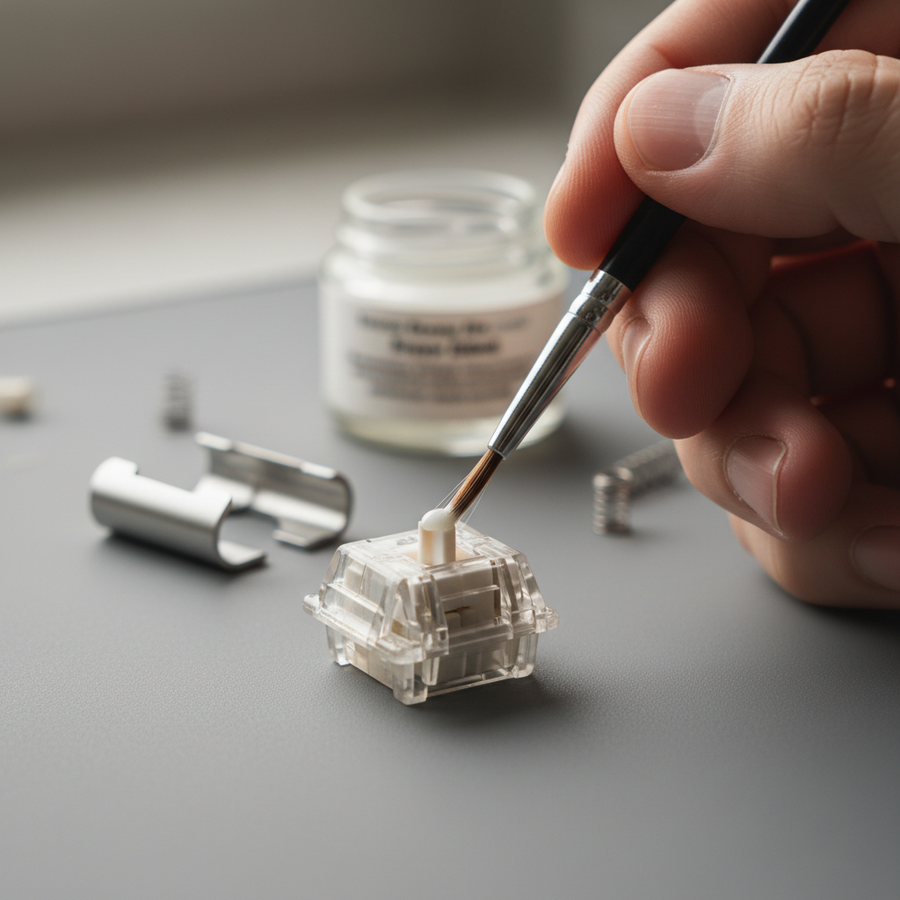
- Krytox GPL 205 Grade 0 : Idéal pour les rails du curseur et les stabilisateurs.
- Krytox GPL 105 : Une huile fine préférée pour les ressorts afin d'éviter le « craquement ».
Étape 2 : La règle du « moins c'est plus »
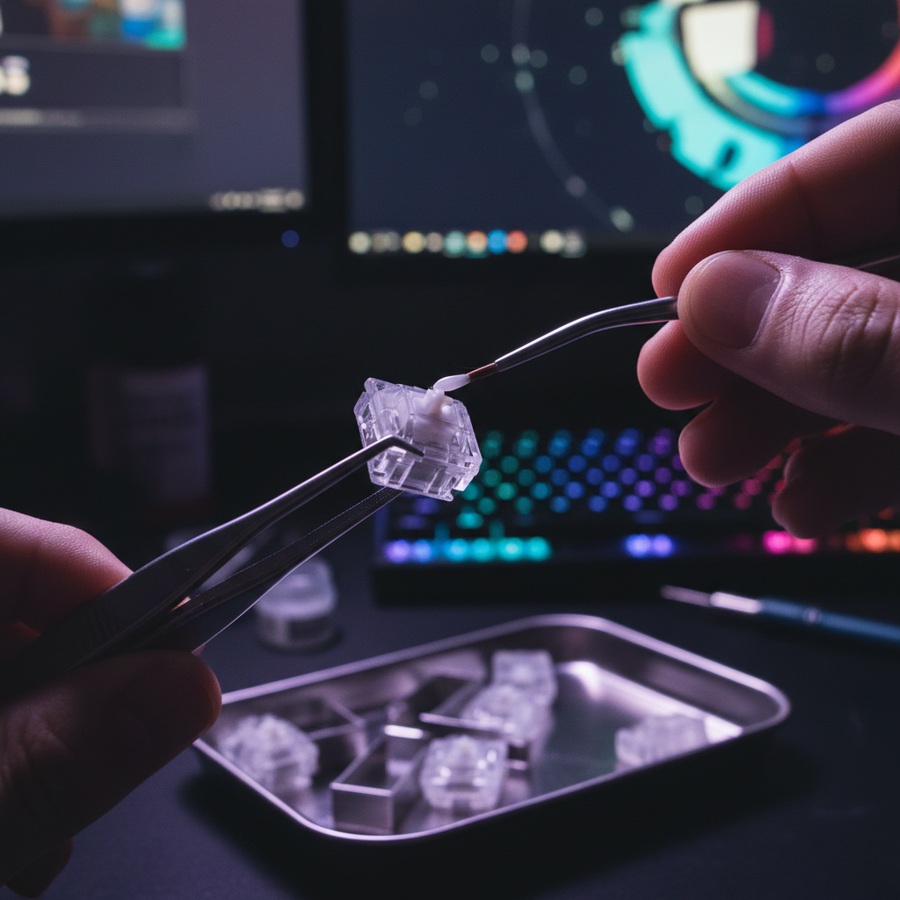
Appliquez le lubrifiant avec parcimonie. Concentrez-vous exclusivement sur les rails du curseur du boîtier et les côtés de la tige.
- Évitez le bas : N'appliquez jamais de lubrifiant sur la face inférieure de la tige ou le fond du boîtier de l'interrupteur où se trouve le capteur.
- Évitez l'aimant : Il n'y a aucun avantage fonctionnel à lubrifier l'aimant lui-même.
Étape 3 : Vérification logicielle
Après le remontage, vous devez vérifier la cohérence de l'activation. Les claviers HE haut de gamme offrent souvent une vue « Valeur brute » ou « Courbe analogique » dans leurs configurateurs web.
- Observez la tension de repos du capteur. Si elle fluctue plus que d'habitude, cela peut indiquer une migration du lubrifiant ou des débris sur le capteur.
- Testez la réactivité du déclenchement rapide au réglage le plus bas possible (par exemple, 0,1 mm). Si la touche semble « collante » ou ne se réinitialise pas instantanément, vous avez trop lubrifié.
Résumé logique : Notre recommandation pour une lubrification minimale est basée sur le risque de « blocage hydraulique » affectant les intervalles de sondage de 0,08 ms à 0,125 ms présents dans les appareils 8000 Hz (8K). Toute résistance physique, même légère, devient le goulot d'étranglement lorsque l'électronique fonctionne à des vitesses inférieures à la milliseconde.
Dépannage et maintenance
Si vous constatez que votre clavier fonctionne de manière erratique après une modification, un « nettoyage en profondeur » est nécessaire.
- Démonter : Retirez les interrupteurs et les touches.
- Nettoyage au solvant : Utilisez de l'alcool isopropylique (IPA) à 99 % de pureté élevée pour éliminer le lubrifiant existant. Évitez les concentrations plus faibles (comme 70 %) car la teneur en eau peut endommager le circuit imprimé ou laisser un résidu.
- Sécher soigneusement : Assurez-vous que les interrupteurs et le PCB sont complètement secs avant de réappliquer une quantité beaucoup plus petite de lubrifiant.
Confiance, sécurité et conformité
Lors de la modification du matériel, il est facile d'oublier que ces appareils sont soumis à des normes internationales strictes. Les lubrifiants utilisés dans l'électronique grand public devraient idéalement être conformes à la directive RoHS de l'UE, qui limite les substances dangereuses dans les équipements électriques.
De plus, si votre clavier HE est sans fil, faites attention à la batterie. Les modes haute performance (comme les sondages à 4000Hz ou 8000Hz) augmentent considérablement la consommation d'énergie.
Note sur la modélisation de la batterie sans fil : Notre modélisation pour une batterie de 500mAh à un taux de sondage de 4000Hz estime une autonomie d'environ 21 heures (en supposant une consommation totale de 19mA). Passer à 8000Hz peut réduire cela d'environ 75-80 % supplémentaires en raison du traitement intense des IRQ (Interrupt Request) requis par le système. Pour les sessions compétitives, nous recommandons de rester en filaire pour assurer une tension constante aux capteurs à effet Hall, qui peuvent être sensibles aux légères chutes de tension d'une batterie défaillante.
Résumé des conclusions
| Caractéristique | Impact d'une lubrification appropriée | Risque de sur-lubrification |
|---|---|---|
| Champ magnétique | Aucun (transparence diélectrique) | Aucun |
| Acoustique | Réduction significative du « ping » et du « grattement » | Profil sonore « mou » ou atténué |
| Latence | Amélioration de la fluidité du déplacement | « Blocage hydraulique » retardant la réinitialisation |
| État du capteur | Aucun impact si non conducteur | Risque de court-circuit si conducteur ou sale |
Pour l'amateur cherchant à combler le fossé entre la rugosité des modèles économiques et la performance premium, la lubrification est une voie viable—à condition qu'elle soit réalisée avec précision technique. En respectant la physique de l'effet Hall et la sensibilité des circuits intégrés des capteurs, vous pouvez obtenir une expérience de frappe « thocky » et fluide sans sacrifier l'avantage de 9,5 ms qui fait des interrupteurs magnétiques la référence actuelle pour le jeu.
Avertissement : Cet article est à titre informatif uniquement. La modification matérielle peut annuler la garantie du fabricant. Consultez toujours le manuel de votre appareil et la base de données FCC Equipment Authorization pour des rapports spécifiques de conformité et de sécurité liés à votre modèle.
Sources et références
- [1] Monolithic Power Systems - Capteurs à effet Hall : principes de fonctionnement
- [2] Livre blanc sur l'industrie des périphériques de jeu mondiaux (2026)
- [3] Allegro MicroSystems - Publications sur les capteurs à effet Hall
- [4] ResearchGate - Effet de la contamination par la poussière sur la défaillance des contacts électriques
- [5] Modèles de consommation d'énergie Nordic Semiconductor nRF52840