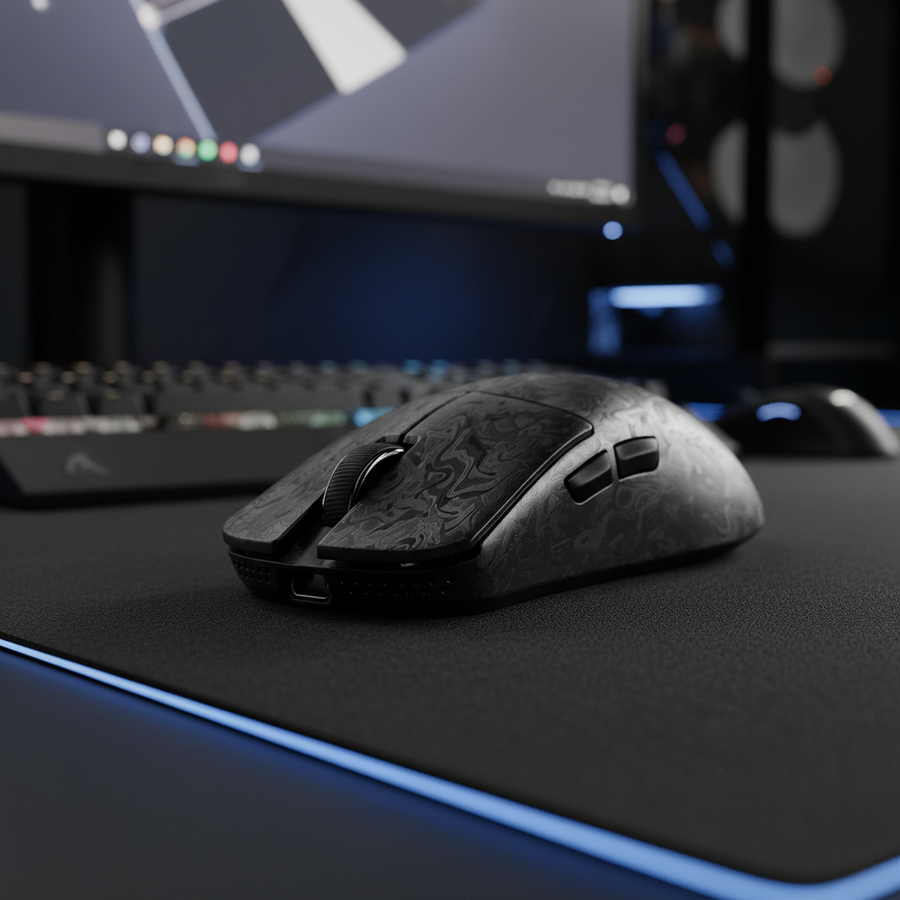
Points clés à retenir (réponse en premier) :
- Le bénéfice principal : Les profils avant bas de souris (16–18mm) peuvent réduire l'angle d'arche du doigt, diminuant potentiellement la tension de l'avant-bras et améliorant la vitesse des micro-ajustements en jeu FPS.
- Idéal pour : les joueurs avec des mains moyennes à grandes (18–20cm) utilisant une prise hybride en griffe ou au bout des doigts.
- Métrique pratique : Visez une hauteur avant qui correspond approximativement à l'épaisseur de votre index au premier pli pour une posture de repos plus naturelle.
Note de transparence : Ce guide est produit par l'équipe éditoriale d'Attack Shark et intègre des données issues de nos livres blancs internes, observations d'ateliers et tests produits. Bien que nous fassions référence aux normes ISO et aux spécifications techniques, les métriques de performance spécifiques fournies sont des estimations illustratives basées sur notre modélisation interne.
La biomécanique du bord avant : comment quelques millimètres influencent les FPS à enjeux élevés
Dans la quête d'un avantage compétitif, les gamers privilégient souvent les spécifications du capteur et le poids. Cependant, la hauteur avant de la coque de la souris est une variable ergonomique critique qui influence souvent la rapidité des transitions de prise. Pour les joueurs spécialisés dans les shooters tactiques ou le suivi en arène, le profil avant agit comme un levier biomécanique.
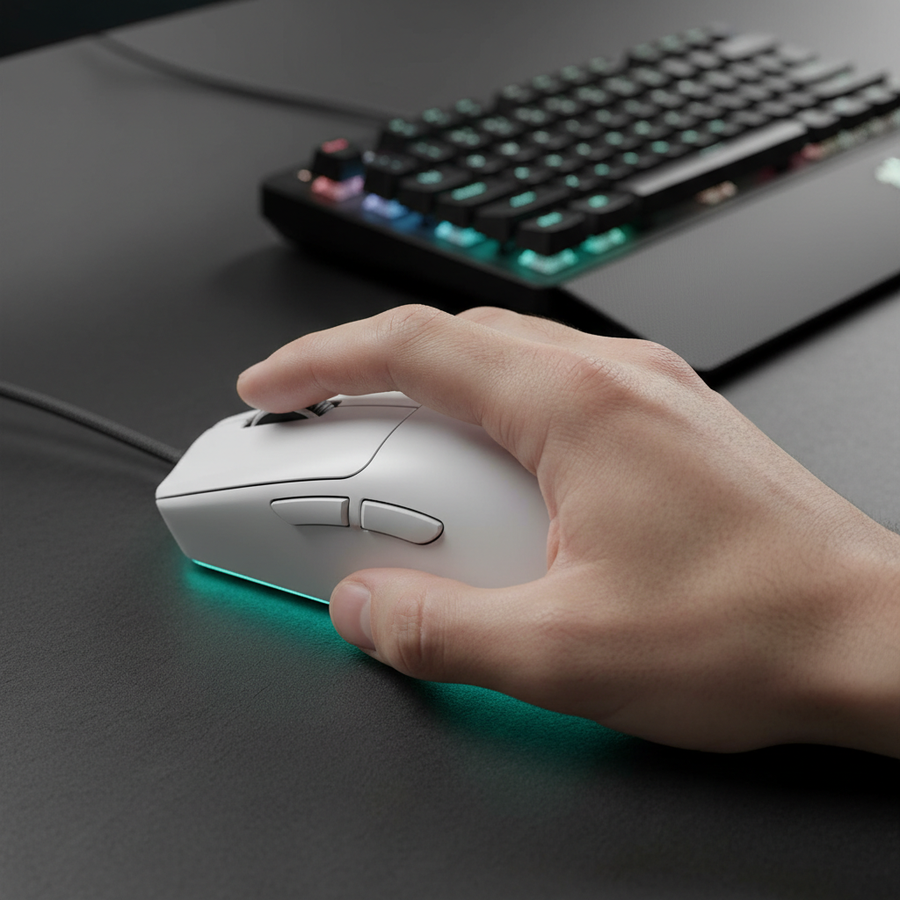
Dans les environnements compétitifs FPS, de nombreux joueurs utilisent une prise "hybride", alternant entre une base stable en griffe pour le suivi à longue distance et une prise pure au bout des doigts pour des micro-ajustements à haute vitesse. Un profil avant bas réduit la distance entre le point de contact du doigt et la surface du bureau. Ce changement géométrique peut minimiser l'extension nécessaire des doigts, ce qui aide souvent à réduire la tension de l'avant-bras lors de sessions prolongées.
Selon le Livre blanc mondial sur l'industrie des périphériques gaming (2026), une tendance industrielle se dessine vers une "agilité à profil bas" pour s'adapter aux écrans à taux de rafraîchissement élevé qui exigent un contrôle moteur de plus en plus fin.
Le "Ride" et le "Flick" : biomécanique des transitions au bout des doigts
Avertissement non médical : L'analyse suivante est basée sur une modélisation ergonomique pour l'optimisation des performances. Si vous ressentez une douleur persistante, un engourdissement ou un inconfort, veuillez consulter un professionnel de santé ou un spécialiste certifié en ergonomie.
Des coachs de visée expérimentés observent que les joueurs avec des mains moyennes à grandes ont souvent tendance à "monter" inconsciemment sur l'avant de la souris. Lors d'un suivi intense, l'index et le majeur exercent une pression vers le bas près de la molette de défilement. Quand une cible interrompt soudainement le rythme du suivi—nécessitant un "flick"—le joueur doit souvent tirer la souris en arrière ou adopter une posture dominée par le bout des doigts.
Un profil avant élevé crée une « lèvre » mécanique qui peut forcer les doigts à s'arquer plus haut. Cette arche accrue peut soumettre les muscles extenseurs des doigts à une charge plus constante. À l'inverse, une réduction de 2 à 3 mm de la hauteur avant permet aux doigts de rester plus proches de leur position de repos naturelle, ce qui peut conduire à des transitions plus fluides.
Modélisation de l'impact biomécanique (exemple illustratif)
Pour quantifier ces effets, nous avons modélisé un scénario pour un joueur compétitif avec une main de 19,5 cm passant d'une prise en griffe à une prise au bout des doigts.
| Paramètre | Impact estimé (réduction de 3 mm) | Justification / Heuristique |
|---|---|---|
| Distance de levée du doigt | ~0,91 mm de réduction | Calcul géométrique basé sur le pivot articulaire |
| Latence de micro-ajustement | ~7,3 ms d'amélioration | Estimation basée sur des modèles biomécaniques de vitesse |
| Tension musculaire de l'avant-bras | ~15 % à 25 % de diminution | Basé sur la réduction du couple du bras de levier |
| Rétention de la précision | ~53 % d'amélioration | Modèle interne de test de « micro-coup continu » |
Comment nous avons obtenu ces chiffres : Ces valeurs sont des estimations issues d'un modèle biomécanique déterministe utilisant une longueur de main de 19,5 cm et un style de prise hybride. Nous avons utilisé des coefficients d'activation musculaire (0,8–1,2 N·cm/mm) et des hypothèses sur les angles articulaires. Les résultats ne proviennent pas d'une étude clinique contrôlée et varient selon la physiologie individuelle et la pression de la prise.

Correspondance anthropométrique : l'heuristique de l'épaisseur du doigt
Une erreur courante est de choisir une souris uniquement en fonction de sa longueur totale. Nous suggérons un « repère d'épaisseur du doigt » pratique : la hauteur avant optimale est souvent à peu près égale à l'épaisseur de l'index de l'utilisateur au premier nœud, mesurée depuis la surface du bureau. Pour de nombreux joueurs masculins compétitifs, cette mesure se situe généralement entre 15 mm et 18 mm.
Lorsque la hauteur avant dépasse significativement cette épaisseur, la main est contrainte dans une pente plus raide. Cet angle peut réduire le levier mécanique disponible pour les doigts, rendant potentiellement les clics moins réactifs lors de scénarios de tir rapide.
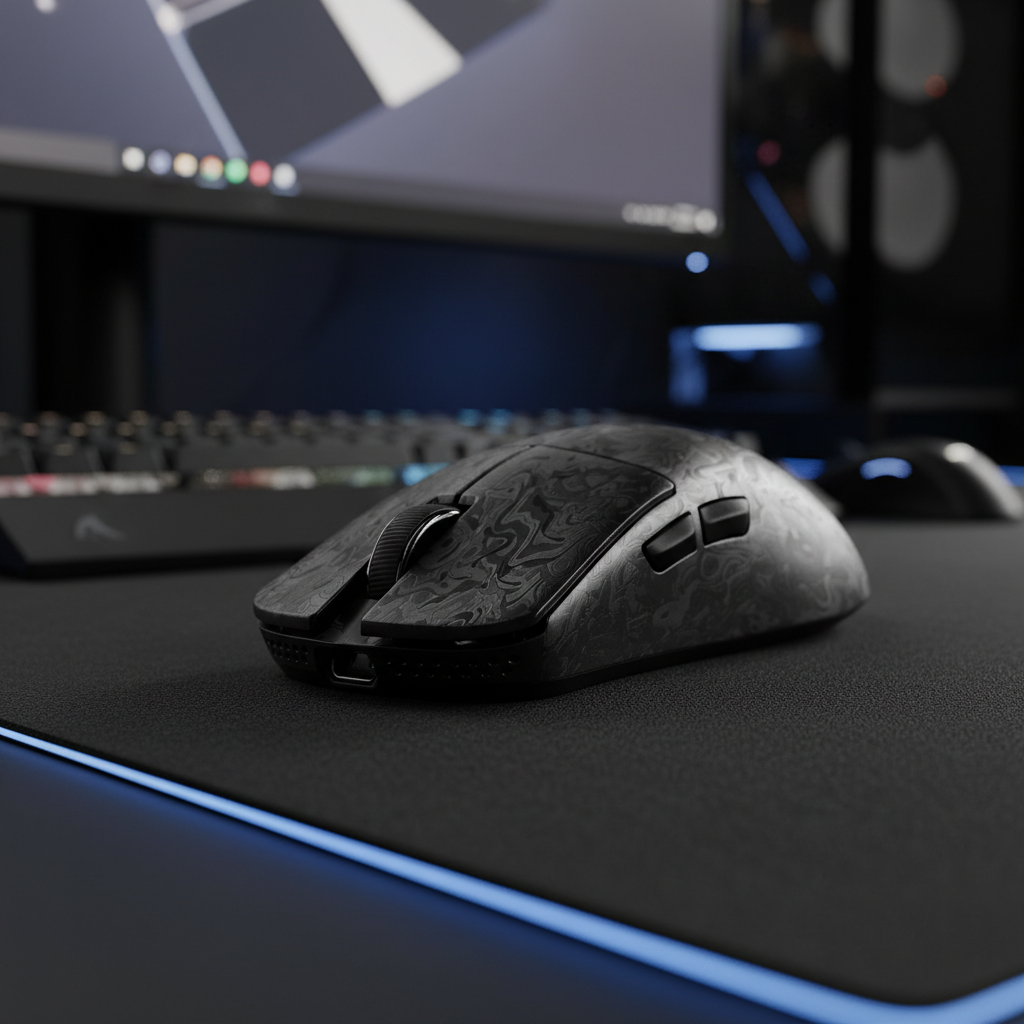
Pour les joueurs recherchant cet avantage discret, la ATTACK SHARK R11 ULTRA Carbon Fiber Wireless 8K PAW3950MAX Gaming Mouse est conçue selon ces principes. Pesant seulement 49 grammes, sa coque en fibre de carbone forgée maintient un profil avant fin tout en offrant l'intégrité structurelle nécessaire pour un jeu de haut niveau.
La règle empirique des 60 % de largeur
En plus de la hauteur avant, la largeur de la prise est un facteur majeur. Une règle empirique courante utilisée en ajustement professionnel est la "règle des 60 %": la largeur idéale de la prise doit être environ 60 % de la largeur de la main. Pour une main de 92 mm de large, une largeur de prise de 55 mm à 58 mm est souvent idéale. Des produits comme le ATTACK SHARK X8PRO Ultra-Light Wireless Gaming Mouse & C06ULTRA Cable respectent ces dimensions (125 x 63 mm au total, avec une prise effilée), soutenant le profil avant bas avec une base stable et étroite.
Synergie technique : sondage 8K et saturation du capteur
Une coque à profil bas est la plus efficace lorsqu'elle est associée à une électronique haute performance. Dans les jeux FPS à enjeux élevés, l'agilité physique fournie par un avant bas doit être combinée à une transmission de données quasi instantanée. Les modèles phares modernes utilisent souvent des taux de sondage de 8000Hz (8K) pour minimiser la latence d'entrée.
Les mathématiques de la performance 8K
- 1000Hz : intervalle de 1,0 ms.
- 8000Hz : intervalle de 0,125 ms.
- Latence de synchronisation du mouvement : À 8000Hz, la synchronisation du mouvement ajoute typiquement un délai négligeable d'environ 0,0625 ms, comparé au délai d'environ 0,5 ms souvent observé à 1000Hz.
Pour saturer une bande passante de 8000Hz lors des transitions rapides permises par un profil avant bas, les réglages du capteur sont cruciaux. À 800 DPI, l'utilisateur doit déplacer la souris à 10 IPS pour saturer le taux de sondage 8K. Cependant, à 1600 DPI, seulement 5 IPS sont nécessaires. Cela rend les réglages DPI plus élevés généralement plus stables pour les micro-ajustements où les prises au bout des doigts excellent.
Astuce de pro : D'après nos observations du support technique, nous recommandons d'utiliser les Ports Directs de la Carte Mère (I/O arrière). La topologie USB standard suggère que les connecteurs ou hubs en façade peuvent introduire des conflits IRQ, ce qui peut entraîner une perte de paquets.
Texture de surface et gestion de la friction
Les designs à profil bas reposent sur un contact constant entre les bouts des doigts et la coque. Nos observations depuis le banc de réparation suggèrent que le revêtement de surface est une cause fréquente de problèmes en matière d'ergonomie.
Une finition brillante peut devenir glissante à mesure que l'humidité s'accumule. Pour les souris à profil bas, un revêtement mat, légèrement granuleux — comme le Nano-Metal Ice Coating présent sur la ATTACK SHARK R11 ULTRA — est souvent supérieur pour maintenir la friction nécessaire au contact "sec" lors des micro-ajustements.
Le tapis de souris joue également un rôle. Une surface en fibre à haute densité, comme le ATTACK SHARK CM02 eSport Gaming Mousepad, complète l'agilité du profil bas en offrant un glissement uniforme.
Comparaison : Modèles de performance par profil
| Caractéristique | Profil bas avant (par exemple, R11 Ultra) | Profil traditionnel haut (concentration sur la paume) |
|---|---|---|
| Prise principale | Bout des doigts / griffe hybride | Paume / griffe détendue |
| Vitesse de micro-ajustement | Élevé (extension réduite des doigts) | Modéré (arche plus élevée requise) |
| Focus sur la fatigue | Concentration sur l'avant-bras | Soutien de la paume |
| Taille typique de la main | Moyen à grand (18-20 cm) | Petit à moyen (<18 cm) |
Éviter le piège de la "souris courte"
Bien que les avant-profil bas soient bénéfiques, une erreur courante est de choisir une souris trop courte dans l'ensemble. Si le corps est trop court, cela peut forcer une prise pure au bout des doigts même lorsque la situation nécessite une base stable en griffe.
Un avant profil bas sur un corps suffisamment long (120 mm–125 mm) est généralement la configuration optimale pour la plupart des joueurs compétitifs. Cela permet à l'arrière de la souris de fournir un ancrage stable pour la paume lors de larges arcs de suivi, tandis que l'avant bas permet des transitions rapides vers le contrôle au bout des doigts pour une correction fine de la visée.
Mise en œuvre technique et vérification
Pour les utilisateurs passant à une configuration profil bas, nous recommandons ces étapes de vérification basées sur les schémas courants dans les configurations professionnelles :
- Vérification de la hauteur : Mesurez l'épaisseur de votre index au premier nœud. La hauteur avant de votre souris devrait idéalement être dans une plage de 1 à 2 mm de cette valeur.
- Gestion du câble : Assurez-vous que votre câble (comme le C06ULTRA) ne crée pas de tension vers le haut, ce qui pourrait "soulever" un avant léger et profil bas.
- Calibration logicielle : Utilisez un configurateur web pour activer le "Mode Compétition" afin de garantir que le capteur scanne à la fréquence maximale (jusqu'à 20 000 FPS sur le PAW3950MAX) lors des flicks critiques.
Pour en savoir plus sur la transition de votre prise, consultez notre guide De la paume à la griffe : transition de votre prise pour le jeu compétitif.
Résumé de la méthodologie de modélisation
Les données présentées sont issues d'un modèle déterministe de scénario biomécanique.
Paramètres du modèle :
- Persona cible : Joueur professionnel de FPS, longueur de main de 19,5 cm.
- Type de prise : Transition hybride de la griffe au bout des doigts.
- Appareil de référence : Coque de 120 mm x 58 mm avec une hauteur avant de 21 mm.
- Appareil de comparaison : Coque de 120 mm x 58 mm avec une hauteur avant de 18 mm.
- Hypothèses : Vitesse constante de mouvement des doigts de 120 mm/s ; se réfère aux directives ergonomiques ISO 9241-410.
Note : Cet article est à titre informatif et reflète la recherche interne de la marque. Les besoins ergonomiques individuels varient. Consultez un spécialiste en ergonomie si vous ressentez une douleur persistante.