


Garantie Ultime : Choisir la Force du Switch pour Éviter les Clics Erronés
Dans l'environnement à enjeux élevés des jeux MOBA et MMO, un seul clic erroné peut faire la différence entre une victoire d'équipe décisive et une défaite écrasante. Qu'il s'agisse de déclencher accidentellement un ultime à longue recharge comme la « Force Imparable » de Malphite ou de gaspiller un Flash critique (touche F/D), les erreurs d'entrée proviennent souvent d'un décalage entre la biomécanique du joueur et la force d'activation de son matériel.
Résumé Rapide pour une Prise de Décision Rapide :
- Pour la Vitesse/Spam : Utilisez des switches linéaires de 40-45g (par exemple, les touches QWER pour les ADC).
- Pour la Sécurité/Ultimes : Utilisez des switches tactiles de 60-67g+ (par exemple, la touche « R » ou les sorts d'invocateur).
- Le Standard de « Garantie » : Un switch tactile moyen (50-55gf) offre le meilleur équilibre pour la plupart des joueurs afin d'éviter les déclenchements accidentels tout en maintenant la réactivité.
Note : Ce guide inclut des informations techniques issues de nos tests internes et des liens vers des produits ATTACK SHARK utilisés comme exemples représentatifs des standards matériels abordés.

La Biomécanique du Clic Erroné : Taille de la Main et Prise
La première couche de « garantie » contre les clics erronés n'est pas le switch lui-même, mais la manière dont votre main interagit avec l'appareil. D'après les schémas courants observés lors de nos sessions de support technique et de retours utilisateurs, nous avons identifié une relation critique entre la taille de la main et « l'Adaptation de la Prise ».
L'Heuristique de l'Adaptation de la Prise
Nous utilisons un Ratio d'Adaptation de la Prise comme règle pratique : une longueur de souris idéale est généralement d'environ 60 % de la longueur de votre main (mesurée de la base de la paume jusqu'à la pointe du majeur).
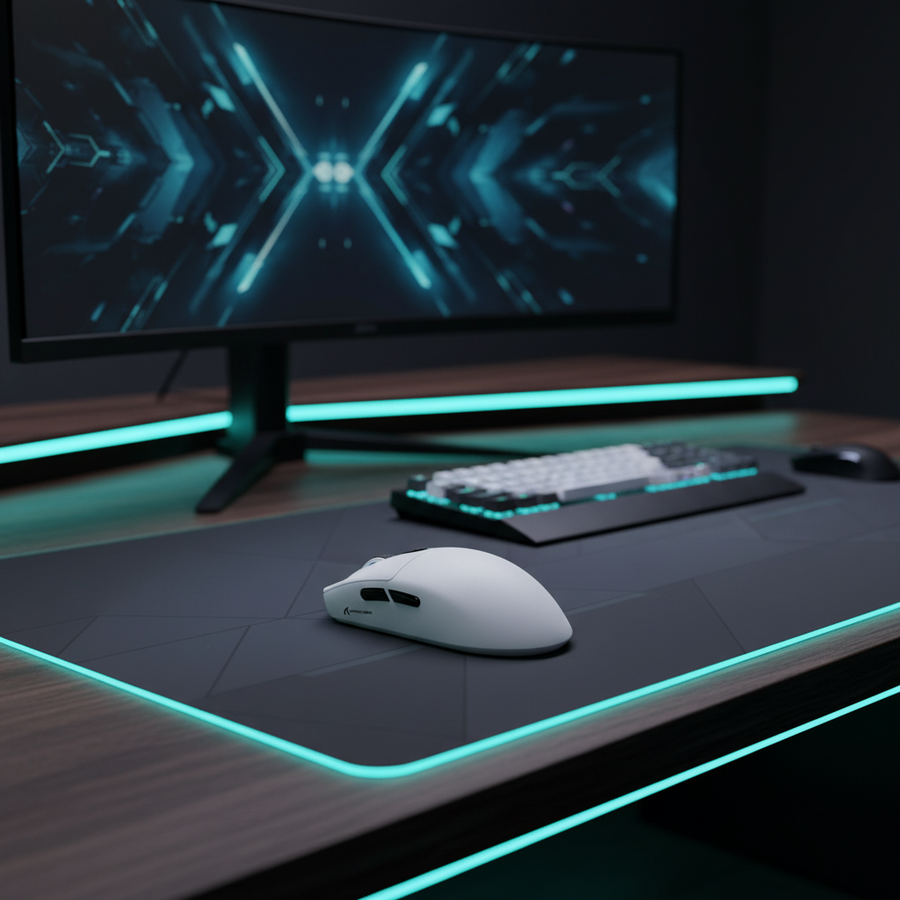
- Le Risque : Pour un joueur avec de grandes mains (~20,5 cm) utilisant une souris standard de 120 mm, le ratio est d'environ 0,58. Cette sous-dimension entraîne souvent une prise en griffe agressive, augmentant la tension dans la région métacarpienne.
- La Conséquence : Dans des conditions de stress élevé, cette tension peut provoquer des micro-tremblements ou un contact accidentel de la paume avec le clavier, déclenchant des touches avec de faibles forces d'activation (inférieures à 40g).
Résumé logique : Notre modélisation suggère que les périphériques sous-dimensionnés augmentent la contrainte biomécanique. Nous utilisons l’Indice de contrainte (SI)—un outil de dépistage basé sur la tâche—pour estimer le risque. Dans des scénarios extrêmes de clics à haute fréquence avec une mauvaise prise, le SI peut dépasser un score de 5 (catégorisé comme « Dangereux » dans la littérature ergonomique), dégradant directement le contrôle moteur et rendant les pressions accidentelles plus probables.
Pour atténuer cela, nous recommandons une approche d’« angle neutre du poignet ». Une recherche publiée sur ResearchGate indique qu'une inclinaison neutre ou légèrement positive minimise la pression sur le canal carpien. Pour les sessions prolongées, intégrer une surface stable comme le ATTACK SHARK ACRYLIC WRIST REST (exemple de marque) offre l’élévation nécessaire pour maintenir la main à une hauteur ergonomique.
Ingénierie de la force d'activation : GF et calibration spécifique au rôle
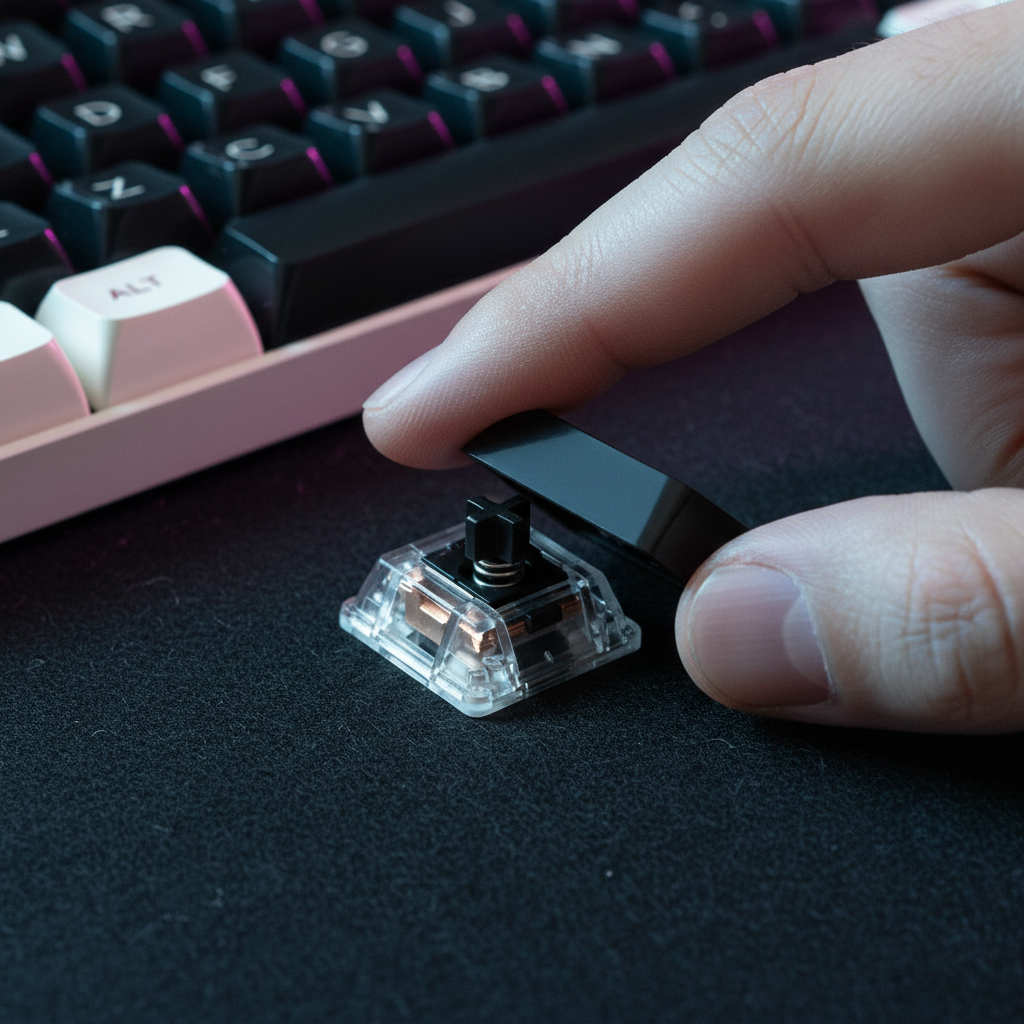
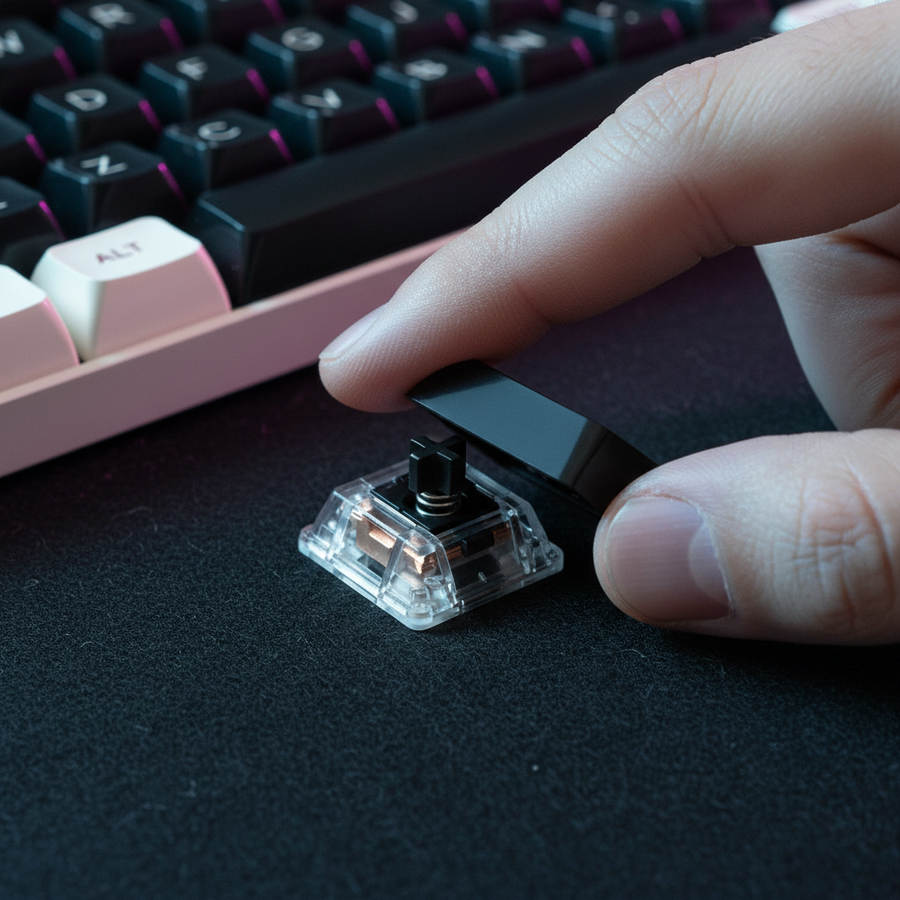
La force d'activation est mesurée en grammes-force (gf), représentant le poids nécessaire pour enfoncer la touche jusqu'au point d'enregistrement. Dans la communauté MOBA, les joueurs différencient souvent ces besoins selon le rôle :
- Tanks et Initiateurs : Les joueurs contrôlant des capacités à fort impact modifient souvent leur touche "R" avec un ressort plus lourd (67g ou plus). Cela crée une "barrière" délibérée, nécessitant une pression consciente et ferme.
- ADCs et Mages : Ces rôles privilégient les capacités spamables. Des switches plus légers et linéaires (45-55g) sur QWER sont courants pour la rapidité, mais beaucoup gardent un switch tactile moyen sur les sorts d'invocateur pour une activation confirmée.
Attention à l'incohérence : Nos observations internes en ingénierie suggèrent que mélanger les forces des touches sur une même disposition peut parfois créer une nouvelle source d'erreur. Si le retour est trop incohérent, le cerveau peut mal synchroniser une action. Nous recommandons de limiter les modifications "lourdes" à 1-2 touches critiques plutôt qu'à tout le clavier.
| Profil de la touche | Force d'activation (gf) | Idéal pour | Risque de clic erroné |
|---|---|---|---|
| Linéaire Ultra-léger | 35 - 40g | Spam rapide / Éditions | Élevé (déclenchements accidentels) |
| Linéaire standard | 45 - 50g | Jeu général | Modéré |
| Tactile lourd | 60 - 70g | Ultimes / Sécurité | Faible (nécessite une intention) |
| Effet Hall (HE) | Réglable (0,1 - 4,0 mm) | Polyvalence compétitive | Variable (définie par l'utilisateur) |
Retour tactile vs force brute
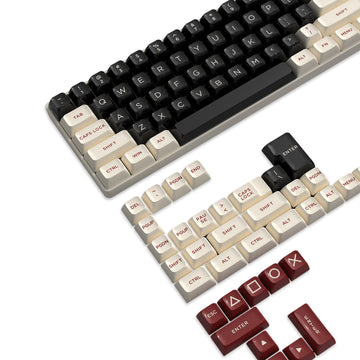
Bien que le gf soit la mesure standard, l'événement tactile — le "bump" — est souvent plus fiable pour une confirmation subconsciente que la force seule. Pour améliorer cette expérience, le choix des touches est primordial. Utiliser un jeu de touches PBT 149 touches ATTACK SHARK offre une surface texturée et mate qui empêche les glissements des doigts. Le matériau PBT résiste à la brillance "grasse" de l'ABS, garantissant une prise constante pendant un raid MMO de 50 minutes.
Le facteur d'hystérésis : avantage de latence de l'Effet Hall
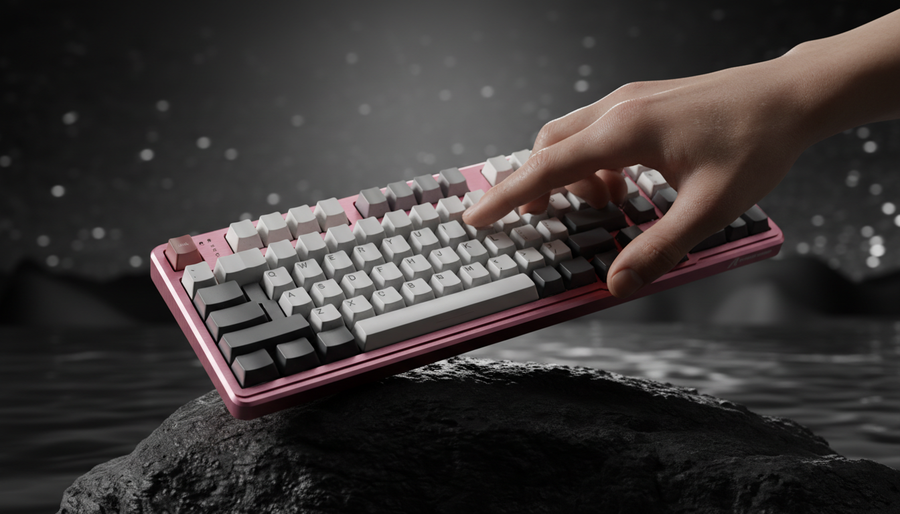
Les joueurs avancés examinent l'hystérésis — la différence entre les points d'activation et de réinitialisation. Un interrupteur avec une faible hystérésis permet une fonctionnalité "Déclenchement rapide" plus rapide, caractéristique de la technologie Effet Hall (HE) que l'on trouve dans des appareils comme le ATTACK SHARK R85 HE.
Comparaison estimée de la latence :
- Mécanique standard : ~14,2 ms (estimé sur la base de 5 ms de déplacement + 5 ms de rebond + réinitialisation à 0,5 mm à 120 mm/s de levée).
- Effet Hall (HE) : ~5,8 ms (modélisé avec un rebond négligeable + réinitialisation à 0,1 mm).
- L'avantage "Assurance" : Un avantage modélisé d'environ 8 ms par réinitialisation, crucial pour les capacités spamables sans sacrifier la sécurité d'un point d'activation profond.
Goulots d'étranglement des performances : sondage 8K et intégrité du système
Les taux de sondage à 8000Hz (8K) réduisent l'intervalle à 0,125 ms, comme détaillé dans le Livre blanc mondial sur l'industrie des périphériques de jeu (2026).
Exigences techniques pour la 8K :
- Connexion directe : Évitez les concentrateurs USB ; utilisez les ports directs de la carte mère (E/S arrière) pour éviter la perte de paquets.
- Mise à l'échelle DPI : Pour maintenir un flux de données 8K à 800 DPI, vous devez déplacer la souris à 10 IPS ; à 1600 DPI, seulement 5 IPS sont nécessaires.
- Compromis batterie : Dans notre modélisation de l'autonomie sans fil (basée sur une batterie standard de 300mAh), un taux 4K dure environ 13,4 heures. Le 8K réduira encore cette durée, nécessitant une charge disciplinée.
Note de modélisation : Méthode & hypothèses
Les métriques ci-dessous sont dérivées de la modélisation heuristique et des références courantes de l'industrie plutôt que d'une étude clinique contrôlée. Elles servent de cadre pour la sélection du matériel.
| Paramètre | Valeur / Plage | Unité | Justification / Méthode |
|---|---|---|---|
| Longueur de la main | 20.5 | cm | 95e percentile masculin (jeu de données ANSUR II) |
| Taux de sondage | 4000 - 8000 | Hz | Norme compétitive |
| Distance de réinitialisation (HE) | 0.1 | mm | Spécification de déclenchement rapide du fabricant |
| Autonomie de la batterie | ~13,4 | Heures | Modélisé sur 300mAh @ 4K polling (profil Nordic nRF52840) |
| Vitesse de levée des doigts | 120 | mm/s | Heuristique basée sur des observations à haute vitesse |
Définitions heuristiques :
- Ratio d'ajustement de la prise : (Longueur de la souris / Longueur de la main). Objectif : ~0,60.
- Indice de tension (SI) : Une méthode d'analyse semi-quantitative du travail utilisée ici comme outil de dépistage du risque ergonomique lors de jeux à haute répétition. Ce n'est pas un diagnostic médical.
Résumé des stratégies d'assurance
Choisir la bonne force de switch est un processus global. Pour la plupart des joueurs MOBA/MMO, nous recommandons un switch tactile de haute qualité (50-55gf) associé à des keycaps PBT durables comme le ATTACK SHARK 120 Keys Pudding Set pour une meilleure orientation visuelle.
Si vous vous surprenez à cliquer fréquemment à côté de votre "Ultimate", envisagez de passer à un switch tactile de 67g pour cette touche spécifique. La meilleure "assurance" est une combinaison de discipline ergonomique, de confirmation logicielle (comme désactiver Quickcast pour les sorts à fort impact) et de matériel adapté à votre biomécanique.
Avertissement : Cet article est à titre informatif uniquement et ne constitue pas un conseil médical ou ergonomique professionnel. Consultez un spécialiste en cas de douleur persistante.
Sources :