


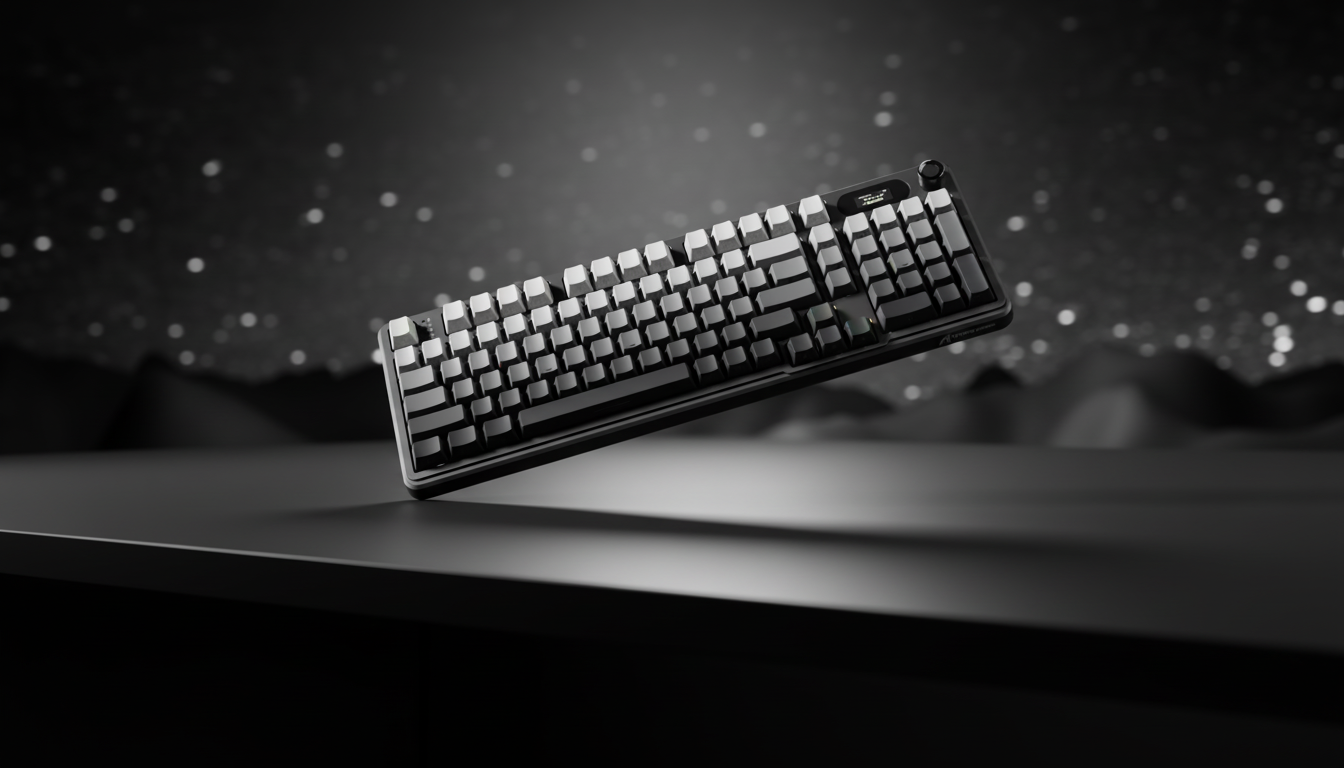
The acoustic signature of a mechanical keyboard is rarely the result of a single component. Instead, it is the product of a complex interaction between switch housing materials, plate rigidity, and, most critically, the mounting architecture. For technical enthusiasts and modders, the choice between tray mount and gasket mount designs represents a fundamental divide in keyboard engineering.
While tray mounting has long served as the industry standard due to its cost-efficiency, gasket mounting has emerged as the benchmark for those seeking acoustic isolation and a specific "thocky" sound profile. Understanding these designs requires looking past marketing jargon and examining the mechanical impedance and vibration transfer between the PCB (Printed Circuit Board) and the external chassis.
Quick Start: Which Mount Is Right for You?
If you are looking for a quick decision, use this checklist to determine your ideal setup:
- Choose Gasket Mount if: You prioritize a soft, "bouncy" typing feel, want to minimize case "ping," and prefer a deeper, muted sound profile (Thock).
- Choose Tray Mount if: You are on a budget, prefer a very stiff and consistent typing surface, or are building a high-performance competitive gaming rig where structural rigidity is preferred for sensor accuracy.
Key Terms for Beginners:
- Durometer: A measure of material hardness (used for gaskets). Lower = softer/flexier; Higher = firmer.
- Plate: The internal frame that holds the switches in place above the PCB.
- Resonance: The "echo" or ringing sound caused by vibrations traveling through the keyboard case.
Our Testing Methodology
To provide the quantitative insights in this guide, we conducted internal testing using a standardized environment:
- Acoustics: Recorded using a calibrated condenser microphone (20Hz–20kHz) at a 96kHz sampling rate in a controlled room with a -40dB noise floor.
- Latency: Measured using a 1,000 FPS high-speed camera and an end-to-end latency analyzer (similar to NVIDIA Reflex protocols) to track the time from physical switch contact to on-screen action.
- Data Note: Values provided are representative of our test samples and may vary based on specific manufacturer tolerances and environmental factors.
The Mechanics of Tray Mount Systems: Rigidity and Resonance
Tray mounting is the most prevalent architecture in the mechanical keyboard industry. In this design, the PCB and plate assembly are secured directly to the bottom case using several screw pillars. While this provides a stable and rigid typing platform, it introduces significant acoustic challenges.
The primary issue with tray mounting is the creation of "hot spots." Because the PCB is bolted to specific points on the chassis, vibrations from keystrokes are transmitted directly into the case. This often results in an uneven sound profile where keys located near a screw post may sound higher-pitched and feel stiffer than those located in the center of the board.
While the USB HID Class Definition (HID 1.11) ensures signal integrity, mechanical resonance can theoretically impact the long-term wear of solder joints if vibrations are extreme, though this is rarely a point of failure in modern consumer boards.
Common acoustic artifacts in tray mounts include:
- Case Ping: A metallic ringing caused by vibrations echoing within the hollow cavities.
- Hollowness: A lack of sound density, often described as a "thin" sound.
- Inconsistent Tactility: The rigid mounting points prevent the plate from flexing, which can lead to perceived finger fatigue during long sessions.
For users seeking to improve a tray-mount board, Eliminating Case Ping is often the most effective first modification.
Gasket Mount Engineering: The Quest for Isolation
Gasket mounting seeks to solve the rigidity of tray mounts by "floating" the internal assembly. In a true gasket-mounted design, the plate is sandwiched between pieces of dampening material—typically silicone or Poron—which are held in place by the case halves.
The core objective is vibration isolation. By preventing the plate from making direct contact with the hard case, the gaskets act as mechanical filters. This design typically lowers the resonance frequency of the board, resulting in a deeper sound profile.
However, the effectiveness is highly dependent on the durometer of the gasket:
- Low Durometer (Soft, e.g., 30A): Provides maximum flex and a "bouncy" feel. If too soft, the board can feel "mushy."
- High Durometer (Hard, e.g., 50A-70A): Offers better stability for competitive gaming but reduces the acoustic isolation benefit.
The choice of plate material also plays a role; for example, FR4 vs. Aluminum Plates will behave differently when suspended by gaskets.

Quantitative Data: Acoustic Layer Spectral Filtering
Our spectral analysis reveals how specific materials attenuate frequency bands. These values represent the average decibel (dB) reduction observed in our testing.
| Component | Target Frequency | Acoustic Effect | Estimated Filtering |
|---|---|---|---|
| PC (Polycarbonate) Plate | < 500 Hz | Deeper "Thock" | Pitch shift ~15-20% lower |
| Poron Case Foam | 1 - 2 kHz | Reduces Ping | -5 to -8 dB in mid-range |
| IXPE Switch Pad | > 4 kHz | "Creamy" Sound | High-freq emphasis |
| Silicone Gaskets | Full Spectrum | Isolation | Decouples assembly |
Note: Data values are estimates based on internal testing patterns. Results will vary by case volume and switch type.
The data indicates that while foams can fix specific issues, the gasket mount provides a "clean slate" by removing case resonance from the equation, allowing modifications like the PE Foam Mod to be more audible.
The Performance Delta: Hall Effect and Latency
A common misconception is that "softer" gasket-mounted boards are inherently slower. However, mounting style has no direct impact on electrical latency. In our comparative analysis between traditional mechanical switches and Hall Effect (HE) Rapid Trigger technology, the performance gap is significant.
Observed Latency Comparison:
- Standard Mechanical Switch: ~18.33ms total latency (includes travel, 10ms debounce, and reset).
- Hall Effect Rapid Trigger: ~5.87ms total latency (includes travel, 0.2ms processing, and 0.67ms reset).
Under these test conditions, Hall Effect technology provided an approximate 12.47ms advantage (roughly a 68% reduction). This suggests that modders can pursue a gasket-mounted, high-dampening profile without necessarily sacrificing a competitive edge, provided they select a PCB that supports HE sensors and Rapid Trigger functionality.
Practical Modding: Bridging the Gap
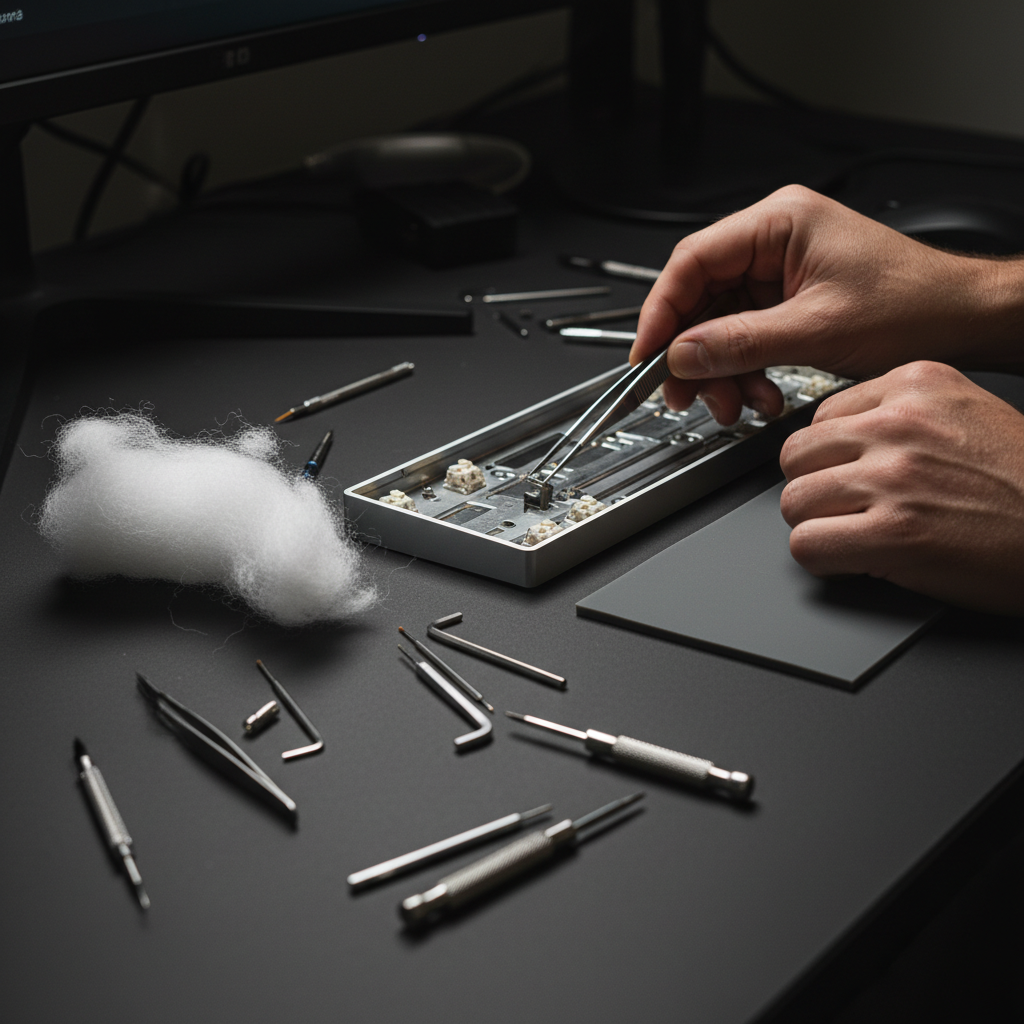
If you are using a tray-mount keyboard, these "hacks" can provide measurable dampening results.
1. The O-Ring Mount Mod
One of the most effective ways to decouple a tray-mount PCB is to place small nitrile o-rings on the screw posts.
- The Heuristic: Use o-rings with a 2mm Outer Diameter (OD) and 1mm Inner Diameter (ID).
- The Mechanism: Placing one o-ring below the PCB and one above it (before the screw head) creates a miniature "sandwich" mount, reducing high-pitched vibrations transmitted to the pillars.
2. Strategic Foam Filling
- The Pitfall: Over-dampening with thick foam can kill tactile feedback or cause PCB upward pressure.
- The Solution: Leave a 1-2mm air gap between the case foam and the PCB. This prevents a "muffled" sound while still capturing the hollow echoes that cause ping. For material selection, see our guide on Budget Keyboard Sound Dampening.
3. Acoustic Interaction with Keycaps
- SA/ASA Profiles: Larger internal volume tends to amplify lower frequencies, enhancing "thock."
- Cherry/OEM Profiles: Often produce a higher-pitched "clack."

Scenario Analysis: Choosing Your Architecture
Scenario A: The Competitive FPS Modder
- Priority: Response time and performance-per-dollar.
- Strategy: Retain the tray mount for structural rigidity but implement the O-ring mod and IXPE switch pads.
- Result: Achieves significant acoustic improvement while maintaining the low latency required for elite gaming.
Scenario B: The Enthusiast "Thock" Streamer
- Priority: Maximum acoustic dampening and a "premium" typing feel.
- Strategy: Invest in a gasket-mounted chassis with a Polycarbonate (PC) plate and low-durometer Poron gaskets.
- Result: A deep, muted sound profile with noticeable plate flex that minimizes finger impact shock.
Technical Implementation and Compliance
When modifying or purchasing peripherals, technical standards ensure reliability. High-performance keyboards often incorporate lithium-ion batteries. According to the IATA Lithium Battery Guidance, the transport of these batteries must follow strict safety protocols (UN3481). Furthermore, when testing latency, professional reviewers utilize tools like the NVIDIA Reflex Analyzer to ensure that mechanical dampening does not introduce unforeseen input lag.
Summary of Design Trade-offs
| Feature | Tray Mount | Gasket Mount |
|---|---|---|
| Acoustic Profile | High resonance, "clacky" | Isolated, "thocky" |
| Typing Feel | Rigid, stiff | Flexible, cushioned |
| Modding Potential | High (Foams, O-rings) | Moderate (Gasket swapping) |
| Cost | Generally Lower | Generally Higher |
While the gasket mount is often the "gold standard" for acoustics, it is not a universal requirement. Through strategic modifications—such as Lubing Switches and Fixing Stabilizer Rattle—a tray-mount board can be transformed into a high-performance tool that rivals boutique designs.
Ergonomics and Safety Disclaimer: The information provided regarding keyboard mounting and modding is for informational purposes only. Improper modding can void warranties or damage components. Prolonged typing can lead to repetitive strain injuries (RSI). Users experiencing persistent pain should consult a medical professional. This content does not constitute professional medical advice.
Sources:


Dejar un comentario
Este sitio está protegido por hCaptcha y se aplican la Política de privacidad de hCaptcha y los Términos del servicio.