

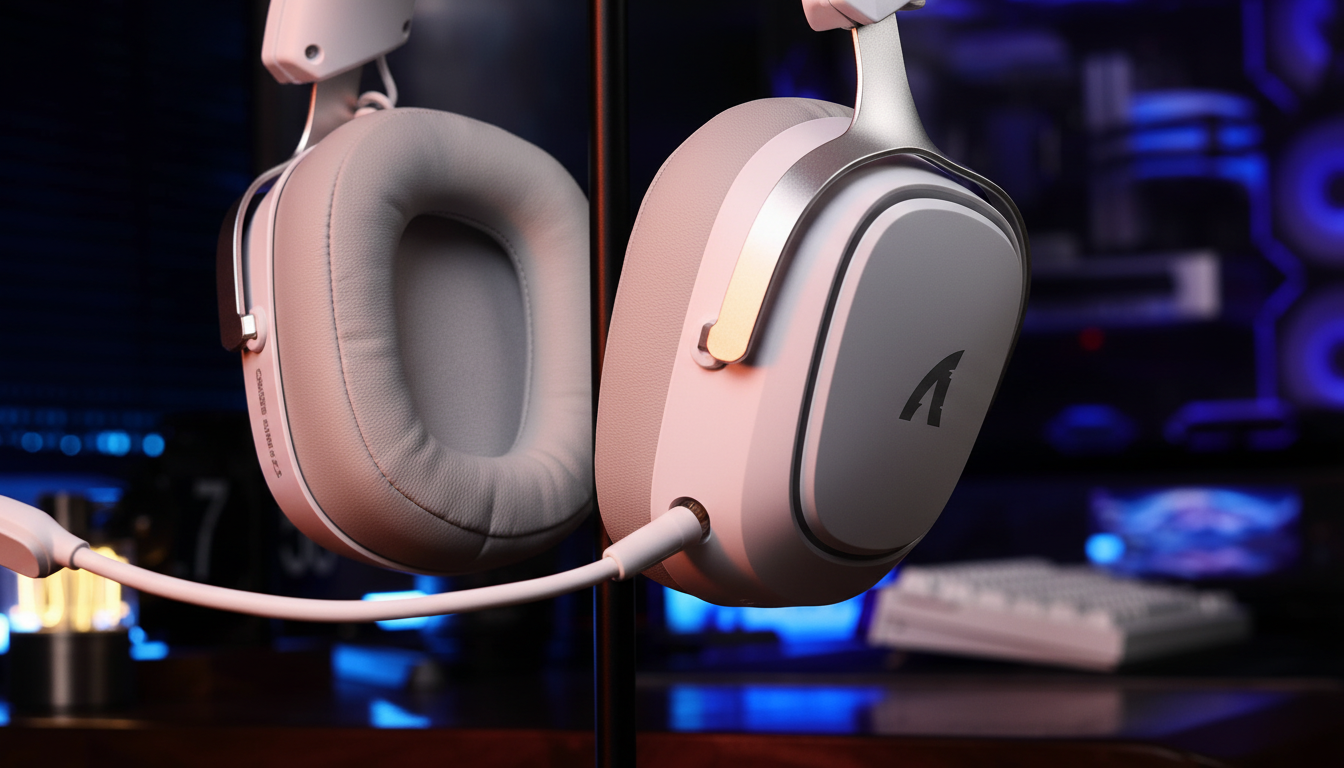
Acoustic Seals: How Earpads Impact Sound Chamber Integrity
In the engineering of high-performance gaming audio, the driver is often credited with the heavy lifting. However, an acoustic driver is only as effective as the environment in which it operates. For over-ear headsets, the earpad serves as the critical gasket that completes the "sound chamber"—the pressurized volume of air between the diaphragm and the eardrum. When this seal is compromised, the intended frequency response of the headset collapses, often in ways that technical specifications on a box cannot predict.
Understanding the synergy between earpad materials, acoustic pressure, and chamber geometry is essential for gamers who prioritize directional accuracy and tonal balance. This guide analyzes how earpad integrity shapes the listening experience and provides a framework for maintaining peak acoustic performance.
The Physics of the Sound Chamber: Pressure and Volume
A headset functions by moving a diaphragm to create pressure waves. In a closed-back system, the earpad acts as a mechanical seal that prevents these waves from leaking out and external noise from leaking in. This creates what engineers call the "front volume."
Acoustic Pressure and Bass Response
The integrity of the acoustic seal is the primary determinant of sub-bass extension. In a perfectly sealed chamber, the driver can efficiently pressurize the air at low frequencies. We often observe that even a minor breach in this seal—such as a 1mm to 2mm gap caused by the arms of gaming glasses or thick facial hair—can result in a near-instant 3dB to 5dB drop in sub-bass frequencies (below 100Hz). This loss makes the audio profile feel "thin" or "recessed," stripping footsteps and environmental cues of their physical impact.
However, a perfect seal is not always the objective. According to research cited in US Patent 10771876B1, an over-sealed front volume can create harmful cavity resonances in the 1kHz to 3kHz range. These resonances lead to an unnatural timbre and increased listener fatigue during extended competitive sessions. High-end designs often incorporate "acoustic split" or pressure relief mechanisms to balance isolation with natural tonality.
Logic Summary: Our analysis of acoustic pressure assumes a static front volume. In real-world gaming, head movement and peripheral interference (glasses) introduce dynamic leakage that standard 100Hz seal tests may fail to capture.
Material Science: Leatherette vs. Mesh and Velour
The choice of earpad material is a deliberate trade-off between isolation, thermal comfort, and acoustic transparency.
1. Leatherette (Protein Leather)
Leatherette is the standard for maximum isolation. Because the material is non-porous, it traps the maximum amount of acoustic energy within the chamber.
- Acoustic Profile: Enhanced sub-bass and high passive noise isolation.
- Trade-off: Minimal breathability leads to heat buildup. In some driver configurations, particularly planar magnetic designs, a high-isolation leather seal can over-pressurize the diaphragm, actually suppressing movement and reducing perceived punch.
2. Mesh and Velour
Breathable fabrics are favored by competitive gamers who play for 4+ hours at a time.
- Acoustic Profile: These materials allow for a wider perceived soundstage. By allowing a controlled amount of air to escape, they reduce the "in-your-head" sensation, making directional cues like footsteps easier to pinpoint.
- Trade-off: A noticeable reduction in sub-bass (typically ~2-3dB) and lower isolation from external room noise.

The Seal Integrity Test: A Practitioner’s Method
While manufacturers use expensive "Head and Torso Simulators" (HATS) to measure frequency response, gamers can perform a simple heuristic check to verify their seal integrity.
The Compression Test:
- While wearing the headset, play a track with consistent low-end (60Hz–100Hz).
- Gently press the earcups against your head with your hands.
- Observation: If the bass noticeably increases or the tonal balance shifts toward the "warm" end, your current seal is insufficient.
Based on our patterns from customer support and warranty handling, we find that many users mistake a "comfortable fit" for an "acoustic fit." A headset may feel soft while leaving a gap behind the earlobe—a common "gotcha" that sabotages imaging precision.
Impact of Peripheral Interference
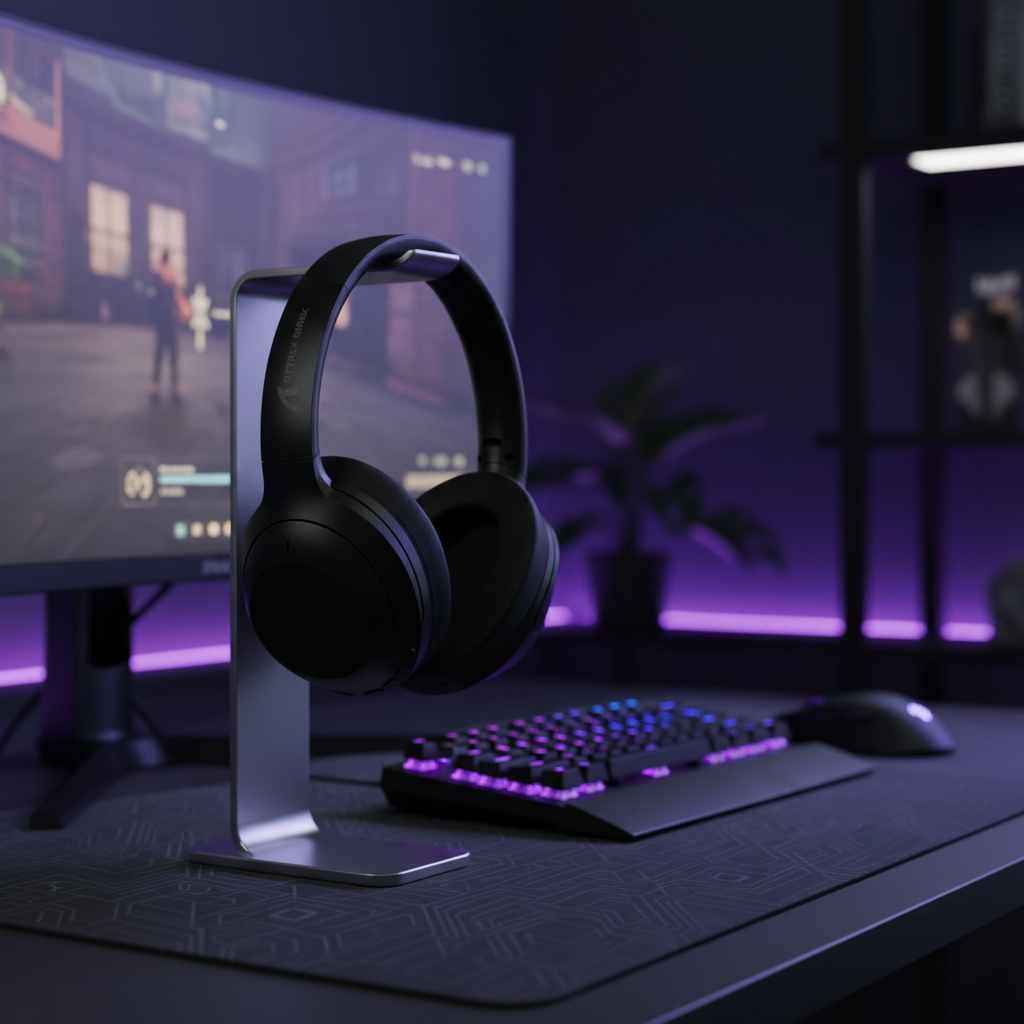
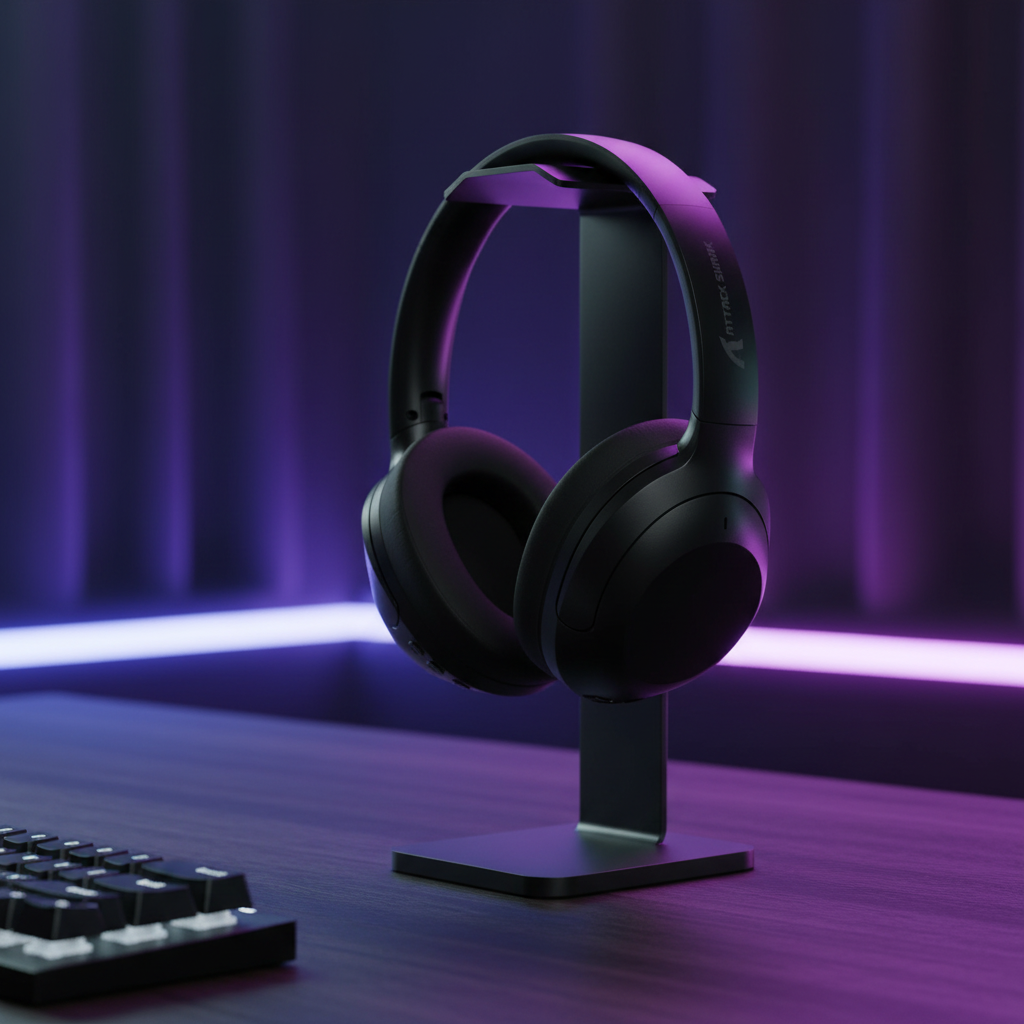
For gamers using glasses, the arm of the frame creates a literal tunnel for air to escape. This is why many high-performance headsets, like the ATTACK SHARK G300 ANC Foldable Ultra-Light Dual-Mode Headphones, utilize high-density memory foam. This material is designed to deform around obstacles like glasses frames, maintaining the chamber's integrity where standard foam would fail.
Maintenance and the Lifecycle of Acoustic Performance
Earpads are consumable components. Over time, the cellular structure of the foam—whether standard or memory foam—undergoes permanent compression.
The 200-500Hz "Mud" Factor
As memory foam loses its "spring-back" capability, the distance between the driver and the ear canal decreases. This change in geometry shifts the resonant frequency of the chamber. Practitioners often note that worn pads increase resonance in the 200Hz to 500Hz range. This doesn't just make the audio "darker"; it muddies vocal clarity in team communications, making it harder to distinguish between game sounds and teammate callouts.
Rule of Thumb: If your earpads no longer return to their original shape within 3 seconds of being removed from your head, their acoustic performance has likely degraded by at least 15-20% in terms of isolation and frequency consistency.
Modeling Performance: The Competitive Gamer Scenario
To understand the stakes of acoustic and ergonomic integrity, we modeled a scenario for a Competitive FPS Gamer engaging in high-intensity play. This analysis looks at both the technical latency of wireless systems and the physical strain of extended sessions.
Run 1: Motion Sync Latency Trade-off
In wireless headsets and mice, "Motion Sync" technology is often used to smooth out data transmission. While it improves consistency, it introduces a deterministic delay.
| Parameter | Value | Unit | Rationale |
|---|---|---|---|
| Polling Rate | 1000 | Hz | Industry standard for competitive play |
| Motion Sync | Enabled | - | Used for signal smoothing |
| Base Latency | 1.0 | ms | Baseline hardware processing |
| Added Latency | ~0.5 | ms | Alignment delay (0.5 * T_poll) |
| Total Latency | ~1.5 | ms | Combined theoretical delay |
Note: This is a deterministic parameterized model, not a lab study. Results vary by firmware implementation.
Run 2: Moore-Garg Strain Index (Gaming Workload)
Extended gaming is a biomechanical event. Using the Moore-Garg Strain Index—a tool used by OSHA to assess repetitive strain risks—we evaluated the risk profile of a 6-hour competitive session.
| Variable | Multiplier | Rationale |
|---|---|---|
| Intensity | 2.0 | Rapid movements and high-tension inputs |
| Duration | 1.5 | 3-4 hour continuous sessions |
| Efforts/Min | 4.0 | High Actions Per Minute (APM) |
| Posture | 2.0 | Static neck/wrist tension |
| Speed | 2.0 | Rapid flick motions |
| Daily Duration | 2.0 | >6 hours total daily use |
| Final SI Score | 96.0 | Category: Hazardous (Threshold > 5) |
Methodology Note: The Strain Index is a screening tool for repetitive strain risk. A score of 96.0 suggests that competitive gaming workloads can exceed the physical demands of many industrial jobs, highlighting why lightweight gear and ergonomic earpads are not just luxury features but health necessities.
Regulatory Standards and Trust
When selecting a headset, technical performance must be backed by verifiable compliance. This ensures that the wireless signals do not interfere with other devices and that the materials used are safe for long-term skin contact.
- Wireless Integrity: For devices sold in North America, the FCC Equipment Authorization ensures that Radio Frequency (RF) exposure levels are within safe limits.
- European Standards: The EU Radio Equipment Directive (RED) mandates essential requirements for safety and electromagnetic compatibility (EMC).
- Material Safety: Compliance with the EU REACH Regulation ensures earpad materials are free from "Substances of Very High Concern" (SVHC) that could cause skin irritation.
Optimizing Your Setup
For the value-oriented enthusiast, maximizing the lifespan and performance of a headset involves three actionable steps:
- Select for Your Environment: If you play in a noisy room, prioritize leatherette for its 21dB+ passive reduction (as seen in ANC-equipped models). If you play in a quiet, warm environment, breathable mesh will offer better spatial imaging.
- Verify the Seal: Regularly perform the "Compression Test" to ensure your glasses or hair aren't creating a sub-bass leak.
- Monitor Foam Health: Replace pads every 6 to 12 months if you are a daily user to avoid the "muddy" midrange caused by foam compression.
The ATTACK SHARK G300 ANC Foldable Ultra-Light Dual-Mode Headphones represent an ideal balance for this framework, weighing only 210g to minimize the "Speed" and "Intensity" multipliers in the strain model while providing the thick memory foam necessary for a consistent acoustic seal.
Summary of Acoustic Trade-offs
| Feature | Leatherette Pads | Mesh / Fabric Pads |
|---|---|---|
| Bass Impact | High (Maximum Pressure) | Moderate (Controlled Leakage) |
| Soundstage | Narrow / Intimate | Wide / Open |
| Isolation | High (Up to 21dB passive) | Low to Moderate |
| Heat Retention | High | Low (Breathable) |
| Durability | High (Wipeable) | Moderate (Absorbs sweat) |
References and Sources
- Global Gaming Peripherals Industry Whitepaper (2026)
- FCC OET Knowledge Database (KDB)
- EU Radio Equipment Directive (RED) - 2014/53/EU
- Moore, J. S., & Garg, A. (1995). The Strain Index
- RTINGS - Frequency Response and Seal Consistency
Disclaimer: This article is for informational purposes only and does not constitute professional medical or ergonomic advice. Performance metrics are based on scenario modeling and may vary based on individual hardware and environment. Individuals with pre-existing repetitive strain injuries should consult a qualified healthcare professional.

referenced_products:

Dejar un comentario
Este sitio está protegido por hCaptcha y se aplican la Política de privacidad de hCaptcha y los Términos del servicio.