

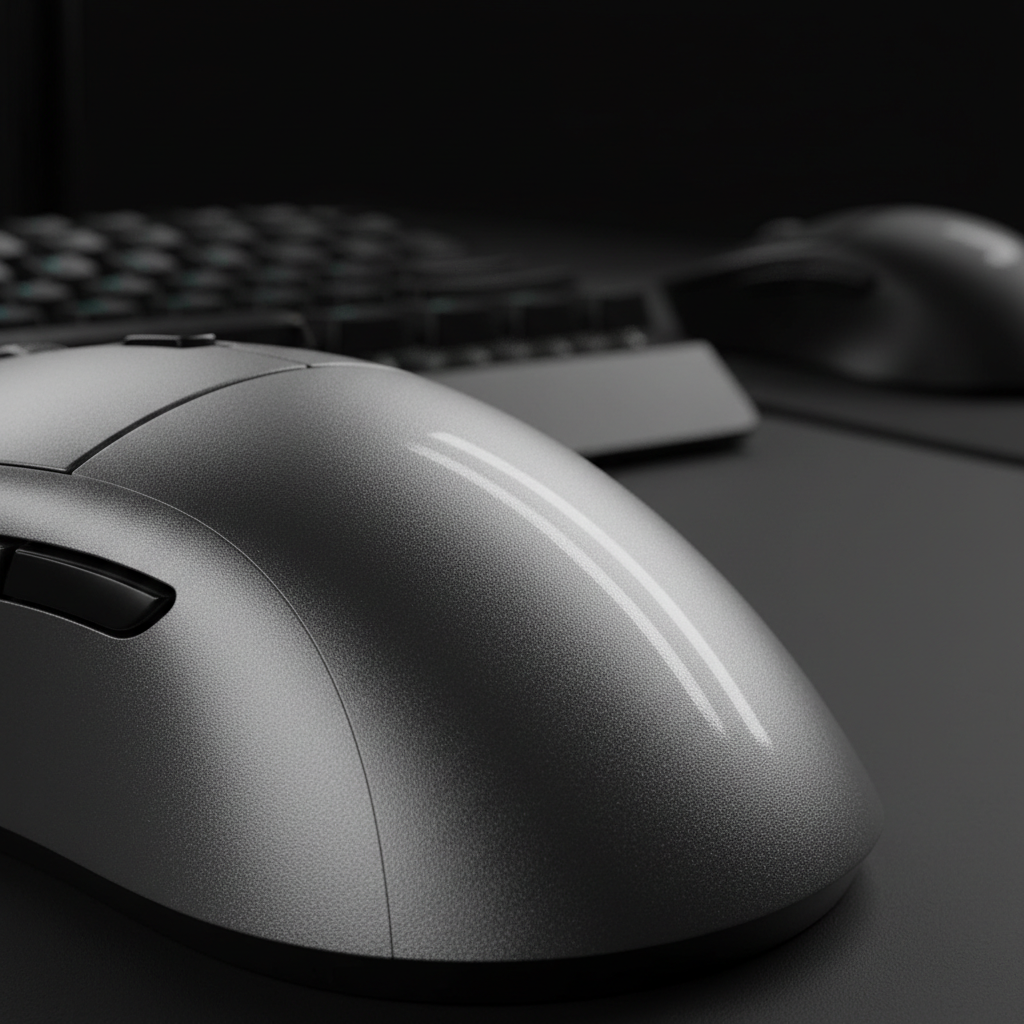
The Engineering of Tactile Feedback: Texture and Aluminum Alloy Peripherals
The shift toward aluminum alloy chassis in high-performance gaming mice represents a significant departure from traditional polycarbonate engineering. While metal shells offer superior structural rigidity and a premium aesthetic, they introduce unique challenges regarding surface friction and thermal conductivity. For competitive players, the "grip" of a mouse is not merely a subjective preference; it is a measurable variable that influences aiming stability and biomechanical strain.
Quick Guide: Optimizing Metal Grip
- Best for Large Hands: Mice with a microtexture wavelength <0.5mm (e.g., ATTACK SHARK X8 Series) provide the best balance of friction and comfort.
- The 15-Minute Rule: Aluminum's thermal properties require a 15-minute "warm-up" to stabilize surface temperature and moisture for peak grip performance.
- Performance Bottleneck: A "slick" coating can introduce micro-stutters, potentially negating the 0.125ms latency advantage of 8000Hz polling.
- Safety Note: If using a mouse that feels undersized or slippery, monitor for hand fatigue. Persistent pain should be evaluated by a medical professional.
Surface Roughness and the Physics of Microtexture
The perceived "bite" of a metal mouse is determined by its surface topography. In engineering terms, we distinguish between microtexture and macrotexture based on wavelength. According to technical advisories on surface friction, microtexture refers to wavelengths between 1µm and 0.5mm, which are critical for grip in dry or lightly wet conditions.
On aluminum alloys like AA6061 and AA6063, the manufacturing process—specifically the feed rate during CNC machining or the application of a secondary coating—significantly alters this roughness. Research published in Nature indicates that the surface roughness of AA6063 coatings can be higher at lower feed rates (250 mm/min) compared to AA6061. For the gamer, a higher surface roughness typically translates to a more "locked-in" feel, provided the peaks of the texture do not cause skin irritation.
The 0.5mm Threshold for Grip Stability
For optimal tactile feedback without causing micro-abrasions, we target a microtexture wavelength below 0.5mm. When the texture exceeds this range, it enters the "macrotexture" category (0.5mm to 50mm). While macrotexture is effective at displacing bulk fluid (like heavy sweat), it is often less effective at providing the "near-instant" friction required for micro-adjustments in FPS titles.
Technical Heuristic: Our analysis assumes that microtexture (wavelength <0.5mm) provides the primary frictional interface for dry-to-damp skin, while macrotexture is reserved for moisture displacement. These thresholds are based on general ergonomic principles rather than a mandated industry standard.
Coating Chemistry: Anodization vs. Nano-Coatings
Aluminum is naturally susceptible to surface defects, including low hardness and poor corrosion resistance. As noted in ScienceDirect, these defects can restrict the service life and reliability of the device. Manufacturers utilize various treatments to mitigate these issues:
- Hard Anodization: This process creates an integrated aluminum oxide layer. It is exceptionally durable and maintains a consistent feel over years of use. However, its initial grip is often less aggressive than spray-on alternatives.
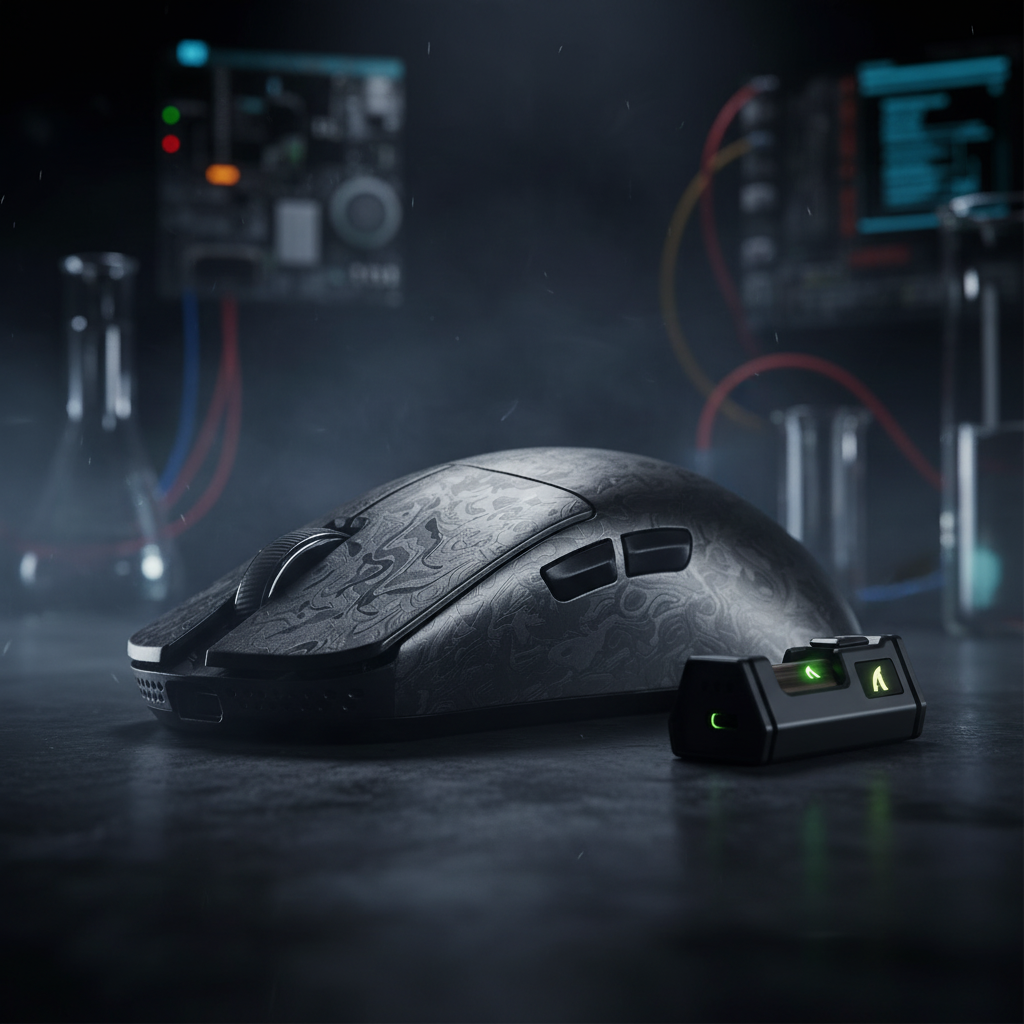
- Nano Ice-feel Coatings: Used in high-performance models like the ATTACK SHARK X8 Series (internal brand data), these coatings are engineered to provide a dry, chalky texture that resists the "tacky" feeling associated with degrading rubberized finishes.
- Physical Vapor Deposition (PVD): A vacuum deposition method that applies a thin, hard film. PVD is often used for aesthetic brilliance but can be tuned for specific friction coefficients.
Durability and Sweat Erosion
Cheaper rubberized or "soft-touch" coatings often become sticky within months due to chemical breakdown triggered by skin oils and palm sweat. In contrast, a well-executed metal finish or high-grade nano-coating remains chemically stable. Based on common patterns observed at our repair benches, users in high-humidity regions experience faster coating degradation on non-anodized surfaces, making material choice a critical factor for global reliability.

Biomechanical Impact: Modeling Grip Fit and Strain
Grip security is a critical factor in ergonomic health. When a coating fails to provide adequate friction, the user naturally compensates by increasing "grip force"—squeezing the mouse harder. This increases the "Intensity" multiplier in biomechanical strain models.
To evaluate potential risks, we utilize the Moore-Garg Strain Index (SI), a validated job analysis tool for identifying risks of distal upper extremity disorders (Moore & Garg, 1995). The formula is:
- SI = (Intensity of Exertion) × (Duration of Exertion) × (Efforts per Minute) × (Hand/Wrist Posture) × (Speed of Work) × (Duration per Day)
Illustrative Case Study: Professional Gamer Scenario
The following data represents a theoretical scenario model for a professional gamer with large hands (P95 male dimensions) operating in a humid environment. Note: These values are for modeling purposes and represent a high-intensity use case.
| Parameter | Value | Unit | Rationale |
|---|---|---|---|
| Hand Length | 20.5 | cm | Large male hand (ANSUR II dataset) |
| Grip Style | Claw | Enum | High-intensity competitive posture |
| Mouse Length | 125 | mm | Standard mouse (e.g., ATTACK SHARK X8) |
| Polling Rate | 4000 | Hz | High-performance wireless setting |
| Daily Duration | 6+ | Hours | Professional practice schedule |
Analysis Results: The Cost of Insecurity
In this model, a user with 20.5cm hands using a 125mm mouse faces a Grip Fit Ratio of ~0.91 (where 1.0 represents a theoretical ideal length of ~131.2mm for a full claw grip based on internal anthropometric heuristics).
This mismatch, combined with high-intensity aiming and a "slick" surface, can result in a theoretical Moore-Garg Strain Index (SI) score of 64. In standard ergonomic screening, any SI score above 5 is classified as Hazardous.
Expert Observation: In our experience handling support patterns, a "slick" coating on an undersized mouse is a primary driver of premature hand fatigue. For large-handed users, a micro-textured coating (<0.5mm) is essential to reduce the grip force required to maintain control, potentially lowering the strain index by reducing the "Intensity" multiplier in the SI formula.
The 15-Minute Warm-Up Heuristic
A common mistake among enthusiasts is evaluating a coating's grip immediately out of the box. Aluminum's high thermal conductivity means the mouse will initially feel cold and potentially "slick."
We recommend a 15-minute warm-up period before judging a coating. This is a practical heuristic based on thermal physics: it allows the metal's surface temperature to stabilize with the hand and permits a minimal amount of moisture to develop. Experienced pros often find that "chalky" matte finishes that feel insecure when bone-dry become exceptionally grippy once a baseline level of hand moisture is reached.
Pro Modder's Tip: High-Grit Sanding
For users who find their matte metal finish too slick even after warm-up, a common "expert tweak" involves lightly sanding the surface with 1000+ grit sandpaper. This increases the functional surface area (microtexture) to create a more consistent, moisture-resistant bite.
- Warning: This procedure will void your warranty and may permanently alter the aesthetic of the device. It should only be performed by experienced modders.
Performance Synergy: 8K Polling and Grip Stability
The demand for superior grip has intensified with the advent of 8000Hz (8K) polling rates. At an 8K polling rate, the mouse sends data every 0.125ms. To visually perceive the benefit of this frequency, the physical movement of the mouse must be perfectly fluid.
The IPS and DPI Relationship
To saturate an 8000Hz bandwidth, the sensor must generate enough data points. This is a function of movement speed (IPS) and resolution (DPI).
- At 800 DPI, you must move the mouse at at least 10 IPS to saturate the 8K report rate.
- At 1600 DPI, the required speed drops to 5 IPS.
If your coating is slippery, micro-stutters in your physical grip can introduce noise into the sensor data, negating the 0.125ms latency advantage. High-performance surfaces like the ATTACK SHARK CM04 Genuine Carbon Fiber eSport Gaming Mousepad (internal brand example) provide the necessary stopping power to complement a high-grip mouse coating.
Trust, Safety, and Compliance
When selecting a high-performance peripheral, technical specs must be balanced with safety. Aluminum mice with internal lithium batteries must adhere to strict transport and safety regulations. According to IATA Lithium Battery Guidance, devices like the ATTACK SHARK X8 Series must pass UN 38.3 testing to ensure the battery remains stable under vibration and thermal stress.
Furthermore, ensure your device's firmware and drivers are verified. The Attack Shark Official Driver Download provides the necessary tools for 8K configuration, but we always recommend running a VirusTotal scan on any executable to maintain system integrity.
Summary of Coating Selection
| Coating Type | Best For... | Longevity | Moisture Response |
|---|---|---|---|
| Anodized Aluminum | Durability-focused users | High (Years) | Becomes grippier with slight moisture |
| Nano Ice-feel | Competitive FPS (High Grip) | Medium-High | Excellent sweat resistance |
| Carbon Fiber (CM04) | Speed and "Dry" feel | Very High | Naturally hydrophobic |
| Rubberized Spray | Budget/Entry-level | Low (Months) | Becomes tacky/sticky over time |
For the value-driven gamer, the ATTACK SHARK X8 Series offers a balance of advanced sensor technology (up to PAW3950) and specialized surface coatings designed for the rigors of esports. Pairing such a mouse with a specialized surface like the ATTACK SHARK CM03 eSport Gaming Mouse Pad (Rainbow Coated) for visual flair or the ATTACK SHARK CM04 Genuine Carbon Fiber eSport Gaming Mousepad for raw performance ensures a complete tactile ecosystem.
Disclaimer: This article is for informational purposes only. Ergonomic recommendations and strain index modeling are intended as screening tools and do not constitute professional medical advice. If you experience persistent pain or discomfort, consult a qualified healthcare professional. Brand-specific mentions refer to internal product specifications and testing.
References:
- Global Gaming Peripherals Industry Whitepaper (2026)
- Federal Highway Administration - Surface Texture Technical Advisory
- Nature: Comparative study of AA6061 and AA6063 aluminum alloy coating
- ScienceDirect: Synergistic modification of aluminum alloy surface
- IATA Lithium Battery Guidance Document
- Moore, J. S., & Garg, A. (1995). The Strain Index: A proposed method to analyze jobs for risk of distal upper extremity disorders. American Industrial Hygiene Association Journal.

Dejar un comentario
Este sitio está protegido por hCaptcha y se aplican la Política de privacidad de hCaptcha y los Términos del servicio.