


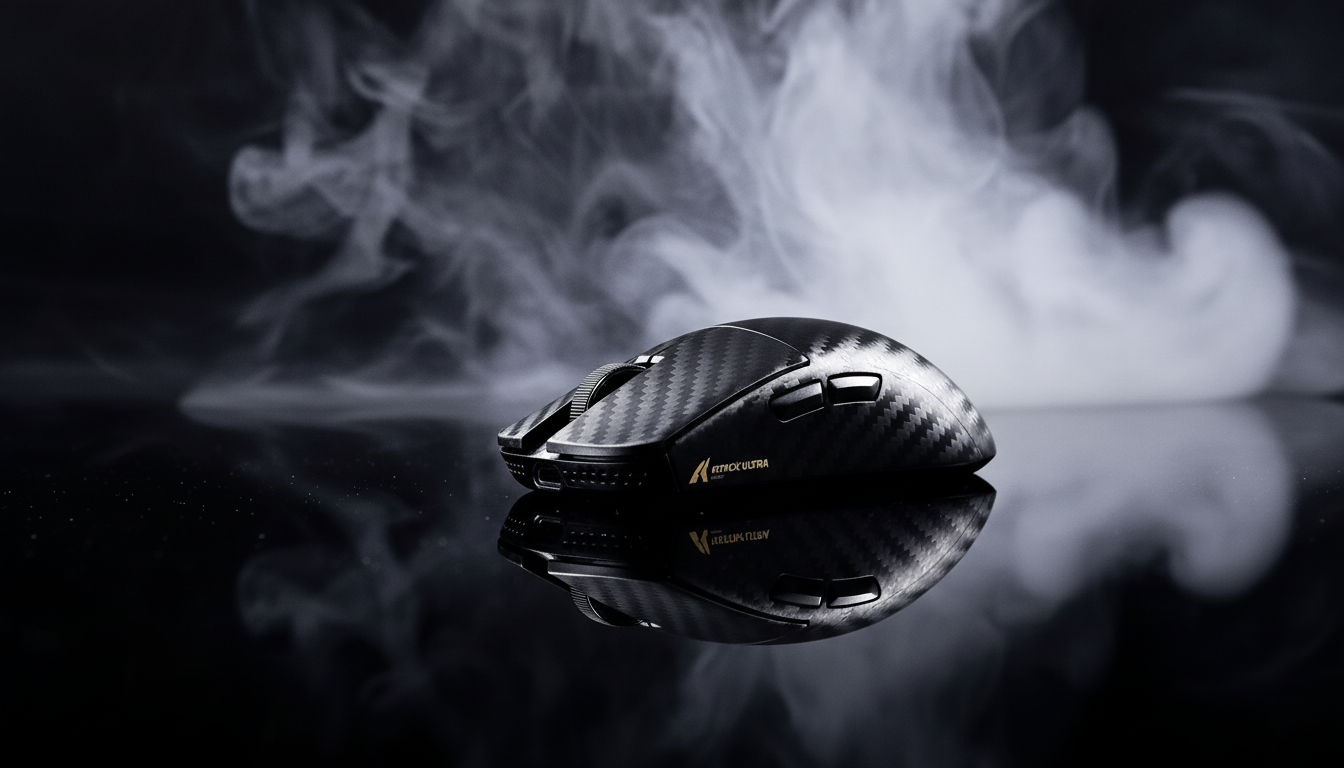
For the modern competitive gamer, the tactile sensation of a click is inseparable from the sound it produces. Traditionally, the industry has relied on Acrylonitrile Butadiene Styrene (ABS) or Polycarbonate (PC) to house the intricate switches that translate human intent into digital action. However, as the market shifts toward ultra-lightweight engineering, materials like carbon fiber have introduced a new acoustic phenomenon: the high-frequency 'snap.'
This isn't merely a marketing distinction. The transition from the dull, low-frequency 'thock' of a plastic shell to the sharp, energetic resonance of carbon fiber represents a fundamental shift in material physics. Understanding this acoustic profile requires a deep dive into how density, stiffness, and internal damping influence the way energy travels through a mouse chassis.
The Physics of the "Snap": Stiffness vs. Damping
The characteristic sound of a carbon fiber mouse is a direct result of its extreme stiffness-to-weight ratio. In material science, the speed of sound through a solid is determined by its Young's Modulus (stiffness) and its density. Carbon fiber reinforced polymers (CFRP) possess a significantly higher Young's Modulus than ABS, allowing sound waves to propagate faster and with less energy loss.
When you actuate a switch in a carbon fiber shell, such as the one found in the ATTACK SHARK R11 ULTRA Carbon Fiber Wireless 8K PAW3950MAX Gaming Mouse, the shell experiences virtually zero flex. In a standard ABS mouse, a minute portion of the switch's kinetic energy is absorbed by the plastic's deformation, acting as a natural low-pass filter that dampens high frequencies. Carbon fiber, being rigid, refuses to absorb this energy, reflecting it back as a high-pitched snap.
According to research on the exceptional damping of CFRPs, while carbon fiber is rigid, its damping characteristics are highly tunable based on the resin system and fiber orientation. This means the 'snap' isn't just a byproduct; it is a signature of the material's structural integrity.
Technical Comparison: Acoustic Properties of Mouse Shell Materials
To understand why carbon fiber sounds different, we must look at the comparative data of common shell materials. The following table highlights the physical properties that contribute to the acoustic "thock" vs. "snap."
| Material | Density (g/cm³) | Young's Modulus (GPa) | Acoustic Profile | Perceived Feedback |
|---|---|---|---|---|
| ABS Plastic | 1.04 - 1.06 | 2.0 - 2.6 | Low-frequency 'Thock' | Muffled, softer |
| Polycarbonate | 1.20 - 1.22 | 2.2 - 2.4 | Mid-frequency 'Clack' | Balanced |
| Magnesium Alloy | 1.74 - 1.80 | 45.0 | High-frequency 'Ping' | Metallic, sharp |
| Carbon Fiber (CFRP) | 1.50 - 1.60 | 50.0 - 150.0+ | High-frequency 'Snap' | Instant, crisp |
Note: Values are estimated based on common engineering practice and standard material grades used in consumer electronics.
As shown, the Young's Modulus of carbon fiber is orders of magnitude higher than ABS. This stiffness ensures that the shell does not "soak up" the sound of the mechanical or optical switch, resulting in a cleaner, more immediate auditory confirmation of the click.
Information Gain: The Science of Acoustic Emission (AE)
One of the most fascinating aspects of carbon fiber acoustics is found in the realm of Acoustic Emission (AE) monitoring. While gamers hear a 'snap,' the material is actually vibrating at frequencies far beyond human hearing.
Data from MDPI's study on carbon fiber damage events indicates that fiber breakage and matrix cracking in composites primarily occur in the ultrasonic range, specifically between 50 kHz and 500 kHz. While a gaming mouse is not (hopefully) experiencing structural failure during a click, the high-frequency energy generated by the switch's internal spring and plunger excites these same ultrasonic modes.
What we perceive as the "High-Frequency Snap" is actually a lower-frequency structural resonance excited by these ultrasonic events. Because carbon fiber is an excellent conductor of high-frequency waves, it translates the "micro-vibrations" of the switch into a crisp audible tone more effectively than any thermoplastic.
The Resonant Pitfall: Managing Internal Reverb
While the snap is often desired for its perceived speed, carbon fiber's lack of internal damping can be a double-edged sword. Its extreme stiffness makes the shell a perfect resonator for any internal component rattle or switch "ping."
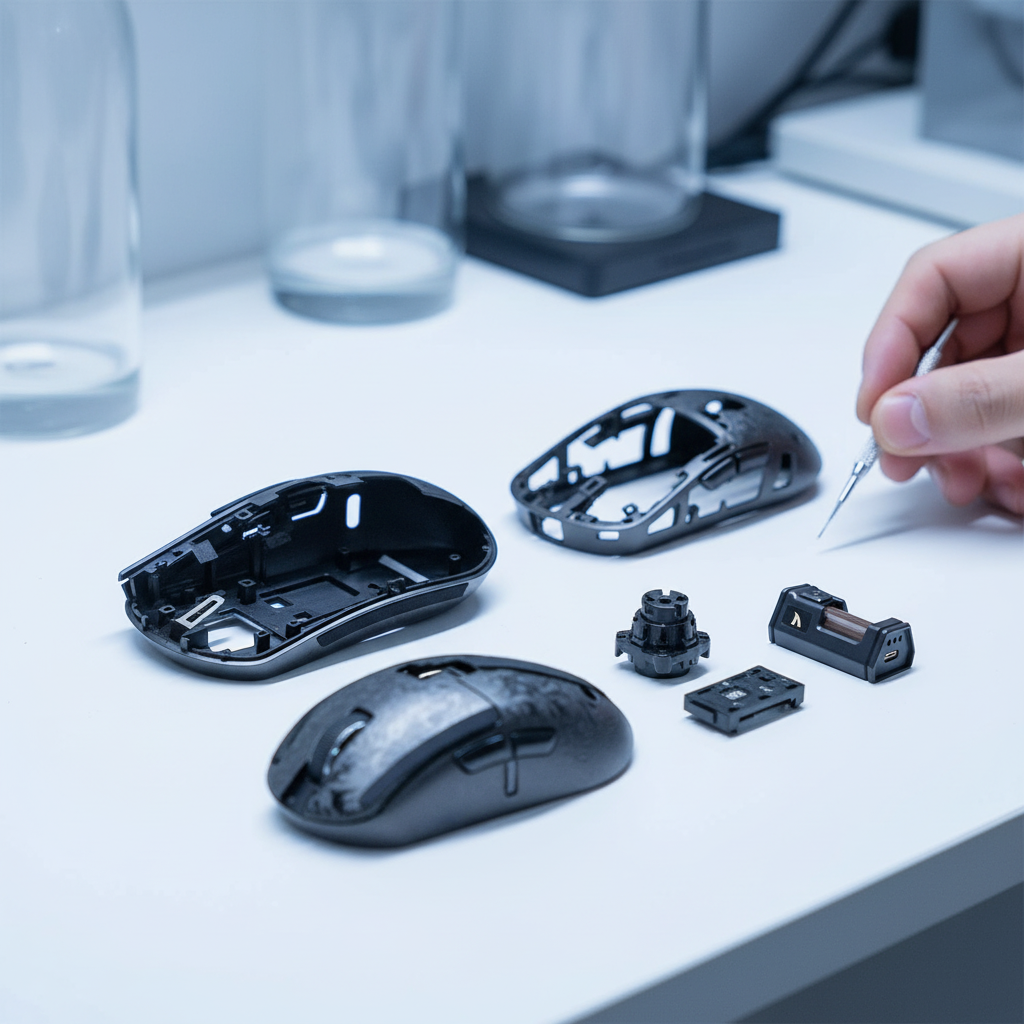
In our experience troubleshooting ultra-lightweight designs, a common "friction point" is the secondary vibration or "tinny" reverb that follows the initial click. This occurs when the energy of the click bounces between the thin walls of the shell without being adequately absorbed. This is particularly noticeable in "forged" carbon fiber shells where the material thickness may vary across the surface.
Expert modders often address this by targeting the "Strategic Resonance Points." If you find your carbon fiber mouse has a distracting secondary ring, we recommend the following professional-grade tweaks:
- The Switch-Back Dampener: Apply a single layer of painter's tape to the bottom of the switch housing before it meets the PCB. This reduces the mechanical "shock" transferred into the board.
- Internal Bracing Check: Ensure that the internal ribs of the shell are making solid contact with the PCB. A gap of even 0.1mm can create a "chatter" effect during high-speed clicking.
- Non-Compressing Foam: Placing a tiny sliver of non-compressing foam between the PCB and the shell at the rear of the mouse can kill the "hollow" reverb without adding more than 0.1g of weight.
Synergy: Carbon Fiber and 8000Hz Polling Rates
The acoustic speed of carbon fiber often correlates with the technical performance of the mouse. For instance, the ATTACK SHARK R11 ULTRA utilizes an 8000Hz (8K) polling rate. At this frequency, the mouse sends a data packet every 0.125ms.
For a user to truly feel the benefit of this near-instant reporting, the physical interface—the shell and the switch—must be equally responsive. A flexible ABS shell introduces a minute "pre-travel" or "mushiness" that can perceptually mask the 0.125ms polling advantage. The rigidity of the carbon fiber shell ensures that the physical actuation and the digital report happen in the tightest possible synchronization.
However, running at 8000Hz introduces significant system demands. According to the Global Gaming Peripherals Industry Whitepaper (2026), high polling rates primarily stress the CPU's Interrupt Request (IRQ) processing. To maintain a stable 8K signal, we recommend:
- Connecting the mouse directly to the motherboard's rear I/O ports.
- Ensuring your monitor refresh rate is at least 240Hz to visually track the smoother cursor path.
- Setting your DPI to at least 1600 to ensure the sensor generates enough data points (roughly 5 IPS required) to saturate the 8000Hz bandwidth.

The "Ice" Factor: Surface Coatings and Acoustics
The sound of a mouse isn't just about the internal structure; the surface finish plays a role. The ATTACK SHARK R11 ULTRA features a "Nano-Metal Ice Coating." Beyond its primary purpose of hand temperature regulation and grip, this coating acts as a micro-thin damping layer on the exterior of the carbon fiber.
In acoustic engineering, adding a different material density to a surface (even at the nano-scale) can help break up standing waves. This results in a "cleaner" snap by truncating the high-frequency tail of the sound, preventing it from becoming a shrill "shriek."
Beyond the Mouse: The Carbon Fiber Ecosystem
The acoustic benefits of carbon fiber aren't limited to the mouse shell. The ATTACK SHARK CM04 Genuine Carbon Fiber eSport Gaming Mousepad provides a complementary surface that changes the "glide acoustics."
Unlike cloth pads that produce a soft "woosh," a dry carbon fiber mat like the ATTACK SHARK CM04 creates a consistent, higher-frequency feedback loop with the mouse's PTFE skates. This provides the gamer with more auditory and tactile information about the texture of the surface and the speed of their movement.
Trust & Safety: Handling Advanced Materials
When dealing with carbon fiber peripherals, it is important to consider the engineering standards involved. High-performance wireless devices must adhere to strict regulatory guidelines to ensure user safety, particularly regarding the lithium-ion batteries housed within these lightweight shells.
The FCC Equipment Authorization (FCC ID Search) ensures that the 2.4GHz and Bluetooth transmissions of these high-speed mice do not interfere with other critical electronics. Furthermore, because carbon fiber is a conductive material, the internal shielding and PCB isolation must be meticulously designed to prevent short circuits—a detail often overlooked in DIY carbon fiber projects but standard in retail models like the R11 ULTRA.
Summary of Acoustic Optimization
If you are a value-driven enthusiast looking to optimize your setup's sound and feel, keep these principles in mind:
- Stiffness is Speed: The 'snap' of carbon fiber is the sound of energy efficiency. It means less energy is being lost to shell deformation.
- Resonance Management: If the snap turns into a ring, use minimal damping (tape or foam) at the source (the switch) rather than the shell.
- System Alignment: High-frequency acoustics pair best with high-frequency electronics. If you are using a carbon fiber mouse for its "instant" feel, ensure your system is configured for 8000Hz stability.
Final Thoughts on Material Evolution
The shift toward carbon fiber in the gaming industry represents the "Formula 1" stage of peripheral engineering. By moving away from the "safe" and "dull" acoustics of ABS, manufacturers are allowing gamers to experience a more raw, connected sensation. The high-frequency snap is more than just a sound; it is the acoustic evidence of a shell engineered for the limits of human reaction time.
As we look toward the future, the integration of nanoparticle-reinforced resins and hybrid sandwich structures—as discussed in recent vibroacoustic modeling research—will likely allow for even more precise tuning of mouse acoustics. For now, the carbon fiber snap remains the gold standard for the competitive enthusiast who demands both performance and sensory clarity.
Disclaimer: This article is for informational purposes only. Modifying your gaming mouse or peripherals may void your warranty. Always consult the manufacturer's guidelines before performing internal modifications. Technical specifications regarding polling rates and system requirements are based on current industry standards and may vary depending on individual hardware configurations.


Dejar un comentario
Este sitio está protegido por hCaptcha y se aplican la Política de privacidad de hCaptcha y los Términos del servicio.