For competitive gamers, the quest for the perfect setup is often a journey of endless trade-offs. You might have the latest 360Hz monitor and a top-tier GPU, but the primary point of contact—the mouse in your hand—frequently feels like the weakest link. Many players find themselves hitting an invisible "hardware ceiling" where their physical reflexes are faster than their equipment can communicate.
This frustration usually manifests in a binary choice: do you choose a high-performance "brick" that causes wrist fatigue after two matches, or a lightweight "shell" that feels flimsy, jitters on your pad, and uses outdated sensors to save on weight? This guide explores why you shouldn't have to choose and how a new generation of hardware is finally bridging the gap.
The Invisible Wall in Competitive Aiming
If you have ever missed a crucial headshot in CS2 or Valorant despite feeling like your crosshair was perfectly aligned, you have likely felt the limitations of standard hardware. In high-stakes tactical shooters, the difference between a round-winning clutch and a trip back to the lobby is measured in milliseconds.
When you use a mouse that weighs 70 or 80 grams, you are fighting physics. Every time you need to make a rapid flick or a micro-adjustment, you must overcome the inertia of that weight. Over a long session, these tiny physical exertions accumulate into wrist strain and a measurable decrease in reaction speed. However, switching to a generic "ultralight" mouse often introduces a new set of problems.
Many manufacturers achieve low weight by using thin plastic that creaks or by stripping out the advanced processors required for stable tracking. This leaves players perpetually searching for the best lightweight gaming mouse—one that offers agility without sacrificing the raw power needed for professional play.
The Great Industry Trade-off: Weight vs. Performance

For years, the gaming industry has operated on a sliding scale. On one end are the feature-rich mice with massive batteries and top-tier sensors. On the other are the "honeycomb" designs that are light but prone to dust and sensor lag. The engineering challenge is immense: how do you fit a professional-grade brain, a high-capacity sensor, and a stable wireless transmitter into a chassis that weighs less than a medium-sized egg?
Most brands compromise. They might give you a 40-gram mouse, but it will use an older sensor that can "spin out" during violent movements. Or they might offer a high polling rate, but the battery only lasts for a few hours. This constant "either/or" choice prevents many enthusiasts from reaching their true aiming potential. The market has been waiting for a device that refuses to choose—a mouse that defines the category of an ultra lightweight gaming mouse while pushing the boundaries of tracking technology.
Breaking the 40-Gram Barrier Without the "Flimsy" Feel
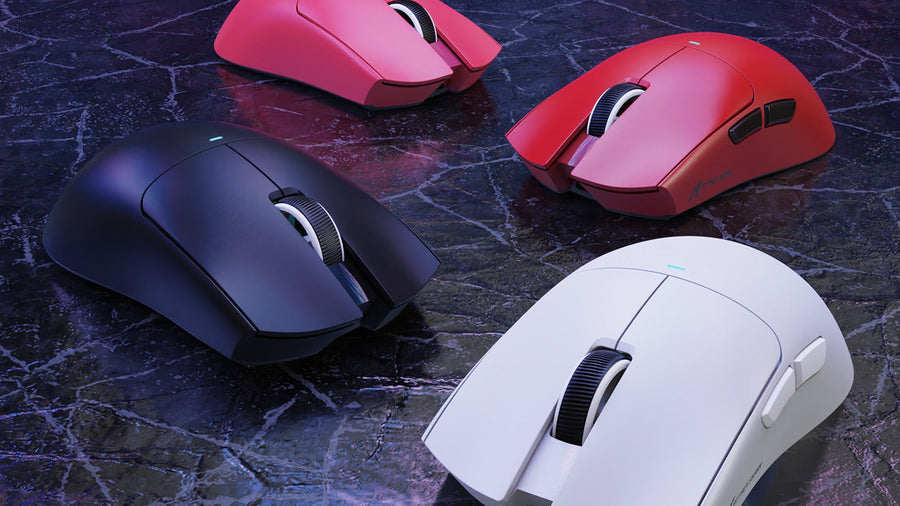
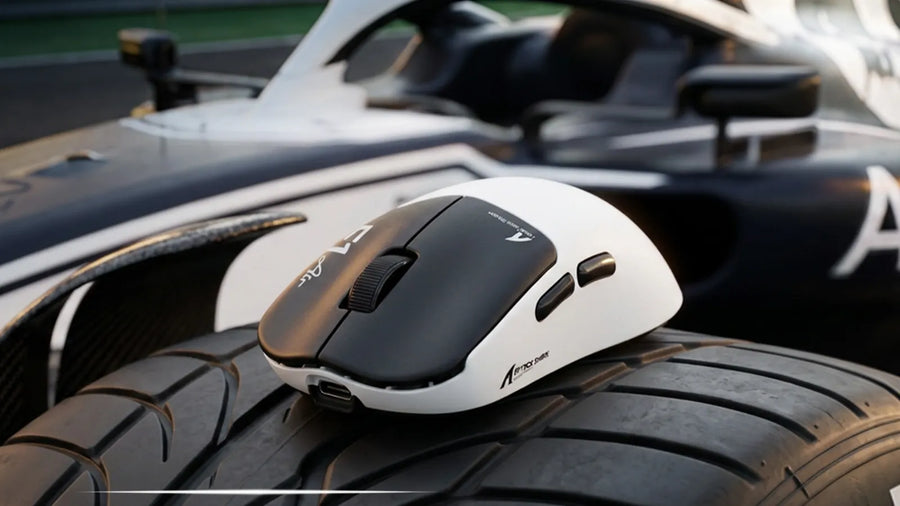
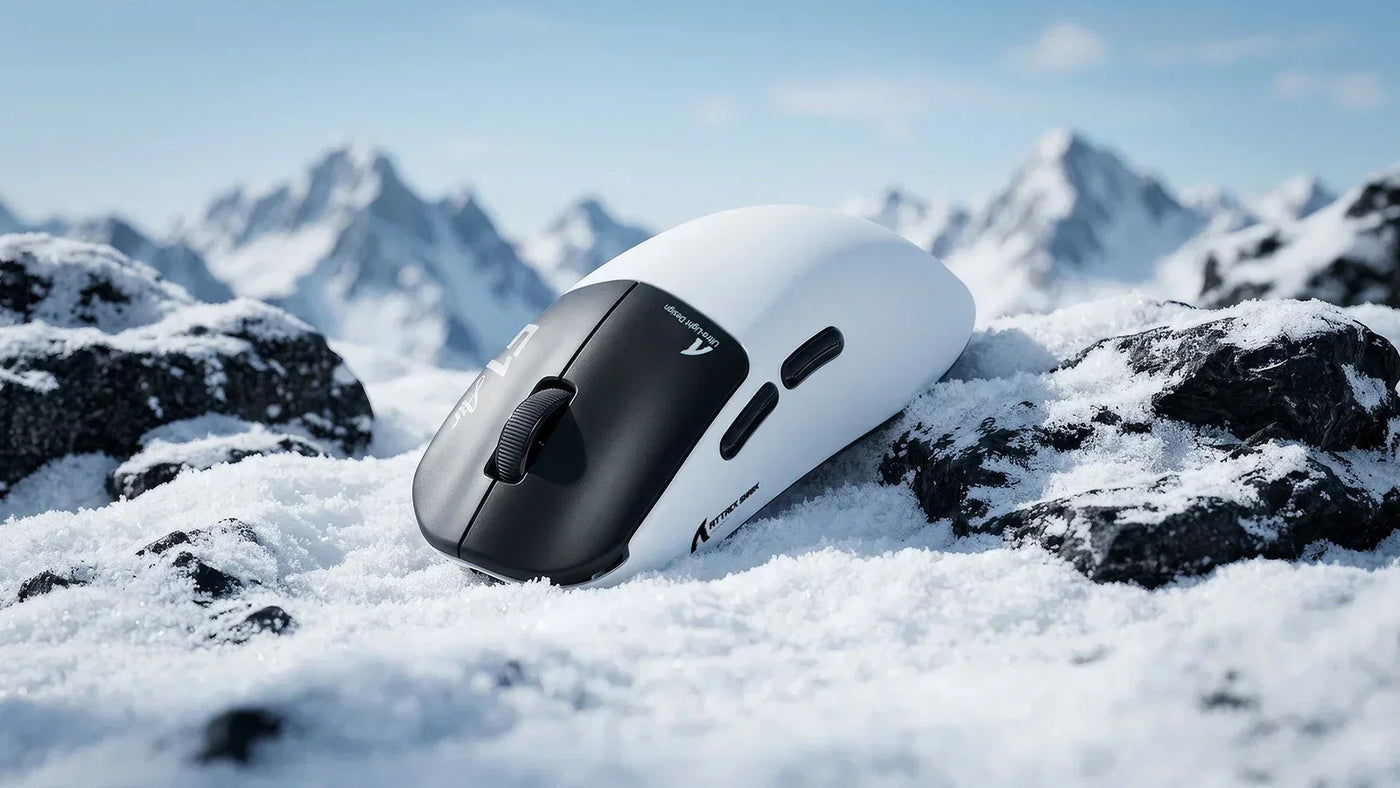
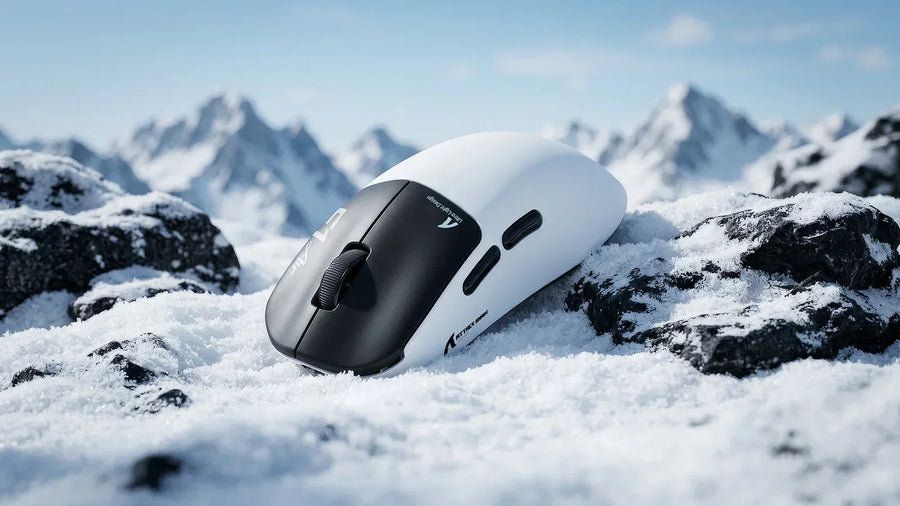
The Attackshark F1 AIR enters the arena as a direct response to this dilemma. Weighing in at an incredible 39g +/- 3g, it immediately addresses the primary concern of FPS professionals: physical fatigue. When a mouse is this light, it essentially becomes an extension of your nervous system. There is no "drag" to overcome when transitioning from holding a passive angle to reacting to a wide swing.
Unlike many in the lightweight wireless gaming mouse category that feel like hollow toys, the F1 AIR utilizes a high-density injection molding process. This ensures the chassis remains rigid and solid even during intense clutching. By finishing the build with a specialized Ice-Feel glass-sprayed coating, it also solves the "slippery" sensation that occurs when hands sweat during overtime, providing a consistent grip that traditional plastic cannot match.
Why Sensor "Headroom" Matters for Your Aim
The most significant leap the F1 AIR makes is in its internal "eyes." While most flagship mice are still catching up to the latest industry standards, the F1 AIR utilizes a deeply customized PAW3955MAX chip.
In the world of the best DPI for FPS, you might play at 400 or 800, but having a sensor with a 52,000 DPI ceiling provides massive "oversampling" benefits. It’s like having a high-resolution camera; even if you only need a small photo, the extra detail ensures the image is perfectly sharp. This technical headroom allows for much smoother cursor paths and flawless tracking on difficult surfaces like glass. With the ability to fine-tune your settings in 1-DPI increments, you can finally move past the hardware ceiling and match your gear to your exact muscle memory.
Wireless Speed That Matches Wired Reflexes

A lightweight mouse is a liability if the wireless signal is unstable. To support professional-level play, the F1 AIR integrates a high-performance main control system that enables Dual 8K Super Transmission technology.
Whether you prefer playing wired or wireless, the F1 AIR functions as a high polling rate mouse at 8,000Hz. This reduces input delay to a point where it is effectively invisible to the human eye, with click latency dropping as low as 0.168ms. When paired with its unique "Shark Fin" receiver—designed for maximum signal strength—it provides the stability of a wired connection with the total freedom of a 39g wireless device. This is the level of reliability required for someone looking for the best mouse for CS2 or other fast-paced titles.
A New Era for FPS Professionals
The Attackshark F1 AIR represents the end of the "trade-off era." It proves that a mouse can be incredibly light (39g) while remaining structurally sound and technologically superior. It removes the final barriers between your reflexes and the game, ensuring that your skill—not your hardware—is the only thing that determines the outcome of a match.
If you are ready to stop compromising and start dominating, the F1 AIR provides the foundation. Stay tuned for our next post, where we will dive even deeper into the specific engineering and premium components that make this record-breaking performance possible.
FAQs about Ultra Lightweight FPS Mice
Does a 39g mouse feel too light for precision aiming?
Most players find that the reduction in inertia allows for much better "stopping power." You can snap your crosshair to a target and stop it instantly without the weight of the mouse carrying it too far.
Is the customized PAW3955MAX sensor better for glass mousepads?
Yes. The advanced tracking algorithms and higher IPS ceiling are specifically designed to handle high-reflectivity surfaces that often cause standard sensors to skip or jitter.
What is the benefit of a "high polling rate" in a lightweight mouse?
A high polling rate mouse (like the F1 AIR's 8K mode) sends data to your PC 8,000 times per second instead of 1,000. This creates a much smoother cursor movement, which is highly noticeable on modern 240Hz or 360Hz monitors.
How does the 1-DPI adjustment help my game?
Standard mice often jump in increments of 50 or 100 DPI. 1-DPI micro-adjustments allow you to find the exact sensitivity that feels "natural" to you, rather than forcing your hand to adapt to the mouse's limitations.
Why is the "Ice-Feel" coating important for long sessions?
Standard plastic often becomes greasy or sticky as your hand warms up. The glass-sprayed coating on the F1 AIR dissipates heat and stays dry, ensuring your mouse grip remains perfect from the first round to the last.