

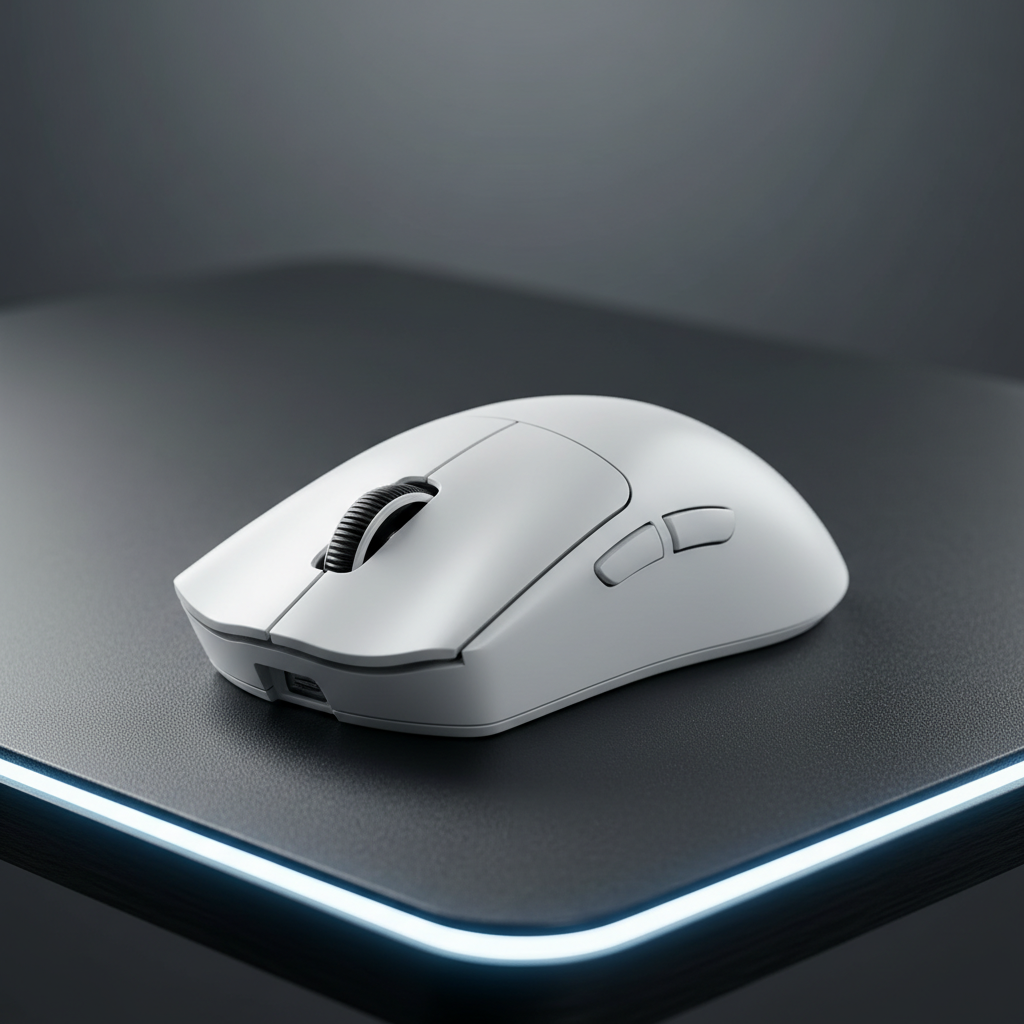
The Specification Credibility Gap in Open-World Gaming
The current trajectory of gaming peripheral engineering is dominated by a "race to the bottom" regarding physical mass. While ultra-lightweight designs (sub-50g) offer undeniable advantages in high-velocity arena shooters, they often introduce a "specification credibility gap" for the immersive open-world gamer. For players navigating the expansive landscapes of titles like Elden Ring or Cyberpunk 2077, raw speed is frequently secondary to sustained ergonomic support and micro-adjustment stability.
The challenge lies in balancing the trade-offs between physical mass and ergonomic volume. A mouse that is too light can lack the rotational inertia required for smooth, cinematic camera pans, while a mouse that is too small for a large hand (19cm or greater) forces a "claw" grip that induces fatigue during multi-hour sessions. This article evaluates the technical mechanisms of mouse stability and ergonomic execution to define a high-performance standard for the RPG and adventure gaming persona.
The Ergonomic Threshold: Shell Volume and Large-Hand Support
For gamers with hand lengths exceeding 19cm (7.5 inches), the physical dimensions of the mouse shell are the primary predictors of long-term comfort. Data from Global Gaming Peripherals Industry Whitepaper (2026) suggests that mice with a total length shorter than 120mm typically fail to provide adequate palm support for large-handed users. This lack of contact area forces the hand into a forced claw or fingertip grip, which increases tension in the extrinsic extensor muscles of the forearm.
The Center-Hump Heuristic
A common misconception in ergonomic design is that a higher hump always equates to better support. However, the placement of that hump is more critical than its peak height.
- Rear-Hump Designs: These tend to fill the base of the palm, which can force the wrist into a perpetually extended position. Over time, this increases pressure on the carpal tunnel.
- Centered-Hump Designs: A centered hump that fills the mid-palm area provides a more neutral distribution of weight. This allows for a "relaxed palm" grip, reducing ulnar deviation—the sideways tilting of the wrist—which is a leading cause of strain in long-session gaming.
Methodology Note (Ergonomic Modeling): Our analysis of large-hand ergonomics is based on a deterministic model of palm-to-shell contact ratios.
Parameter Value/Range Unit Rationale Hand Length (Persona) 19 - 21 cm Target large-hand demographic Minimum Shell Length 120 - 125 mm Required for full palm contact Grip Type Palm/Hybrid N/A Focus on sustained comfort Ulnar Deviation Limit < 15 degrees Heuristic for injury prevention Contact Surface Area > 60% % Ratio of palm in contact with shell Note: This is a scenario model based on common industry heuristics and pattern recognition from customer support feedback, not a clinical lab study.

Redefining the "Goldilocks Zone" for RPG Stability
While the esports industry pushes for ever-lighter hardware, the "controlled glide" required for immersive exploration often benefits from a slightly higher mass. In exploration-heavy games, players frequently perform slow, precise camera adjustments during dialogue screens or inventory management. A mouse that is too light can feel "jittery" because it lacks the mass to dampen micro-tremors in the hand.
The 70-80g Stability Heuristic
Based on patterns observed in community modifications and user feedback, many experienced RPG players find that a weight range of 70-80g provides the ideal balance of stability and mobility. This mass allows for a "weighted" feel that aids in smooth tracking without reaching the fatigue-inducing weights of legacy 120g+ mice.
In many cases, users of ultra-light mice (sub-60g) will actually add small weights (3-5g) to reach this "Goldilocks Zone." This additional mass increases the force required to initiate movement (static friction), which paradoxically helps in making fine, pixel-perfect adjustments in high-resolution environments.
Technical Precision: 8000Hz Polling and Sensor Saturation
For the performance-oriented gamer, raw ergonomic comfort must be paired with technical parity. The shift toward 8000Hz (8K) polling rates represents the current ceiling of data transmission frequency in gaming mice. To understand the value of this spec, one must look at the underlying physics of the USB HID Class Definition.
The Math of 8K Latency
- 1000Hz Polling: The mouse sends a data packet every 1.0ms.
- 8000Hz Polling: The mouse sends a data packet every 0.125ms.
A critical technical detail often overlooked is the impact on Motion Sync. This feature synchronizes sensor data with the USB polling interval to ensure consistent tracking. At 1000Hz, Motion Sync typically adds a deterministic delay of ~0.5ms (half the polling interval). However, at 8000Hz, this delay drops to ~0.0625ms, rendering the latency penalty virtually negligible.
The Sensor Saturation Requirement
To actually utilize an 8000Hz bandwidth, the sensor must generate enough data points. This is a function of movement speed (IPS) and DPI.
- At 800 DPI: A user must move the mouse at least 10 IPS to saturate the 8K polling rate.
- At 1600 DPI: Only 5 IPS is required to maintain a full data stream.
This implies that for RPG players who typically use lower physical movement speeds, higher DPI settings (1600+) are actually more effective for maintaining the stability of a high-polling connection.
System Bottlenecks and USB Topology
It is important to note that 8000Hz polling is not a "free" upgrade. The bottleneck is often IRQ (Interrupt Request) processing within the CPU. High polling rates stress single-core performance and OS scheduling. To avoid packet loss or system stutter, high-performance mice must be connected directly to the Rear I/O ports of the motherboard. Using USB hubs or front-panel headers often results in shared bandwidth and signal interference, which can negate the benefits of the high-frequency connection.
Surface Physics and Long-Term Tactile Comfort
The tactile interaction between the hand and the mouse surface is a critical, yet frequently ignored, specification. In immersive gaming, where sessions can last 4 to 6 hours, the coating of the mouse determines both grip reliability and heat management.
Matte vs. Glossy Coatings
- Matte Finishes: Generally preferred for long sessions. They offer a consistent grip for dry hands and are more effective at hiding oils and sweat. Matte surfaces also allow for better airflow between the palm and the shell, reducing the "clammy" feeling associated with intense play.
- Glossy Finishes: While they provide an extremely high grip for users with very dry hands, they can become slippery and uncomfortable once any moisture is introduced.
The Role of the Mouse Pad
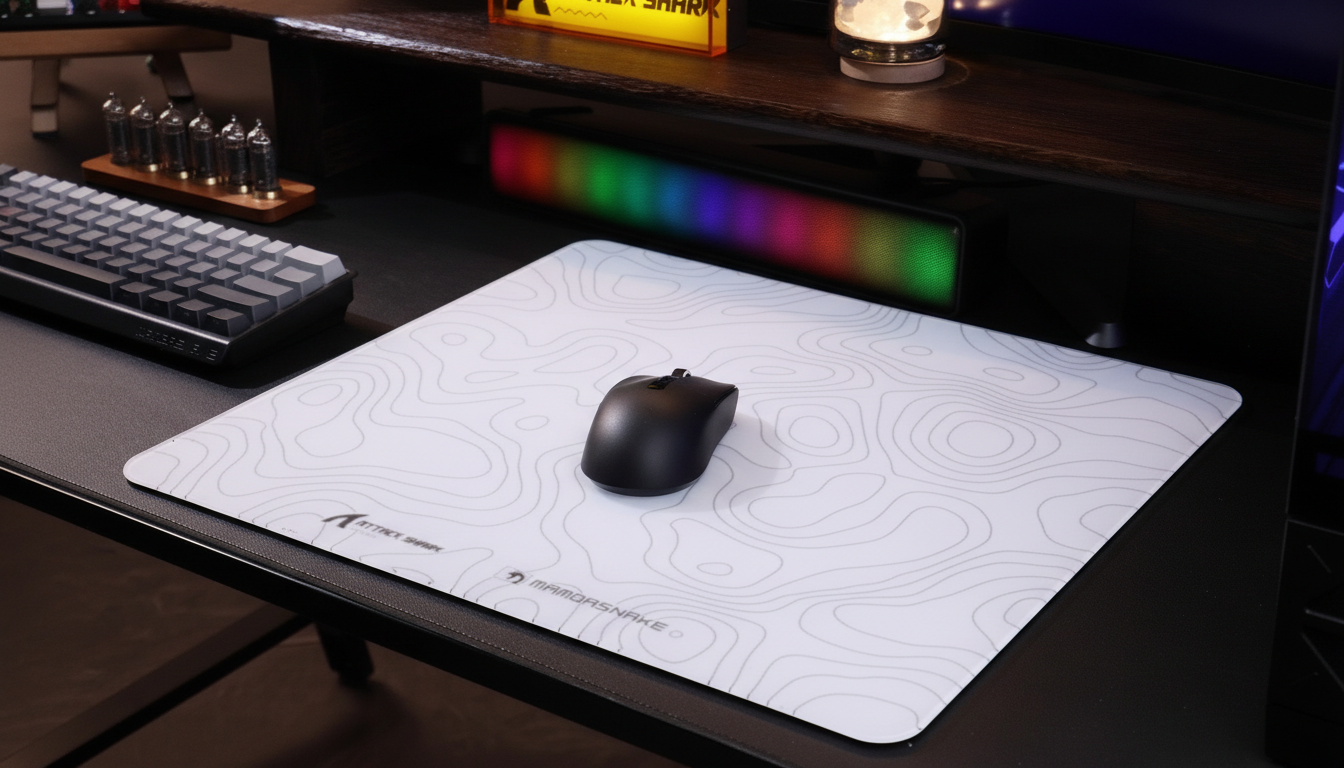
The interaction is a two-part system. A high-density fiber mouse pad with a significant thickness (e.g., 4mm) provides essential cushioning for the wrist. This "elastic core" helps distribute the pressure of the arm's weight, which is particularly important for palm-grip users who rest their entire hand on the device. According to testing methodologies used by RTINGS, the glide consistency of PTFE (Teflon) feet on a clean, high-density surface is a primary factor in reducing the "effort" of movement, regardless of the mouse's raw weight.
Compliance, Safety, and Trust in Wireless Technology
As wireless technology becomes the standard for immersive play, the underlying safety and regulatory compliance of these devices become paramount. High-performance wireless mice rely on high-capacity lithium-ion batteries and complex 2.4GHz radio arrays.
Battery and Radio Standards
Authoritative bodies like the FCC (Federal Communications Commission) and ISED Canada mandate strict testing for RF exposure and electromagnetic compatibility (EMC). For example, devices must comply with FCC Part 15 regulations to ensure they do not interfere with other wireless devices in a home environment.
Furthermore, battery safety is governed by international standards such as UN 38.3 (for safe transport) and IEC 62133 (for cell safety). These certifications ensure that the lithium-ion cells used in wireless peripherals can withstand thermal stress and physical impact without risk of failure. When choosing a high-performance peripheral, verifying these compliance marks (CE, FCC, UKCA) is as important as checking the DPI or sensor model.
Summary of Technical Benchmarks for Open-World Play
To achieve a benchmark-level setup for immersive gaming, one should look for a configuration that prioritizes the following technical targets:
- Physical Mass: 70-80g for a balance of stability and rotational inertia.
- Shell Length: >120mm to ensure adequate palm support for large hands.
- Hump Placement: Centered to minimize wrist extension and ulnar deviation.
- Polling Rate: 8000Hz for sub-0.2ms latency, paired with 1600+ DPI for data saturation.
- Connectivity: Direct Rear I/O connection to avoid CPU interrupt conflicts.
- Safety: Verified compliance with FCC, RED, and UN 38.3 standards.
By focusing on these grounded technical mechanisms rather than marketing superlatives, gamers can build a setup that offers both the precision required for competitive play and the ergonomic durability needed for the most expansive open-world adventures.
Disclaimer: This article is for informational purposes only. Ergonomic needs vary significantly by individual anatomy. If you experience persistent pain, numbness, or tingling in your hands or wrists, please consult a qualified medical professional or occupational therapist.


コメントを書く
このサイトはhCaptchaによって保護されており、hCaptchaプライバシーポリシーおよび利用規約が適用されます。