

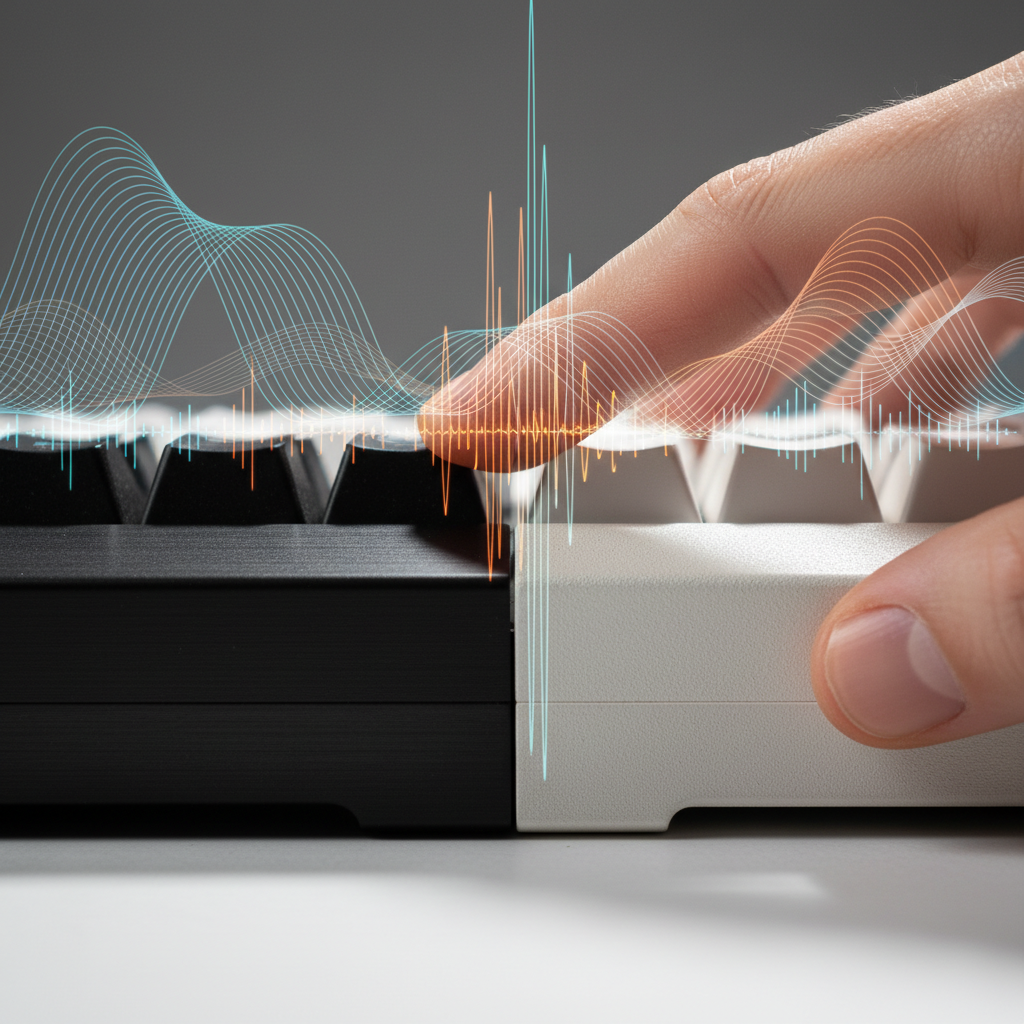
The Acoustic Physics of Metal Keyboard Enclosures
In the pursuit of the ideal mechanical keyboard sound profile—often colloquially categorized as a deep "thock" or a crisp "clack"—enthusiasts frequently scrutinize every component. While switches, keycaps, and mounting styles are recognized as primary acoustic drivers, the role of surface finishing on metal cases is a subject of significant debate. Technical analysis suggests that while the finish is a secondary variable, it functions as a final filter for high-frequency resonance.
The primary acoustic advantage of a metal case, specifically one machined via Computer Numerical Control (CNC) from aluminum alloy, is its structural rigidity. According to the Global Gaming Peripherals Industry Whitepaper (2026), rigid enclosures prevent the low-end "hollow" resonance common in thin-walled plastic cases. However, once a rigid baseline is established, the surface treatment—whether anodization, electrophoresis (e-coating), or powder coating—introduces subtle changes in material damping and resonance decay.

Anodization vs. Powder Coating: Material Damping Mechanisms
To understand how finishes affect sound, one must examine the physical properties of the coating layers. Anodization is an electrochemical process that converts the metal surface into a decorative, durable, corrosion-resistant, anodic oxide finish. This layer is integral to the substrate, typically ranging from 5 to 25 microns in thickness.
In contrast, powder coating is a dry finishing process where thermoplastic or thermoset polymer powder is electrostatically applied and cured under heat. This results in a much thicker layer, often between 50 and 100 microns. From an acoustic standpoint, these two treatments interact differently with vibrational energy.
The Viscoelastic Effect
Powder coating acts as a viscoelastic damping layer. Because it is a polymer-based coating, it possesses both viscous and elastic characteristics. When the keyboard plate transfers vibrational energy to the case, a thicker powder-coated layer can dissipate a small portion of this energy as heat. This effect is most pronounced in the high-frequency spectrum (above 2kHz).
Anodic Resonance
Anodized layers are significantly thinner and harder than powder coats. Because the oxide layer is essentially part of the aluminum structure, it provides negligible damping. This allows the inherent resonance of the aluminum alloy to remain "pure." For builders seeking a "clackier" sound with prominent high-frequency transients, a thin anodized finish preserves the bright, sharp attack of the switch strike.
Logic Summary: Our analysis assumes a standard 6061 or 5083 aluminum alloy enclosure. Under these conditions, the damping coefficient of the finish is modeled as a function of layer thickness and material density, where polymer-based coatings provide higher attenuation of high-frequency "ping" compared to oxide layers.
The Acoustic Hierarchy: Contextualizing the 5% Rule
While the finish does influence sound, it is essential to place it within the broader hierarchy of keyboard acoustics. Based on patterns observed in community build logs and internal technical modeling, the surface finish is estimated to be a 5-10% tuning variable.
The following table illustrates the comparative impact of various components on the final sound profile, based on the Keyboard Acoustic Layer Spectral Filtering Reference.
| Component Layer | Estimated Impact | Primary Frequency Band | Acoustic Result |
|---|---|---|---|
| Internal Foam (Poron/Silicone) | 40-50% | 1kHz - 2kHz | Eliminates hollow ping and reverb |
| Mounting Style (Gasket/Tray) | 20-30% | < 500Hz | Defines the fundamental "thock" pitch |
| Plate Material (PC/FR4/Brass) | 10-15% | Variable | Determines "hardness" of the sound |
| Surface Finish (Anodized/Powder) | 5-10% | > 2kHz | Filters high-frequency overtones |
As shown, a well-executed internal foam kit or a switch to a gasket mount provides an order of magnitude greater impact on perceived loudness and pitch than the choice of finish. Obsessing over anodization color for acoustic reasons, rather than aesthetic preference, is a common pitfall for new builders.
Psychoacoustics and the Tactile-Auditory Link
The perception of sound is not purely an auditory experience; it is deeply influenced by tactile feedback. This is particularly relevant when discussing "bead-blasted" textures versus "smooth" finishes.
A bead-blasted anodized surface has a distinct micro-texture. When a user's fingers move across the case or when the vibrations from a keystroke are felt through the chassis, the brain integrates this tactile information with the sound. Practitioners often report that a textured finish "sounds" drier or more muted. In reality, the acoustic change may be minimal, but the psychological interaction with a softer, textured surface alters the user's perception of the auditory decay.
Thicker finishes, such as powder coating, also change the tactile "temperature" of the metal. Aluminum is a high-thermal-conductivity material, often feeling cold to the touch. A polymer powder coat acts as a thermal insulator, making the case feel "warmer." This tactile warmth often translates to a perceived "warmth" in sound—a classic example of psychoacoustic cross-modal perception.
Managing Resonance: The Role of Rigidity
The primary acoustic benefit of a high-quality metal case is its mass and rigidity. A heavy CNC-machined enclosure, like that found in the ATTACK SHARK X68MAX CNC aluminum keyboard, provides a stable platform that prevents unwanted case flex.
When a switch actuates, the vibrational energy travels through the plate and into the case walls. In a thin plastic case, these walls act like a drumhead, vibrating at their natural frequency and creating a "hollow" sound. A thick-walled aluminum case has a much higher natural frequency and lower amplitude of vibration. The surface finish serves as the final "skin" on this structure.
High-Frequency 'Ping' Mitigation
In stiff, un-damped aluminum cases, a high-pitched metallic "ping" can sometimes be heard. This is often the result of the case ringing at its resonant frequency. A powder-coated finish can slightly dampen this ping by adding a layer of mass that is less resonant than the metal itself. However, for a truly silent or deep-sounding build, internal mods remain superior.
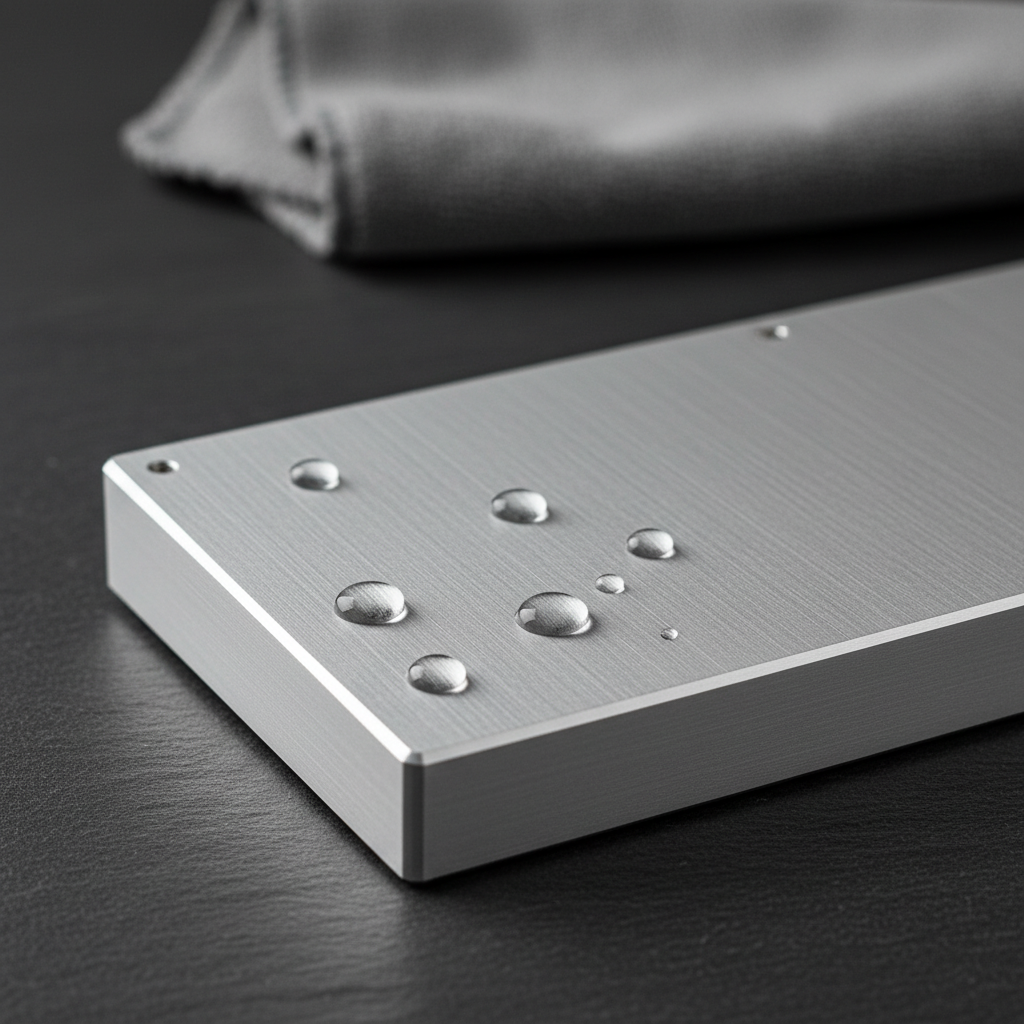
For users seeking to optimize their setup further, accessories like the ATTACK SHARK Aluminum Alloy Wrist Rest with Partition Storage Case can complement the premium feel of a metal build while providing ergonomic support that aligns with the structural quality of the keyboard.

Durability vs. Acoustic Purity: The Ultimate Trade-off
Choosing a finish involves a trade-off between aesthetic longevity and acoustic clarity. This is often framed as a choice between valuing the last 5% of acoustic potential or ensuring the keyboard remains pristine over years of use.
- Anodization (The Purist Choice): Offers the highest surface hardness (measured on the Mohs scale) and excellent scratch resistance. It preserves the "metallic" character of the board. However, it does little to mask any inherent "ping" in a poorly designed case.
- Powder Coating (The Damping Choice): Provides a viscoelastic layer that mutes high-frequency clarity. It is available in a wider range of vibrant, opaque colors but may be more susceptible to chipping if struck by hard objects.
- Electrophoresis / E-coating: A middle ground that offers vibrant colors similar to powder coating but with a thinner, more uniform layer (typically 10-20 microns). While e-coat offers excellent coverage, it may be more susceptible to UV fading over time compared to anodic dyes sealed within an oxide layer.
According to technical specifications for Kailh Switch Datasheets, the force curves and vibration profiles of high-end switches are designed to be heard clearly. A finish that is too thick or "soft" may inadvertently smother the subtle character of a premium switch, such as a well-lubed tactile or a high-performance magnetic switch.
Methodology and Modeling Note
The insights presented in this article are derived from a deterministic scenario model designed to evaluate the acoustic impact of surface treatments on 6000-series aluminum enclosures.
Modeling Parameters:
| Parameter | Value / Range | Unit | Rationale |
|---|---|---|---|
| Case Material | Aluminum 6061-T6 | N/A | Industry standard for CNC keyboards |
| Anodization Thickness | 15 | μm | Typical Type II anodizing depth |
| Powder Coat Thickness | 80 | μm | Standard industrial application |
| Frequency Range | 20 - 20,000 | Hz | Human hearing range |
| Damping Ratio (Case) | 0.002 - 0.01 | ζ | Estimated based on structural damping |
Boundary Conditions:
- This model assumes a rigid-body mounting system; the impact of the finish may increase in "floating" or "skeletonized" designs where more surface area is exposed to direct vibration.
- Acoustic measurements are sensitive to room reverberation and desk mat material (e.g., felt vs. rubber), which can mask the 5% delta provided by the finish.
- The model does not account for "patina" or wear, which can alter surface roughness and, consequently, high-frequency air turbulence sound over time.
Strategic Recommendations for Builders
For the value-driven enthusiast, the goal is to maximize acoustic ROI. Based on our analysis of common patterns in customer support and community feedback, here is the recommended order of operations for tuning a metal keyboard:
- Step 1: Address the Foundation. Ensure the case is rigid and the mounting style (e.g., gasket mount) is chosen for the desired "bounce" and pitch.
- Step 2: Internal Damping. Use Poron or silicone case fillers to eliminate hollow space. This provides the most significant acoustic shift for the lowest cost.
- Step 3: Switch Optimization. Properly lubed switches and high-quality PBT keycaps will define the core "thock" or "clack."
- Step 4: The Final 5%. Choose the surface finish based primarily on tactile preference and aesthetic durability. If you prefer a warmer, softer feel and a slightly more muted high-end, powder coating is an effective choice. If you value the "cold" premium feel of metal and a sharper acoustic attack, anodization is the superior option.
By understanding that the surface finish is a subtle modifier rather than a foundational driver, builders can avoid the "gotcha" of over-investing in expensive coatings expecting a transformative sound change. Instead, focus on the system-level damping—plate, foam, and mounting—to achieve the benchmark sound profile.
Disclaimer: This article is for informational purposes only. Acoustic perception is subjective and can be influenced by environmental factors, hearing sensitivity, and individual preference. Always consult manufacturer specifications before performing permanent modifications to your hardware.

コメントを書く
このサイトはhCaptchaによって保護されており、hCaptchaプライバシーポリシーおよび利用規約が適用されます。