


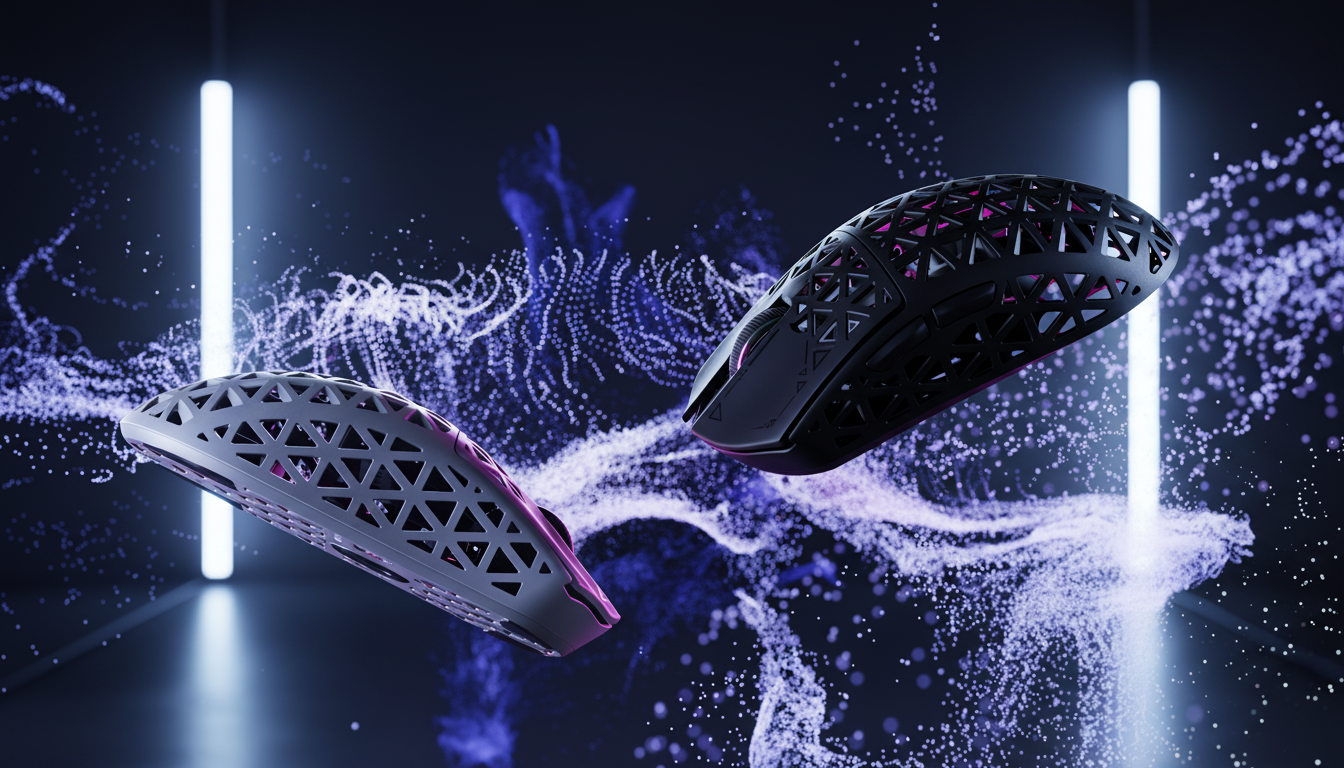
The competitive gaming landscape has undergone a radical transformation, shifting from the era of feature-heavy, weighted mice to a "race to zero." In this pursuit of ultra-lightweight performance, manufacturers have turned to exotic materials like magnesium alloy and carbon fiber to shave off every possible gram. For the value-oriented gamer, however, the central question is not whether these materials are lighter, but whether the significant price premium translates into a proportional increase in win rates or comfort.
Analyzing the Return on Investment (ROI) of mouse materials requires looking past marketing buzzwords and into the mechanical properties of the chassis. While a 55g carbon fiber mouse sounds impressive, the practical difference between that and a 65g high-quality plastic mouse is often secondary to factors like sensor implementation, polling rate stability, and ergonomic fit.
The Physics of Mouse Materials: A Comparative Analysis
To understand the value proposition, one must first look at the material science. Most gaming mice utilize a polycarbonate (plastic) blend. It is cost-effective, easy to mold into complex ergonomic shapes, and surprisingly durable when engineered with internal support pillars. Magnesium alloy and carbon fiber composites are the "exotic" alternatives, offering higher strength-to-weight ratios at the cost of manufacturing complexity.
The following data compares the physical properties of these materials and their estimated impact on a standard mouse chassis design.
| Material | Density (g/cm³) | Tensile Strength (MPa) | Flexural Modulus (GPa) | Strength-to-Weight Ratio | Estimated Weight | Price Premium |
|---|---|---|---|---|---|---|
| High-Quality Plastic | 1.25 | 70 | 2.5 | 56.0 (Baseline) | 65g | 0% |
| Magnesium Alloy | 1.80 | 280 | 45.0 | 155.6 | ~58g | +40-60% |
| Carbon Fiber Composite | 1.55 | 500 | 70.0 | 322.6 | ~55g | +100-150% |
Note: Data points are estimated ranges based on common aerospace-grade material properties and standard mouse chassis volumes.
According to the Global Gaming Peripherals Industry Whitepaper (2026), the industry is reaching a point of diminishing returns where the cost of saving a single gram can exceed $10 in retail pricing. For most users, the 322.6 strength-to-weight ratio of carbon fiber is technically superior, but the structural rigidity of a well-designed plastic shell is already sufficient for any human-induced force during gaming.
The Diminishing Returns of Weight Reduction
In the enthusiast community, weight is often treated as the ultimate performance metric. However, biomechanical patterns suggest that the "detectable threshold" for weight reduction—where a player can actually feel a difference in flick speed or stopping power—is approximately 5 to 7 grams.
When moving from a 90g mouse to a 65g mouse, the 25g difference is transformative. It reduces physical resistance and allows fine motor skills to take over more effectively, a benefit particularly noticeable in titles like Valorant or Apex Legends. But the jump from 65g to 55g is more subtle. In many cases, prioritizing ultra-light weight over shape compatibility leads to grip fatigue.
Scenario: The Large-Handed Competitive Gamer
Consider a gamer with an extra-large hand (21.5cm length) using a claw grip. For this user, the ideal mouse length is approximately 137.6mm. Most ultra-lightweight exotic mice are designed with smaller dimensions to further reduce weight. If this gamer chooses a 50g magnesium mouse that is only 120mm long, they will likely experience cramping.
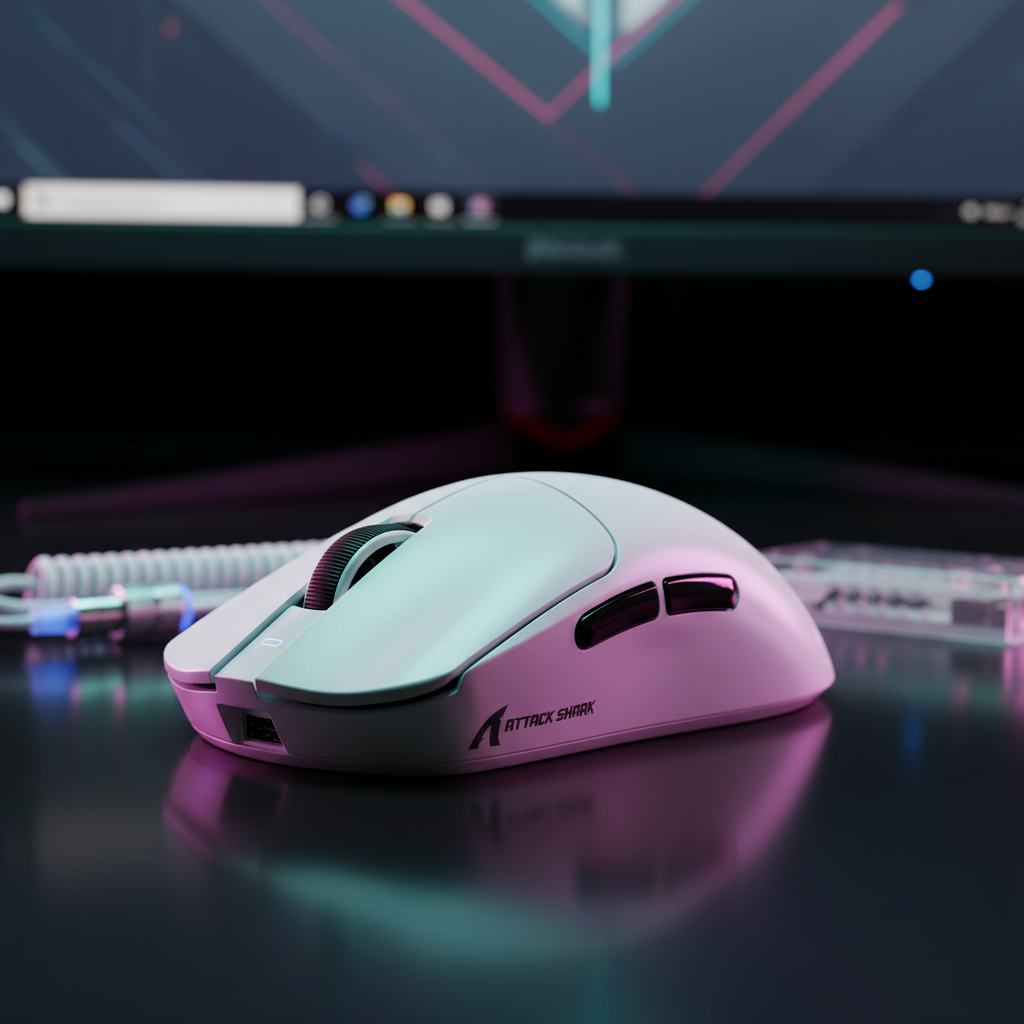
A more rational choice would be a slightly heavier, ergonomically sound model like the ATTACK SHARK G3 Tri-mode Wireless Gaming Mouse. At 59g, it utilizes an innovative nitrogen-cooled injection molding process to achieve a weight competitive with exotic materials while maintaining a solid, no-hole shell that fits a wider range of hand sizes.
Structural Integrity: Beyond the Base Material
A common misconception is that carbon fiber or metal is "better" because it doesn't flex. While true that carbon fiber has a flexural modulus of 70.0 GPa (compared to plastic's 2.5 GPa), structural integrity in a mouse is primarily a function of internal engineering.
Experienced modders and engineers note that internal ribbing and support pillars often matter more for preventing shell flex than the base material alone. A poorly designed magnesium shell can still creak, while a high-quality polycarbonate shell can feel like a solid block of granite.
Furthermore, the "premium" feel often attributed to exotic materials is frequently a result of surface coatings and acoustics. A hollow, thin plastic shell sounds "cheap," whereas a dense plastic or metal shell feels "premium." Value-driven brands solve this by optimizing the wall thickness of the plastic in key contact areas, providing that rigid feel without the $150 price tag.
The Hidden Costs of Exotic Manufacturing
Why is carbon fiber so expensive? It isn't just the raw material. The manufacturing process for a carbon fiber mouse involves:
- Prepreg Material: Raw carbon fiber sheets must be kept refrigerated.
- Autoclave Curing: The shells must be baked under high pressure and temperature.
- Low Yields: Complex ergonomic curves are difficult to achieve with fiber mats, leading to high rejection rates during quality control.
- Finishing: Carbon fiber requires extensive clear-coating and hand-polishing to prevent skin irritation from micro-fibers.
In contrast, advanced injection molding—like the "liquid nitrogen-cooled" process used in the ATTACK SHARK G3PRO Tri-mode Wireless Gaming Mouse—allows for rapid production with extremely tight tolerances. This model achieves a 62g weight with an integrated charging dock, offering a high-performance-per-dollar ratio that exotic materials cannot match.

Performance Synergy: Sensor Tech and Polling Rates
Material choice does not exist in a vacuum; it must work in tandem with the internal electronics. An ultra-lightweight chassis is only beneficial if the sensor can track those rapid movements accurately.
When discussing high-performance mice, the RTINGS mouse latency methodology highlights that click and sensor latency are the true bottlenecks. A lightweight mouse allows you to move faster, but if the sensor has high motion-sync delay, that physical advantage is lost.
The 8K Polling Reality
Modern flagship mice are moving toward 8000Hz (8K) polling rates. To understand the impact, consider the math:
- 1000Hz: 1.0ms polling interval.
- 8000Hz: 0.125ms polling interval.
At 8000Hz, the Motion Sync latency is reduced to approximately 0.0625ms, which is virtually undetectable. However, to saturate this 8000Hz bandwidth, your physical movement must be fast enough to generate data points. At 800 DPI, you need to move at least 10 inches per second (IPS) to fully utilize the 8K report rate. At 1600 DPI, the threshold drops to 5 IPS.
This creates a synergy: a lightweight mouse (like the G3 series) makes it easier to reach these IPS thresholds during micro-adjustments, while the 8K sensor ensures those movements are captured with near-instant precision.
System Requirements for 8K Polling:
- CPU Load: 8K polling stresses the CPU's Interrupt Request (IRQ) processing. You need a modern, high-clock-speed processor to avoid frame drops.
- USB Connection: You must use Direct Motherboard Ports (Rear I/O). According to the USB HID Class Definition, shared bandwidth on a USB hub or front-panel header can cause packet loss, negating the benefits of high-frequency polling.
Surface Interaction: The Role of the Mousepad
A 50g mouse on a muddy, worn-out cloth pad will feel "heavier" and less responsive than a 70g mouse on a premium surface. The friction coefficient of your mousepad is the most significant external factor affecting the perceived weight of your gear.
For those seeking the ultimate lightweight feel without replacing their mouse, a carbon fiber surface is a viable alternative. The ATTACK SHARK CM04 Genuine Carbon Fiber eSport Gaming Mousepad provides a 2mm ultra-thin profile with a genuine dry carbon fiber weave. Unlike cloth, this surface offers near-perfect uniform tracking along the X and Y axis and doesn't develop "slow spots" over time.
For a more vibrant, high-control experience, the ATTACK SHARK CM03 eSport Gaming Mousepad (Rainbow Coated) uses ultra-high-density fiber with a water-resistant coating, balancing speed and stopping power for those who find carbon fiber too fast.
Practical Decision Framework: Is It Worth It?
To help you decide where to invest your budget, consider this ROI hierarchy:
- Ergonomic Fit (ROI: Critical): If the mouse doesn't fit your hand, no material will save your performance. Prioritize shape first.
- Sensor & Latency (ROI: High): Ensure you have a top-tier sensor (like the PAW3395 or PAW3311) and stable wireless tech.
- Weight (ROI: Moderate): Aim for the 55g–70g range. Below 55g, the price increases exponentially while the performance gains plateau.
- Exotic Materials (ROI: Low): Reserve magnesium and carbon fiber for when you have already optimized every other part of your setup and are chasing the final 1% of performance.
Existing Insight: Carbon Fiber vs. Magnesium: Comparing Premium Mouse Shells provides a deeper look into the specific tactile differences between these two high-end options if you are committed to the exotic route.
The Value Challenger's Conclusion
For 95% of competitive gamers, a high-quality plastic mouse in the 55-65g range represents the "sweet spot" of performance and value. Materials like those used in the ATTACK SHARK G3 Tri-mode Wireless Gaming Mouse offer the lightweight benefits of exotics without the prohibitive manufacturing costs.
Instead of spending an extra $100 to save 5 grams of weight, a more effective strategy is to invest that money into a high-performance mousepad and a consistent practice routine. In the world of esports, muscle memory and a proper ergonomic fit will always outperform a material's tensile strength.
Ergonomics & Health Disclaimer: The ergonomic advice provided in this article is for informational purposes only. Improper mouse sizing or repetitive strain can lead to musculoskeletal issues. If you experience persistent wrist pain, numbness, or tingling, please consult a qualified healthcare professional or occupational therapist. For more on workplace safety standards, refer to the FCC Equipment Authorization guidelines regarding RF exposure and device safety.

コメントを書く
このサイトはhCaptchaによって保護されており、hCaptchaプライバシーポリシーおよび利用規約が適用されます。