


Leaf Spring Metallurgy: How Contact Materials Prevent Chatter

Leaf Spring Metallurgy: How Contact Materials Prevent Chatter

The Physics of Contact Chatter: Resonance and Elasticity

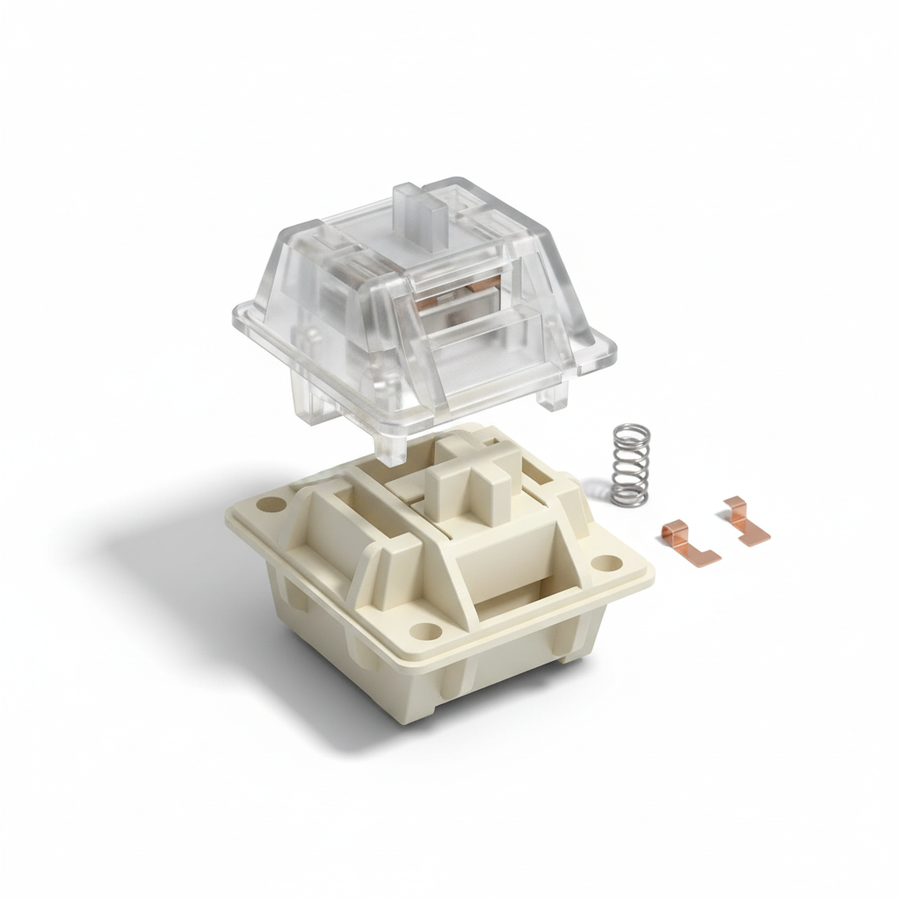
Key chatter is rarely a simple mechanical failure; it is typically a manifestation of resonant instability within the switch assembly. When a switch is actuated, the leaf spring—a thin, conductive copper-alloy component—is forced into contact with a stationary terminal. This collision induces kinetic energy that translates into high-frequency vibrations.

If the material's damping properties are insufficient or the leaf geometry is poorly tuned, the spring can "bounce" off the terminal multiple times before achieving a stable electrical state. While some enthusiasts suggest that increasing inter-leaf friction can dampen this effect, engineering data indicates that excessive friction often leads to premature wear or shifts the system into damaging resonant modes.

Based on general metallurgical principles, the critical properties are the material's elastic modulus and mass density, which determine the spring's natural frequency. By optimizing these variables, engineers aim to ensure that natural frequencies remain outside the typical excitation ranges generated during rapid typing (usually 5–20Hz) or gaming.

Gold-Crosspoint Technology: Establishing Durability Thresholds

To prevent oxidation and maintain low contact resistance, the industry utilizes "gold-crosspoint" technology. However, the term "gold-plated" can be misleading without defined thickness parameters.

In high-performance engineering, the thickness of the gold layer directly correlates with the "wear-through" point. While standard consumer switches often utilize "gold flashing" (typically <0.1 microns), this layer can be compromised relatively quickly under heavy use. For switches targeting 50 million to 100 million actuations, a thicker application is generally required to withstand the cumulative "wiping action" of the contact.

  • Standard Grade: 0.1–0.5 microns (Suitable for general office use).
  • Premium/Gaming Grade: 1.0–3.0 microns (Recommended for high-frequency actuation).
  • Extreme Duty Heuristic: 3–5 microns of hard gold (e.g., cobalt-hardened gold per ASTM B488 Type II) is often cited as a design target for environments where signal integrity must be maintained despite high humidity or corrosive atmospheric conditions.

The geometry of the contact point is equally vital. A rounded, polished crosspoint facilitates a consistent "wiping action," which helps clear microscopic debris and ensures a fresh contact surface, thereby reducing the probability of signal noise (chatter).

Material Selection: Copper Alloys and Damping Performance

The base metal of the leaf spring is usually a copper-based alloy, such as Phosphor Bronze or High-Conductivity Beryllium Copper (within RoHS limits), selected for its balance of electrical conductivity and fatigue resistance.

Material Property High-Spec Copper Alloy (e.g., C19010) Standard Brass (C26000) Impact on Performance
Electrical Conductivity >90% IACS ~25-28% IACS Lower heat generation, cleaner signal
Elastic Modulus ~110-130 GPa ~100-110 GPa Improved frequency stability
Fatigue Life (Cycles) Typically 100M+ Often <50M Long-term reliability
Corrosion Resistance High (when paired with Ni/Au) Moderate Prevents chatter-inducing oxides

Note: These values represent typical material properties and may vary based on specific tempering and heat-treatment processes.

Beyond metallurgy, the integration of polymer liners—such as Nylon or POM—assists in suppressing metal-on-metal vibrations. As discussed in our technical comparison of Nylon vs. Polycarbonate, these materials provide the mechanical damping necessary to minimize the physical "bounce" at its source.

Environmental Stress and Signal Integrity

Real-world performance must account for environmental variables. Accelerated lifecycle testing—often involving salt spray or high-humidity chambers—demonstrates that even premium plating can fail if the switch housing does not provide an adequate seal. Particulates can act as abrasives, accelerating the wear of the gold layer and increasing the coefficient of friction (COF).

In high-humidity regions, "fretting corrosion"—microscopic movements that wear away protective coatings—is a significant risk. Devices adhering to FCC Equipment Authorization or ISED Canada Radio Equipment List (REL) standards undergo testing to ensure they remain stable under various electromagnetic and environmental conditions.

Professional gaming desk setup with Attack Shark peripherals, emphasizing build quality and premium materials.

Advanced Testing: Verification and Quality Control

To verify the metallurgical integrity of a switch, engineers move beyond binary "on/off" testing to analyze the rise time and stability of the electrical signal.

Technical Verification Checklist

For engineers or advanced enthusiasts looking to validate switch quality, the following procedures are typically employed:

  1. Bounce Time Measurement: Use an oscilloscope to measure the time from initial contact to a stable signal. For high-performance gaming, a physical bounce time of <1ms is the industry benchmark.
  2. Contact Resistance (CR) Test: Measure CR before and after a 10-million-cycle stress test. An increase of >20% often indicates plating wear-through.
  3. Cross-Sectional Analysis: Destructive testing using microscopy to verify actual gold plating thickness against manufacturer specifications.
  4. Environmental Aging: Subjecting samples to 48 hours of high humidity (90% RH) to check for oxide formation on the leaf spring.

Using tools like the NVIDIA Reflex Analyzer, one can measure "click-to-photon" latency. However, the internal "debounce time"—the firmware's delay to account for metallurgical bounce—is where the material quality is truly felt. High-purity alloys allow for lower debounce settings, directly reducing input lag.

Scenario Analysis: Application-Specific Requirements

The necessity for advanced metallurgy varies based on usage intensity and environmental factors.

Scenario A: Standard Home/Office Setup In climate-controlled environments with moderate usage (2–4 hours/day), standard gold-flashed contacts are usually sufficient. The primary concern is often the acoustic profile rather than extreme durability.

Scenario B: Competitive Esports & High-Humidity Environments For professional players or users in tropical climates, premium plating (1.0–3.0μm+) is highly recommended. When operating at polling rates of 8000Hz (0.125ms intervals), any metallurgical instability causing a signal bounce longer than the polling interval can result in dropped packets or jitter.

Regulatory Compliance and Material Safety

The materials used in modern switches must comply with international safety standards to ensure both performance and environmental responsibility:

  • REACH Regulation: The ECHA Candidate List (SVHC) monitors substances of concern in polymer housings.
  • EU RoHS Directive: The RoHS Directive restricts the use of hazardous substances like lead or cadmium in leaf spring alloys.
  • Radio Equipment Directive (RED): For wireless peripherals, compliance with the EU RED ensures that high-speed data transmission (2.4GHz) does not interfere with other critical infrastructure.

Recommended Implementation Gear

To complement high-performance switches, the signal path must be preserved:

  • Signal Integrity: Cables like the ATTACK SHARK C04-C COILED CABLE utilize high-quality shielding to prevent EMI from affecting delicate timing.
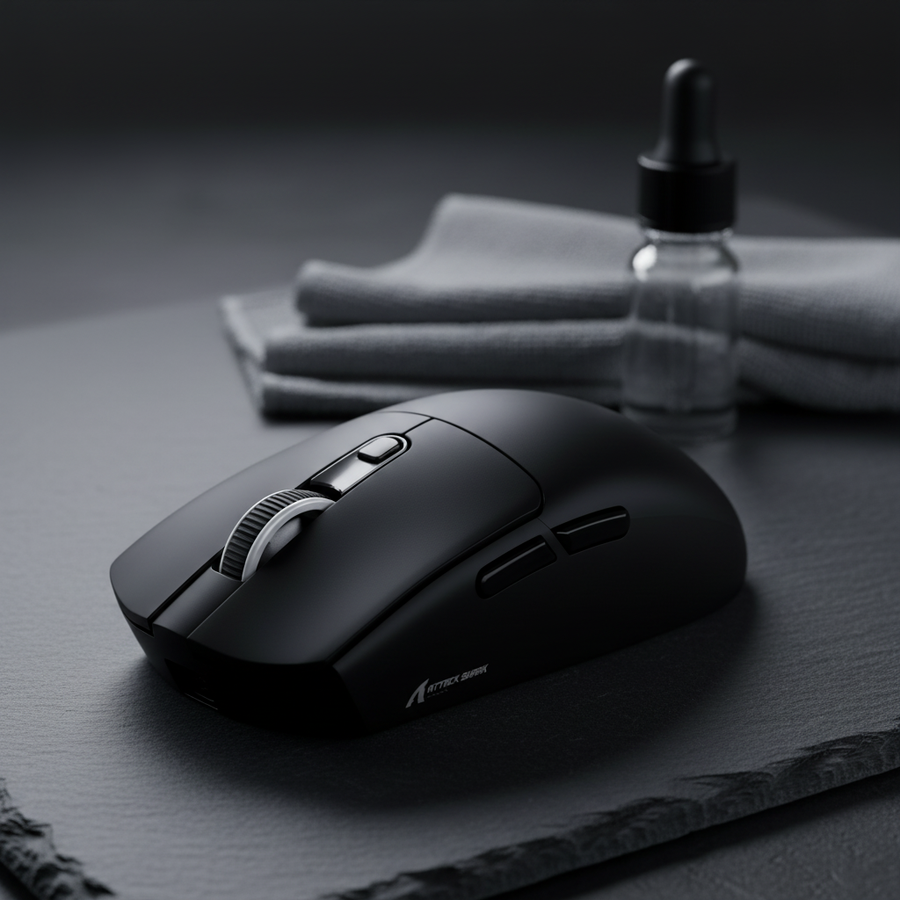
  • High-Speed Response: Devices such as the ATTACK SHARK X8PRO are designed to leverage the stability of advanced contact materials at 8000Hz polling rates.
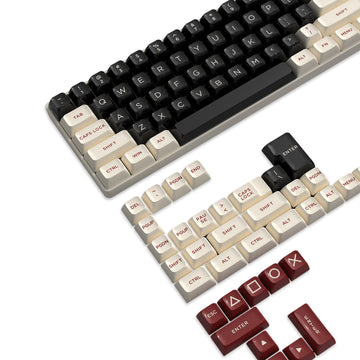
  • Customization: For those prioritizing aesthetics alongside performance, the ATTACK SHARK 120 Keys PBT Set offers durable housing for premium switch assemblies.

Disclaimer: This article is for informational purposes and reflects general engineering principles in the mechanical keyboard industry. Individual product performance can vary based on manufacturing tolerances, environmental conditions, and specific usage patterns.

Sources

次を読む

POM vs. PC Housing: How Switch Materials Change Your Tone
Non-Corrosive Cleaning Methods for Magnesium Alloy Shells

コメントを残す

このサイトはhCaptchaによって保護されており、hCaptchaプライバシーポリシーおよび利用規約が適用されます。