
The Strategic Importance of LOD in Competitive FPS
For high-rank players in titles like Counter-Strike 2 (CS2) or Valorant, the physical act of aiming is a violent cycle of rapid swipes and micro-lifts. Arm aimers, who typically operate at low DPI settings (400–800 DPI), often exhaust their mousepad real estate in a single 180-degree turn. This necessitates "re-centering"—the near-instantaneous lifting and repositioning of the mouse.
The critical failure point in this cycle is Lift-Off Distance (LOD). If the LOD is set too high, the sensor continues to track the surface as you lift, causing the crosshair to "jitter" or "float" away from the target. If it is set too low, the sensor may fail to re-acquire tracking immediately upon landing, leading to a "skip" during the next crucial flick. This guide explores how to calibrate your hardware to bridge the gap between technical specifications and real-world execution.
The Physics of Lift-Off Distance and Sensor Skips
LOD is the vertical distance at which a mouse sensor stops tracking the surface. Modern optical sensors, such as the PixArt PAW3395 and the flagship PAW3950MAX, use a high-speed camera to capture "frames" of the surface texture. As the mouse is lifted, the focal point of the sensor's lens shifts, and the reflected light disperses.
How Flagship Sensors Handle Z-Height
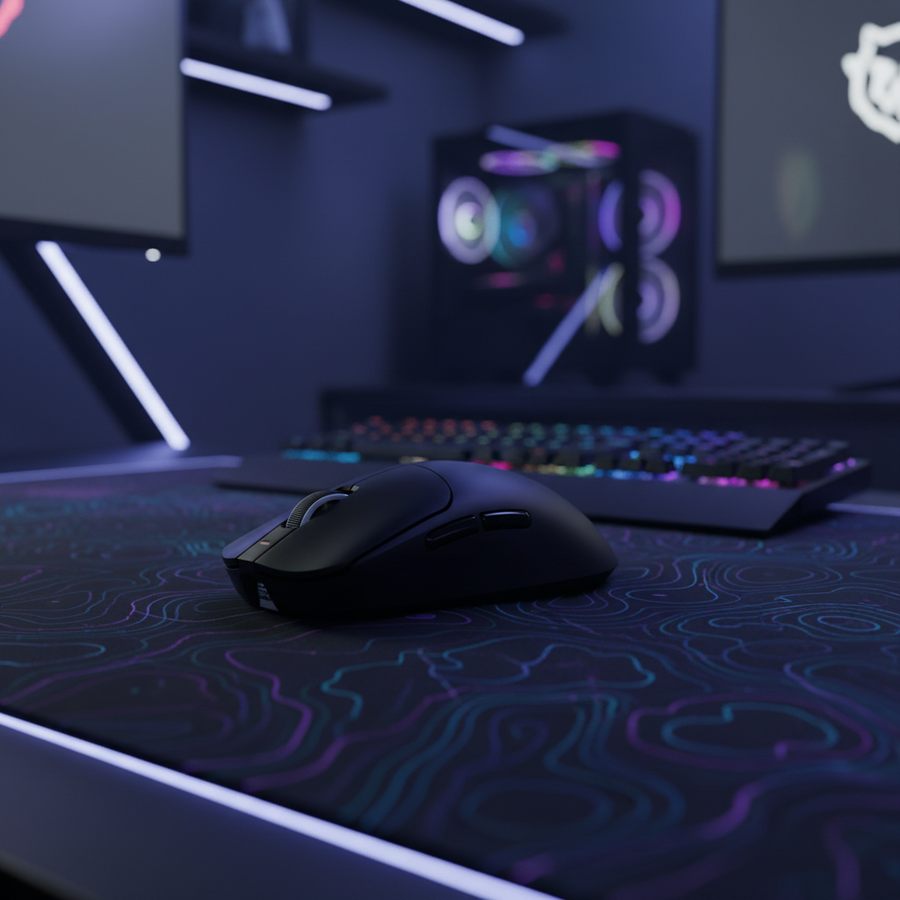
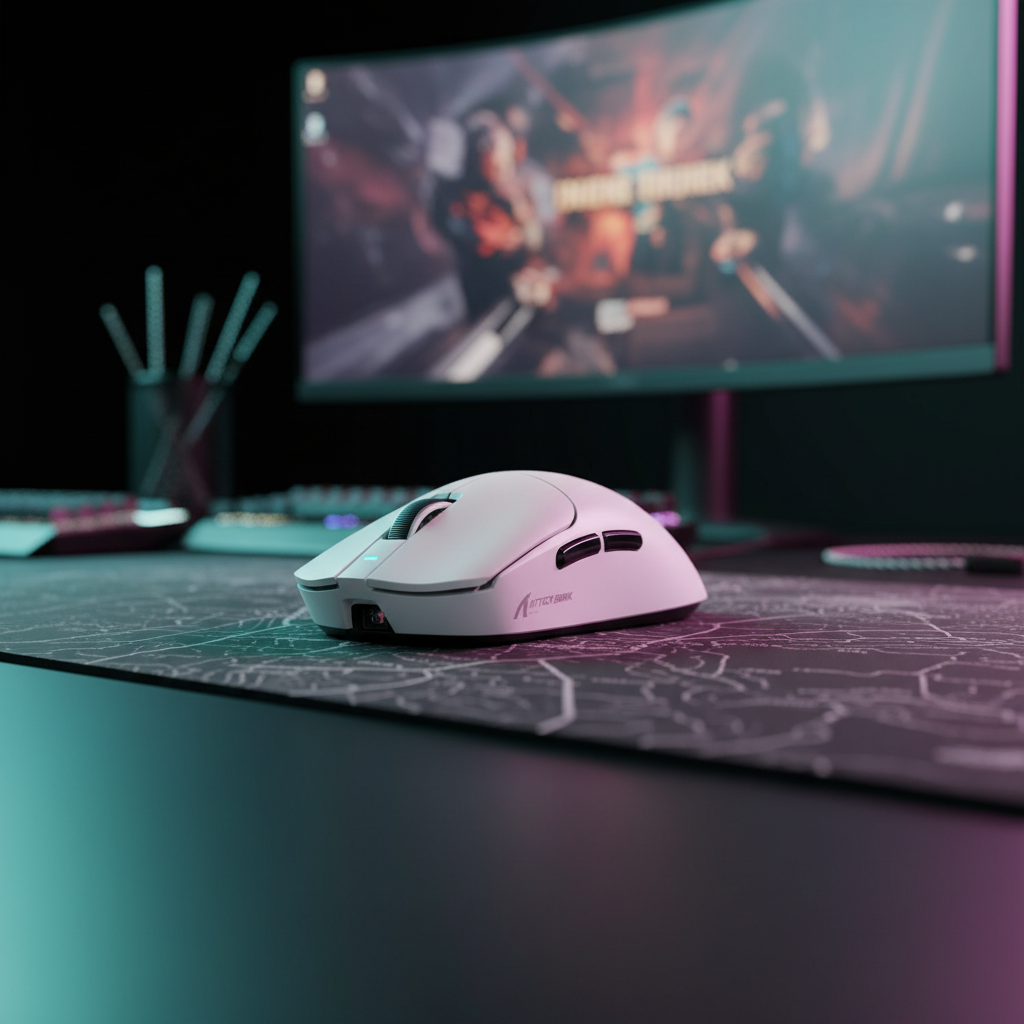
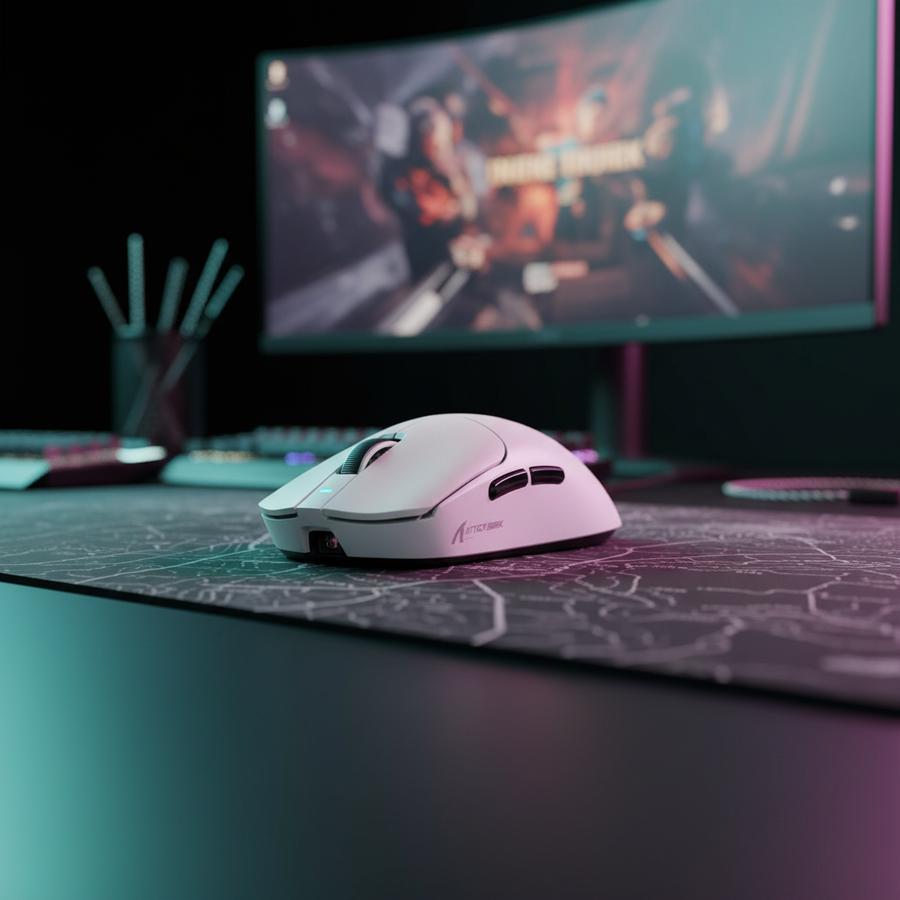
In devices like the ATTACK SHARK X8 Series Tri-mode Lightweight Wireless Gaming Mouse, the sensor's Z-height tracking is managed via a combination of hardware focal limits and firmware algorithms. The PAW3950MAX, for instance, offers a native LOD as low as 0.7mm. However, the manufacturer's firmware implementation is often the "secret sauce" that determines stability.
Logic Summary: Our analysis of sensor tracking stability assumes that firmware-level surface calibration acts as a noise filter, preventing the sensor from misinterpreting the dispersing light at the edge of its focal range (based on patterns observed in high-performance MCU implementations).

Professional Calibration: The "Coin Test" vs. Software Presets
While software configurators like the ATTACK SHARK G3PRO Tri-mode Wireless Gaming Mouse web-based driver allow for 1mm or 2mm toggles, these are nominal values. In practice, the effective LOD is a dynamic variable influenced by surface reflectivity and skate thickness.
The "Coin Test" Methodology
To find your true LOD, we recommend the "Coin Test"—a standard troubleshooting heuristic used by hardware auditors:
- Preparation: Place your mouse on your primary gaming surface.
- Stacking: Place a standard thin coin (approx. 1.2mm to 1.5mm) directly under the sensor.
- Verification: Attempt to move the mouse. If the cursor moves, your LOD is higher than the coin's thickness.
- Iteration: Add a second coin. The point at which tracking stops is your effective LOD.
Based on pattern recognition from technical support data, software-reported values can vary by up to 0.5mm from the physical reality. This discrepancy is often the root cause of "phantom skips" where a player believes the sensor is defective, but the LOD is simply failing to clear the surface texture during a rapid lift.
Modeling the "Pressure-LOD" Interaction
A common mistake is calibrating LOD on a static surface. During intense gameplay, "pressure-LOD" interaction occurs. Rapid swipes often involve unconscious tilt or increased downward pressure, which compresses the mousepad and effectively lowers the sensor.
| Parameter | Value/Range | Unit | Rationale |
|---|---|---|---|
| Nominal LOD | 1.0 - 2.0 | mm | Software setting |
| Pad Compression | 0.1 - 0.4 | mm | 4mm rubber core variance |
| Skate Wear | 0.0 - 0.3 | mm | PTFE degradation over 3 months |
| Tilt Angle | 1 - 5 | Degrees | Human factor during flick |
| Effective Variance | ~0.8 | mm | Total dynamic shift |
Surface Interdependence: Cloth, Glass, and Hybrid Pads
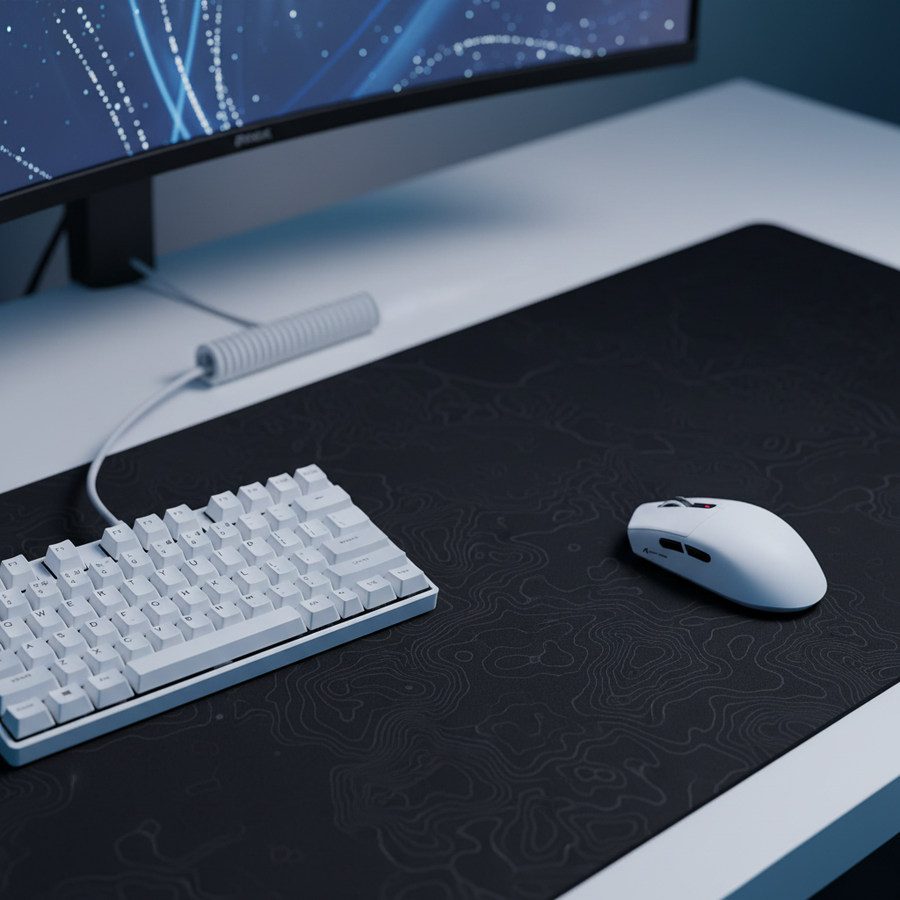
The material of your mousepad dictates the sensor's required sensitivity. On a cloth surface like the ATTACK SHARK CM02 eSport Gaming Mousepad, the ultra-high-density fiber creates a complex "landscape" for the sensor.
- Cloth Pads: These surfaces are compressible. If you use a 4mm elastic core pad, we typically recommend a slightly higher LOD (e.g., 2mm). This provides a buffer for when you press down during a flick, preventing the sensor from "bottoming out" and losing tracking.
- Hard/Glass Pads: These surfaces are non-compressible and highly reflective. For these, the lowest stable LOD (1mm or lower) is preferred to minimize the "float" sensation during rapid lifts.
The 0.3mm Rule: Why Your Skates Are a Dynamic Variable
According to our observations in hardware maintenance, PTFE (Teflon) skates are a consumable component. As skates wear down, the sensor moves closer to the pad. A wear of just 0.3mm—common after several weeks of heavy use on "control" pads—can shift a perfectly calibrated 1mm LOD into a "dead zone" where the sensor skips during fast movements. Re-calibrating your LOD after changing mouse feet or after significant wear is non-negotiable for maintaining tracking integrity.
8000Hz Polling: The Technical Frontier of Tracking
High polling rates (4K and 8K) are designed to reduce the delay between physical movement and the OS receiving a data packet. In a 1000Hz system, the interval is 1.0ms. At 8000Hz, the interval drops to a near-instant 0.125ms.
The Math of Motion Sync
At 8000Hz, features like "Motion Sync" (which aligns sensor reports with USB polls) operate with a deterministic delay of approximately 0.0625ms. This is a significant improvement over 1000Hz systems, where the delay is ~0.5ms. However, this precision demands a "clean" environment.
CPU IRQ and USB Topology Constraints
To prevent packet loss at 8K, users must adhere to strict system requirements:
- Direct Motherboard Ports: You must use the rear I/O ports. USB hubs or front-panel headers introduce shared bandwidth and shielding issues that cause "micro-stutters" often mistaken for sensor skips.
- IRQ Processing: The bottleneck at 8K is not raw CPU speed, but Interrupt Request (IRQ) processing. This stresses single-core performance. If your CPU usage spikes or your frame rate drops when moving the mouse, your system may be struggling to handle the 8000 interrupts per second.
Methodology Note: Our 8K saturation model assumes a user must move at at least 10 IPS at 800 DPI to fully utilize the 8000Hz bandwidth. At 1600 DPI, this threshold drops to 5 IPS, making higher DPI settings more stable for micro-adjustments in high-polling scenarios.
Compliance and Technical Integrity
When selecting high-performance peripherals, verifying the underlying hardware is essential. Authoritative databases like the FCC Equipment Authorization (FCC ID Search) provide transparency into the MCU and RF chips used in wireless devices. For example, ensuring a device uses a Nordic 52840 or 54L15 MCU (as seen in the ATTACK SHARK X8 Series Tri-mode Lightweight Wireless Gaming Mouse) is a primary indicator of its ability to handle 8K polling and stable LOD calibration without firmware crashes.
Furthermore, the Global Gaming Peripherals Industry Whitepaper (2026) emphasizes that as sensors reach the limits of human perception (40,000+ DPI), the focus shifts from raw specs to the "execution quality" of the firmware and the physical stability of the chassis.
Troubleshooting and Maintenance Checklist
If you experience sensor skips during rapid swipes, follow this expert-derived diagnostic path before assuming hardware failure:
- Clean the Sensor Lens: Use a dry Q-tip or compressed air. Even a single microscopic hair can disrupt the Z-height calculation.
- Verify USB Port: Ensure the receiver is in a USB 3.0+ port directly on the motherboard.
- The "Coin Test" Check: Perform the lift test to see if your effective LOD has shifted due to skate wear.
- Disable Surface Calibration: In some software suites, "Manual Surface Calibration" can conflict with the sensor's auto-tuning. Try reverting to a "Default" or "Generic" pad profile.
- Check for Interference: Ensure your 2.4GHz receiver is not within 3 feet of a Wi-Fi router or high-power wireless device, as packet loss can mimic a sensor skip.
By understanding that LOD is not a static number but a systemic interaction between sensor, firmware, skates, and surface, you can eliminate tracking inconsistencies and focus entirely on your aim.
Disclaimer: This article is for informational purposes only. Technical modifications to hardware or firmware may affect warranty status. Always consult your product manual and follow local electrical safety guidelines.
Sources:


コメントを書く
このサイトはhCaptchaによって保護されており、hCaptchaプライバシーポリシーおよび利用規約が適用されます。