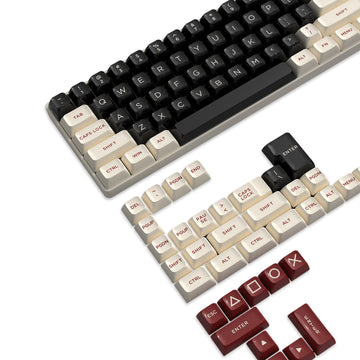



When diving into the world of mechanical keyboards, most enthusiasts focus heavily on switches. However, the component your fingers actually interact with—the keycap—plays an equally crucial role in your typing experience. Keycap profiles dictate the shape, height, and angle of the keys, fundamentally changing how a keyboard feels and sounds. Choosing the "right" profile is subjective, but understanding the differences is key to finding your personal comfort zone. This guide breaks down the most popular profiles to help you make an informed decision for your setup.

What is a Keycap Profile?
A keycap profile refers to the overall silhouette of the keycaps on the keyboard. It encompasses the height of the cap, the shape of the top surface (where your finger rests), and the angle of the rows relative to each other.
Profiles generally fall into two broad categories:
- Sculpted: In a sculpted profile, each row of keys has a different height and angle. This design is ergonomic, meant to cradle your fingers and reduce the distance you need to stretch to reach upper or lower rows.
- Uniform: In a uniform profile, every keycap is the exact same shape and height, regardless of where it sits on the board. This offers a flat, consistent aesthetic and allows you to rearrange novelty keys anywhere without them looking out of place.
Understanding these categories aligns with research on neutral posture typing, which emphasizes minimizing wrist extension to prevent strain.
Why Is the Cherry Profile the Gold Standard?
If you are looking for a safe, widely-loved starting point, look no further than the Cherry profile. Originating from the classic industry designs, this is arguably the most popular aftermarket profile for custom enthusiasts today.
These keycaps are sculpted but sit relatively low to the switch. This lower center of gravity creates a comfortable, natural typing angle that does not force you to lift your wrists too high. The surface area is cylindrical, gently guiding your fingertips to the center of the key.
Because there is less empty space inside a Cherry cap compared to taller profiles, the sound tends to be lower-pitched and bassy. This makes them a favorite for enthusiasts chasing a "thocky" sound. However, you should check your board's orientation first; on some keyboards with north-facing LEDs, these caps can sometimes hit the switch housing, causing an unpleasant friction known as "interference."
Start with the Familiar OEM Profile
If you bought a standard pre-built mechanical keyboard from a big-box electronics store, you are likely already using OEM (Original Equipment Manufacturer) profile keycaps.
OEM is very similar in shape to the Cherry profile—both are sculpted and cylindrical—but OEM caps are noticeably taller. The angle of the top surface is slightly steeper. This increased height is designed to be universally comfortable for the average user right out of the box, requiring less distinct finger curvature to reach the number row.
The biggest advantage here is familiarity. Since this is the default for mass production, most users find it easy to adapt to. However, the sound is generally higher-pitched and more hollow due to the larger internal volume compared to shorter profiles, which some audio-focused typists try to avoid.

Capture Vintage Vibes with the SA Profile
For those who love the retro look of a typewriter or an old computer terminal from the 1970s, the SA (Spherical All) profile makes a bold statement.
Unlike the cylindrical tops of Cherry or OEM profiles, SA caps feature spherical indentations that cup your fingertips securely. They are highly sculpted, creating a dramatic curve from the function row down to the spacebar.
Be warned: SA caps are tall. This height can be fatiguing without a wrist rest, as your hands need to hover higher. They also wobble more on the switch stem due to their size. However, the trade-off is an incredibly deep, resonant "clack" that echoes inside the large keycap chamber—perfect for deliberate, rhythmic typing.
Try the Flat and Modern XDA Profile
Moving away from sculpted designs, XDA is a popular uniform profile that offers a clean aesthetic fantastic for compact keyboards.
Because XDA is uniform, the 'Q' key is the exact same shape as the 'A' key, creating a completely flat typing landscape. The tops are slightly spherical but much wider and flatter than SA, giving your fingers plenty of room to land.
Many users find XDA excellent for gaming because the flat surface makes sliding from key to key effortless. However, finding keys by feel can be harder since there is no row sculpting to guide you. You might find yourself looking down more often until your muscle memory adjusts to the flat terrain.

Go Low and Sleek with DSA
DSA is the lower-profile cousin of XDA and was one of the first popular uniform profiles in the custom keyboard community.
These caps are very short, eliminating the need for a wrist rest for most people. Like XDA, they have spherical tops and a uniform height, but the aesthetic is much tidier and lower-profile. This makes them a favorite for slim builds or travel boards.
Due to their small size, DSA keycaps have a tighter, higher-pitched sound with little echo. The typing feel is snappy and direct. However, the smaller surface area on top can feel a bit cramped for users with larger hands compared to the spacious XDA.
Does Keycap Material Quality Matter?
While the profile determines the shape, the material determines the texture and durability. When choosing a profile from a reputable brand like Attack Shark, you will typically encounter two main plastics: ABS and PBT.
The Longevity of PBT
Many high-quality profiles, such as those offered by Attack Shark, utilize PBT (Polybutylene Terephthalate). This plastic is rigid and textured. It resists the "shine" that develops on cheaper keycaps over time. A PBT keycap in a Cherry or XDA profile will sound deeper and feel "dryer" to the touch, offering a premium experience that lasts for years.
The Vibrancy of ABS
ABS is smoother and easier to mold, which is why it is often used for double-shot sculpted profiles like SA. While it can develop a shine over time, it allows for brighter, more vibrant colors. Understanding the material helps you predict how the profile will feel under your fingers after months of use.
Match the Profile to Your Workflow
The "best" profile depends entirely on what you do with your keyboard.
Gaming Priorities
Gamers often prefer Cherry or OEM profiles. The sculpted nature helps you distinguish rows by feel, which is crucial when you are focused on the screen. The lower height of Cherry allows for faster actuation and less finger travel. Products from Attack Shark often focus on these ergonomically efficient profiles to ensure gamers have the speed they need.
Typing and Coding
Writers often gravitate towards SA or similar high-profile variants for the satisfying tactile feedback. The way the keys cup the fingers can make typing feel like an event. However, many speed typists stick to Cherry for its efficiency and ergonomic comfort over long hours. Sustained typing comfort is often linked to reducing repetitive strain injury risks through proper equipment selection.
Pure Aesthetics
If you are building a keyboard purely for the look, uniform profiles like XDA or DSA offer the most flexibility. You can put cool icon keys or novelty art caps anywhere on the board without worrying about row height mismatches.
Conclusion: Finding Your Perfect Keycap Fit
There is no single "correct" keycap profile, only the one that fits your hands. If you are unsure, the Cherry profile is the safest bet for a balance of ergonomics and sound. If you want a vintage feel, try SA. If you prefer a modern, flat look, XDA is worth exploring. The beauty of mechanical keyboards lies in customization—don't be afraid to experiment with different shapes until you find the perfect match for your fingertips.
FAQs
Do all keycap profiles fit all switches?
Most aftermarket keycaps are designed for standard cross-stem switches. If your switches have this standard stem, almost any profile will fit. However, you should always verify compatibility with your specific keyboard layout.
Can I mix different profiles on one keyboard?
Technically yes, but it is not recommended. Mixing a tall SA key with a short DSA key will create an uneven, jagged surface that is uncomfortable to type on and likely to cause tripping (hitting the side of a key accidentally).
Does keycap profile affect RGB lighting?
The profile shape itself does not block light, but the height does. Taller profiles like SA allow more room for light to diffuse underneath the cap, creating a "glow" effect around the switch. Lower profiles like Cherry keep the light tighter to the board. If lighting is a priority, consider checking compatible RGB lighting setups.
Will high-profile keycaps slow down my typing?
Initially, they might. Taller profiles require you to lift your fingers higher between keystrokes. However, once you adjust to the rhythm, many people type just as fast. It is simply a matter of muscle memory.