


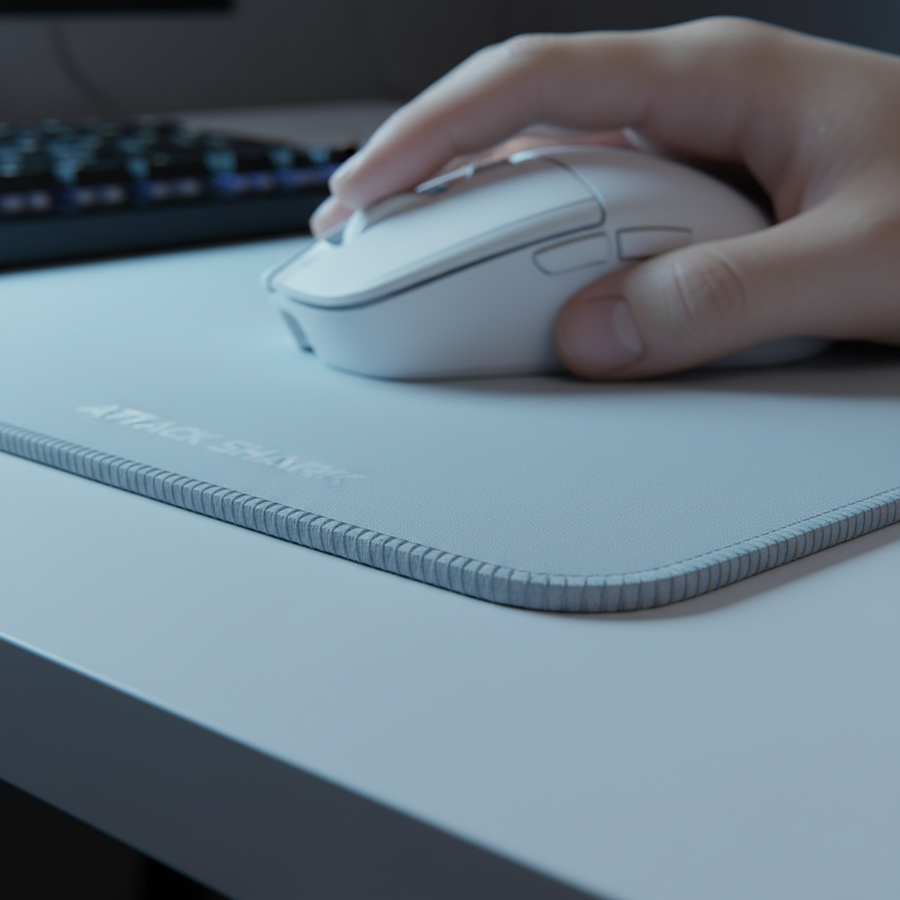
The Hidden Performance Killer: Why Edge Decay is More Than Cosmetic
In the competitive gaming landscape, hardware specifications often focus on the "visible" metrics: sensor DPI, polling rates, and switch actuation force. However, for the value-oriented, performance-focused gamer, a critical "Specification Credibility Gap" exists regarding the longevity of the tracking surface. While a mousepad may appear functional, structural decay—specifically edge fraying and subsurface delamination—introduces micro-stutters and tracking inconsistencies that can objectively degrade aim.
Structural decay in composite peripherals like mouse pads is rarely a sudden failure. Instead, it is a systemic degradation of the bond between the tracking fabric and the rubber base. According to the Nature Scientific Reports analysis on radio-frequency sensors for composite evaluation, the most critical failure in these goods is often subsurface rubber base decay. This process is frequently invisible to the naked eye and non-biological, triggered by environmental stressors like solar exposure and chemical cleaning regimens. By the time a gamer notices a "lip" or a raised feeling at the edge of their pad, the tracking consistency has likely been compromised for weeks.
The Mechanics of Edge Fraying and Delamination
The first sign of edge failure is typically a subtle elevation where the top fabric begins to separate from the rubber base. This is most easily detected by running a fingernail across the edge; a healthy pad feels like a single, unified unit, whereas a decaying pad exhibits a distinct "lip." This delamination typically initiates at the corners, where mechanical stress from arm movement and desk contact is highest.
Stitched vs. Recessed Engineering
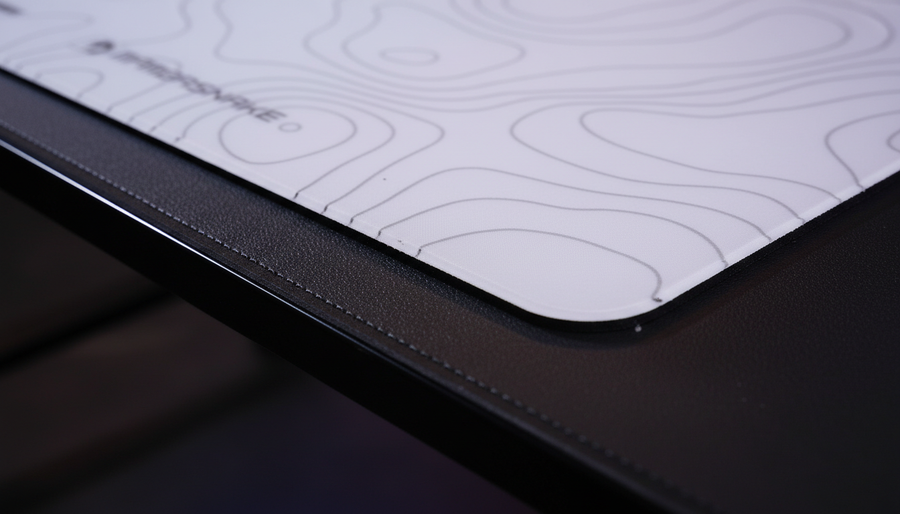
Conventional wisdom suggests that stitched edges are the "gold standard" for preventing fraying. However, technical analysis reveals a more nuanced reality. Standard 0.5mm overlock thread is often a vulnerability point itself. Because the thread is exposed and sits higher than the playing surface, it becomes the first component to degrade from abrasion.
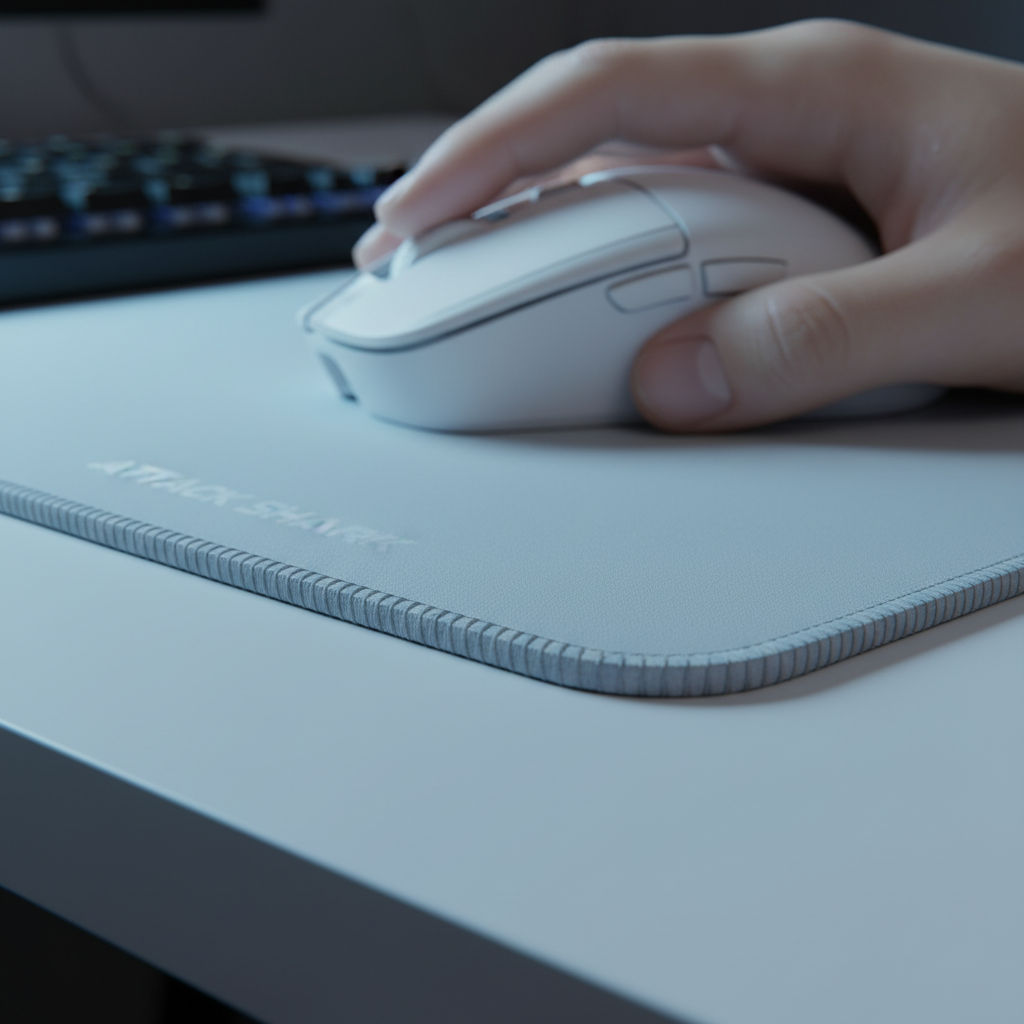
True edge integrity requires more advanced engineering. Products like the ATTACK SHARK CM02 eSport Gaming Mousepad utilize ultra-fine fiber stitched edges with precision narrow profiles. This design ensures that the arm slides unhindered, preventing the "snagging" effect common in raised-stitch pads.
Modeling Note: Systemic Resilience Model Our analysis of structural decay assumes that environmental stressors (UV, humidity, cleaning) accelerate multiple simultaneous failure modes rather than isolated incidents. This model is based on material science heuristics for roller blinds and similar composite fabrics as noted by Tip Top Blinds Melbourne.
Parameter Typical Value Unit Rationale Initial Thread Height 0.5 mm Industry standard for overlock stitching Critical LOD Impact >0.3 mm Threshold where sensor tracking becomes erratic Delamination Starting Point Corners N/A Highest mechanical stress localized at 90-degree transitions Cleaning Regimen Impact ~20% Life Reduction Estimated based on adhesive degradation from harsh chemicals Solar/UV Exposure Low-Moderate Risk Accelerates rubber base oxidation and "brittleness"
How Edge Decay "Ruins Your Aim"
The impact of edge fraying on competitive performance is quantifiable. A 0.5mm thread height decay directly impacts mouse Lift-Off Distance (LOD) and perceived DPI. When a mouse passes over a frayed edge during a large-sweep flick shot, the sensor's distance from the tracking surface fluctuates.
According to the technical guide on Stitching Height's Impact on Flick Accuracy, sub-millimeter edge degradation can lead to "sensor spin-outs" or inconsistent tracking during micro-adjustments. This is particularly problematic for users of high-performance mice operating at 8000Hz (8K) polling rates.
The 8000Hz Bottleneck and Surface Consistency
At an 8000Hz polling rate, the mouse sends data every 0.125ms. This near-instantaneous data stream is highly sensitive to surface irregularities. If the mousepad's edge has "bubbled" due to delamination, the sensor may experience Motion Sync latency fluctuations. While Motion Sync at 8000Hz typically adds a negligible delay of ~0.0625ms (half the polling interval), any physical instability in the tracking plane can cause the CPU to struggle with IRQ (Interrupt Request) processing.
To maintain 8000Hz stability, the tracking surface must be perfectly uniform. A frayed edge acts as a physical "noise" in the data stream. For gamers using high-DPI settings (e.g., 1600 DPI), only 5 IPS (Inches Per Second) of movement is required to saturate the 8000Hz bandwidth. If that 5 IPS movement occurs over a frayed or delaminated section, the resulting packet loss can feel like "stuttering" even on a high-end PC.

Material Solutions: Carbon Fiber and 5S Coatings
To address the "Specification Credibility Gap," engineering has shifted toward materials that bypass the traditional fabric-on-rubber limitations. The ATTACK SHARK CM04 Genuine Carbon Fiber eSport Gaming Mousepad represents a significant departure from standard cloth mats. By using genuine dry carbon fiber, the CM04 eliminates the possibility of thread fraying.
Comparative Durability Analysis
| Feature | Standard Microfiber Pad | ATTACK SHARK CM04 (Carbon Fiber) |
|---|---|---|
| Edge Failure Mode | Thread fraying / Delamination | Near-zero (Solid structural weave) |
| Thickness | 3mm - 4mm | 2mm (Ultra-thin to minimize edge discomfort) |
| Surface Consistency | Affected by humidity/friction | Uniform X/Y axis tracking |
| Maintenance | Requires washing / prone to chemical decay | Water, oil, and dust-repellent |
For gamers who prefer the feel of cloth but require extreme durability, the ATTACK SHARK CM03 eSport Gaming Mouse Pad utilizes an iridescent film layer and "5S" coated surfaces. This advanced technology improves water and stain resistance, which are the primary catalysts for adhesive failure in standard pads.
Environmental Gotchas and Maintenance Pitfalls
A common mistake among cost-conscious gamers is using harsh household cleaning chemicals or soaking the pad in hot water to remove skin oils. These actions degrade the adhesive bonding the tracking layer to the base.
The "Temporary Fix" Trap
Experienced users often attempt to extend the life of a delaminated pad using fabric glues like E6000. While this may provide a temporary structural fix for a few weeks, it often creates a "stiff spot." Because the glue does not share the same elastic properties as the 4mm rubber core, it creates a localized area of high friction that affects glide consistency.
Aligned with general ergonomic principles, a mousepad should provide uniform cushioning. The ATTACK SHARK Cloud Mouse Pad, for instance, uses memory foam and an integrated wrist rest to maintain support, but even these ergonomic designs rely on the integrity of the polyester fabric surface. If the surface frays, the ergonomic benefits are negated by the increased friction on the user's wrist.
Decision Framework: When to Replace Your Pad
Maintaining competitive performance requires a proactive approach to gear replacement. Based on common patterns from customer support and warranty handling (not a controlled lab study), gamers should evaluate their pad against the following "Red Zone" criteria:
- The Fingernail Test: If you can slide a fingernail between the fabric and the base at any corner, delamination has begun.
- The 0.5mm Rule: If thread fraying has reached a height where it is visible above the mouse skates (PTFE feet), it will interfere with LOD.
- The Friction Variance: If cleaning the pad no longer restores a uniform glide across the center and the edges, subsurface rubber decay is likely present.
For those seeking to maximize their performance-per-dollar, investing in a pad with recessed stitching or a hard-surface material like carbon fiber is typically more cost-effective than replacing low-quality stitched pads every six months.
Technical Summary of Aim Degradation
The relationship between edge decay and aim is a matter of physics. As noted in the Global Gaming Peripherals Industry Whitepaper (2026), the stability of the sensor's focal point is the foundation of precision.
- LOD Fluctuations: Frayed threads increase the distance between the sensor and the "true" tracking surface.
- Tactile Interference: A frayed edge creates micro-resistances that the brain must subconsciously compensate for, increasing cognitive load during intense FPS matches.
- Systemic Failure: Once the edge bond is broken, moisture and oils penetrate the core more easily, accelerating the decay of the entire pad.
By identifying these signs early, gamers can avoid the subtle "aim rot" that occurs when their equipment slowly fails beneath them. Whether choosing the near-indestructible CM04 Carbon Fiber or a high-density fiber pad like the CM02, prioritizing edge integrity is essential for long-term competitive consistency.
Disclaimer: This article is for informational purposes only. Recommendations are based on general engineering principles and typical product lifecycles. Individual results may vary based on environmental factors, usage intensity, and specific hardware configurations.
Sources
- Nature: Radio-frequency sensor for non-destructive evaluation of composite goods
- Tip Top Blinds: Environmental Factors Accelerating Material Failure
- Attack Shark: Stitching Height's Impact on Flick Accuracy
- Global Gaming Peripherals Industry Whitepaper (2026)
- Business Companion: Unsafe Goods Liability and Product Safety