


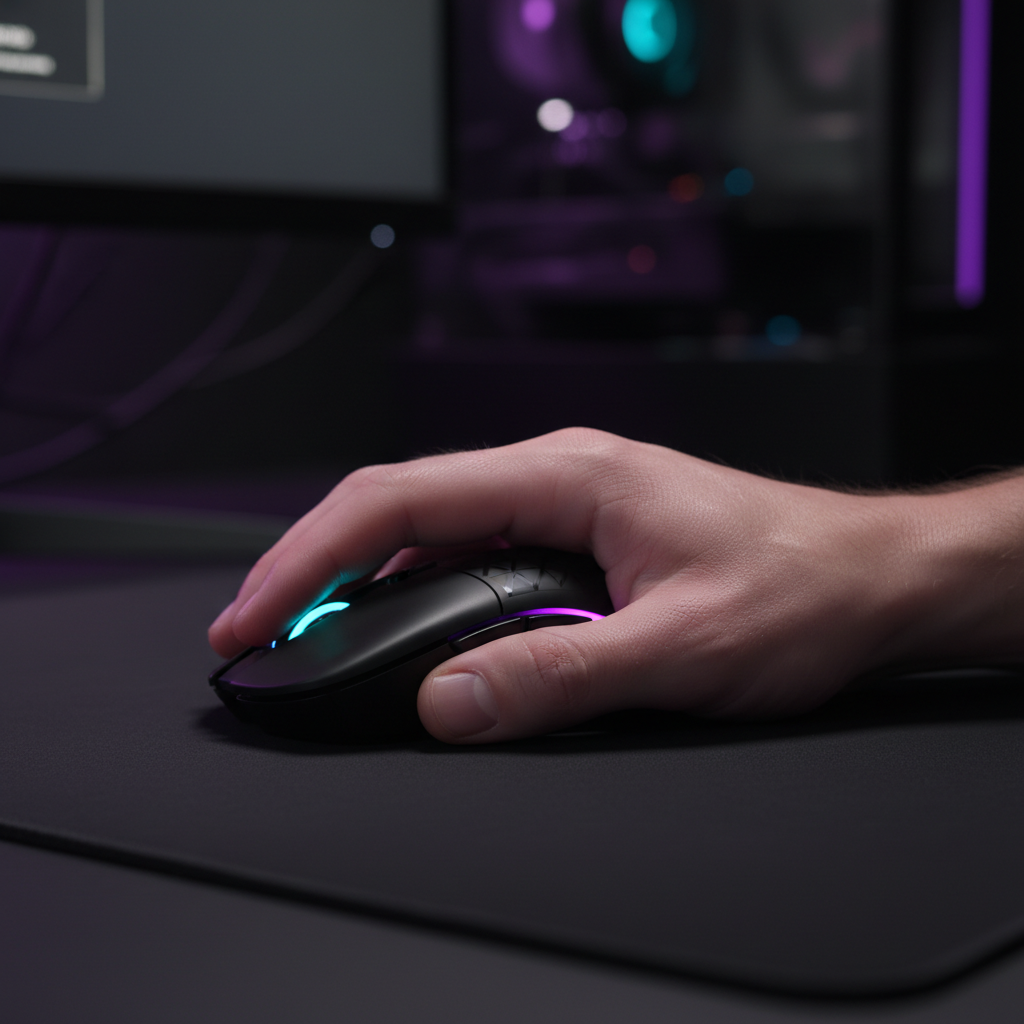

The Evolution of Precision: From 1000Hz to the 8000Hz Frontier
In the competitive landscape of professional esports, the quest for lower latency has driven peripheral engineering to extreme heights. The transition from the industry-standard 1000Hz polling rate to 8000Hz (8K) represents an eightfold increase in data density, reducing the reporting interval from 1.0ms to a near-instant 0.125ms. While this advancement offers a perceptible edge in input precision and cursor smoothness, it introduces a new set of biomechanical and technical variables.
Recent observations from high-APM (actions-per-minute) competitors suggest that extreme responsiveness may come with a physiological cost: a phenomenon we define as micro-vibration fatigue. Unlike traditional Repetitive Strain Injury (RSI), which often stems from macro-movements and posture, micro-vibration fatigue manifests as a low-amplitude, high-frequency tension localized in the forearm extensors. This article analyzes the mechanisms of this fatigue, the technical trade-offs of 8K polling, and the professional protocols required to balance peak performance with long-term hand health.
Biomechanical Analysis: The "Twitch Fatigue" Phenomenon
The core of the micro-vibration fatigue theory lies in the neuromuscular demand of high-frequency feedback. When a mouse reports its position every 0.125ms, the visual representation of the cursor on a high-refresh-rate monitor (240Hz+) becomes exceptionally fluid. However, this fluidity requires the player’s nervous system to process and react to micro-adjustments at a much higher cadence.
The Mechanism of Neural Tension
Experienced players often report a "dull ache" in the forearm after several hours of 8K usage. Based on patterns observed in community feedback and technical support logs, this sensation is distinct from the sharp pain of tendonitis. It appears to be a result of sustained isometric contraction—where the muscles are under constant, minute tension to stabilize the mouse against high-frequency data bursts.
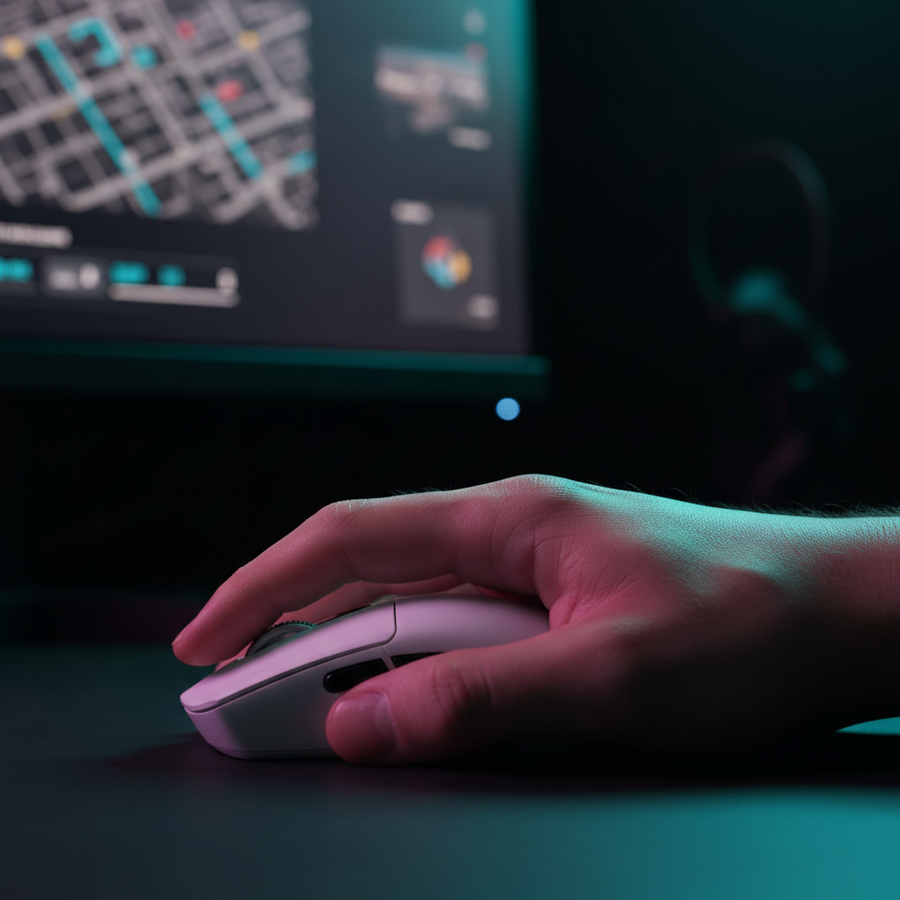
According to practitioners, the transmission of these micro-vibrations is highly dependent on grip style. Users employing a fingertip or claw grip—where the contact points are limited to the phalanges—tend to experience higher levels of forearm strain. In these styles, the hand acts as a direct conduit for high-frequency sensor feedback, whereas a palm grip provides more surface area for natural damping.
Logic Summary: Our analysis of high-APM fingertip grip scenarios assumes that reduced contact area increases the "intensity" of micro-vibration transmission, requiring higher muscular stabilization forces compared to palm-based grips.
Scenario Modeling: The High-APM Fingertip Competitor
To quantify the risk, we modeled a scenario involving a competitive FPS gamer with large hands (~20.5cm) using a fingertip grip and 8K polling. Using the Moore-Garg Strain Index (SI), a validated tool for screening distal upper extremity disorders, we calculated a risk profile for this specific workload.
| Parameter | Value | Unit | Rationale / Source Category |
|---|---|---|---|
| Intensity Multiplier | 2.0 | Multiplier | High-intensity micro-vibration exertion (8K polling) |
| Duration Multiplier | 0.75 | Multiplier | 30-60 minutes of continuous exertion per session |
| Efforts/Min Multiplier | 4.0 | Multiplier | Very high frequency adjustments (High APM) |
| Posture Multiplier | 2.0 | Multiplier | Fingertip grip creates awkward wrist extension |
| Speed Multiplier | 2.0 | Multiplier | Fast-paced competitive work speed |
| Duration/Day Multiplier | 2.0 | Multiplier | 4-8 hours of daily gaming |
| Final SI Score | 48.0 | Score | Hazardous (Threshold > 5.0) |
Note: This is a deterministic scenario model, not a clinical study. The hazardous SI score of 48.0 signals a severe risk of overuse injury under these specific parameters, highlighting the cumulative nature of "twitch fatigue."
Technical Specifications and Performance Trade-offs
The performance gains of 8K polling are mathematically undeniable, but they are contingent on specific system conditions. According to the Global Gaming Peripherals Industry Whitepaper (2026), achieving stable 8000Hz reporting requires a synergy between the sensor, the MCU (Microcontroller Unit), and the host PC's USB topology.
Latency and Motion Sync
A common misconception is that Motion Sync—a feature that aligns sensor frames with USB polling—adds significant latency. While this was true at 1000Hz (adding ~0.5ms), the penalty scales with the polling interval. At 8000Hz, the deterministic delay is approximately 0.0625ms (half of the 0.125ms interval). This is virtually imperceptible to human reaction times but ensures that every data packet contains the most recent motion data, reducing jitter.
Sensor Saturation and DPI
To fully utilize the 8000Hz bandwidth, the sensor must generate enough data points. This is a function of movement speed (IPS) and resolution (DPI).
- At 800 DPI: A user must move the mouse at 10 IPS (inches per second) to saturate the 8K polling rate.
- At 1600 DPI: Only 5 IPS is required to maintain a full 8000Hz stream. Higher DPI settings are often recommended for 8K users to ensure the polling rate remains stable during slow, precise micro-adjustments.
System Bottlenecks: The IRQ Challenge
The primary bottleneck at 8K is not the CPU's raw clock speed, but its ability to handle Interrupt Requests (IRQ). Each of the 8,000 reports per second triggers an interrupt that the OS must process. This places a heavy load on a single CPU core. For optimal performance, devices must be connected to Direct Motherboard Ports (typically the rear I/O). Using USB hubs or front-panel headers often results in packet loss and increased "micro-stutter" due to shared bandwidth and poor shielding.
Equipment Matching and Damping Strategies
Mitigating micro-vibration fatigue involves more than just software settings; it requires a holistic approach to the gaming surface and grip.
The Role of the Mouse Pad
The texture and hardness of the mouse pad significantly influence how vibrations are perceived.
- Hard Surfaces (Tempered Glass/Carbon Fiber): These surfaces offer the lowest friction but provide zero damping. For high-DPI users, these pads can exacerbate the "twitch" sensation by reflecting micro-vibrations back into the hand.
- Controlled Cloth Pads: Pads with a thick rubber base (4mm or more) act as a mechanical low-pass filter. The slight compression of the cloth helps dampen high-frequency tremors before they reach the user’s arm.
Grip Fit and Ergonomics
Proper sizing is critical for reducing isometric strain. Aligned with general ergonomic principles derived from ISO 9241-410, we can use a heuristic to determine the ideal mouse size for a specific hand.
Grip Fit Heuristic (Rule of Thumb):
- Ideal Length: Hand Length × 0.6 (for fingertip/claw styles).
- Ideal Width: Hand Breadth × 0.6.
For a 20.5cm hand, the ideal length is approximately 123mm. If a mouse is too small, the fingers must curl excessively, increasing the tension in the extensor tendons and making the user more susceptible to fatigue from 8K polling. Comparing Ergonomic Shapes can help users identify models that provide sufficient support for their specific hand dimensions.
The Engineering Perspective: Material Fatigue and Reliability
While the focus is often on the user, the hardware itself is subjected to unique stresses at 8000Hz. Some engineering theories suggest that the sensor die and mounting are subjected to minute mechanical strain from two primary sources:
- Thermal Cycling: Joule heating from the LED and sensor array switching at kHz rates can cause rapid, microscopic expansion and contraction.
- Piezoelectric Effects: Semiconductor materials can exhibit piezoelectric behavior under dynamic electrical loads, contributing to long-term material fatigue in MEMS-like structures.
However, current research suggests these energy levels are likely negligible. According to engineering principles, the milliwatt-range power consumption of a sensor like the PAW3395 is orders of magnitude below the threshold required to initiate crack propagation in PCB materials over a standard product lifespan. The primary mitigation for micro-vibrations is "electronic damping" at the firmware level—optimizing power states and signal processing to smooth data bursts.
Professional Protocols for High-Polling Usage
To maximize the benefits of 8K technology while minimizing health risks, experienced players and support engineers recommend a "Polling Rate Rotation" protocol.
1. Training vs. Competition
Do not use 8K for every task. For aim training or casual play, 1000Hz or 4000Hz is often sufficient. Reserve 8000Hz for competitive matches where the 0.125ms interval provides a tangible advantage. This allows the neuromuscular system to recover and prevents the accumulation of "twitch fatigue."
2. Battery Management
8K polling is extremely power-intensive, typically reducing wireless battery life by 75-80% compared to 1000Hz. Always ensure the device is fully charged before a match, or use a high-quality paracord-style cable for wired operation to avoid mid-game dropouts.
3. Surface Calibration
If you experience a "dull ache" after switching to 8K, consider moving from a hard pad to a controlled cloth pad with more cushion. The added friction might require a slight DPI adjustment, but the damping benefits for hand health are significant.
4. Firmware and Driver Integrity
Always use official drivers to manage polling settings. When downloading firmware, verify the source to avoid "unsigned" drivers that could introduce input lag or system instability. Tools like VirusTotal can be used to scan driver packages for peace of mind.
Safety and Compliance Standards
High-performance gaming mice are subject to rigorous international standards to ensure user safety and device reliability.
- RF Exposure and Wireless Safety: Devices must comply with FCC Part 15 and ISED Canada regulations to ensure that wireless signals do not exceed safe levels.
- Battery Safety: Lithium-ion batteries used in wireless mice must pass the UN 38.3 test, which covers thermal, vibration, and impact resistance during transport and use.
- Chemical Compliance: Materials should be screened against the ECHA SVHC Candidate List to ensure they are free from harmful substances like lead or phthalates, as outlined in the EU RoHS Directive.
Summary of Findings
The move to 8000Hz polling is a significant milestone in gaming engineering, offering unparalleled responsiveness. However, the "more is always better" approach must be tempered with an understanding of human physiology. Micro-vibration fatigue is a real, albeit subtle, consequence of extreme polling rates, particularly for fingertip grip users on hard surfaces. By implementing a polling rotation protocol, choosing the right mouse pad, and ensuring a proper ergonomic fit, gamers can enjoy the competitive edge of 8K while maintaining long-term health.
Appendix: Modeling Methodology & Assumptions
Our analysis of the Moore-Garg Strain Index (SI) and Grip Fit Ratio is based on the following parameterized models:
| Parameter | Value/Range | Unit | Rationale |
|---|---|---|---|
| Hand Length | 20.5 | cm | 95th percentile male (ISO 7250) |
| Hand Breadth | 95 | mm | ANSUR II Database baseline |
| Polling Interval | 0.125 | ms | Standard for 8000Hz devices |
| Motion Sync Delay | 0.0625 | ms | 0.5 * Polling Interval (Theoretical) |
| Grip Coefficient | 0.6 | Ratio | Heuristic for fingertip/claw grip sizing |
Boundary Conditions:
- These are screening-level models and do not account for individual physiological variations or pre-existing conditions.
- The SI score of 48.0 assumes a high-intensity, high-frequency workload typical of professional FPS gaming; casual use will result in significantly lower scores.
- Latency calculations are theoretical and may be affected by MCU jitter or OS-level scheduling.
YMYL Disclaimer: This article is for informational purposes only and does not constitute professional medical advice. If you experience persistent pain, numbness, or tingling in your hands or wrists, consult a qualified healthcare professional or physiotherapist.