


The Physics of Adhesion on Metallic Gaming Peripherals
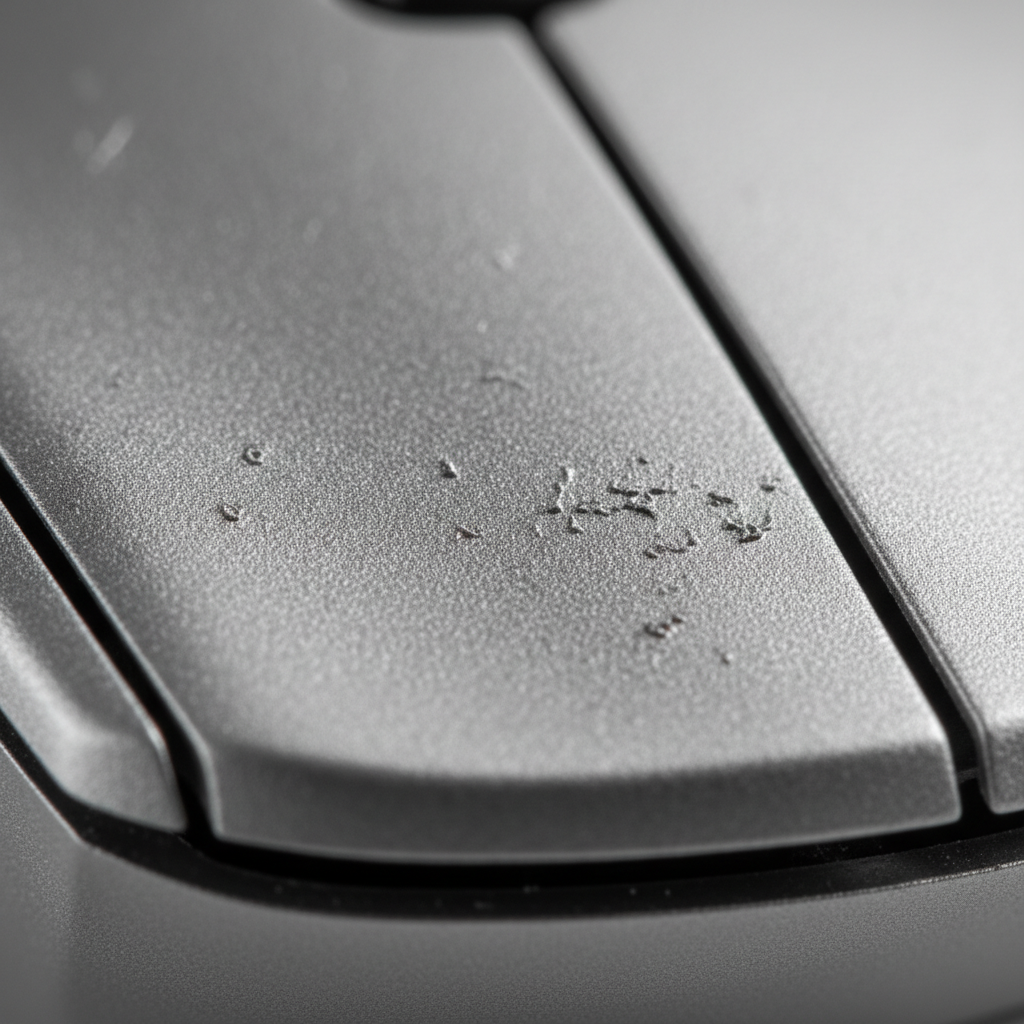
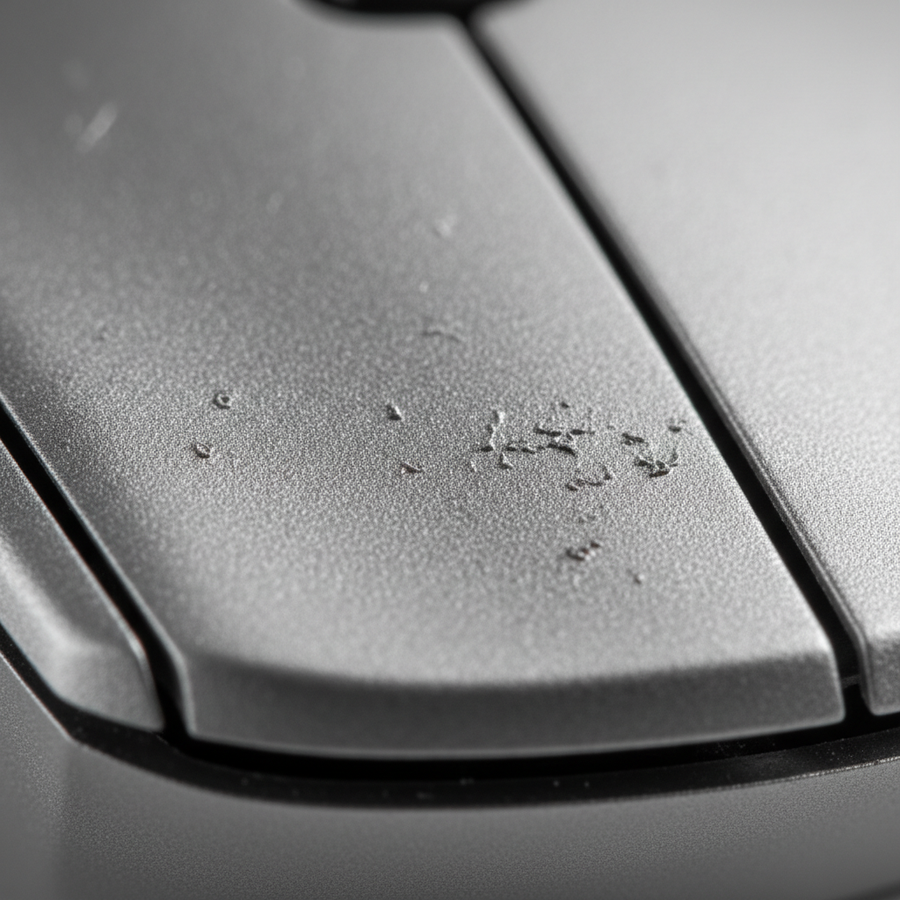
In the pursuit of weight reduction and structural rigidity, the gaming peripheral industry has increasingly pivoted toward magnesium alloys. While these materials offer an exceptional strength-to-weight ratio, they present significant challenges for surface finishing. The phenomenon of "chipping" or "flaking" is rarely a failure of the paint itself; rather, it is a failure of the interface—the microscopic boundary where the coating meets the metal substrate.
Understanding why a high-performance coating fails requires a deep dive into materials science, specifically the electrochemical properties of magnesium and the mechanical stresses inherent in competitive gaming. This article explores the mechanisms of adhesion failure, the manufacturing trade-offs that influence durability, and the environmental factors that accelerate degradation.
The Magnesium Interface: Why "Clean" Isn't Enough
The primary hurdle in coating magnesium alloys is the natural formation of an oxide layer. Unlike the stable, protective oxide layer found on aluminum, the oxide that forms on magnesium is often porous, non-uniform, and weakly bonded to the underlying metal. If a coating is applied directly over this "native" oxide, the foundation is fundamentally fragile.
Surface Energy and Wetting
For a liquid coating to adhere, it must "wet" the surface, meaning the surface energy of the metal must be significantly higher than the surface tension of the paint. Magnesium naturally has high surface energy, but contaminants—even microscopic oils from the die-casting process—can lower this energy, leading to poor wetting and subsequent delamination.
Mechanical Interlocking vs. Chemical Bonding
Reliable adhesion typically relies on two mechanisms:
- Mechanical Interlocking: The coating flows into the "peaks and valleys" of the metal surface.
- Chemical Bonding: Molecular-level attractions (such as Van der Waals forces or covalent bonds) between the polymer and the metal.
In high-volume manufacturing, practitioners have observed that mechanical abrasion (such as sandblasting) followed by chemical etching is necessary to create an optimal surface profile. According to industry standards for high-wear consumer electronics, a surface roughness measurement between 1.5 and 3.0 microns Ra is typically targeted. This provides enough surface area for mechanical interlocking without making the final finish feel overly coarse to the user.
Methodology Note (Surface Prep): This roughness range (1.5–3.0μm Ra) is a common manufacturing heuristic used to balance coating "bite" with tactile smoothness. Values below this range often result in poor long-term adhesion, while values above it require thicker paint layers that add unnecessary weight.
Thermal Expansion Mismatch: The Silent Killer
One of the most overlooked causes of coating failure is the Coefficient of Thermal Expansion (CTE) mismatch. Gaming mice are subject to significant temperature fluctuations during international shipping (e.g., cargo holds reaching sub-zero temperatures) and intense use (palm heat).
Magnesium has a CTE of approximately 25.2 × 10⁻⁶/°C. In contrast, the polyurethane or epoxy-based coatings used for grip and aesthetics have CTEs ranging from 100 to 200 × 10⁻⁶/°C.
| Material | Approx. CTE (10⁻⁶/°C) | Expansion Rate Relative to Magnesium |
|---|---|---|
| Magnesium Substrate | 25.2 | 1.0x (Baseline) |
| Typical PU Coating | 150.0 | ~6.0x |
| Aluminum (for comparison) | 23.1 | ~0.9x |
When the temperature changes, the coating expands or contracts up to six times more than the metal beneath it. This creates immense shear stress at the interface. Because stress concentrates at sharp edges, parting lines, and button seams, these are almost always the first areas where chips appear. This is a design-for-manufacturability (DFM) challenge; rounded edges distribute this stress more evenly than sharp, aggressive angles.
Chemical Attack: Sweat vs. Cleaning Agents
A common misconception among gamers is that "acidic sweat" is the primary cause of coating erosion. While human sweat contains lactic acid and urea, which can slowly degrade certain polymers, it is rarely the cause of rapid chipping.
The Isopropyl Alcohol "Gotcha"
The more potent threat is often the user's cleaning routine. Many gamers use 70% or 95% isopropyl alcohol (IPA) wipes to "sanitize" their gear. However, many performance coatings are polyurethane-based. IPA acts as a solvent that can penetrate the polymer matrix, causing it to swell and soften. This weakens the internal cohesion of the coating and the bond at the interface, making it far more susceptible to mechanical chipping during normal use.
According to research into consumer electronics maintenance, repeated application of harsh solvents can lead to "environmental stress cracking" in the coating layer. For those seeking to preserve their finish, mild soap and water are generally safer alternatives that do not compromise the chemical structure of the paint.
Manufacturing Trade-offs: Profit Margins vs. Longevity
In the value-oriented segment of the market, manufacturers must make calculated decisions regarding surface treatment. There is a significant cost difference between "adequate" and "premium" preparation.
- Solvent Wiping (Standard): A quick wipe with a degreaser. This removes surface oils but does nothing to address the unstable magnesium oxide layer.
- Plasma Treatment (Advanced): Using ionized gas to "bombard" the surface, increasing surface energy and removing contaminants at a molecular level.
- Chemical Etching/Chromating (Premium): A multi-stage chemical bath that removes the native oxide and replaces it with a stable conversion coating.
As noted in the Global Gaming Peripherals Industry Whitepaper (2026), the industry is seeing a shift toward more robust pre-treatments as user expectations for metal mice rise. However, some manufacturers may still prioritize lower costs, leading to a higher variance in coating durability across different batches.
Modeling the "High-Performance" User Experience
To understand how these material failures impact the end-user, we must look at the specific demands of a competitive gaming environment. High-performance features like 8000Hz (8K) polling rates and high-resolution sensors change how a user interacts with the device, which in turn influences wear patterns.
Scenario Analysis: The Competitive FPS Gamer
We modeled the experience of a competitive gamer with large hands (~20.5cm) using an aggressive claw grip and 4K/8K polling settings. This profile places unique stresses on both the hardware and the surface coating.
1. Ergonomic Fit & Surface Stress
For a user with a 20.5cm hand length using a standard 120mm mouse, the "Grip Fit Ratio" is approximately 0.91. This indicates the mouse is slightly smaller than the ergonomic ideal (~131mm for this hand size). To compensate, the user often applies more "pinch force" at the grip points to maintain control. This increased localized pressure accelerates mechanical wear on the coating at the thumb and ring-finger contact points.
2. Performance Trade-offs (Battery & Heat)
High polling rates (4K/8K) significantly increase the power consumption of the MCU (Microcontroller Unit).
| Feature | Polling Interval | Estimated Battery Runtime (300mAh) |
|---|---|---|
| 1000Hz | 1.0ms | ~50+ Hours |
| 4000Hz | 0.25ms | ~13.4 Hours |
| 8000Hz | 0.125ms | ~3-5 Hours |
Modeling Note (Battery Runtime): These estimates assume a standard 300mAh lithium-ion battery and 85% discharge efficiency. The 4000Hz calculation (13.4 hours) is based on a total system draw of ~19mA (Sensor + Radio + MCU). Transitioning to 8000Hz doubles the IRQ (Interrupt Request) processing load on the system, which can cut runtime by an additional 70-80% compared to 1000Hz.
The frequent charging cycles required for 4K/8K use mean the mouse is handled more often near the USB-C port—a high-stress area where the coating is prone to chipping due to "plug-in" friction and thermal fluctuations from the charging battery.
3. Precision & DPI Requirements
To avoid "pixel skipping" on a 4K display with a 103° FOV and low sensitivity (30cm/360), our modeling suggests a minimum of ~2,300 DPI is required to satisfy the Nyquist-Shannon sampling theorem. Users operating at these high-precision levels often make thousands of micro-adjustments per hour. Each micro-adjustment involves static friction (stiction) between the hand and the mouse coating, contributing to long-term surface fatigue.
Logic Summary (DPI Calculation): The minimum DPI (2,300) is calculated by ensuring the sampling rate (DPI) is at least twice the Pixels-Per-Degree (PPD) of the display setup. This ensures that every physical movement is captured with enough resolution to map accurately to the screen's pixel grid.
Validation and Testing Standards
Professional quality control teams do not guess about adhesion; they use standardized tests to validate the integrity of the coating before a product reaches the shelf.
ASTM D3359 (Cross-Hatch Adhesion Test)
This is the industry standard for assessing whether a coating will stay attached. A lattice pattern is cut into the coating down to the substrate, and a specialized pressure-sensitive tape is applied and removed.
- 4B/5B Rating: Minimal to no detachment. This is the requirement for premium gaming peripherals.
- 0B/1B Rating: Significant flaking along the edges of the cuts, indicating a high risk of "spontaneous" chipping in the field.
ASTM B117 (Salt Spray Testing)
To simulate long-term exposure to palm sweat and humidity, mice are placed in a salt fog chamber. A "500-hour salt spray resistance" rating is often the benchmark for high-end metallic gear. Failure in this test usually manifests as "blistering," where sweat penetrates the coating and reacts with the magnesium to form hydrogen gas, pushing the paint away from the metal.
Maintaining Your Metal Mouse Finish
While manufacturing plays a massive role, user behavior can significantly extend the life of a magnesium mouse coating.
- Avoid Alcohol-Based Cleaners: As discussed, IPA can soften polyurethane finishes. Use a microfiber cloth slightly dampened with water or a dedicated "electronics cleaner" that is labeled as safe for plastics and paints.
- Manage Humidity: High humidity accelerates the oxidation of the underlying magnesium if there is even a microscopic "pinhole" in the coating. For more on this, see Humidity and Grip: Maintaining Surface Tactility in Damp Climates.
- Consider Anodization: If durability is the absolute priority, some users prefer anodized finishes over painted ones. While anodization offers a different tactile feel, it is a chemical conversion of the surface itself rather than an added layer, making it immune to "chipping" in the traditional sense. For a comparison, refer to Anodization vs. Spray Painting: Durability for Metal Mice.
- Address Sweat Proactively: If you have particularly "aggressive" sweat, regular wiping after sessions can prevent the buildup of salts that might eventually find a way through the coating. Detailed advice can be found in Preventing Magnesium Mouse Coating Erosion from Palm Sweat.
Summary of Adhesion Dynamics
The transition to magnesium alloys in the gaming world is a double-edged sword. It enables the ultra-lightweight performance that competitive players crave, but it demands a higher level of engineering sophistication in surface treatment. Chipping is not an inevitable defect; it is a symptom of the complex battle between metal oxidation, thermal expansion, and chemical exposure.
By understanding the "why" behind adhesion failure—from the Ra roughness of the substrate to the CTE mismatch of the polymers—gamers can make more informed purchasing decisions and take better care of their high-performance tools.
Disclaimer: This article is for informational purposes only. Technical specifications and performance metrics are based on scenario modeling and common industry heuristics, not specific laboratory testing of any individual product. Always consult your product's user manual for specific cleaning and maintenance instructions.
Sources & References
- FCC Equipment Authorization Database - For compliance and internal hardware verification.
- ASTM B571 Standard Practice for Qualitative Adhesion Testing - Industry standard for metal plating and coating.
- Nordic Semiconductor nRF52840 Product Specification - Basis for power consumption and polling rate modeling.
- ISO 9241-410: Ergonomics of Human-System Interaction - Sizing and physical input device design criteria.
- Global Gaming Peripherals Industry Whitepaper (2026) - Industry trends and manufacturing benchmarks.