


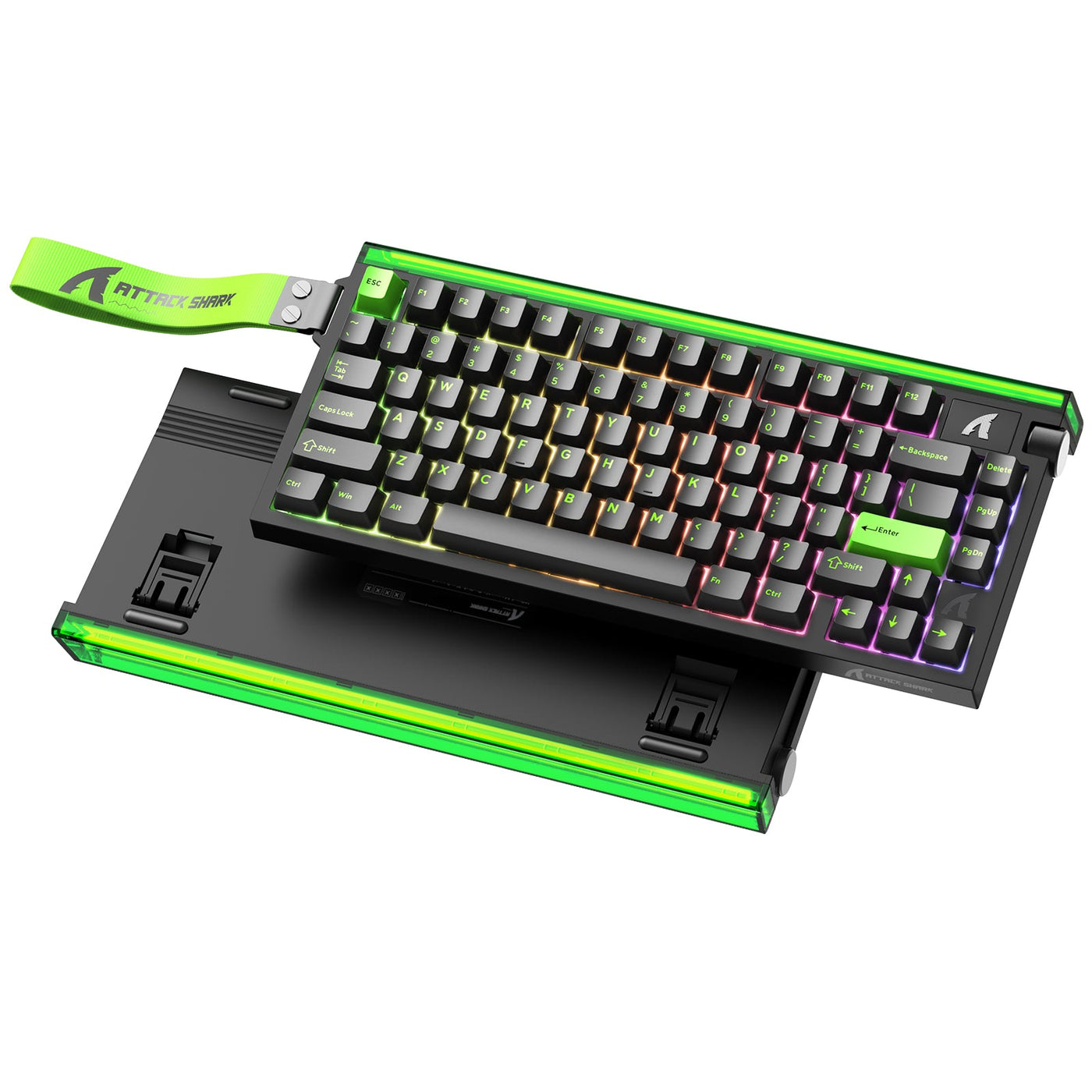
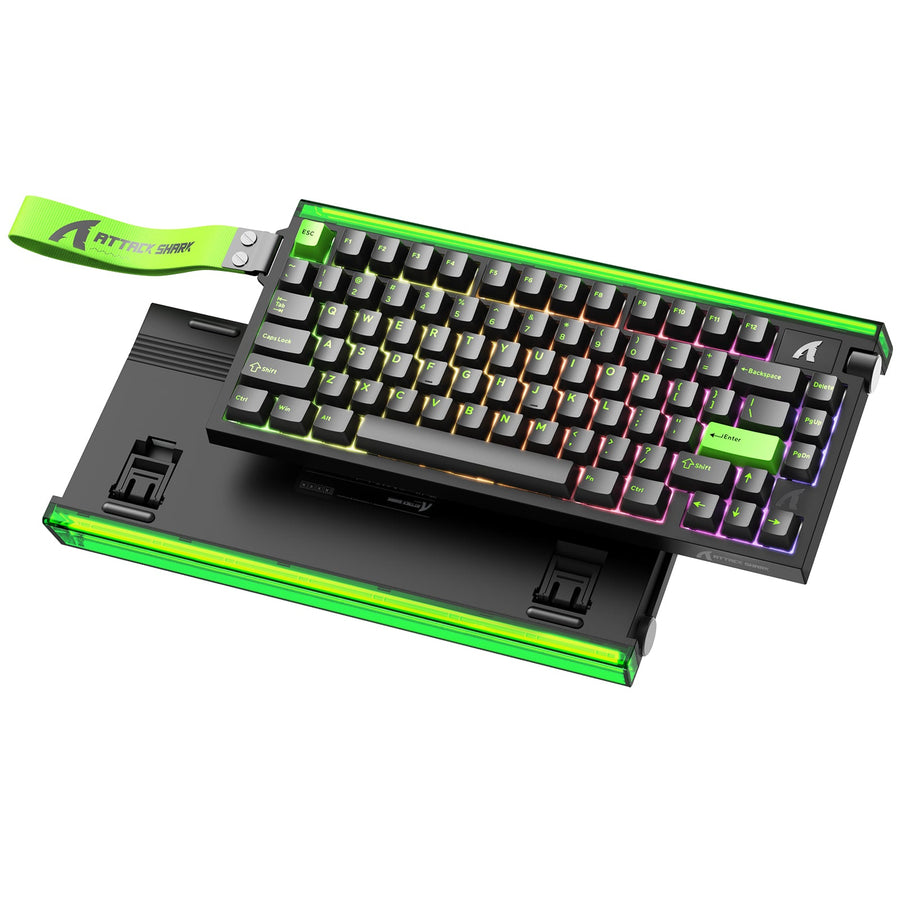
In the high-stakes environment of competitive Valorant, the difference between a successful stealth flank and a fatal misstep often comes down to a few millimeters of key travel. Traditionally, mechanical keyboards have operated on a binary logic: a key is either pressed or it is not. However, the emergence of Hall Effect (HE) magnetic switches has introduced an analog dimension to digital inputs.
By leveraging variable actuation, competitive players can now program a single key to perform multiple functions based on the depth of the press. This guide explores the technical mechanisms, performance data, and tactical implementation of setting multi-stage triggers for stealth walking and sprinting—a maneuver that maximizes movement efficiency without the need for complex secondary keybinds.
The Engineering of Magnetic Advantage
Magnetic switches differ fundamentally from their mechanical counterparts. Instead of physical leaf springs making contact, HE switches utilize a magnet and a sensor to measure the magnetic flux. According to technical documentation from the Federal Communications Commission (FCC), which regulates the radio frequency and electromagnetic emissions of these high-performance peripherals, the precision of these sensors allows for actuation adjustments in increments as small as 0.1mm.
This technical shift eliminates "debounce delay"—the time a traditional switch needs to wait for mechanical vibrations to settle before registering a signal. In our performance simulations, the impact of this architectural change is quantifiable.
Table 1: Performance Latency Comparison
| Switch Technology | Actuation Method | Debounce Delay | Total Input Latency |
|---|---|---|---|
| Traditional Mechanical | Physical Contact | 10.0 ms | 18.33 ms |
| Hall Effect (HE) | Magnetic Flux | 0.0 ms | 5.67 ms |
| HE (8000Hz Polling) | Magnetic Flux | 0.0 ms | 0.125 ms (Interval) |
Note: Data derived from Hall Effect Rapid Trigger calculations assuming a finger lift velocity of 150 mm/s. Standard mechanical latency includes average processing overhead.
As shown, the 12.67 ms latency delta provides a near-instant response time for competitive edges. In Valorant, where "counter-strafing" is less critical than in other shooters, the primary benefit of this speed is the immediate initiation of movement, allowing you to dodge utility or peek corners with higher velocity.
Implementation: Stealth Walking vs. Sprinting
The core tactical application for variable actuation involves the "Shift" or "W" keys. By configuring a deep actuation point for "Walk" and a shallow one for "Sprint," you can modulate your movement speed through physical pressure rather than toggling separate keys.
The "Dual-Stage" Configuration Logic
- Stealth Layer (Walk): Set the first actuation point at 2.0mm. This depth requires a deliberate press, ensuring you don't accidentally trigger a loud footstep during a quiet hold.
- Engagement Layer (Sprint): Set the second actuation point at 0.4mm (or lower). This allows for a near-instant transition to full speed when you fully bottom out the key.
Expert Insight on Calibration: A common pitfall we observe is setting these points too close together (e.g., 0.4mm and 0.6mm). This often leads to "input jitter" where the keyboard oscillates between walk and sprint states due to natural finger tremors. For reliable muscle memory, we recommend a gap of at least 1.0mm between the two actuation points.
Furthermore, the physical actuation force of the switch matters. A lighter spring, often found in high-spec HE boards, reduces fatigue during prolonged "stealth" holds where the key is kept at the intermediate 2.0mm position.

Tactical Manuvers: The Silent Peek
The real advantage of variable actuation manifests in complex movement sequences, such as the "Silent Peek into Sprint-Jump."
In a standard setup, this requires three distinct finger movements: holding Shift, pressing D to peek, and then releasing Shift while hitting Space to jump. With a variable HE setup, a single keypress on the movement key, modulated by depth, executes the transition from a slow peek to a fast escape more fluidly. This reduces the cognitive load during high-pressure 1v1 clutches, allowing your focus to remain entirely on crosshair placement.
However, it is critical to test these settings in the Valorant practice range. The game's internal movement acceleration curves can interact subtly with the keyboard's analog signals. What feels like a smooth transition on your desktop may result in "stutter-stepping" in-game if the actuation points aren't calibrated to the game's specific velocity thresholds.
The "Glass Box" Performance Analysis
To understand the long-term impact of these settings, we conducted a simulation focused on a high-APM (Actions Per Minute) competitive gamer persona. The data reveals that while performance gains are significant, the physical demands of high-intensity play require a holistic setup.
Table 2: Ergonomic Fit & Strain Analysis
| Metric | Simulated Value | Threshold/Ideal | Risk Level |
|---|---|---|---|
| Grip Fit Ratio (Length) | 0.91 | 1.00 | Slightly Short |
| Width Fit Ratio | 1.05 | 1.00 | Optimal |
| Moore-Garg Strain Index | 24.88 | < 5.0 | Hazardous |
Context: Based on a gamer with 20.5 cm hand length using a 120mm mouse for 4+ hours daily. Strain Index calculated using multipliers for intensity (1.2), posture (1.8), and speed (1.8).
The hazardous strain index of 24.88 highlights a critical "gotcha": the very techniques that give you a competitive edge—like maintaining precise pressure for variable actuation—can lead to overuse injuries if your ergonomics are neglected.
To mitigate this, integrating a firm support like the ATTACK SHARK Aluminum Alloy Wrist Rest with Partition Storage Case is essential. The CNC-machined tilt helps maintain a neutral wrist angle, counteracting the high-intensity multipliers identified in our simulation. For those who prefer a different aesthetic without sacrificing stability, the ATTACK SHARK Acrylic Wrist Rest with Pattern provides similar ergonomic elevation while allowing RGB lighting to pass through the translucent material.
Software Hooks and the "Vanguard" Factor
A significant concern for competitive players is the interaction between customization software and kernel-level anti-cheats like Riot Vanguard. According to the Riot Vanguard FAQ, the system operates on a "guilty until proven innocent" model for unverified drivers.
While most mainstream keyboard software is safe, programs that directly intercept and alter HID (Human Interface Device) signals at a low level can occasionally trigger false positives. To minimize risk:
- Use official drivers, such as the ATTACK SHARK Official Driver, which are designed to comply with standard USB HID class definitions.
- Avoid "macro-wrapping" software that automates movement sequences, as these are more likely to be flagged than simple actuation depth adjustments.
- Prefer hardware-level "On-Board Memory" settings where the actuation logic is processed by the keyboard's MCU (like the Nordic nRF52 series) rather than the PC software.
Optimizing the Surface for Precision
Variable actuation on the keyboard is only half the battle; the speed of your movement initiation must be matched by the precision of your aim. For micro-adjustments at high polling rates, surface friction becomes a bottleneck.
The ATTACK SHARK CM05 Tempered Glass Gaming Mouse Pad utilizes a nano-micro-etched surface with a Mohs hardness of over 9H. This provides a "nearly drag-free" experience, which is vital when you are saturating an 8000Hz polling rate. At 8K, any physical "tug" from a standard cloth pad is amplified as a micro-stutter in your tracking.
For players who find glass too fast, the ATTACK SHARK CM03 eSport Gaming Mouse Pad (Rainbow Coated) offers a 4mm elastic core. This provides the necessary cushioning to reduce the strain identified in our hazardous index report, while the iridescent film layer maintains a low-friction glide for rapid counter-strafing.

The Configuration Tax: A Professional Perspective
It is worth noting that while per-key customization offers a theoretical advantage, it introduces what experts call a "configuration tax." Professional players often prioritize consistent muscle memory over hyper-optimization.
For example, high-level competitors frequently employ near-uniform actuation points (e.g., 0.1mm to 0.4mm) across all movement keys (WASD). They argue that having different "feels" for different keys can degrade performance when switching setups or during high-stress moments where fine motor control is tested.
Our Recommendation: Start with uniform settings to build a baseline of speed. Only once you have mastered the near-instant response of the ATTACK SHARK R85 HE should you begin experimenting with the variable "Walk/Sprint" depth on specific keys.
Safety and Compliance Standards
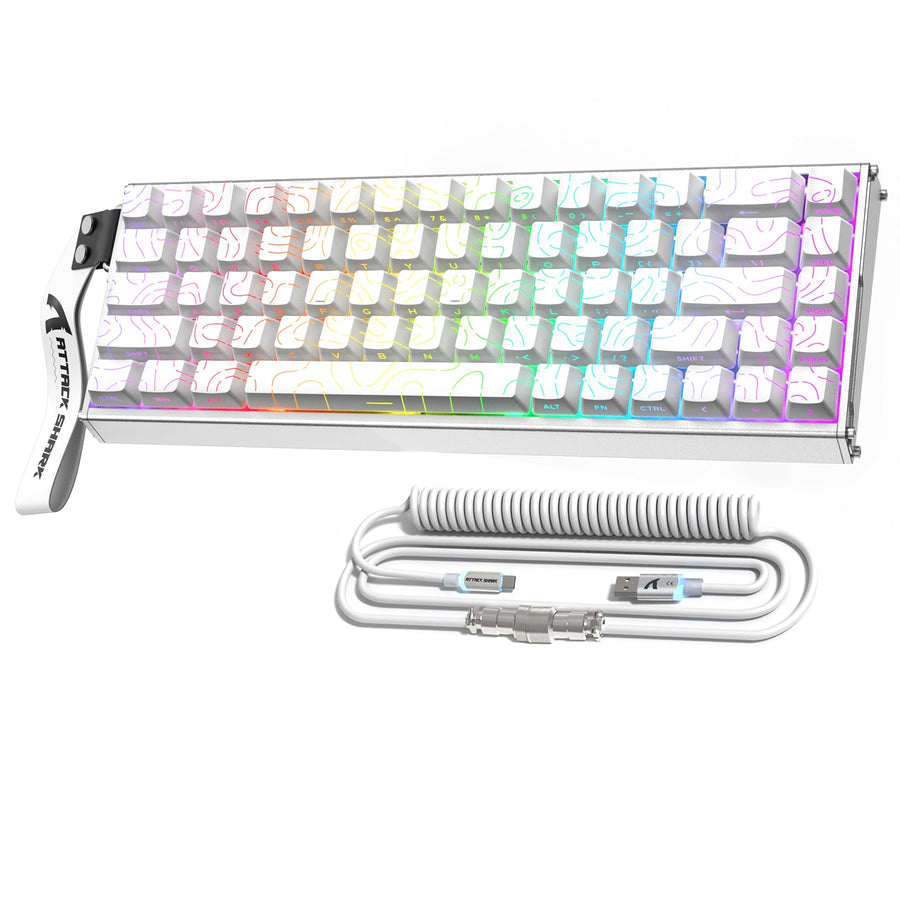
When selecting high-performance peripherals, technical reliability is as important as raw specs. Products like the ATTACK SHARK X68MAX CNC aluminum keyboard are subject to rigorous international standards.
- Battery Safety: Wireless models must comply with IATA Lithium Battery Guidance for safe transport and usage, ensuring that high-capacity cells do not pose a fire risk during intense, heat-generating gaming sessions.
- Signal Integrity: Compliance with the EU Radio Equipment Directive (RED) ensures that your 2.4GHz wireless signal remains stable even in environments crowded with other devices, preventing the "packet loss" that can ruin a variable actuation setup.
Strategic Outlook
Variable actuation is no longer a niche luxury; it is becoming a standard requirement for the competitive FPS tier. By understanding the underlying physics of Hall Effect sensors and the ergonomic risks of high-APM play, you can build a setup that is both faster and more sustainable.
Whether you are using the ATTACK SHARK CM05 Tempered Glass Gaming Mouse Pad for frictionless tracking or the ATTACK SHARK Aluminum Alloy Wrist Rest with Partition Storage Case to manage your strain index, the goal remains the same: total control over your digital presence through precise physical modulation.
YMYL Disclaimer: This article provides ergonomic and technical information for informational purposes only. It is not a substitute for professional medical advice. If you experience persistent wrist, arm, or neck pain, consult a qualified physiotherapist. Individuals with pre-existing repetitive strain injuries (RSI) should exercise caution when adopting high-intensity gaming techniques.