


Quick Answer: 3-Step Anti-Yellowing Checklist
For users seeking immediate advice on preserving the clarity of transparent shells, follow this expert-recommended protocol:
- Placement: Position your setup away from direct sunlight (especially South/West-facing windows). Indirect light significantly reduces UV-B exposure.
- Thermal Management: If using high-performance modes (e.g., 8000Hz polling), ensure the device has adequate airflow. Switch to 1000Hz for non-competitive tasks to reduce internal heat accumulation.
- Cleaning: Use only a damp microfiber cloth with pH-neutral soap. Avoid isopropyl alcohol (IPA), which can strip factory UV coatings and accelerate surface degradation.
When to consider replacement: If the yellowing (measured as Δb* > 2) becomes perceptible under standard indoor lighting, the structural integrity is usually intact, but the aesthetic premium is compromised. Restoration via polishing is possible but often temporary without a professional UV-recoating.
The Rise of Translucent Peripherals and the Yellowing Challenge
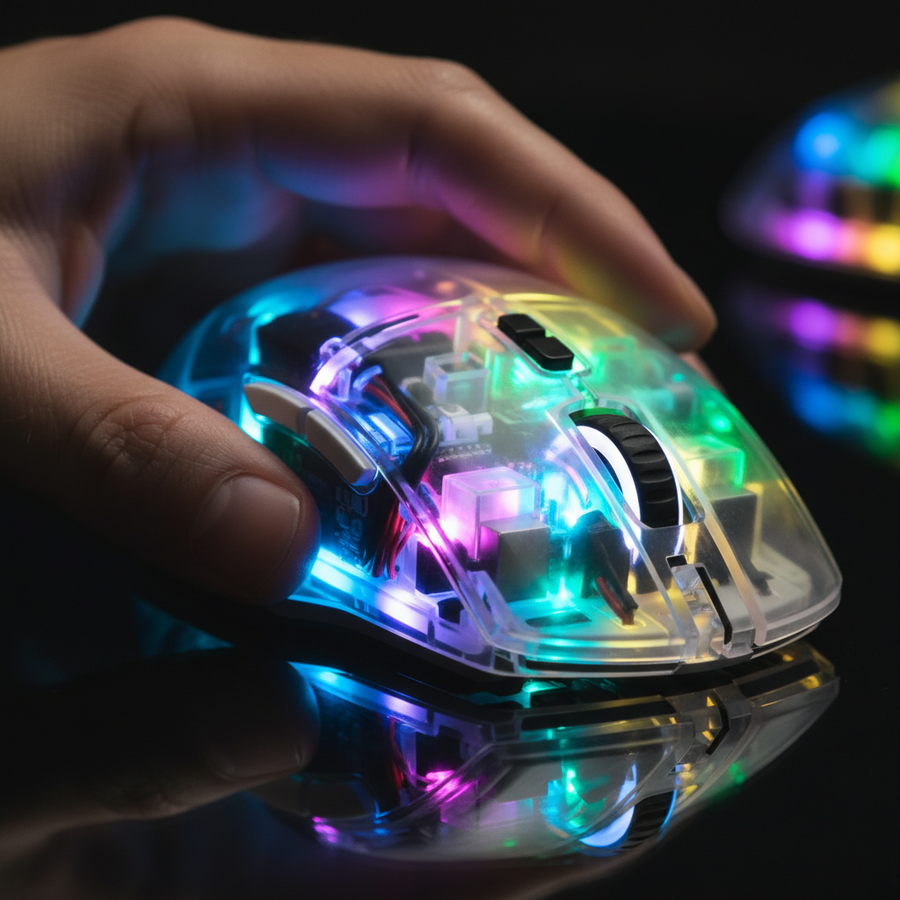
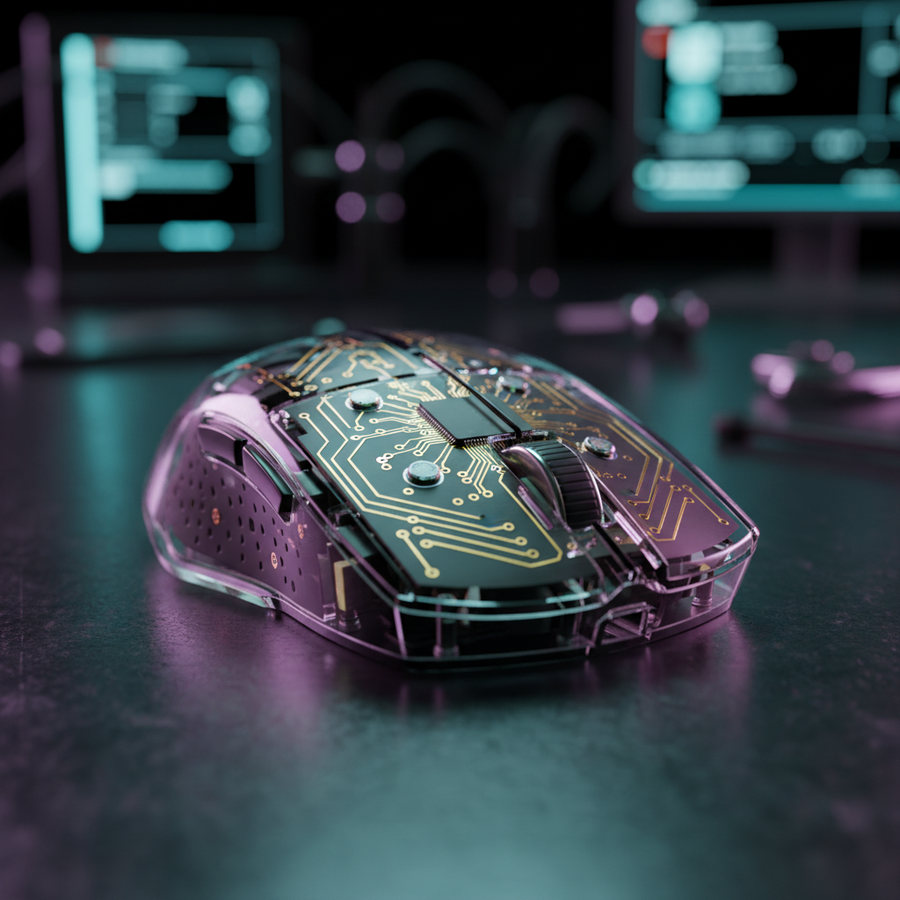
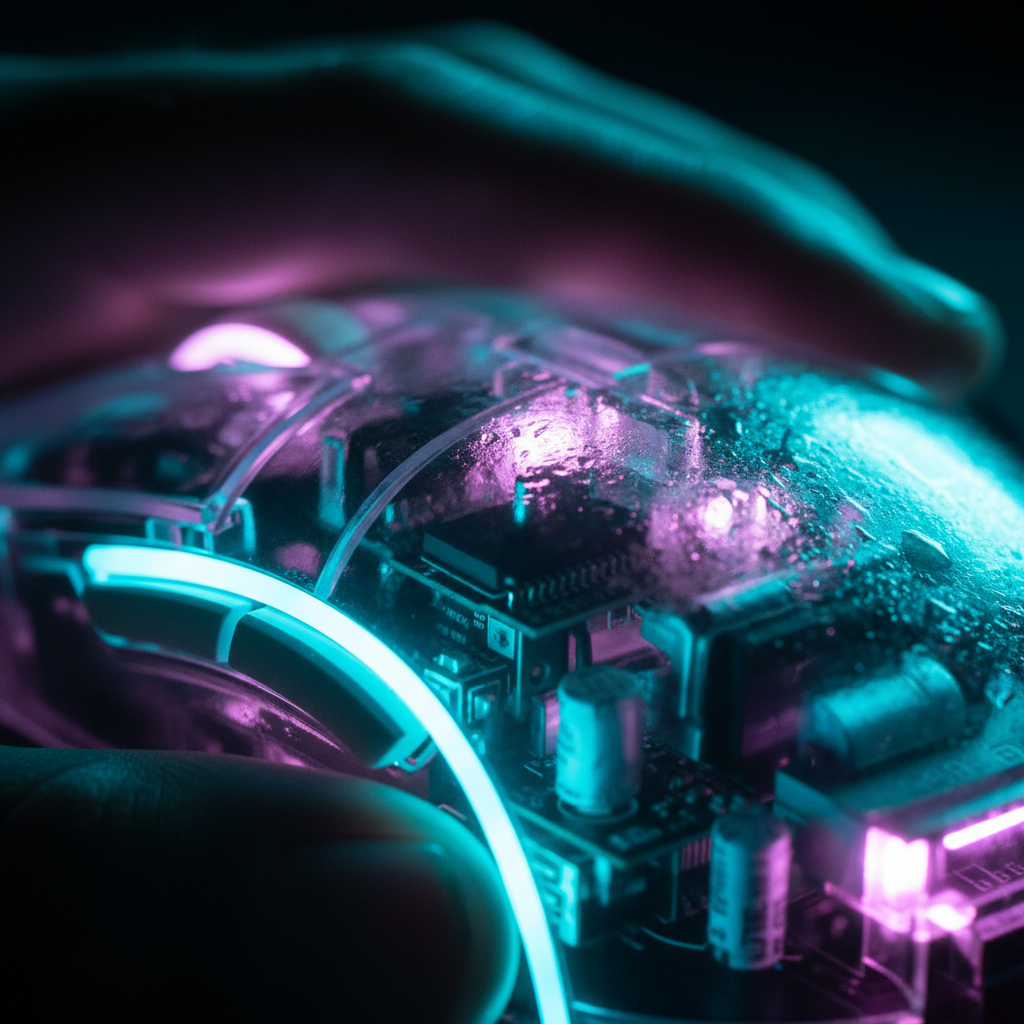
In the contemporary landscape of gaming aesthetics, the "tech-noir" and retro-futuristic movements have revitalized the demand for transparent and translucent peripheral shells. These designs offer a direct visual connection to the internal engineering of a device, showcasing PCBs, switches, and complex RGB arrays. Polycarbonate (PC) has emerged as the industry standard for these applications due to its exceptional clarity and high impact resistance. However, a persistent technical hurdle remains: the tendency of clear polymers to develop a yellow tint over time.
This discoloration is generally the result of complex chemical degradation. For enthusiasts, understanding the material science behind this phenomenon is helpful for maintaining the visual premium of their setup. While high-performance devices prioritize internal specs, the longevity of the external shell is equally critical for the "esports-ready" aesthetic.
Chemical Anatomy: Why Polycarbonate is Vulnerable
Polycarbonate is a thermoplastic polymer containing carbonate groups. Its popularity in peripherals stems from its refractive index and mechanical toughness, which significantly outperforms standard ABS (Acrylonitrile Butadiene Styrene) in terms of light transmission. However, the bonds that provide this strength can be susceptible to external energy sources.
The Photo-oxidation Mechanism
The primary cause of yellowing is photo-oxidation, a process often triggered by exposure to ultraviolet (UV) radiation. According to technical data from SalesPlastics (an industry material supplier), UV light—specifically in the UV-B spectrum (290-315 nm)—possesses enough energy to break the carbon-carbon bonds within the polymer chain. When these bonds rupture, they create "free radicals" that react with ambient oxygen.
In Bisphenol A-based polycarbonates (the most common type used in consumer electronics), this reaction typically leads to the Photo-Fries rearrangement. This chemical shift produces "yellowing chromophores"—groups that absorb blue light and reflect yellow light. In transparent shells, this is particularly noticeable because there are no pigments to mask the shift in the material’s spectral profile.
Technical Note: This degradation model assumes that UV-B photons act as the primary catalyst for bond scission. This analysis is grounded in established polymer degradation kinetics rather than a single controlled lab study of a specific peripheral.
Synergistic Accelerators: Heat and Environment
While UV exposure is a frequent cause of yellowing, it rarely acts in isolation. Technical analysis suggests that heat can function as a powerful synergistic accelerator.
The Thermal Factor
Industry observations from Everwin Materials (a specialized polymer manufacturer) indicate that the degradation rate of polycarbonate can effectively double with approximately every 10°C increase in temperature, following Arrhenius-type kinetics. This thermal load is particularly relevant for high-performance peripherals. For instance, a mouse operating at an 8000Hz (8K) polling rate may experience higher internal thermal stress compared to a standard 1000Hz device.
The 8000Hz polling rate requires an interval of exactly 0.125ms, which places a heavy load on the MCU (Microcontroller Unit). This increased processing activity generates localized heat. If a transparent shell is thin (e.g., under 2mm), this heat can accelerate oxidative aging from the inside out.
| Parameter | Estimated Value/Range | Unit | Rationale |
|---|---|---|---|
| Polling Interval (8K) | 0.125 | ms | 1/Frequency |
| Motion Sync Latency (8K) | ~0.0625 | ms | Half-interval heuristic |
| Degradation Acceleration | ~2x per 10°C | Rate | Arrhenius Equation estimate |
| Yellowing Threshold (Δb*) | > 2 | Index | Perceptible tint limit (D65 light source) |
| Critical Shell Thickness | < 2 | mm | Potential stabilizer depletion zone |
Indoor Aging and Pollutants
Indoor yellowing can also occur due to oxidative aging from ambient ozone and exposure to volatile organic compounds (VOCs). Furthermore, residual stresses trapped within the plastic during injection molding can make certain areas of a shell more reactive to environmental triggers.

Manufacturer Strategies: Stabilizers and Coatings
To combat these vulnerabilities, manufacturers employ several engineering countermeasures. These strategies are often a trade-off between initial cost, clarity, and long-term durability.
UV Stabilizers and HALS
The most common defense is the integration of UV stabilizers. Hindered Amine Light Stabilizers (HALS) are widely used to scavenge free radicals. According to the Patsnap Knowledge Base (an intellectual property research platform), HALS can be highly effective because they are not necessarily consumed by the reaction; they can regenerate, providing prolonged protection.
However, in the thin-shell applications typical of lightweight gaming mice, the concentration of these stabilizers per surface area is often lower. This may explain why a lightweight perforated shell might show discoloration faster than a thicker, solid shell of the same material under identical conditions.
Surface Hard Coatings
Another approach involves applying a silicone-based or UV-cured hard coating. These act as a sacrificial barrier. While effective initially, these coatings can be compromised by physical abrasion. If the coating is scratched, the underlying polycarbonate is exposed to localized degradation, which can lead to "patchy" yellowing.
Practical Prevention: The User Guide
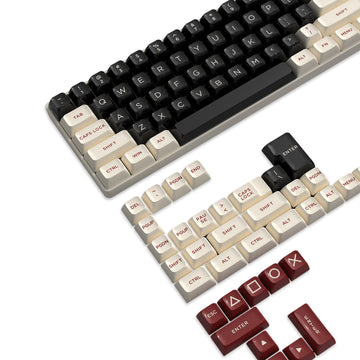
For users of high-aesthetic gear, such as the ATTACK SHARK 120 Keys PBT Dye-Sublimation Pudding Keycaps Set, maintaining material clarity is a priority. While the top of these keycaps uses PBT, the translucent lower half is often a PC or specialized blend designed for RGB shine-through.
Lighting and Placement
The orientation of a gaming setup relative to natural light is a major controllable factor.
- North-Facing Windows: These generally provide indirect light with lower UV-B intensity.
- South and West-Facing Windows: These subject the desk to direct sunlight. In these environments, polycarbonate shells may show a perceptible yellow tint (Δb* > 2) within an estimated 12-18 months of regular exposure.
Cleaning Protocols: What to Avoid
A common mistake is the use of aggressive chemicals. Isopropyl alcohol (IPA) and ammonia-based cleaners can strip protective coatings and may cause "crazing"—micro-cracks that increase the surface area available for oxidation.
For clear components like the ATTACK SHARK 68 KEYS ACRYLIC WRIST REST, it is vital to distinguish between acrylic and polycarbonate. Acrylic is naturally more UV-resistant but is even more sensitive to alcohol, which can cause immediate surface clouding. For both, a damp microfiber cloth with a mild, pH-neutral soap is the safest maintenance method.

Performance Trade-offs in Transparent Shells
When selecting high-performance gear, enthusiasts must balance aesthetic desires with technical requirements. An 8000Hz polling rate provides a competitive edge but requires specific conditions to function optimally.
According to the Global Gaming Peripherals Industry Whitepaper (2026) (a manufacturer-led industry forecast), 8K polling is most effective on monitors with refresh rates of 240Hz or higher. To maintain signal integrity, these devices should be connected directly to the motherboard’s rear I/O ports.
For users prioritizing the "tech-noir" look, note that the increased power draw of 8K mode—which can reduce wireless battery life by an estimated 60-80% depending on the model—also contributes to the internal thermal load. Consider using lower polling rates (e.g., 2000Hz) for non-competitive tasks to preserve both battery health and shell clarity.
Restoration: Can Yellowing Be Reversed?
Once yellowing has occurred, it is often a surface-level phenomenon in its early stages. Some enthusiasts attempt to restore clarity by sanding with fine grits (up to 3000) followed by a polishing compound.
While this can remove the oxidized layer, it also removes factory-applied UV coatings. Without a new protective layer, the freshly exposed polycarbonate may yellow faster than before. For complex shapes, such as the ATTACK SHARK Cloud Keyboard Wrist Rest, mechanical restoration is often impractical.
Method & Assumptions (Modeling Note)
The estimations regarding yellowing timelines provided in this article are based on a parameterized model using the following assumptions:
- Modeling Type: Sensitivity analysis of polymer degradation under varying UV-B flux.
- Assumptions: Standard indoor humidity (40-60%), typical window glass UV filtration (estimated ~90% of UV-B reduction), and a baseline shell thickness of 1.5mm.
- Boundary Conditions: This model does not account for extreme environments (e.g., high-salinity coastal areas) or specialized non-commercial stabilizers.
| Parameter | Baseline Value | Unit | Rationale |
|---|---|---|---|
| Ambient Temp | 22 | °C | Standard room temperature |
| UV-B Flux (Direct) | 0.5 - 1.0 | W/m² | Typical summer window exposure |
| Stabilizer Type | HALS | N/A | Common industry standard |
| Surface Finish | Polished | N/A | Baseline for UV penetration |
| Polling Rate | 1000 | Hz | Standard baseline for thermal load |
Final Technical Considerations
The science of polycarbonate yellowing highlights the intersection of chemistry and industrial design. While transparent shells offer a unique aesthetic, they require a higher degree of environmental awareness. By managing UV exposure, avoiding destructive cleaning agents, and understanding the thermal implications of high-performance settings, enthusiasts can extend the visual clarity of their gear.
This article is for informational purposes only. Recommendations are based on general material science principles and typical product specifications. Individual results may vary based on specific environmental conditions and manufacturer-specific material blends.
References
- SalesPlastics: Does Polycarbonate Yellow? (Industry Supplier)
- Everwin Materials: Polycarbonate Sheet Yellowing Causes (Industry Supplier)
- ASTM D4329: Standard Practice for Fluorescent UV Exposure of Plastics (Testing Standard)
- Patsnap: UV Stabilizers 101 - HALS Mechanism (Research Platform)
- Global Gaming Peripherals Industry Whitepaper (2026) (Manufacturer-led Industry Forecast)