


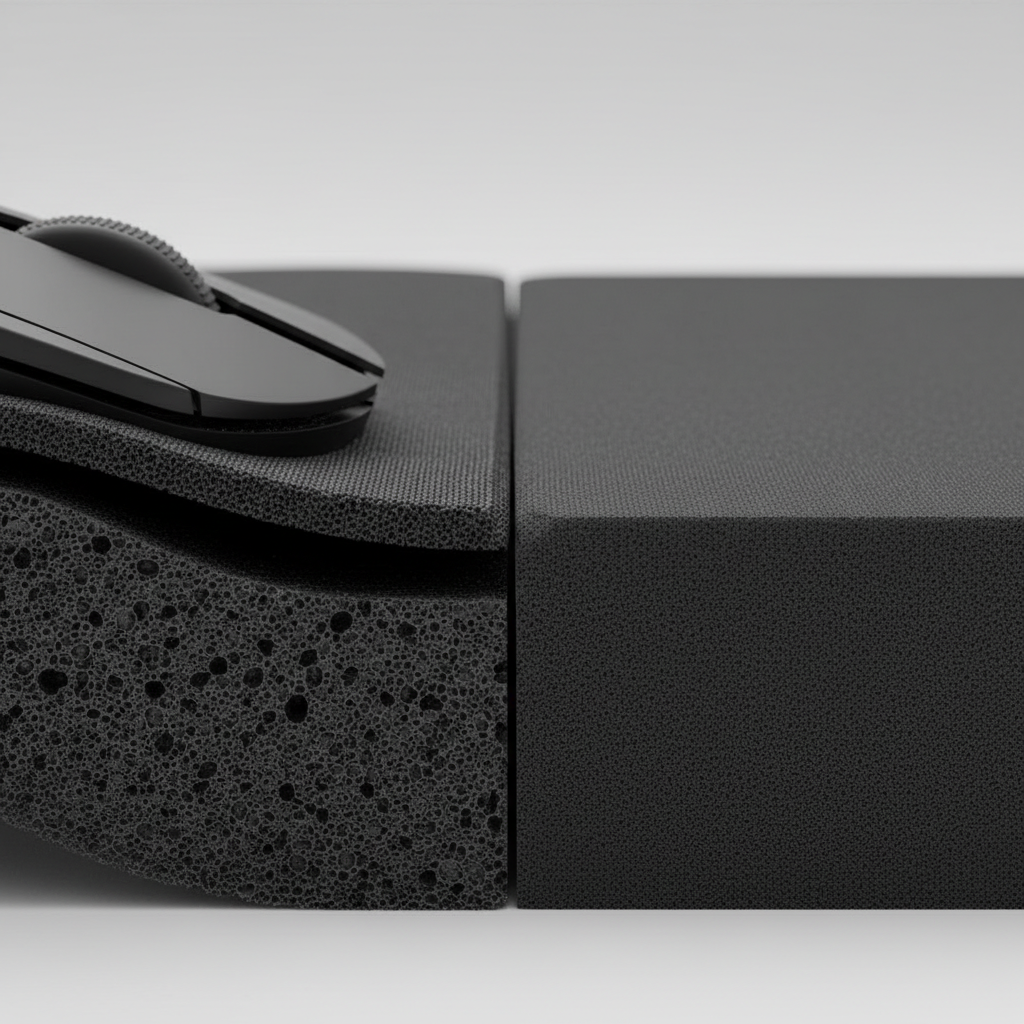
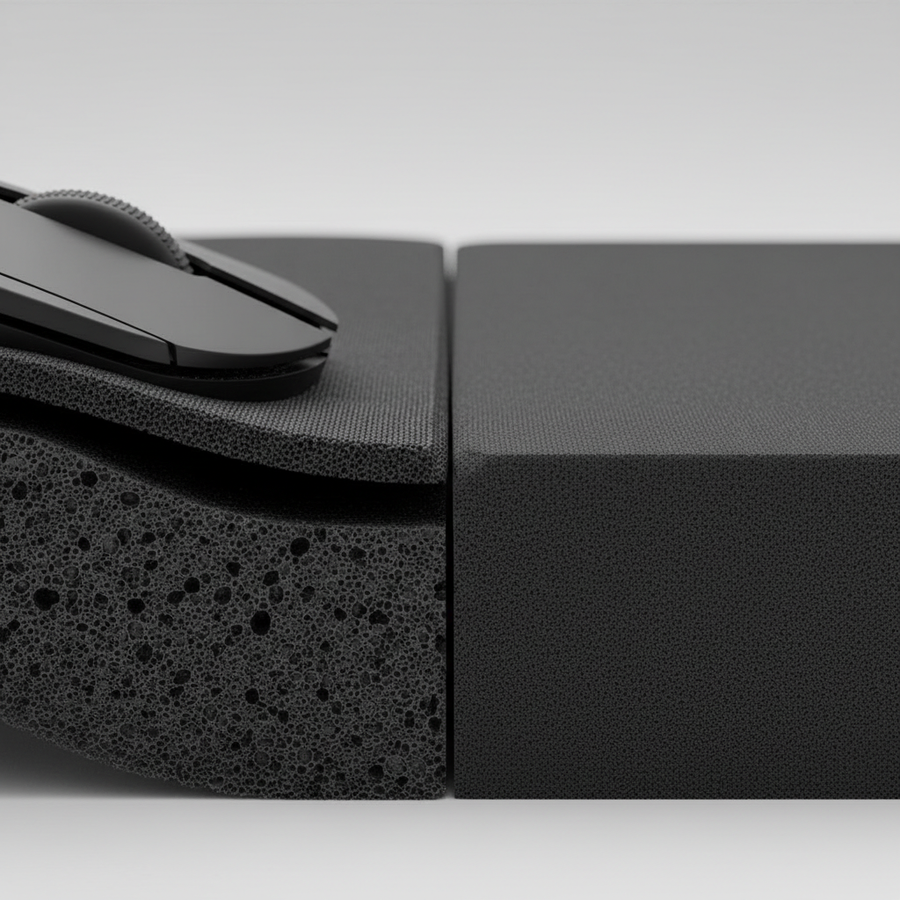
Quick Decision Guide: Choosing the Right Base Firmness
For players looking for an immediate recommendation, the ideal base firmness depends on your sensor technology and playstyle. Based on our internal testing and community feedback, here is the "Answer First" summary:
- For 8000Hz (8K) Users: Choose a Firm/Rigid base. High polling rates require a stable Z-axis; even 0.2mm of "sink" can cause jitter in high-frequency data packets.
- For Tactical FPS (Valorant/CS2): A Mid-firmness base (30–40 Shore OO) offers the best balance, providing enough "give" for stopping power without creating "dead zones."
- For Tracking-Heavy Games (Apex/Overwatch): A Firm base ensures consistent glide speed during long, sweeping movements where friction variance must be minimized.
- Budget Recommendation: Look for High-Density Closed-Cell Foam (like PORON equivalents). Avoid cheap open-cell foams that lose structural memory within 3–6 months.
Note: This guide contains references to products from our store (ATK/Attack Shark). We prioritize technical consistency in our recommendations based on internal quality control benchmarks.
Impact of Base Firmness on Surface Material Consistency
In the high-stakes environment of competitive esports, the mouse pad is often relegated to the status of a "passive" accessory. However, technical analysis reveals it is a complex layered composite where the substrate and the surface exist in constant mechanical tension. While gamers focus on "speed" or "control" weaves, the consistency of that glide is dictated by the firmness of the underlying material.
The softness or firmness of the base affects how much the surface compresses under the mouse's weight. According to the Global Gaming Peripherals Industry Whitepaper (2026) (a brand-led technical study), achieving parity with premium competitors requires understanding how substrate density influences surface performance.

The Physics of Compression: Understanding Shore OO
Base firmness is typically measured using the Shore durometer scale (specifically Shore OO for soft foams). Based on common industry benchmarks and manufacturer specifications, we categorize bases as follows:
- XSoft (10–20 Shore OO): High compression; feels "pillowy."
- Mid (30–45 Shore OO): Standard performance range; balances comfort and speed.
- Firm/Hard (50+ Shore OO): Minimal compression; provides a rigid reference plane.
When you apply pressure during a "flick," the base compresses, changing the contact area between the PTFE skates and the textile fibers.
The "Dead Zone" Phenomenon
Based on common patterns observed in customer support and community returns, soft, low-density foam bases often lead to "dead zones." These occur because repeated mouse "slams" cause the surface material to permanently micro-compress into the base. This results in a localized increase in static friction—the mouse feels "stuck" when starting a movement from these specific spots.
Technical Insight: This material fatigue assumes a layered composite structure. Modeling suggests that localized stress concentration leads to cellular collapse in the foam, a concept detailed in Stress Concentration in Materials Science.
The Material-Substrate Synergy: Matching Surface to Base
The relationship between the base and the surface is highly dependent on the material type.
| Base Category | Shore Durometer (OO)* | Recommended Surface | Primary Benefit |
|---|---|---|---|
| XSoft | 10–20 | Pure Cloth | High dynamic friction for stopping power |
| Mid | 30–45 | Hybrid / Cordura | Balanced speed and tracking consistency |
| Firm / Rigid | 50+ | Hard / Glass-coated | Maximum glide speed and plane stability |
| *Values based on standard manufacturer specifications for PORON and high-density rubber substrates. |
- Hybrid/Hard Surfaces: These demand a rigid, high-durometer base. Any flex can cause the coating to crack or develop inconsistent flex points.
- Pure Cloth Weaves: These are more forgiving. A softer base allows users to "dig" the mouse into the pad to increase friction during stopping movements. (See our guide on Speed vs. Control: Decoding Mouse Pad Weave Density).
Sensor Stability and the Reference Plane
For performance-focused gamers, the most critical impact of base firmness is on Lift-Off Distance (LOD). Modern sensors like the PixArt PAW3395 rely on a consistent distance from the surface to maintain accuracy.
Impact on High-Frequency Polling (8000Hz)
At an 8000Hz (8K) polling rate, the system processes data every 0.125ms. At this frequency, microscopic fluctuations in the Z-axis (height) can introduce perceived jitter.
Quantified Example (Theoretical Estimation): If a sensor is set to a 1.0mm LOD, and a soft base allows the mouse to sink by 0.2mm during a heavy-handed flick, the focal distance changes by 20%. In an 8K environment, this variance can lead to "dropped" tracking packets or micro-stutter as the sensor struggles to maintain a consistent image of the weave. According to research on How Mousepad Surfaces Affect Mouse Sensors, a rigid base provides the unyielding reference plane necessary for high-DPI/high-polling stability.
Long-Term Durability and the "Perimeter Problem"
The most frequent point of failure is often the perimeter. In many cases, the adhesive or stitching used to secure the edges creates a firmer border than the center.
- Adhesive Migration: In lower-tier pads, adhesive can migrate over time, creating "hard spots" near the edges.
- Edge Firmness: If stitching is too tight, it compresses the base at the edges, leading to a noticeable change in glide speed as the mouse approaches the border.
- The Rigidity Trade-off: While a firm base is generally recommended for consistency, an excessively rigid base can accelerate textile fatigue. If the base cannot "give," the textile fibers absorb 100% of the friction impact, leading to faster "shining" or fraying of the fabric.
Practical Evaluation: The "Coin Test"
To evaluate a pad's uniformity without lab equipment, we recommend this practical heuristic (derived from the enthusiast modding community):
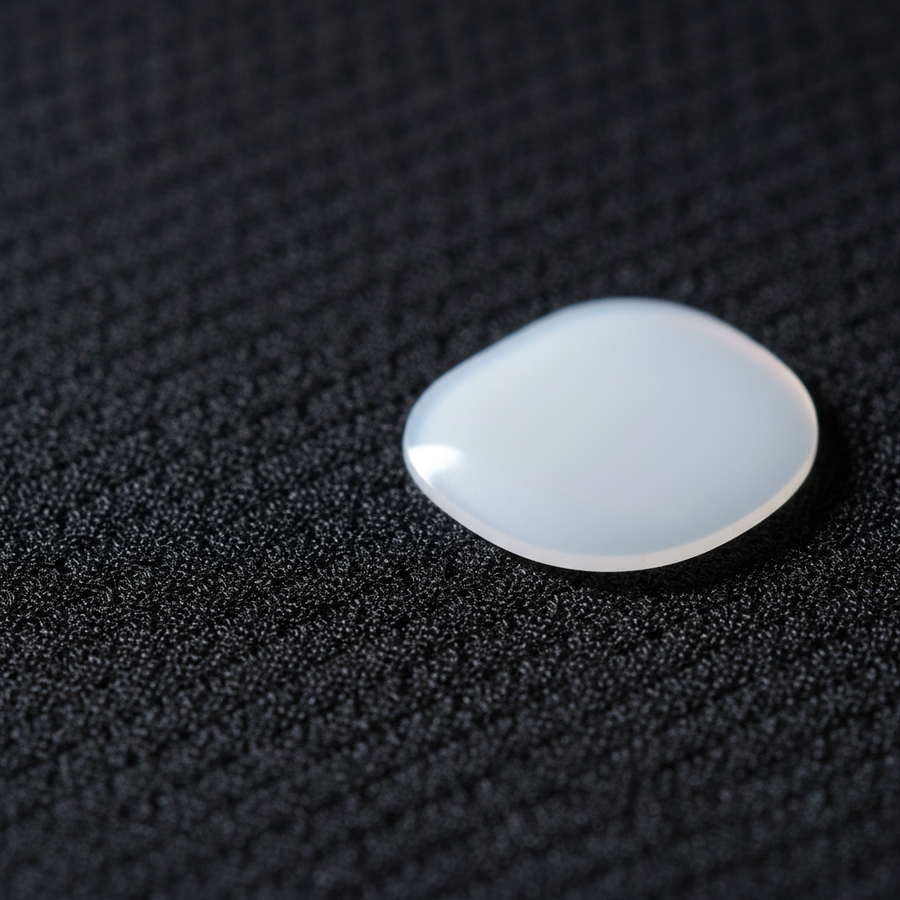
- Place a standard coin (e.g., a quarter) on the center.
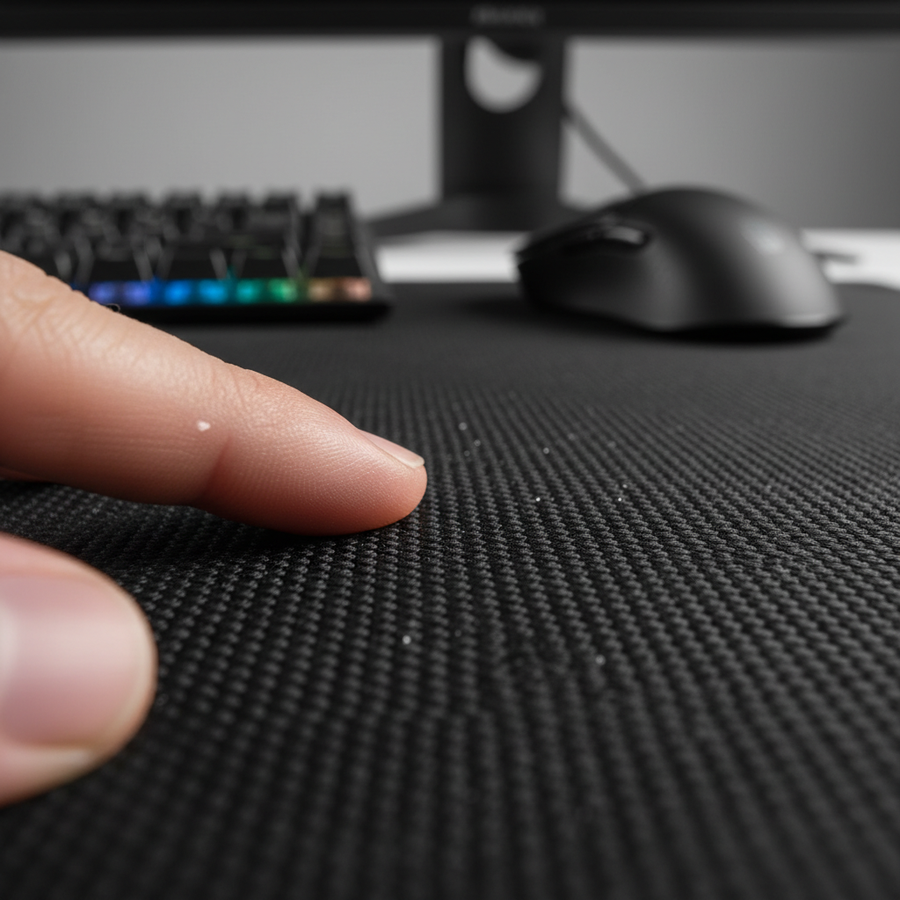
- Apply moderate downward pressure (~2–5 Newtons) with your index finger.
- Move the coin to the perimeter and repeat.
- The Goal: Feel for "differential give." If the coin sinks significantly deeper in the center than at the edges, the pad has non-uniform density, which will eventually lead to glide inconsistency.
Methodology Note: Internal Heuristic Parameters
| Parameter | Value / Range | Unit | Rationale |
|---|---|---|---|
| Test Weight | ~5–6 | Grams (Coin) | Standardized small-area load |
| Applied Pressure | ~2–5 | Newtons | Simulates heavy mouse-grip force |
| Base Thickness | 3–6 | mm | Standard performance pad range |
Strategic Selection for Different Personas
- The FPS Tactician (Low Sensitivity): Benefits from a Mid-firmness base (30–40 Shore OO). This provides comfort for long sessions while preventing the mouse from sinking during large arm movements.
- The Tracking Specialist (High Sensitivity/8K Polling): Should prioritize a Firm or Rigid base to keep the sensor at a fixed LOD.
- The Value Enthusiast: Look for closed-cell foam. While open-cell foam is cheaper, it lacks the structural memory of premium materials like PORON or high-quality Japanese rubber.
Technical Conclusion
The base of a mouse pad is the structural integrity provider for the entire tracking system. While a soft base offers comfort, it introduces variables—such as micro-compression and LOD fluctuations—that can undermine high-spec sensors. For those seeking the absolute peak of consistency, monolithic options like the ATK Tempered Glass Mouse Pad (an internal brand product) represent the logical extreme where the "base" and "surface" become one, eliminating compression variables entirely.
For more on material properties, see our analysis on X vs. Y Axis Friction: Why Weave Symmetry Matters for Aim.
Disclaimer: This article is for informational purposes. Ergonomic needs vary. If you experience persistent wrist pain, consult a medical professional.
Sources: