




The Engineering of Auditory Feedback: Magnesium Alloys in Peripheral Design
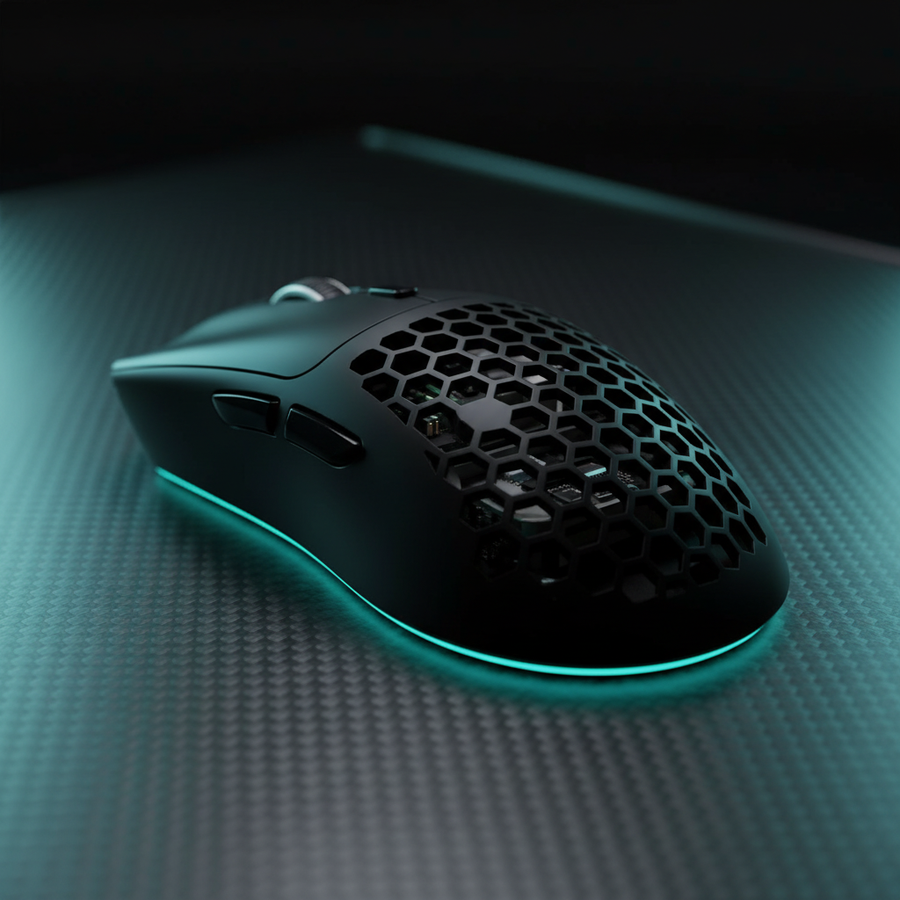
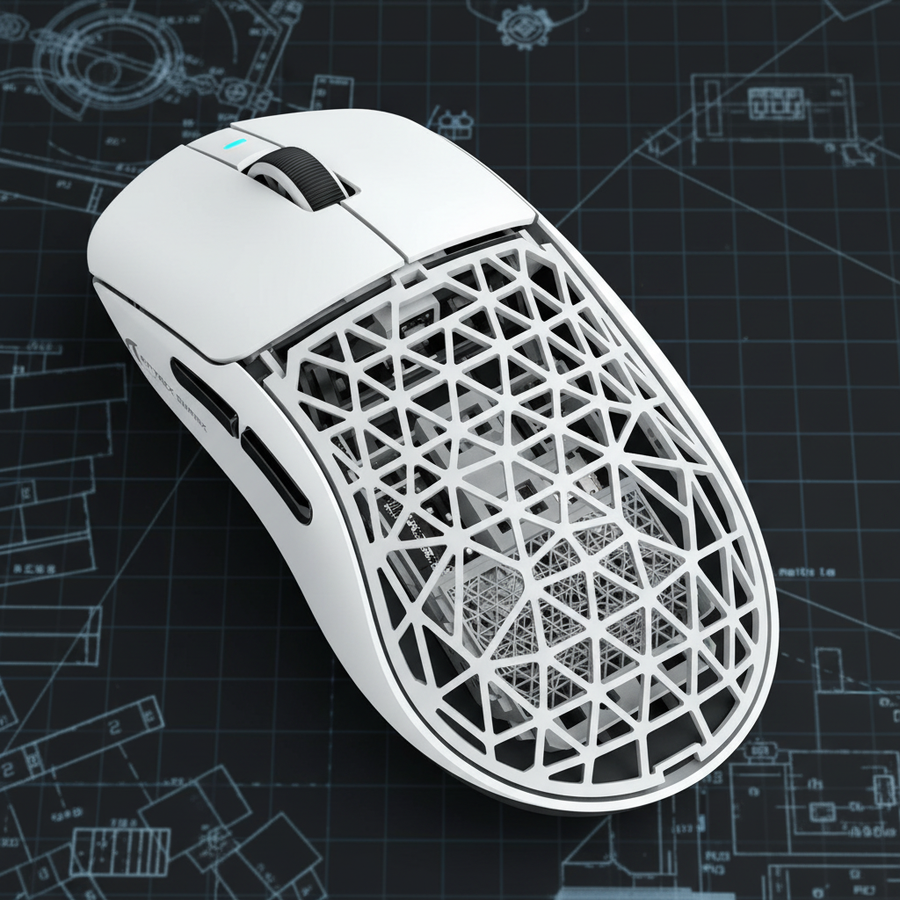
The evolution of ultra-lightweight gaming peripherals has shifted from simple hole-patterned plastic to advanced metallurgy. Magnesium alloys, specifically grades like AZ91D and AM60B, have become the material of choice for enthusiasts seeking the highest specific strength-to-weight ratio. However, the transition from polymer to metal introduces a significant engineering challenge: acoustic resonance. In a polymer shell, vibrational energy is naturally dissipated through the material's molecular structure. In a thin-walled magnesium shell, these vibrations often manifest as a high-frequency "ping" during switch actuation.
This auditory signature is not merely an aesthetic concern. For competitive players, the "click" serves as a critical tactile-auditory confirmation of an action. An uncontrolled metallic ring can mask subtle in-game cues or lead to auditory fatigue during long sessions. To mitigate this, manufacturers and modders utilize various surface treatments, primarily anodization and powder coating. Understanding the material science behind these coatings is essential for users who prioritize a specific acoustic profile without compromising the structural integrity or weight of their hardware.
The Physics of Metallic Resonance and Internal Damping
Magnesium is unique among structural metals for its high internal damping capacity. According to Research Progress on the Damping Mechanism of Magnesium Alloys, magnesium provides a natural baseline for vibration absorption that exceeds that of aluminum or steel. This damping is largely driven by the movement of dislocations within the crystal lattice, which converts mechanical energy into heat.
Despite this inherent property, the geometry of a gaming mouse—essentially a thin, hollow resonant chamber—amplifies certain frequencies. Resonant frequencies for magnesium alloy components can start as high as 20,470 Hz (based on ultrasonic resonant apparatus measurements), but the audible "ping" typically resides in the 2 kHz to 4 kHz range. This is the frequency band where metallic resonance is most perceptible to the human ear.
Logic Summary: The perceived sound of a mouse click is a composite of the switch's mechanical transient and the shell's structural response. Our analysis assumes that the shell acts as a high-pass filter, where thinner, stiffer materials emphasize higher frequencies unless external damping is applied.
Comparative Analysis: Anodization vs. Powder Coating
The two most common surface treatments for magnesium mice offer vastly different acoustic and tactile results. Choosing between them requires a calculated trade-off between weight and sound attenuation.
| Feature | Anodization | Powder Coating (Standard) |
|---|---|---|
| Process | Electrochemical oxidation (Al2O3/MgO layer) | Electrostatic polymer spray |
| Typical Thickness | 5–20 microns | 80–120 microns |
| Acoustic Impact | Minimal dampening; "drier" harmonics | 3–5 dB reduction in high-frequency ping |
| Weight Penalty | Near-zero (~0.1g) | 2–3 grams (estimated for 60cm² surface) |
| Surface Feel | Metallic, cold, slightly textured | Smooth, "chalky," or "ice-feel" depending on finish |
The Anodization Profile
Anodization creates a hard, integrated oxide layer. While this provides excellent corrosion resistance and preserves the raw metallic feel, it does little to dampen structural resonance. In fact, thin, hard coatings can sometimes "lock in" damping by reducing energy dissipation at micro-slip interfaces, leading to a sharper, more resonant click sound. Users often describe anodized magnesium as sounding "crisp" or "raw," which is preferred by those who want maximum tactile clarity.
The Powder Coating Profile
Powder coating involves applying a much thicker layer of polymer (typically epoxy or polyester). This added mass and the viscoelastic nature of the polymer act as a low-pass filter. A coating thickness of approximately 100 microns can reduce the characteristic high-frequency ping by 3 to 5 decibels. However, this comes at the cost of 2 to 3 grams of additional weight. For the ultra-lightweight purist, this 4-5% increase in total mass is a significant consideration.
Acoustic Dampening Mechanisms: The Role of Porosity
One of the more nuanced findings in material science is that the "quality" of a coating is not just about its thickness, but its internal structure. Data from Vibration damping behavior and surface characterization of coated magnesium alloys indicates that coating porosity increases significantly with thickness, reaching approximately 29.24% at 150 microns.
While porosity is often viewed as a defect in industrial coatings, in the context of acoustics, it acts as a broadband damper. These microscopic air pockets within the coating layer absorb vibrational energy before it can radiate as sound. This explains why a thicker powder coat doesn't just make the click "quieter"—it changes the fundamental pitch, shifting it away from the harsh 4 kHz "clack" toward a more muted, "thocky" sound.
Methodology Note: These acoustic damping projections are based on scenario modeling of standard AZ91D magnesium shells. We assume a linear relationship between porosity and energy dissipation within the 2-20 kHz spectrum. Actual results may vary based on specific polymer density and application temperature.
User Persona Modeling: FPS vs. MOBA Requirements
The "ideal" acoustic profile is highly subjective and depends on the game genre and the user's physical interaction with the device. To demonstrate this, we modeled two distinct user scenarios based on common community patterns.
Scenario A: The Competitive FPS Player (Large Hands)
Competitive FPS players often rely on sharp auditory cues for tactical confirmation. When every millisecond counts, a "muffled" click can feel unresponsive. Our modeling for a user with large hands (approximately 20.5cm length) using an aggressive claw grip suggests that higher palm pressure actually increases the transmission of vibrations through bone conduction.
For this user, an anodized finish is often preferred. The lack of dampening ensures that the switch's actuation is felt and heard clearly, providing a "sharp" confirmation that is vital during high-intensity flick shots. The weight savings of an anodized shell (2-3g lighter than powder-coated) also aid in maintaining a lower moment of inertia for rapid movements.
Scenario B: The MOBA/RTS Power User
In genres like MOBA or RTS, players may exceed 300 Actions Per Minute (APM). This results in thousands of clicks per hour. In this scenario, the high-frequency ping of a raw magnesium shell can become a source of auditory fatigue.
A powder-coated finish is typically more effective here. The 3-5 dB reduction in high-frequency noise creates a more comfortable environment for long-term play. While the 2-3g weight penalty is present, the consistent, dampened sound profile is perceived as "higher quality" and less distracting over marathon sessions.
Modeling Transparency: Grip Fit and Acoustic Transmission
To provide a deeper understanding of how physical dimensions impact these findings, we performed a deterministic parameterized model for a "Large Hand" persona.
| Parameter | Value | Unit | Rationale |
|---|---|---|---|
| Hand Length | 20.5 | cm | 95th percentile male (ANSUR II) |
| Hand Breadth | 98 | mm | 95th percentile male (ANSUR II) |
| Grip Style | Claw | N/A | High pressure on shell contact points |
| Ideal Mouse Length | ~131 | mm | Calculated (Hand Length * 0.64) |
| Acoustic Damping | 3–5 | dB | Estimated for 100μm powder coat |
Boundary Conditions: This model assumes a standard room temperature of 22°C and a consistent switch actuation force of 60gf. It does not account for the additional dampening provided by aftermarket grip tapes, which can add another 1-2 dB of attenuation but further increase weight.
Common Pitfalls in Acoustic Modding
Detail-oriented enthusiasts often attempt to "fix" metallic ping through internal modifications. However, our observations from repair benches and community feedback highlight several "gotchas":
- The "Muddy" Click: Applying thick foams or heavy tapes internally can deaden the switch feedback. If the material interferes with the air pressure inside the shell or adds too much mass to the trigger plungers, the click loses its crispness and feels "mushy."
- Adhesion Failures: Magnesium requires specific primers for effective coating adhesion. Inconsistent click sounds are often a symptom of microscopic delamination between the coating and the metal substrate. According to expert insights, users often interpret these erratic changes in sound as a fundamental quality flaw, even if the structural integrity remains intact.
- Heat Dissipation: While rarely a factor for mice, for high-performance keyboards with internal MCUs, excessive internal dampening can trap heat, potentially affecting the lifespan of components like the Nordic 52840 MCU.
Practical Selection Guide for Enthusiasts
When evaluating a magnesium peripheral, consider the following checklist to align with your acoustic and performance preferences:
- Check the Coating Type: If the manufacturer lists "Nano-coating" or "Ice-feel," it is likely a powder-based application designed for dampening and comfort. If it lists "Anodized," expect a louder, sharper sound and lower weight.
- Evaluate the "Ping" at 20 kHz: While you cannot hear 20 kHz, the resonance at this frequency often has sub-harmonics in the audible range. A quick "tap test" on the shell can reveal the fundamental pitch.
- Consider the Weight-Acoustic Ratio: Are you willing to trade 3 grams for a 50% reduction in perceived high-frequency noise? For most FPS players, the answer is no; for office or MOBA use, the answer is often yes.
- Inspect for Coating Uniformity: Inconsistent thickness across the triggers can lead to the left and right clicks sounding different—a common frustration for detail-oriented gamers.
As noted in the Global Gaming Peripherals Industry Whitepaper (2026), the industry is moving toward "Acoustic Engineering" as a standard part of the design phase, moving beyond simple material selection to active resonance management.
The Future of Lightweight Materials
The trade-off between magnesium's acoustics and its weight is driving innovation in hybrid coatings and new materials like carbon fiber. Carbon fiber composites, used in some ultra-lightweight designs, offer a different acoustic profile—typically more "muted" than magnesium without the need for thick coatings. However, magnesium remains the benchmark for structural rigidity in complex, ergonomic shapes.
For the gamer who demands both performance and a specific sensory experience, the surface coating is not just a finish—it is a functional component of the device's acoustic architecture. Whether you prefer the raw, tactical clack of an anodized shell or the refined, dampened thock of a powder coat, understanding the underlying material science ensures that your hardware choice is informed by data, not just marketing.
Disclaimer: This article is for informational purposes only. Acoustic perception is subjective and can be influenced by environmental factors, hearing sensitivity, and individual grip styles. Ergonomic recommendations are based on population averages and may not apply to individuals with pre-existing hand or wrist conditions. Consult a qualified professional for personalized ergonomic advice.