


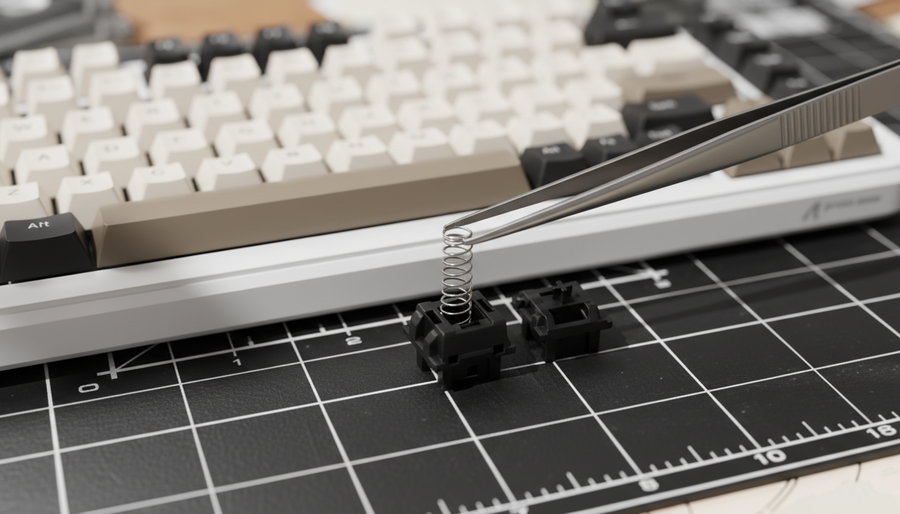
The Ergonomic Imperative of Modifier Key Optimization
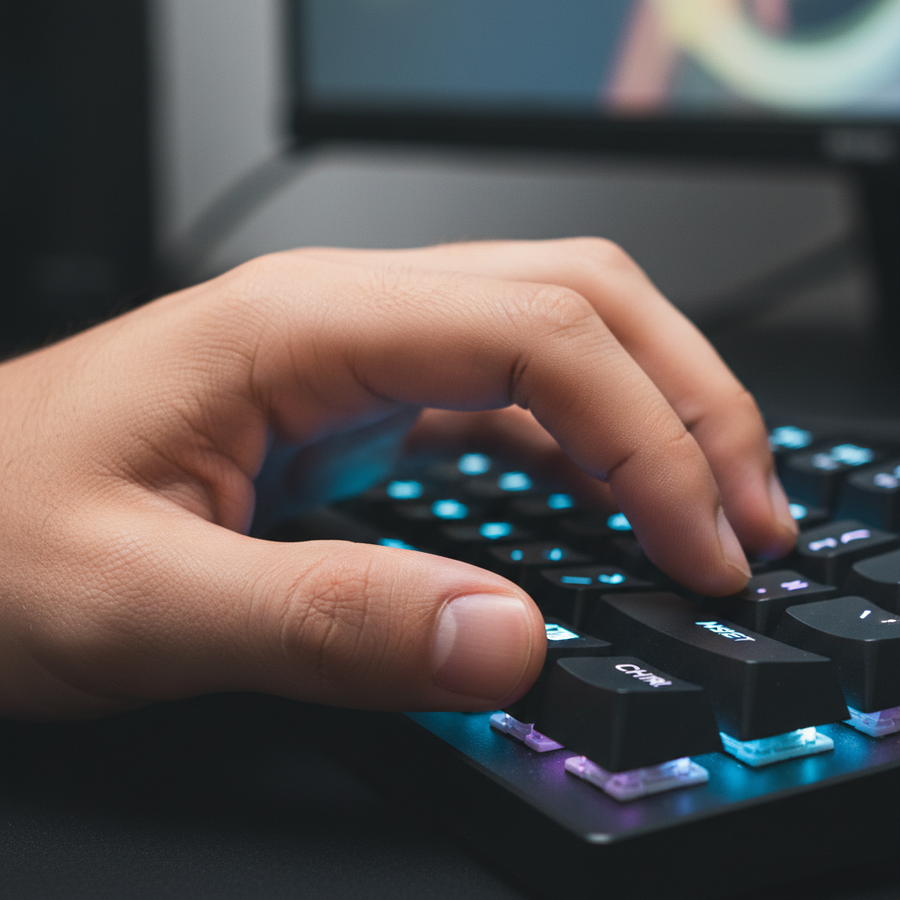
In high-stakes competitive gaming, particularly within the MMO (Massively Multiplayer Online) and MOBA (Multiplayer Online Battle Arena) genres, the physical demands placed on the hand often exceed those of standard office work. Modifier keys—specifically Shift, Ctrl, and Alt—are frequently held for extended durations to access secondary and tertiary ability bars. This sustained isometric contraction of the pinky and thumb creates significant localized muscle fatigue.
Technical analysis suggests that the standard 60g actuation force found in many mechanical switches, while tactile and satisfying for typing, may be suboptimal for these high-frequency modifiers. By strategically reducing the actuation force through localized spring swaps, gamers can theoretically lower the physiological stress on the distal upper extremities. However, this modification requires a nuanced understanding of spring physics, keycap inertia, and mechanical return speeds to avoid compromising switch reliability.
Quantitative Modeling of Hand Strain: The Moore-Garg Analysis
To evaluate the impact of spring weight on long-term health and performance, this scenario models a competitive gamer with large hands (~20.5 cm hand length) engaging in 4–6 hour daily sessions. Using the Moore-Garg Strain Index (SI), a validated tool for assessing the risk of distal upper extremity disorders, we can quantify the benefits of transitioning from a 60g baseline to a 45g optimized modifier setup.
Modeling Methodology & Assumptions
The following analysis utilizes a deterministic parameterized model based on the Moore-Garg Strain Index formula. It is important to note that this is a scenario model designed for ergonomic screening and is not a controlled clinical laboratory study or a medical diagnosis.
| Parameter | Baseline (60g) | Optimized (45g) | Unit | Rationale |
|---|---|---|---|---|
| Intensity Multiplier | 1.5 | 1.2 | Multiplier | 25% force reduction lowers exertion from "Moderate-High" to "Light-Moderate." |
| Duration Multiplier | 0.5 | 0.5 | Multiplier | Based on continuous exertion >10s but <1m (typical modifier hold). |
| Efforts Per Minute | 3.0 | 3.0 | Multiplier | Assumes 15–20 modifier actions per minute in competitive play. |
| Posture Multiplier | 1.5 | 1.5 | Multiplier | Accounts for non-neutral wrist/hand posture (ulnar deviation). |
| Speed Multiplier | 1.5 | 1.5 | Multiplier | Reflects rapid, repetitive motions required in MOBA/MMO environments. |
| Daily Duration | 1.5 | 1.5 | Multiplier | Based on a standard 4–6 hour high-intensity gaming session. |
Analysis Results:
- Baseline SI Score (60g): ~7.6 (Classified as "Hazardous" where SI > 5).
- Optimized SI Score (45g): ~6.1 (Remains in the hazardous range but represents a ~20% relative reduction in strain).
Logic Summary: The reduction in the intensity multiplier directly correlates to the lower physical force required to maintain the switch in a depressed state. For a large-handed gamer, this 20% reduction in theoretical strain can significantly delay the onset of muscle tremors and "modifier fatigue" during extended raids or matches.

Spring Physics and High-Frequency Actuation Limits
While reducing spring weight offers ergonomic relief, there is a mechanical "floor" below which performance degrades. In modding circles, using springs lighter than 35g for modifiers is often considered a pitfall.
The Problem of Switch Chatter and Return Speed
A switch spring serves two primary functions: providing resistance during the downstroke and providing the restoring force necessary to reset the switch. According to research on Fatigue Life and Reliability of Compression Springs, cycle life is inversely proportional to stress amplitude. While lighter springs may theoretically operate at a lower stress range, their reduced restoring force can slow the key return speed.
If the restoring force is too weak, the switch stem cannot return fast enough between rapid presses. This leads to "mechanical bounce," where the controller's debounce algorithm may struggle to distinguish between a deliberate press and electrical noise. In a quantifiable engineering context, "high-frequency" for a keyboard switch refers to actuation rates that challenge the mechanical cycle time. For a switch with a 4ms mechanical cycle (including return), the theoretical chatter-free limit is 125Hz. While this is beyond human finger speed, a weak spring increases the return time, effectively lowering this threshold and increasing the risk of missed inputs during frantic gameplay.
Linear vs. Progressive Force Curves
For high-frequency modifiers, a consistent linear force curve is typically preferable to a progressive one. A progressive spring increases in resistance as it is compressed. While this can prevent "bottoming out" harshly, it creates a variable actuation point depending on the speed of the press. For modifiers, where muscle memory relies on a consistent "hold" sensation, the predictability of a linear spring ensures that the key registers exactly where the user expects it every time.
Confounding Variables: Keycap Mass and Profile
A common oversight in ergonomic modding is treating the switch in isolation from the keycap. The mass of the keycap is a significant confounding variable that affects the perceived actuation force.
According to technical guides on Keycap Weight and Typing Feel, keycap inertia plays a critical role in the first millimeter of travel.
- SA Profile Keycaps: These are taller and heavier, often weighing between 1.5g and 2.0g.
- Cherry/OEM Profile Keycaps: These are lower profile and lighter, typically ranging from 1.0g to 1.3g.
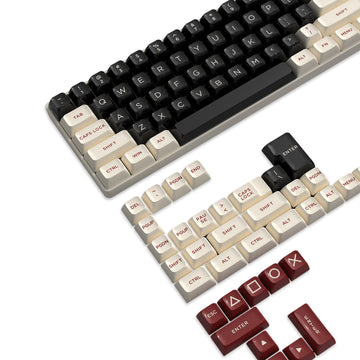
If a user installs a 35g spring under a heavy SA profile keycap, the weight of the plastic itself may consume a portion of the spring's upward force, resulting in a "mushy" reset or even accidental actuations caused by the resting weight of the finger. When optimizing for light actuation, using high-quality PBT sets, such as the ATTACK SHARK 120 Keys PBT Dye-Sublimation Pudding Keycaps Set, provides a balanced weight profile that complements lighter springs without sacrificing durability or RGB translucence.
The Staggered Weighting Strategy
Experienced modders recommend a "staggered" approach rather than a universal spring swap. This methodology accounts for the varying strengths of the fingers and the specific roles of each key.
- Primary Modifiers (Left Shift, Left Ctrl): These are typically operated by the pinky, the weakest finger. A reduction of 10–15g from the base switch weight (e.g., from 60g to 45g) is often the "sweet spot" for endurance.
- Secondary Modifiers (Alt, Windows/Cmd): These are often handled by the thumb or a tucked-in index finger. Since these fingers are stronger, a 50g spring may be used to maintain a more tactile response.
- The Spacebar: Due to its length and the weight of the stabilizer wire, the spacebar typically requires a heavier spring (55g–65g) to prevent it from feeling sluggish or failing to return.
Integration with External Supports
Reducing internal switch force is only one half of the ergonomic equation. For gamers with large hands, the angle of the wrist is equally critical. Using a firm support, like the ATTACK SHARK Black Acrylic Wrist Rest, helps maintain a neutral wrist position. This alignment ensures that the tendons in the carpal tunnel are not compressed while the fingers are engaging those light-spring modifiers.

Implementation: The Modder’s Workflow
To successfully implement lighter springs without damaging the hardware, specific technical steps must be followed.
Tool Selection and Housing Integrity
Using a dedicated switch opener is critical. Attempting to pry open switches with a screwdriver can stress the housing clips, leading to hairline cracks. These cracks cause "switch wobble," which degrades the typing experience and can lead to inconsistent actuation.
Seating and Lubrication
After a spring swap, it is common to perceive a slight "scratchiness" or binding. This is often due to the new spring not being perfectly seated on the bottom housing's center post.
- The 100-Press Rule: Based on common patterns from technical support and community feedback, consistently pressing a newly modified key 50–100 times helps "seat" the spring and redistribute any existing lubricant.
- Lubrication Note: While spring swapping, applying a thin layer of high-viscosity grease to the ends of the springs can eliminate "spring ping," a common auditory annoyance in light-spring builds.
Performance Synergy: High-Frequency Inputs and Polling Rates
When discussing "high-frequency" modifiers, it is essential to consider the entire signal chain. Modern competitive peripherals are pushing toward 8000Hz (8K) polling rates. While this article focuses on mechanical frequency, the system's ability to process these inputs is governed by strict physical laws.
As detailed in the Global Gaming Peripherals Industry Whitepaper (2026), an 8000Hz polling rate results in a 0.125ms reporting interval. This level of precision requires a clean mechanical signal. If a spring swap results in excessive switch chatter, the system's IRQ (Interrupt Request) processing may be overloaded with "noise" packets, negating the latency benefits of a high-polling-rate controller. Therefore, ensuring a crisp, fast return on your light-spring modifiers is not just about feel—it is about maintaining the integrity of the data stream to your CPU.
Compliance and Safety Standards
When modifying hardware, it is important to remain aware of international safety and quality standards. While spring swapping is a mechanical change, it occurs within a device that must meet rigorous electrical and environmental regulations.
- FCC & ISED: Devices like those found in the FCC Equipment Authorization Database undergo testing for electromagnetic compatibility. Modifiers that cause excessive electrical chatter could theoretically impact these characteristics, though usually only at a negligible level for the end-user.
- RoHS & REACH: When sourcing aftermarket springs, ensure they comply with the EU RoHS Directive to ensure they are free from hazardous substances like lead or cadmium, which can be present in low-quality alloys.
Summary of Ergonomic Optimization
Optimizing modifier keys through spring swaps is a high-reward modification for MMO and MOBA players, provided it is executed with technical precision. By moving from a 60g to a 45g spring, users can achieve a measurable reduction in hand strain, as demonstrated by the Moore-Garg model. However, the modder must account for the confounding effects of keycap mass and the mechanical limits of switch return speeds.
For those seeking the ultimate balance of performance and comfort, combining localized spring weighting with ergonomic accessories like the ATTACK SHARK Acrylic Wrist Rest with Pattern creates a comprehensive system that supports high-frequency gaming while protecting long-term musculoskeletal health.
Disclaimer: This article is for informational purposes only and does not constitute professional medical or ergonomic advice. Modifying your keyboard may void your warranty. If you experience persistent pain, numbness, or tingling in your hands or wrists, consult a qualified healthcare professional or occupational therapist.
Sources
- Moore, J. S., & Garg, A. (1995). The Strain Index: A proposed method to analyze jobs for risk of distal upper extremity disorders.
- Keneng Hardware: How to Test Fatigue Life and Reliability of Compression Springs.
- EatHealthy365: The Definitive Guide to Keycap Weight and Typing Feel.
- Global Gaming Peripherals Industry Whitepaper (2026).
- ISO 9241-410:2008 Ergonomics of human-system interaction -- Part 410: Design criteria for physical input devices.